Welding can provide strong earning potential, but income varies significantly based on skill level, certifications, industry, and work environment. Many people ask, do welders make a lot of money? because wage expectations often influence career decisions, training investments, and specialization choices.
In real-world fabrication, construction, pipeline, shipbuilding, and industrial maintenance work, experienced welders who can consistently produce quality welds and meet inspection requirements are often paid more than entry-level workers.
Factors such as process expertise, travel requirements, overtime opportunities, and the ability to work with demanding materials can have a major impact on earnings. Understanding these variables is important when evaluating the long-term value of a welding career.
This guide examines what welders typically earn, the factors that influence pay rates, and which welding sectors offer the greatest income potential, helping you assess whether welding is a financially rewarding profession.

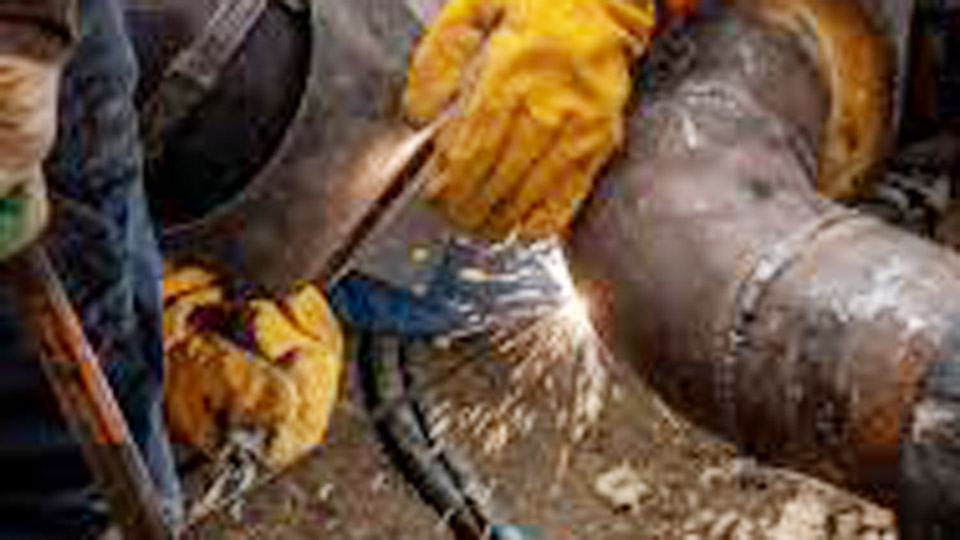
Image by primeweld
Welder Salary Benchmarks
National data provides a clear baseline for decision-making on career moves.
Median and Range Overview
The U.S. Bureau of Labor Statistics reports a median annual wage of $51,000 ($24.52 per hour) for welders, cutters, solderers, and brazers as of May 2024, with the top 10% exceeding $72,970.
Entry-level positions often start at $35,000–$42,000 annually, while experienced welders with 5+ years reach $48,000–$65,000 in standard roles. Specialized work pushes totals significantly higher through base pay, overtime, hazard differentials, and benefits.
Hourly realities differ by skill tier:
- Entry/apprentice: $18–$26/hr
- Experienced structural/fabrication: $25–$38/hr
- Certified specialty/pipe/industrial: $35–$60+/hr
These figures exclude overtime, which is common in shutdowns, pipelines, and construction, often adding 20–50% to effective earnings.
Regional Variations
Location heavily influences take-home pay due to demand, cost of living, and industry concentration. Top-paying states include Alaska (~$76,370 median), Hawaii (~$75,510), Wyoming, North Dakota, and Washington. High-demand cities like Fairbanks, Urban Honolulu, San Jose, Baton Rouge, and Kennewick frequently offer premiums for qualified welders.
In oil-and-gas heavy regions or remote projects, per diem and travel pay can effectively double compensation for mobile crews. Shop welders in lower-cost areas see steadier but lower base rates without the same uplifts.
Key Factors That Determine Welder Earnings
Earnings stem from measurable technical proficiency, credentials, and industry exposure rather than vague “experience.”
Certifications and Code Qualifications
AWS certifications, particularly D1.1 Structural Welding Code and ASME Section IX for pressure piping, unlock higher-paying work. Certified welders command premiums because they produce X-ray quality joints with documented procedures.
- AWS Certified Welder (CW) moves workers from $30k–$42k entry range into $42k–$58k quickly.
- Certified Welding Inspector (CWI) shifts focus to oversight, often yielding $80k–$100k+ with supervisory roles, as inspectors verify joint integrity without constant arc time.
Pipe welders with 6G certification (pipe in all positions) access refinery, power plant, and pipeline jobs where root pass quality using GTAW (TIG) and fill/cap with SMAW or GMAW must meet stringent criteria. These roles routinely pay $35–$55/hr plus incentives.
Specialization by Process and Industry
Different welding processes correlate with pay tiers based on precision, material complexity, and environmental demands.
Pipe and Pressure Vessel Welding
Requires mastery of uphill progression, keyhole techniques in SMAW, and controlled heat input to avoid distortion in chrome-moly or stainless steels. Parameters like 70–90 amps for 1/8″ E7018 electrodes on root passes and precise travel speeds ensure penetration without burn-through. This specialization drives pipeline and industrial earnings of $80k–$100k+ annually.
Aerospace and Precision TIG Welding
Demands low-amperage GTAW on thin aluminum, titanium, and Inconel with argon shielding and filler rod control to prevent porosity or cracking. Heat management via pulse settings (e.g., 1–2 Hz, background 20–40% of peak) maintains material properties critical for flight components. Pay reflects the low tolerance for defects and required cleanroom-level technique.
Underwater Welding
Combines commercial diving with SMAW using waterproof electrodes or specialized processes. Hyperbaric conditions alter arc behavior, requiring adjustments for pressure effects on shielding and cooling rates. Compensation includes extreme hazard pay, often $80k–$200k+ for experienced saturation divers.
Structural and Heavy Fabrication
Involves FCAW or GMAW with self-shielded wires for outdoor work, focusing on fillet and groove welds in all positions while managing wind, fit-up gaps, and distortion in large assemblies.
Technical Skills That Boost Income
Mastering parameters, joint design, and troubleshooting directly impacts productivity and pass rates, which employers reward.
Heat Input and Distortion Control
High-earning welders calculate heat input (kJ/in = (Amps × Volts × 60) / Travel Speed) to minimize warping in thick sections or dissimilar metals. For example, on 1/2″ carbon steel plate, limiting input to 25–35 kJ/in with interpass temperatures below 300°F preserves mechanical properties and reduces rework—critical for code work that pays premiums.
Preheating (e.g., 200–400°F for higher carbon equivalents) and peening or sequencing passes further control residual stresses in bridge or pressure vessel fabrication.
Position and Process Efficiency
Flat and horizontal positions allow higher deposition rates with larger electrodes or wires (e.g., 0.045″ FCAW at 200–280 amps), increasing inches per hour. Vertical-up or overhead work demands stringer beads or weave techniques with lower parameters to fight gravity and slag inclusion.
Switching between processes—GTAW for roots, SMAW for fills—optimizes speed and quality on critical joints, reducing total labor hours and boosting effective hourly value on project bids.
Material-Specific Techniques
Stainless and aluminum require tailored approaches:
- Stainless: Low heat, back-purging with argon, and stringer beads to control sensitization.
- Aluminum: AC balance and frequency adjustments on TIG machines (e.g., 60–120 Hz) for cleaning action without excessive heat.
Welders proficient in these produce defect-free joints faster, qualifying for higher-rate contracts in food processing, marine, or chemical industries.
Career Paths and Progression Strategies
From Shop Floor to Specialized Roles
Start with general fabrication to build arc time and blueprint reading. Transition to certified structural work, then pipe or industrial shutdowns for rapid pay jumps. Union ironworker or boilermaker paths often include negotiated scales with benefits that add substantial value.
Mobile pipeline crews accept travel but gain per diem, overtime, and rapid advancement through repeated high-quality production under API 1104 standards.
Inspection and Supervisory Tracks
Experienced welders move into CWI or quality roles by studying codes, visual inspection, and NDT methods (ultrasonic, magnetic particle). These positions reduce physical demands while increasing responsibility and compensation.
Entrepreneurship and Side Income
Skilled fabricators offer mobile repair services for agricultural equipment, custom exhausts, or structural fixes using portable GTAW/GMAW setups. Mastering out-of-position repairs on cast iron or high-strength steels opens premium emergency work.
Real-World Decision Factors
Project duration, overtime availability, and total compensation packages matter more than base hourly rates. Shutdown work offers intense periods of high earnings followed by downtime. Full-time shop positions provide stability with lower peaks.
Factor in equipment costs, consumables, and certification maintenance when evaluating returns. A $5,000–$10,000 investment in training and quals often pays back within the first year through rate increases.
Advanced Insight for Higher Earnings
Top performers treat welding as a data-driven process: logging parameters, tracking defect rates, and refining techniques against code requirements. This mindset—combined with versatility across processes and materials—separates median earners from those consistently accessing $70k–$150k+ opportunities in demanding sectors.
Precise control of arc physics, metallurgy, and procedure qualification directly correlates with reliability, which the market rewards.
FAQ
How much do pipe welders make compared to structural welders?
Pipe welders with 6G certification typically earn $35–$55+/hr in industrial settings versus $25–$40/hr for structural roles, due to the precision required for pressure-retaining joints and code compliance.
Does getting AWS certified increase welder salary significantly?
Yes—certifications like D1.1 or CW often add $5–$15/hr or more by qualifying for code work that non-certified welders cannot perform.
What welding process leads to the highest pay?
Underwater and specialized pipe/TIG work in aerospace or energy sectors offer the highest potential, often $80k–$200k+ with appropriate diving or material certifications.
Are welding jobs in high demand in 2026?
Demand remains steady with ~45,600 annual openings projected, strongest in energy, construction, and manufacturing for qualified specialists.