Pipeline welders join sections of pipe that transport oil, gas, water, and other critical materials over long distances. A single defective girth weld can lead to leaks, environmental damage, costly repairs, or catastrophic failures under high pressure.
Understanding what a pipeline welder does clarifies the precision, endurance, and technical decisions required on every joint.
These specialists work primarily on transmission pipelines in remote, rugged, or urban environments. They ensure welds meet stringent codes like API 1104 while handling variables such as pipe diameter, material grade, position, and weather. Their work directly impacts infrastructure integrity, safety, and operational efficiency.
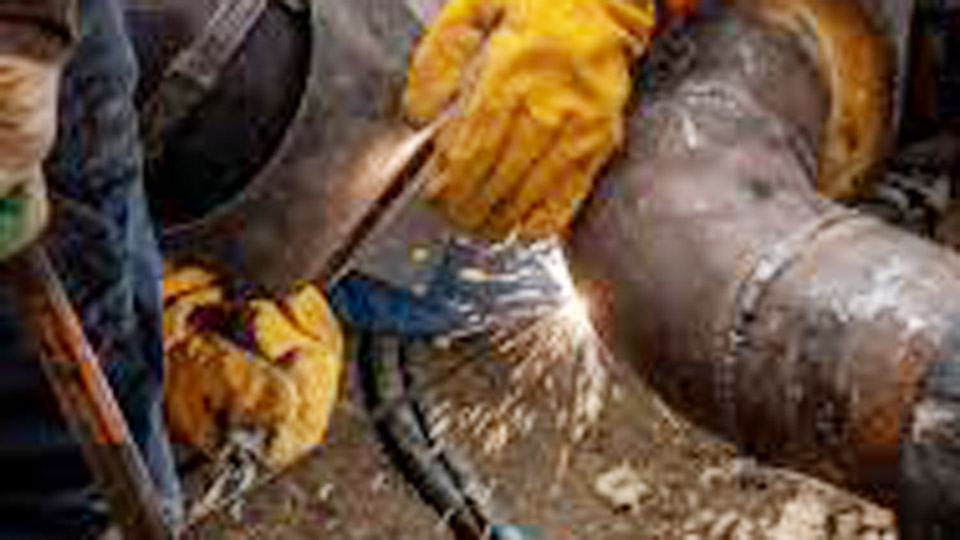
Image by betterteam
Core Responsibilities of Pipeline Welders
Pipeline welders focus on girth welds—circumferential joints connecting pipe sections—along with tie-ins, repairs, and fabrication of supports or fittings.
Pre-Weld Preparation and Fit-Up Decisions
Pipeline welders begin with pipe alignment and bevel preparation. They check for ovality, wall thickness variations, and proper land (root face) dimensions, typically 1/16″ to 1/8″ depending on procedure.
Misalignment (hi-lo) must stay within API 1104 limits, often 1/16″ or less for critical service, to avoid stress concentrations.
They clean joint surfaces to remove mill scale, rust, or contaminants using grinders or wire brushes. Bevel angles (usually 30° ± 5°) and root gaps (1/16″–3/32″ for SMAW root) require precise adjustment with internal or external clamps. Incorrect fit-up leads to incomplete penetration or excessive reinforcement.
Executing Multi-Pass Welds
Most field pipeline welding uses multiple passes:
- Root pass: Establishes full penetration. Pipeline welders often use E6010 or E7010 cellulosic electrodes for SMAW (vertical down) or GTAW with filler for critical roots. Key parameters include travel speed that maintains a keyhole for consistent penetration without burn-through.
- Hot pass: Removes slag from the root and fuses edges. Higher amperage settings clean the joint quickly.
- Filler passes: Build weld thickness. These use low-hydrogen electrodes (e.g., E7018) or flux-cored wires for productivity.
- Cap pass: Provides contour and protection. It must blend smoothly with the pipe surface to resist cracking.
Welders monitor heat input (typically 15–45 kJ/inch depending on material and procedure) to control microstructure and prevent hydrogen-induced cracking in higher-strength steels like X70 or X80.
Quality Control and Inspection Integration
Pipeline welders visually inspect each pass for defects like undercut, porosity, or lack of fusion before proceeding. They often work alongside inspectors using non-destructive testing (NDT) such as radiography (RT) or ultrasonic testing (UT). API 1104 defines acceptance criteria for porosity clusters, slag inclusions, and cracks—zero tolerance for cracks.
Key Welding Processes Used in Pipeline Work
Pipeline welding demands process versatility based on location, pipe specs, and production needs.
SMAW (Shielded Metal Arc Welding / Stick)
SMAW remains dominant for field girth welds due to portability and wind resistance. Cellulosic electrodes (EXX10) enable fast vertical-down welding with deep penetration. Low-hydrogen types suit fill and cap passes on crack-sensitive materials.
Amperage ranges from 80–180A depending on electrode diameter (1/8″–5/32″ common). Welders adjust arc length and travel speed to control bead profile.
GTAW (Gas Tungsten Arc Welding / TIG)
GTAW produces superior root passes with excellent control and cleanliness, especially for stainless or alloy pipes. Pipeline welders use it for tie-ins or high-spec sections. Typical settings: 80–150A DCEN with 100% argon shielding at 15–25 CFH. Tungsten electrodes (2% thoriated or lanthanated) require precise grinding for stable arcs.
GMAW/FCAW and Mechanized Systems
Semi-automatic or automated GMAW (including STT for roots) and FCAW increase productivity on large-diameter pipelines. Mechanized bug-and-band systems enable consistent vertical-up or down welding with flux-cored wires designed for pipeline grades. These reduce welder fatigue on long spreads.
Welding Positions and Technique Adaptations
Pipeline welders must qualify in multiple positions, with 5G and 6G being most relevant for fixed pipe.
5G Position (Horizontal Fixed Pipe)
Welders circle the pipe, transitioning through flat, vertical, and overhead segments. Technique changes include weave or stringer beads, electrode angles (10–15° drag), and amperage adjustments to fight gravity. Overhead sections demand faster travel to prevent sagging.
6G Position (Inclined Fixed)
The most challenging qualification tests 45° inclined pipe. It combines all positions and rotation restrictions, demanding exceptional puddle control and body positioning.
Welders adapt torch or electrode work angles (push vs. drag), travel speeds, and weave patterns continuously. For downhill SMAW, steeper angles and faster speeds prevent undercut; uphill requires slower travel for fill.
Materials, Pipe Specifications, and Procedure Variables
Common pipeline materials include API 5L carbon steels (Grade B to X80+). Higher grades need stricter preheat (50–150°C or more) and interpass temperature controls (max often 250–300°C) to manage hardness and cracking risk.
Wall thickness dictates joint design and pass count—thicker pipe (e.g., 0.5″+) requires more filler layers. Diameter affects access and distortion control; large-diameter pipes may need internal purging or backing.
Welders reference qualified Welding Procedure Specifications (WPS) for essential variables: process, electrode classification, voltage, amperage, travel speed, and shielding. Deviations require requalification under API 1104.
Environmental and Logistical Challenges
Pipeline welders operate in remote locations with extreme weather. Wind affects gas shielding, rain or humidity introduces hydrogen risks, and temperature extremes impact preheat and cooling rates. They manage muddy rights-of-way, elevation changes, and tight schedules that demand high production rates (multiple joints per day per crew).
Tie-in welds—connecting pre-laid sections—often occur under time pressure with misalignment from ground movement. Repair welds on in-service lines add heat input limits to avoid burn-through or hydrogen issues.
Tools and Equipment Pipeline Welders Rely On
Essential gear includes:
- Welding machines with reliable arc performance in harsh conditions (inverter or engine-driven).
- Pipe clamps, alignment tools, and beveling machines.
- Grinders, wire brushes, and hot boxes for electrode storage.
- PPE rated for arc flash, plus respiratory protection in confined or coated pipe scenarios.
Mechanized systems require programming bug speed, oscillation, and parameters for consistent results.
Certification, Training, and Career Path
Entry typically requires high school education plus welding training. Pipeline-specific qualifications include welder performance tests to API 1104 or ASME Section IX, often in 6G position. AWS Certified Welder program and API 1104 endorsements validate skills.
Apprenticeships or on-the-job progression build experience across processes and positions. Continuous requalification keeps certifications current.
Salary and Lifestyle Considerations
Pipeline welders often earn premium pay due to travel, overtime, and per diem. Entry-level ranges $40k–$60k, while experienced hands on major projects reach $80k–$120k+ annually with incentives. Schedules involve long shifts (10–12+ hours) for weeks at a time, followed by time off.
Final Thoughts
Pipeline welding rewards technical mastery and resilience with high-stakes impact. Success hinges on consistent parameter control, adaptive techniques across positions, and unwavering focus on code-compliant quality.
The best pipeline welders treat every joint as a pressure-tested lifeline, balancing productivity with zero-defect standards that keep infrastructure operating safely for decades. This combination of skill, decision-making under variable conditions, and endurance defines the role at a professional level.
FAQ
How long does it take to become a qualified pipeline welder?
Most need 6–18 months of dedicated pipe welding training and practice, plus passing 5G/6G tests. Full field readiness often comes after 2–4 years of progressive experience.
What is the difference between a pipe welder and a pipeline welder?
Pipe welders work in shops or plants on varied systems. Pipeline welders specialize in field girth welds on long-distance transmission lines, emphasizing mobility, API 1104 compliance, and outdoor multi-position techniques.
Which welding process is best for pipeline root passes?
SMAW with cellulosic electrodes for speed in field conditions or GTAW for highest quality and control on critical or alloy pipes. Choice depends on WPS, material, and access.
Do pipeline welders need to travel constantly?
Many roles involve significant travel to project sites across regions or countries, with rotational schedules. Stationary or shorter-range utility work exists but pays less.