Many welders hit a wall after a few years on the job: consistent beads, passing basic inspections, yet paychecks that barely cover rising costs. The question “How Much Do Welders Actually Make?” surfaces constantly because national averages hide the real differences driven by process mastery, certifications, location, and industry demands.
Understanding these factors determines whether you stay in shop fabrication at $20–$25/hour or move into high-paying pipe, structural, or specialized roles that clear $70,000–$100,000+ annually.
Accurate salary data guides equipment investments, certification choices, and relocation decisions. It separates hobby-level work from career-building paths where technique directly translates to higher earnings.
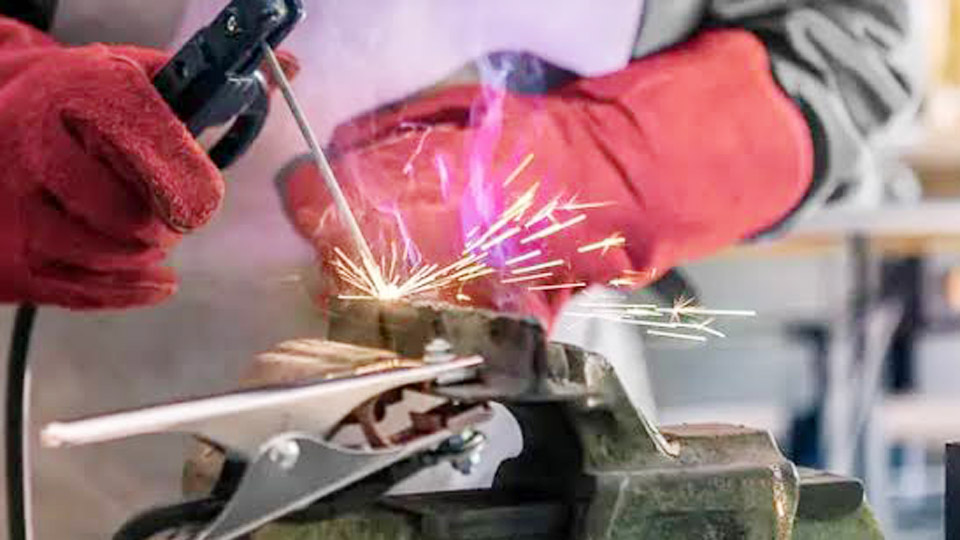
Image by protoolsolutions
National Welder Salary Benchmarks
Current Median and Range (2024–2025 Data)
The U.S. Bureau of Labor Statistics (BLS) reports a median annual wage for welders, cutters, solderers, and brazers at $51,000 ($24.52/hour) as of May 2024. The bottom 10% earn under $37,000, while the top 10% exceed $73,000.
Averages often land around $46,000–$57,000 depending on the source, reflecting variations in overtime inclusion and self-reported data.
Hourly rates typically range from $18–$30 for most positions, with overtime (common in construction and maintenance) adding 10–30% to yearly totals. These figures exclude benefits, per diems, or travel pay common in field work.
Entry-Level vs. Experienced Pay Progression
Entry-level welders (0–2 years) start at $17–$23/hour ($35,000–$48,000 annually), often in fabrication shops running MIG on mild steel. With 3–5 years and basic certifications, pay climbs to $25–$35/hour ($52,000–$73,000). Ten-plus years with specialized skills routinely reach $38–$55+/hour, especially in high-demand sectors.
Progression depends on weld quality under code (e.g., AWS D1.1 structural or ASME Section IX pipe) and the ability to switch processes quickly without defects.
How Welding Process and Specialization Drive Earnings
MIG and Flux-Cored Welding Compensation
MIG (GMAW) dominates production and automotive work, with national averages near $43,000–$61,000. Flux-cored (FCAW) variants excel in outdoor and heavy fabrication, often commanding slight premiums due to higher deposition rates and wind resistance.
Skilled MIG operators in manufacturing hit consistent $25–$32/hour by minimizing spatter, maintaining proper voltage/wire feed for penetration, and reducing rework. High-volume shops reward speed without sacrificing radiographic quality.
TIG Welding Premiums and Applications
TIG (GTAW) welders earn higher averages ($60,000+) due to precision requirements in aerospace, food-grade stainless, and exotic alloys. Clean, controlled arcs on thin materials or critical joints justify the skill premium.
Parameters matter: 1/8″ 304 stainless often uses 90–120 amps DCEN with 15–20 CFH argon. Mastery of pulsed TIG, filler control, and back-purging separates $28/hour shop work from $40+/hour certified roles.
Stick (SMAW) and Pipe Welding Realities
Stick welding forms the base for many field positions, with experienced operators at $24–$35/hour. Pipe welding—especially 6G certified—pushes earnings significantly higher.
Pipeline, refinery, and power plant work frequently includes per diem, overtime, and hazard pay, enabling $80,000–$150,000+ for mobile rig welders with multiple qualifications.
Key variables include uphill vs. downhill techniques, root pass consistency with E6010/E7018, and hot pass timing to avoid inclusions.
Underwater and Niche Specialties
Underwater welders command $80,000–$150,000+ due to hyperbaric risks and commercial diving certifications. Other high earners include nuclear, cryogenic, and alloy specialists requiring stringent procedure qualifications.
Geographic Variations in Welder Pay
Highest-Paying States and Cities
Alaska leads with averages near $76,000–$80,000+, driven by oil, gas, and infrastructure. Hawaii, Rhode Island, Connecticut, and Delaware follow. Top metros include Fairbanks ($81,000+), Urban Honolulu, San Jose, and Baton Rouge.
Cost-of-living adjustments change the picture—lower-cost states like Texas or Louisiana can offer strong effective purchasing power for top earners.
Regional Strategy for Welders
Northern and energy-producing states reward mobility. Gulf Coast and Midwest fabrication hubs provide steady volume. Always calculate total compensation: base + overtime + benefits + per diem. Relocating for $10–$20/hour gains requires evaluating housing, taxes, and job stability.
Certifications and Their Direct Impact on Pay
AWS and ASME Credentials
AWS Certified Welder (CW) or Certified Welding Inspector (CWI) status often adds $5–$15/hour. CWI roles reach $60,000–$90,000 by verifying procedures, interpreting codes, and conducting visual/NDT inspections.
ASME Section IX qualifications for pressure piping unlock shutdown/turnaround work with intense but lucrative schedules.
Process-Specific and Advanced Certifications
Multi-process certs (SMAW + GTAW + GMAW) increase versatility. Specialized endorsements for structural steel (D1.1), pipeline (API 1104), or aerospace boost marketability. Employers pay premiums for welders who reduce rejection rates through precise technique and documentation.
Industry-Specific Earnings Breakdown
Construction and Structural Steel
Union ironworker welders in major projects earn $30–$50+/hour with benefits. Heights, rigging knowledge, and blueprint reading add value. Non-union structural work sits lower but offers faster entry.
Manufacturing and Fabrication Shops
Steady indoor work with MIG/TIG averages $45,000–$65,000. Efficiency metrics (parts per hour, minimal distortion) influence bonuses. Automation familiarity (robotic welding cells) provides an edge.
Oil, Gas, Pipeline, and Maintenance
Highest variability: base $30–$45/hour plus substantial overtime and per diems. Turnarounds and shutdowns compress years of pay into months but demand endurance and code-level quality on schedule.
Government, Aerospace, and Specialty
Federal or defense-related roles average higher ($60,000–$80,000+) with stability. Precision work on titanium or Inconel requires tight heat input control and post-weld treatments.
Additional Income Streams and Total Compensation
Overtime remains the fastest earnings booster—many welders add 5–10 hours weekly at 1.5x. Travel pay, lodging allowances, and performance bonuses in field positions compound quickly. Side fabrication, repair work, or teaching basic courses provide supplemental income for skilled independents.
Benefits packages (health, retirement matching) add thousands in effective value. Union vs. non-union tradeoffs include higher base/benefits in unions versus flexibility elsewhere.
Factors That Limit or Accelerate Earnings Growth
Weld quality directly affects pay through inspection pass rates and rework avoidance. Consistent parameters (e.g., travel speed, weave patterns, electrode angles) and material prep reduce defects.
Physical conditioning sustains long shifts in demanding environments. Business acumen—understanding job costing, bidding small repairs, or managing a mobile rig—separates top earners.
Economic cycles in energy and construction influence demand. Diversifying skills across processes and industries mitigates downtime.
Real-World Decision Framework for Welders
Evaluate opportunities by total hourly equivalent: base + expected OT + per diems divided by hours. Prioritize certifications aligned with target industries rather than collecting random quals. Track personal metrics—arc time efficiency, defect rates—to negotiate raises or switch employers strategically.
For shop owners or contractors, competitive pay attracts reliable talent who minimize costly repairs and delays.
Performance-based Takeaway
Top welders treat every joint as a qualification test. Mastering heat-affected zone control, distortion management, and code compliance turns technical proficiency into sustained high earnings.
The next-level insight comes from integrating welding procedure specifications (WPS) with real-time adjustments for material thickness, joint design, and environmental variables—separating reliable $30/hour operators from indispensable specialists who command premium rates across projects.
FAQ
How much do beginner welders make in their first year?
Entry-level welders typically earn $35,000–$45,000 annually ($17–$23/hour), with higher figures in high-demand areas or with basic certs. Overtime can push totals higher quickly.
Does welding certification significantly increase salary?
Yes. AWS or ASME certifications often add $5–$15/hour by qualifying for code work, inspections, and specialized projects that pay premiums for quality assurance.
What welding process pays the most?
Pipe welding, underwater, and TIG on exotic alloys generally pay highest due to difficulty, risk, and precision requirements. Pipeline and industrial maintenance roles frequently exceed $80,000 with OT and per diems.
Are welder salaries higher in certain industries?
Oil/gas, pipeline, power generation, and aerospace offer the strongest pay, especially with mobility and certifications. Manufacturing and general fabrication provide more stability at moderate rates.