Cast iron cracks pose a persistent challenge for welders and fabricators. The material’s high carbon content and brittleness make traditional fusion welding risky, often leading to new cracks from thermal stresses or hard zones in the heat-affected area.
Many turn to how to repair cast iron cracks without welding for reliable, distortion-free solutions that preserve the original casting’s integrity, especially for engine blocks, machine bases, manifolds, or antique parts where heat could cause warping or further damage.
These non-weld methods deliver structural repairs or functional seals depending on load, temperature, and environment. Understanding material properties and matching the repair to service conditions ensures long-term performance without the complications of preheat, post-weld heat treatment, or specialized nickel rods.
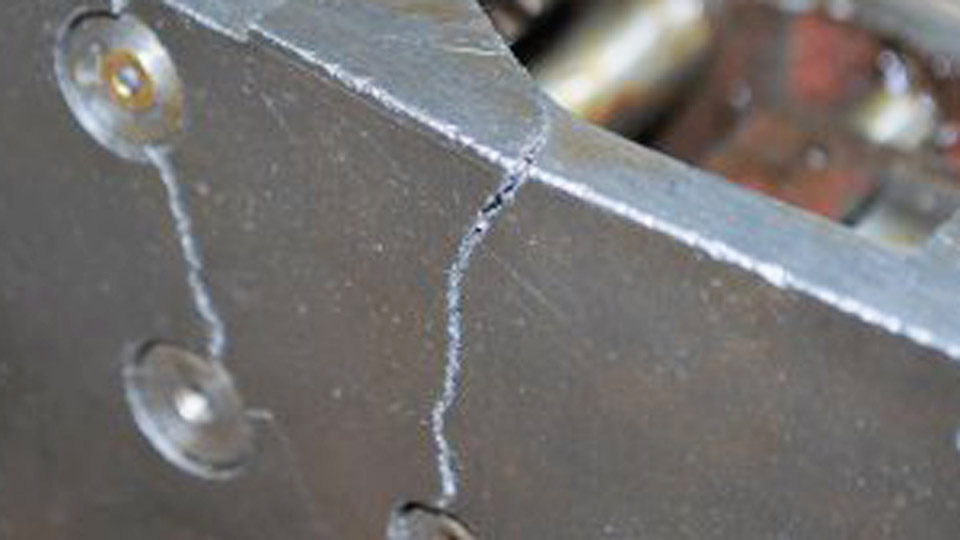
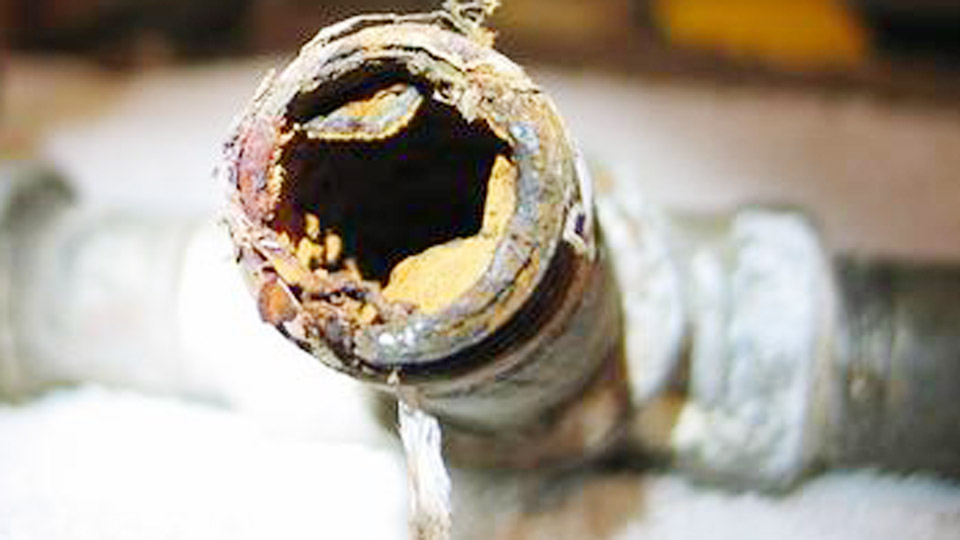
Image by hobby-machinist
Why Cast Iron Cracks and When Non-Weld Repairs Excel
Grey cast iron’s graphite flakes provide excellent vibration damping and machinability but create low tensile strength and poor ductility. Cracks often initiate from thermal shock, mechanical overload, corrosion, or manufacturing defects. Stress concentrates at crack tips, propagating under cyclic loading or vibration.
Non-weld repairs avoid the primary failure modes of welding: martensite formation, carbide precipitation, and differential contraction. They suit in-situ repairs on large or immovable components, heat-sensitive assemblies, or situations where welding certification isn’t feasible.
Professionals evaluate crack location (tension vs. compression zones), pressure requirements, operating temperature, and accessibility before choosing a method.
Assessing the Crack and Preparing the Repair Area
Crack Evaluation
Stop-drill the ends of the crack with a 1/8″ to 3/16″ bit to prevent propagation. Measure depth, length, and orientation using dye penetrant or magnetic particle inspection for hidden extensions. Determine if the crack is in a high-stress tensile area (e.g., near mounting points) or low-stress zone. For pressure-retaining parts like pump housings, check for leakage paths through the porous cast iron structure.
Surface and Contaminant Removal
Cast iron absorbs oils and contaminants deeply. Degrease with acetone or steam clean. Grind or burr out the crack into a U or V-groove (typically 60-90° included angle) for better filler access and mechanical keying. Remove 1/16″ to 1/8″ of material on each side of the crack.
For epoxy or brazing, create a rough profile with 80-120 grit abrasives; shiny surfaces reduce bond strength. Clean thoroughly to bare metal and dry completely—residual moisture causes voids or weak bonds.
Material Considerations
Grey iron responds differently from ductile or malleable iron. High-phosphorus or high-silicon variants may need adjusted techniques. Test repairs on scrap if possible, especially for load-bearing applications.
Epoxy and Polymer-Based Repairs for Low-to-Moderate Load Applications
Epoxy putties and metal-filled compounds provide quick, accessible fixes for non-critical or low-temperature service (typically under 350°F/177°C continuous). Products like JB Weld SteelStik or Devcon formulations bond mechanically and chemically to prepared cast iron.
Surface Preparation Specifics
Abrade to a 40-80 grit profile for maximum surface area. For oily or porous areas, apply a primer or thin epoxy sealer coat first and allow partial cure. Heat the part gently (150-200°F) to drive out absorbed fluids before application.
Application Techniques
Knead two-part putties until uniform color. Force material into the groove, overlapping edges by at least 1/2″ for better shear strength. Build layers if deep, allowing partial cure between coats. For cracks in horizontal surfaces, use backing tape or temporary forms to contain the compound.
Cure times vary: 5-10 minutes set, 1-24 hours full strength depending on formulation and temperature. Higher ambient temperatures accelerate cure but reduce working time.
Strength and Limitations
Tensile strength of cured steel-filled epoxies reaches 3,000-5,000 psi, adequate for compression loads or sealing but poor in pure tension or high-vibration without reinforcement. Reinforce large repairs with fiberglass or carbon fiber cloth embedded in epoxy for added stiffness.
These repairs excel for water jackets, decorative castings, or temporary field fixes but degrade above their rated temperature or under heavy cyclic loading.
Machining and Finishing
Once fully cured, machine or grind flush. Epoxies machine similarly to aluminum; use sharp carbide tools at moderate speeds to avoid heat buildup that softens the repair.
Cold Metal Stitching for Structural Integrity
Cold metal stitching (or metal locking) is the preferred industrial method for high-strength, permanent repairs without heat. It restores tensile and compressive strength by mechanically interlocking the casting with high-nickel or steel keys and pins.
Process Overview
- Stop-drill crack ends.
- Use a jig to drill a series of holes perpendicular to the crack at precise spacing (e.g., centers at 7/8″ for larger locks).
- Broach or chisel the holes into slots.
- Drive preformed metal locks (dovetail or multi-lobe shapes) into slots across the crack. These locks are ductile yet strong, matching cast iron’s expansion coefficient.
- Drill and tap additional holes along the crack line between locks.
- Install tapered, threaded stitching pins, then peen them to expand and lock tightly.
- Grind or machine the repair flush.
Technical Parameters
Lock sizes range from small (3-lobe, 5/32″) for thin sections to large (5-lobe, 3/8″+) for heavy castings. Spacing depends on material thickness and load—closer for high stress.
Multiple layers build depth in thick sections. The process creates a repair often stronger than the original casting in compression due to the peening-induced compressive stresses.
Advantages Over Other Methods
No heat distortion, applicable in explosive or flammable environments, and fully machinable. Repairs hold pressure (e.g., city water lines) and withstand vibration. Kits from manufacturers like Lock-N-Stitch include jigs, tools, and materials for consistent results. Professionals achieve leak-tight seals suitable for engine blocks, gearboxes, and pump casings.
Limitations and Best Practices
Requires skill and proper tooling; not ideal for very thin walls or highly irregular geometries. In high-tensile areas, combine with additional reinforcement. Peening is critical—insufficient peening leaves loose pins.
Brazing as a Low-Heat Alternative
Brazing joins without melting the base cast iron (filler flows at 800-1,200°F vs. iron’s ~2,100°F melting point), minimizing cracking risk compared to fusion welding. Silicon bronze or nickel-silver rods work well.
Preparation and Technique
Clean and groove as before. Preheat the entire area broadly and evenly to 500-800°F to reduce thermal gradients. Use appropriate flux to remove oxides and promote wetting. Apply filler with an oxy-acetylene or TIG setup (TIG brazing with silicon bronze offers precise control).
Maintain temperature below red heat for the iron. Back-step or use short passes, peening lightly while hot to relieve stresses. Slow cool under insulation or in vermiculite.
Filler Selection and Properties
High-silver brazing alloys provide better ductility and lower melting points. Bronze fillers offer good strength and machinability. Joint strength can approach or exceed the weakened parent metal when properly executed, with good corrosion resistance.
Applications and Considerations
Ideal for manifolds, exhaust components, or decorative iron where appearance and moderate heat resistance matter. Not suitable for high-pressure steam or areas exceeding the filler’s service temperature. Requires good fit-up; wide gaps reduce strength.
Composite and Mechanical Reinforcement Options
For complex or large-area damage, carbon fiber or fiberglass composites bonded with high-strength epoxy add tensile strength without weight. Clean thoroughly, apply epoxy, lay up fibers in multiple orientations, and cure under pressure if possible. This suits non-machined surfaces or vibration-prone parts.
Mechanical options include bolting reinforcement plates, drilling and pinning, or using threaded inserts. These distribute loads away from the crack.
Decision Factors by Application
- Low load, ambient temp, cosmetic/sealing: Epoxy putty.
- Structural, pressure-tight, in-situ: Cold stitching.
- Moderate heat, good access: Brazing.
- Large or complex: Hybrid (stitching + composite).
Test repaired parts under simulated service conditions when safety-critical.
Comparing Repair Methods: Strength, Cost, and Suitability
| Method | Relative Strength | Max Temp | Skill Level | Cost | Best For | Drawbacks |
|---|---|---|---|---|---|---|
| Epoxy Putty | Low-Medium | ~350°F | Low | Low | Quick seals, non-critical | Limited load, temp sensitive |
| Cold Stitching | High | High (metal) | Medium-High | Medium | Structural, pressure | Tooling investment |
| Brazing | Medium-High | 600-800°F | Medium | Low-Medium | Heat-exposed parts | Requires heat control |
| Composites | Medium (tensile) | Varies | Medium | Medium | Reinforcement | Not always machinable |
Choose based on engineering requirements rather than convenience alone.
Common Challenges and Advanced Techniques
Porosity in cast iron traps contaminants—extended degreasing or vacuum methods help. For stitching in curved areas, custom jigs maintain alignment. In brazing, flux residue removal prevents corrosion. Advanced users combine methods: stitch for strength, then epoxy or braze for sealing.
For precision restorations (e.g., machine tool beds), post-repair stress relief or machining restores flatness and tolerances.
Real-World Application Insights
Successful repairs balance material science with practical constraints. A stitched engine block can return to full service with proper pin density, while an epoxied garden ornament lasts years outdoors. Always prioritize crack-stopping and full-depth preparation.
The most advanced insight comes from understanding cast iron’s compressive strength advantage: many non-weld repairs exploit this by introducing residual compression, often outperforming hasty welds in real cyclic service. Select the method that matches both the part’s demands and your shop capabilities for durable results.
FAQ
Can JB Weld or similar epoxies permanently fix cast iron cracks?
For low-stress, non-pressurized, moderate-temperature applications with proper surface prep, yes. They provide reliable sealing and moderate strength but are not a substitute for mechanical repairs in high-load scenarios.
Is cold metal stitching stronger than welding for cast iron?
In many cases, particularly compression and vibration resistance, yes. It avoids heat-affected zone weaknesses and can exceed original material properties locally when done correctly.
Does brazing count as welding for cast iron repairs?
No—brazing uses lower temperatures and does not melt the base metal, reducing crack risk significantly while providing a strong metallurgical bond.
How do I choose between epoxy, stitching, and brazing?
Evaluate load (tensile vs. compressive), temperature, pressure, and whether distortion is acceptable. Stitching for critical structural needs; epoxy for quick DIY; brazing for balanced heat and strength.