Braze welding is often the safest repair method when a cast iron part is cracked but must retain its original shape and strength. Understanding how to braze weld cast iron is important because cast iron is highly prone to cracking under rapid heating and cooling, making conventional fusion welding risky in many repair situations.
Proper filler metal selection, controlled preheating, heat input, and cooling practices help minimize thermal stress, reduce distortion, and prevent costly repair failures.
Whether you’re restoring an engine block, machine base, manifold, or decorative casting, using the correct brazing technique can improve repair reliability while preserving the parent metal.
I’ll explain the key principles behind successful cast iron braze welding, helping you make informed decisions that lead to stronger, longer-lasting repairs and fewer problems during machining, inspection, or service.
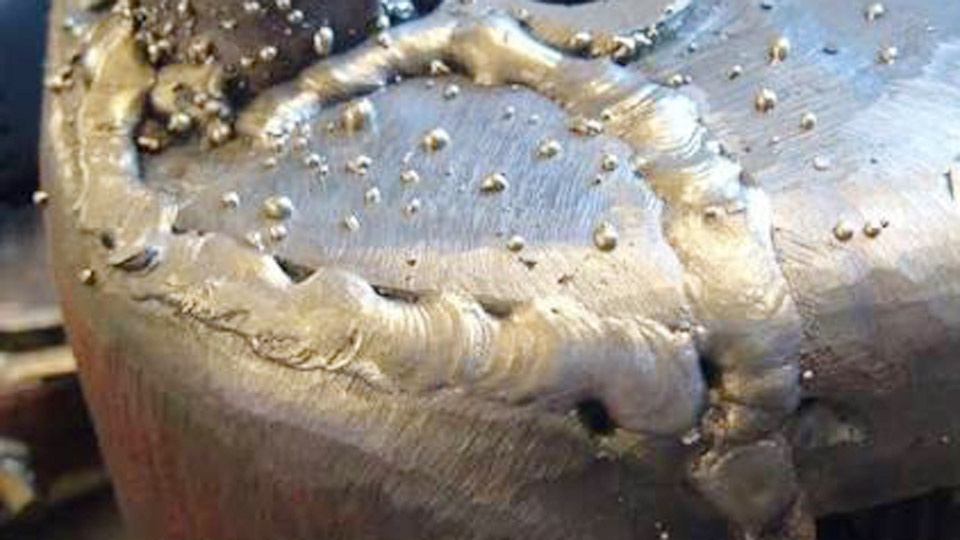
Image by mig-welding.co.uk
Understanding Brazing vs. Fusion Welding for Cast Iron
Key Metallurgical Differences
Brazing relies on capillary action and wetting of the filler alloy onto the solid cast iron surface, rather than melting and mixing with the base metal.
Cast iron’s high carbon (2–4%) and graphite flakes hinder wetting, so surface preparation is non-negotiable. Fusion welding melts the base, risking hard, crack-prone martensite in the HAZ due to rapid cooling.
Braze welds using copper-zinc or silicon bronze fillers achieve tensile strengths around 40,000–65,000 PSI—lower than fusion but sufficient for most non-structural repairs—and remain more ductile and machinable.
When Brazing Outperforms Welding
Choose brazing for:
- Thin or varying-thickness castings prone to cracking.
- Repairs needing post-machining or good leak resistance.
- Applications with service temperatures below ~500°F (260°C), where zinc-bearing fillers perform well.
- Unknown or old cast iron with high phosphorus/sulfur content.
Fusion welding (e.g., nickel electrodes like ENi-CI) provides higher strength and heat resistance for structural loads but demands stricter preheat (often 500–1200°F uniform) and controlled cooling.
Joint Strength and Service Considerations
Braze joint strength depends on joint design (overlap or groove for mechanical interlocking) more than fusion welds. Clearance of 0.002–0.006 inches optimizes capillary flow and shear/tensile properties. For high-vibration or elevated-temperature service, consider nickel-silver fillers or test alternatives.
Filler Metals and Flux Selection
Copper-Zinc (Brass) Alloys
RBCuZn-A, B, or C (low-fuming bronze) are standard for oxy-fuel braze welding cast iron. These flow well at 1600–1800°F, offer good color match in some cases, and suit general repairs. Silicon additions in RBCuZn-B/C improve fluidity and reduce zinc fuming.
Silicon Bronze and Aluminum Bronze
For TIG/MIG brazing, ER CuSi (silicon bronze) or aluminum bronze provides excellent wetting and ductility. Silicon bronze flows easily with lower heat input; aluminum bronze offers higher strength but poorer flow.
Silver-Based Alloys
Lower-temperature options (1100–1400°F) like BAg series excel for delicate parts or carbide inserts. They reduce thermal gradients but cost more and may limit service temperature.
Flux Essentials
Borax-based fluxes (e.g., FB3 series or cast iron-specific) remove oxides, promote wetting, and handle graphite. Apply to joint and rod; some rods are flux-coated. Use extra flux on contaminated or old castings.
Selection Table (for quick reference):
| Filler Type | Melting Range (°F) | Best For | Pros | Cons |
|---|---|---|---|---|
| RBCuZn-C | ~1600–1700 | General repairs | Good flow, machinable | Zinc fuming |
| Silicon Bronze | ~1800 | TIG/MIG, thin sections | Ductile, low heat | Lower color match |
| Nickel-Silver | Varies | Wear resistance | Stronger, machinable | Higher cost |
| Silver Alloys | 1100–1400 | Delicate or dissimilar | Lowest heat input | Reduced strength at temp |
Surface Preparation Techniques
Mechanical and Chemical Cleaning
Graphite flakes and contaminants block wetting. Start with degreasing (solvents or alkaline), then grind or burr out cracks into a U or V-groove (60–90° angle, 1/16–1/4″ depth). Use wire brushing, grinding, or sandblasting with steel shot—avoid embedding abrasives.
For porous old castings, thermal degreasing (heating to ~1000°F) vaporizes trapped oils before final cleaning. Drill stop-holes at crack ends to prevent propagation.
Joint Design for Brazing Success
Favor lap or grooved joints over butt for better capillary action and strength. Maintain tight fit-up (0.003″ ideal). For build-up, layer in multiple passes with tinning first.
Preheating and Temperature Control
Why Preheat Matters
Cast iron’s low ductility demands slow, uniform heating to 500–800°F (or higher for thick sections) to equalize temperatures and reduce stress. Local preheat works for small parts; furnace or broad torch for large ones.
Monitor with temp sticks, crayons, or color (dull red ~1100–1300°F working range). Avoid exceeding temperatures that melt the base or cause zinc boil-off.
Flame and Heat Management
Oxy-acetylene: Neutral or slightly oxidizing flame prevents excessive carbon pickup while burning off graphite. Use medium/heavy tips; keep flame moving in circles. For TIG brazing, DCEN, blunt tungsten, 15–20 CFH argon, low amperage.
Heat the base metal, not the rod. The casting should melt the filler via contact.
Brazing Execution Methods
Oxy-Acetylene Braze Welding
- Preheat broadly.
- Apply flux.
- Heat joint area to dull red; tin the surface by rubbing rod.
- Build up in short sections (2–5″), maintaining tinning ahead.
- Avoid overheating—pull torch if filler runs.
TIG Brazing Cast Iron
Set low heat, maintain 1/8–1/4″ arc, 75–80° torch angle. Watch for surface sheen indicating proper temperature; feed rod so capillary draws filler. Excellent for precision and minimal distortion.
Other Processes
MIG brazing with silicon bronze wire (short-circuit or pulse) works with argon/CO2 mixes. Induction suits production.
Focus on consistent travel speed and even heat to avoid cold laps or burn-through.
Cooling and Post-Braze Processing
Slow cooling is critical—insulate with vermiculite, sand, or blankets; avoid drafts or quenching. For large parts, furnace cool. Once ambient, remove flux residue with hot water or wire brushing. Machine or grind as needed; braze deposits are generally machinable.
Peen lightly while warm (if applicable) to relieve stress, but test on scrap first.
Common Challenges and Solutions
Porosity and Poor Flow
Causes: Contamination, insufficient heat, excessive zinc vapor. Solutions: Thorough cleaning/fluxing, proper temperature (base hot enough to flow filler), quality rods with controlled composition.
Cracking During or After Process
Uneven heating/cooling or overheat. Maintain uniform preheat, short segments, and slow cool. Stop-drill cracks beforehand.
Weak Bonds or Delamination
Poor wetting from oxides/graphite or wrong flux. Re-clean and ensure oxidizing flame where recommended to burn graphite.
For old castings, multiple cleaning cycles or specialized fluxes improve results.
Equipment and Setup Recommendations
- Torches: Oxy-acetylene with appropriate tips; backup propane for preheat.
- Power Sources: TIG machine with pulse for control; MIG for wire.
- Safety: Ventilation for zinc fumes, proper PPE, fire precautions.
- Testing: Visual, dye penetrant, or pressure test repairs.
Practice on scrap cast iron to dial in temperatures and flow.
Advanced Considerations for Professionals
For dissimilar joints (cast iron to steel), brazing excels due to compatibility. In high-production, consider automated flame or induction with pre-placed filler.
For maximum strength in marginal cases, combine mechanical fastening with braze sealing. Always verify service conditions—brazed joints soften above filler limits.
Real-world Application Insight
Successful braze repairs on cast iron prioritize process control over filler strength. Uniform heat management and surface readiness determine longevity more than any single parameter, allowing reliable reclamation of expensive castings that would otherwise be scrapped.
Master the “tinning pass” technique—establishing a thin, adherent layer before build-up—combined with precise interpass temperature control, yields bonds that outperform generic methods in vibration and thermal cycling by distributing stresses across a ductile interface.
FAQ
Can you braze weld cast iron without preheating?
Small, thin repairs sometimes succeed with careful local heating, but preheating is strongly recommended for reliability, especially on thicker or restrained parts to prevent cracking.
What is the best filler rod for brazing cast iron?
RBCuZn-C or silicon bronze rods are versatile for most repairs, balancing flow, strength, and machinability. Match to service needs (e.g., nickel-silver for wear).
How strong is a brazed cast iron joint compared to welded?
Brazed joints are typically weaker but more ductile and crack-resistant, ideal for non-structural or machinable repairs. Strength depends heavily on joint design and preparation.
Why won’t my brazing rod flow or stick on cast iron?
Usually insufficient base metal temperature, contamination, or inadequate flux. Heat the casting to dull red and ensure clean, fluxed surfaces.