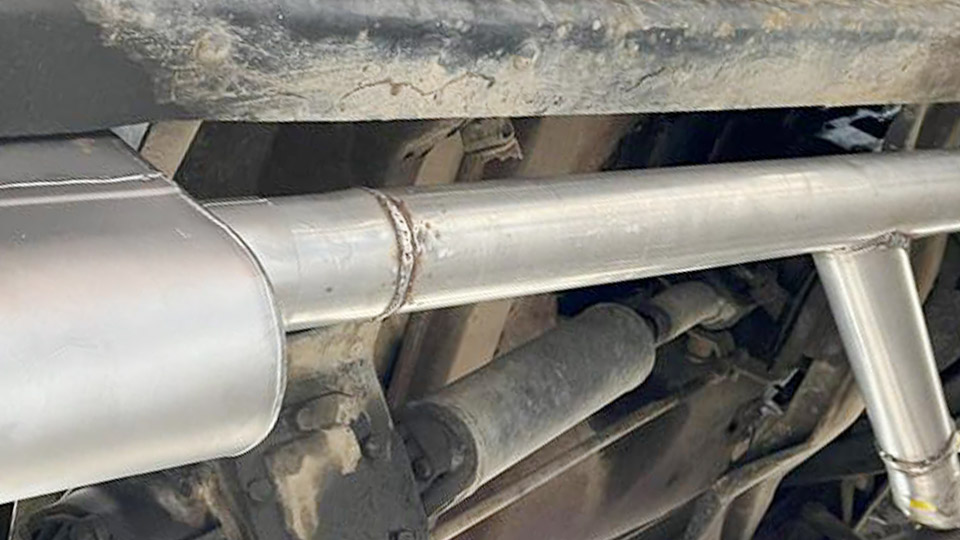
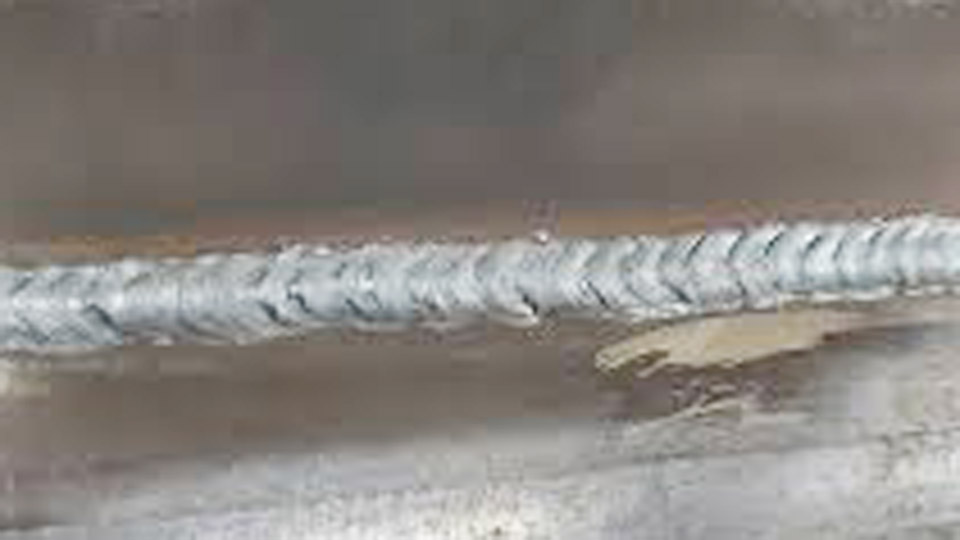
Running out of argon or working outdoors in wind often stops a job cold when the only process you know for aluminum demands shielding gas. Welding aluminum without gas becomes the only realistic option for field repairs, remote work, or shops without gas cylinders.
Aluminum’s rapid oxide formation and high thermal conductivity make unprotected fusion welding difficult, so the process choice, electrode, polarity, and surface condition determine whether the joint holds or fails from porosity and lack of fusion.
Stick welding with dedicated aluminum electrodes is the accessible method that actually works for most DIY, hobby, and maintenance situations. Knowing its exact limits and settings prevents wasted material and weak repairs.
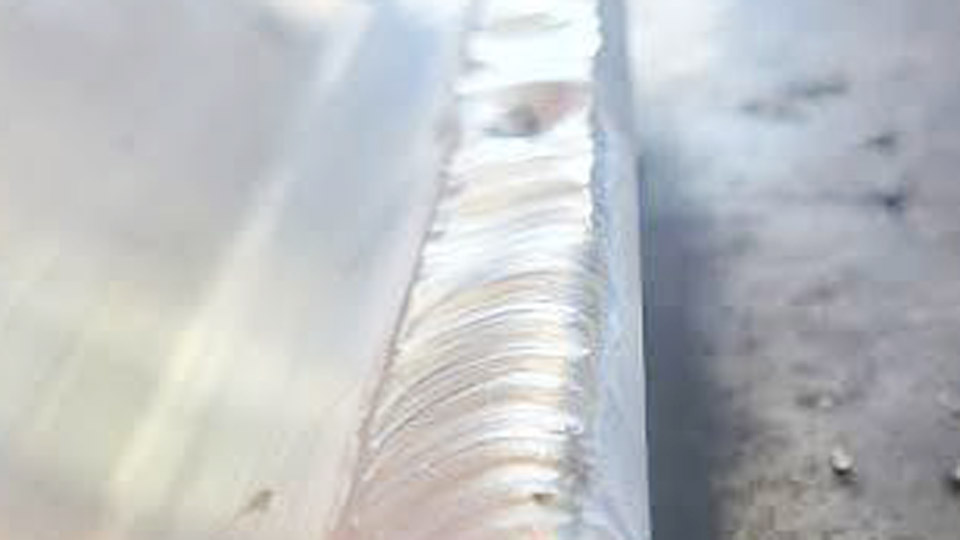
Image by fb/I See You Don’t Know Shit About Welding
Why Conventional MIG and TIG Fail Without Shielding Gas
Aluminum oxide melts near 2050 °C while the base metal melts at approximately 660 °C. Without an inert atmosphere the oxide remains solid, floating on the puddle and blocking fusion.
Solid aluminum MIG wire (ER4043 or ER5356) and TIG filler produce no protective gas of their own, so atmospheric oxygen and nitrogen create heavy porosity and brittle welds.
What Happens with Standard Solid Wire on a Gasless Machine
A typical flux-core-only or dual-process machine running solid aluminum wire without argon deposits a porous, contaminated bead that lacks strength. The arc is unstable and the deposit often contains oxide inclusions visible after cleaning.
Why Steel Flux-Core Wire Cannot Substitute
Self-shielded steel flux-cored wire (E71T-11 type) deposits carbon-steel chemistry incompatible with aluminum. The resulting joint is brittle, corrosion-prone, and metallurgically unacceptable for any load-bearing use.
Stick Welding Aluminum Electrodes — The Practical Gasless Route
Shielded metal arc welding with specialized aluminum electrodes is the primary method available to most welders without gas. The flux coating generates a localized protective atmosphere and chemically attacks the oxide layer.
Electrode Types That Actually Work
E4043 (approximately 5 % silicon) is the general-purpose choice compatible with 1xxx, 3xxx, many 5xxx (low magnesium), and 6xxx alloys plus many castings. E4047 (11–13 % silicon) offers higher fluidity and better crack resistance on more sensitive alloys.
Specialty coated rods such as Aluminil Si5 (E Al 4043) and Si12 (E Al 4047) follow the same principles and are formulated for reduced moisture pickup.
Polarity and Machine Requirements
DCEP (electrode positive, reverse polarity) is mandatory. The positive electrode provides the cleaning action needed to disrupt oxide. AC machines generally lack the steady cleaning and arc force required; a DC-capable inverter or transformer with adequate output is necessary.
Machines rated 150 A or higher give useful range; thinner work can succeed on lower-output units with 3/32 in electrodes.
Amperage Ranges and Starting Settings for Common Electrode Sizes
Aluminum demands higher current relative to thickness than steel because of its thermal conductivity, yet the low melting point requires fast travel to avoid burn-through.
| Electrode Diameter | Typical Amperage Range (DCEP) | Suitable Thickness Range | Notes |
|---|---|---|---|
| 3/32 in (2.4 mm) | 50–80 A | Thin sheet to ~1/8 in | Best control on lighter sections |
| 1/8 in (3.2 mm) | 80–130 A | 1/8–1/4 in | Most common general-purpose size |
| 5/32 in (4.0 mm) | 100–160 A | 3/16 in and thicker | Higher deposition, needs more heat |
Start near the middle of the range for the electrode size and thickness, then adjust. If the electrode sticks, increase current; if the base metal collapses or undercuts, reduce current and increase travel speed. Preheat thicker sections (typically 200–350 °F / 95–175 °C) lowers the required amperage and improves fusion on the first pass.
How Thickness and Joint Type Change the Setting
Closed butt or lap joints on 1/8 in material often run cleanly near the lower half of the 1/8 in electrode range. Open-root or fillet joints on 1/4 in plate benefit from the upper half plus preheat. Vertical and overhead positions are difficult; most successful work stays flat or horizontal because the fluid aluminum puddle sags easily.
Surface Preparation Decisions That Control Weld Integrity
Oxide and contamination are the leading causes of failure. Mechanical and chemical cleaning must precede every weld.
Sequence That Removes Oxide Effectively
Degrease first with acetone or isopropyl alcohol so contaminants are not driven into the surface. Follow with a dedicated stainless-steel wire brush used only on aluminum; carbon-steel brushes introduce iron particles that cause corrosion later.
Avoid ordinary grinding discs that smear oxide rather than remove it. Chemical etch solutions can supplement mechanical cleaning on critical joints. Weld within roughly 30 minutes of final cleaning because oxide reforms rapidly.
Why Incomplete Cleaning Produces Specific Defects
Residual oxide produces grey streaks, lack of fusion at the toes, and porosity. Moisture trapped in the oxide or in damp electrode coating generates hydrogen porosity that appears as pinholes after slag removal.
Technique Variables Unique to Aluminum Stick Electrodes
Travel speed and arc length dominate success once polarity and amperage are set.
Arc Length and Travel Speed Requirements
Maintain a very short arc—nearly dragging the flux coating on the surface. Aluminum solidifies quickly; a long arc spreads heat and increases oxidation. Travel roughly twice as fast as a comparable steel weld. Stringer beads are preferred; wide weaves allow the puddle to freeze unevenly and trap slag.
Electrode Angle and Crater Control
A near-perpendicular or slight drag angle works for most flat work. Fill craters completely at terminations; aluminum is prone to crater cracking. Restart by striking ahead of the crater and moving back into it, or use a technique that keeps the crater hot until filled.
Post-Weld Cleaning and Multi-Pass Considerations
The slag from aluminum electrodes is often dense and tenacious. After the weld cools to roughly 200 °F, warm water and a stiff stainless brush frequently lift most of the residue.
A dilute sulfuric acid solution followed by thorough rinsing can produce a cleaner surface when appearance matters. Between multi-pass layers the same cleaning is required; residual slag becomes inclusions.
When Stick Aluminum Welding Is the Correct Choice Versus When It Is Not
Stick electrodes excel for outdoor or remote repairs where wind would destroy gas coverage, for thicker sections where appearance is secondary, and for emergency work when only a stick machine is available.
They are poorly suited to thin sheet (risk of burn-through), highly visible cosmetic joints, or code-critical structural members that demand the cleanliness and mechanical properties of gas-shielded processes.
For non-structural farm, marine, or vehicle repairs the method is often adequate once technique is mastered. Critical load-bearing or pressure-containing joints should be evaluated against applicable codes and preferably executed with argon-shielded MIG or AC TIG when equipment is available.
Wrapping Up
True self-shielded flux-cored aluminum wire suitable for common MIG machines remains uncommon or effectively unavailable for general use; products marketed as such are frequently solid wire that still requires gas or are brazing consumables. Relying on them produces inconsistent or non-fusion results.
Selecting the electrode diameter and amperage that match thickness, enforcing short-arc fast travel, and treating surface preparation as non-negotiable determine whether a gasless aluminum weld succeeds.
Advanced operators further control heat input by combining moderate preheat with pulse features on capable inverters, reducing the risk of hot cracking on restrained joints while still operating without any external shielding gas.
FAQs
Can you MIG weld aluminum without gas using flux-core wire?
True self-shielded aluminum flux-cored wire for standard MIG machines is not readily available or practical for most users. Ordinary steel flux-core wire is incompatible. Use dedicated aluminum stick electrodes instead.
What polarity is required for aluminum stick electrodes?
DCEP (electrode positive / reverse polarity) is required for proper oxide cleaning and arc stability. DCEN or AC generally produces poor results.
What amperage should I use for 1/8 inch E4043 aluminum rod?
Start in the 80–130 A range on DCEP. Adjust based on thickness and observed puddle behavior; thicker material and open joints usually need the higher end of the range.
Is stick-welded aluminum strong enough for structural repairs?
Properly executed welds on compatible alloys can achieve usable strength for many repair applications, but appearance, porosity risk, and process limitations make gas-shielded MIG or TIG preferable for critical structural or code work.