In pipe fabrication and industrial piping systems, choosing between a Butt Weld vs Socconnection
Butt welds are commonly preferred for high-pressure and high-temperature applications because they provide full penetration and smoother internal flow. Socket welds, on the other hand, simplify alignment and installation on smaller pipe diameters but can create fatigue and corrosion concerns in certain environments.
In this guide I’ll explain the practical differences between butt welds and socket welds, including strength, applications, cost, inspection, and welding performance in real-world fabrication conditions.

Image by dombor
Understanding Butt Weld Joints
Joint Design and Preparation Requirements
Butt welds join two pipe ends aligned end-to-end, typically with a groove for full or partial penetration. Pipe ends require beveling—commonly 30° to 37.5°—to create a V or U groove that allows deep filler metal penetration. Wall thickness dictates bevel type: single V for thinner pipes, compound bevels for thicker sections.
Alignment is critical. Misalignment beyond 1/16 inch (1.6 mm) reduces joint efficiency. Tack welds hold position before root pass application. Full penetration butt welds achieve joint strength matching or exceeding the base material when executed properly.
Welding Processes and Parameters
Common processes include GTAW (TIG) for root passes on critical systems and SMAW (stick) or GMAW (MIG) for fill and cap passes. Amperage settings vary by material and thickness: for 1/4-inch (6 mm) carbon steel, root pass might use 80-110A with 1/8-inch electrode, while fill passes increase to 120-160A. Travel speed and heat input control distortion and ensure proper fusion.
Multi-pass techniques are standard for thicker walls. Interpass temperature control (typically below 350°F/177°C for many steels) prevents cracking. Backing rings or gas purge protect the root in high-purity applications.
Strength and Performance Characteristics
Butt welds deliver superior tensile strength and fatigue resistance due to full penetration and smooth internal bore. They handle high pressure and temperature better than socket welds, making them standard in process piping above NPS 2. Corrosion resistance improves with no internal crevices, reducing risks in aggressive fluids.
In fatigue-loaded systems, butt welds outperform because stress concentrations are minimal when properly contoured.
Socket Weld Joints Explained
Design Features and Insertion Mechanics
Socket welds insert the pipe into a recessed fitting, then apply a fillet weld around the outer joint. A 1/16-inch (1.6 mm) gap at the socket bottom accommodates thermal expansion during welding, preventing cracking from restraint.
No beveling is needed, simplifying preparation to cleaning and deburring. This makes socket welds faster for field work, especially in confined spaces or small-bore piping (NPS 2 and below).
Typical Welding Techniques
Socket welds use fillet weld profiles, usually 1.4 times the pipe wall thickness per code. GTAW or SMAW works well; heat input is lower than butt welds. Welders build the leg size in single or multiple passes, ensuring the toe blends smoothly to reduce stress risers.
Inspection focuses on leg length, throat, and surface discontinuities via visual, magnetic particle, or dye penetrant methods. Volumetric testing (radiography) is less common than with butt welds.
Applications and Limitations
Socket welds suit small-diameter, high-pressure utility lines, instrument tubing, and non-critical services up to certain pressure classes (3000#, 6000#, 9000# per ASME B16.11). They excel where quick assembly and lower skill thresholds are priorities but face limitations in very high-temperature or cyclic fatigue applications due to the fillet weld geometry and potential crevice.
Direct Comparison: Butt Weld vs Socket Weld
Strength, Pressure Ratings, and Durability
Butt welds generally provide higher strength—often matching the pipe’s full rating—while socket welds achieve roughly half that in comparative testing, making them suitable for lower-stress small-bore applications.
Pressure ratings for socket weld fittings follow class designations (3000-9000#), while butt welds align with pipe schedules (STD, XS, XXS, etc.).
In high-pressure steam or hydrocarbon service, butt welds dominate. Socket welds risk crevice corrosion in corrosive environments because the gap traps fluids.
Installation Speed and Labor Costs
Socket welds win on speed: minimal prep, easier alignment, and simpler fillet welding reduce labor hours significantly for small pipes. Butt welds demand precise beveling, alignment, and multi-pass work, increasing time and requiring higher welder qualification.
For a 1-inch pipe run with multiple fittings, socket weld installation can be 30-50% faster in shop or field conditions.
Flow Characteristics and Internal Integrity
Butt welds create a smooth, continuous bore with no restrictions or turbulence, ideal for process lines where flow efficiency or pigging is required. Socket welds introduce a slight internal step and crevice, potentially causing minor pressure drop or accumulation points.
Cost Considerations
Socket weld fittings often cost more per unit due to forging, but overall project costs may be lower from reduced labor and inspection. Butt weld systems leverage standard pipe and fittings, proving economical at scale for larger diameters.
Comparison Table:
| Aspect | Butt Weld | Socket Weld |
|---|---|---|
| Typical Size | All diameters, preferred >2″ NPS | ≤2″ NPS |
| Joint Strength | High (full penetration) | Moderate (fillet) |
| Prep Work | Beveling required | Minimal (clean + gap) |
| Welding Skill Level | Higher | Lower |
| Corrosion Risk | Low | Higher (crevice) |
| Inspection | Often volumetric (RT) | Mostly surface (VT, PT, MT) |
| Best For | High pressure/temperature, critical | Small bore, moderate pressure |
Material and Code Considerations
Compatibility with Common Metals
Both joint types work with carbon steel, stainless steel, and alloys, but material influences choice. Stainless steels in corrosive service favor butt welds to eliminate crevices. Carbon steel in non-corrosive, small-bore utility lines often uses socket welds for economy.
Preheat and post-weld heat treatment (PWHT) requirements are stricter for butt welds in thicker or higher-alloy materials.
Relevant Standards and Qualifications
ASME B16.9 governs butt weld fittings; ASME B16.11 covers socket weld. Piping codes like ASME B31.3 dictate when socket welds are prohibited (e.g., high-energy systems or certain fluid services). Welder qualifications differ: butt welds often require more stringent testing for groove welds.
Decision Framework for Welders
Project-Specific Factors
Evaluate pipe diameter first: socket welds for NPS 2 and under in non-cyclic service; butt welds for larger sizes or critical integrity. Pressure, temperature, and fluid type drive the choice—high-pressure steam lines demand butt welds. Space constraints and access favor socket welds in tight installations.
When to Choose Butt Weld
Select butt welds for:
- Diameters over 2 inches
- High-pressure/temperature service
- Systems requiring full bore flow or pigging
- Fatigue or cyclic loading
- Corrosive or high-purity applications
When Socket Weld is Appropriate
Use socket welds for:
- Small-bore piping (1/2″ to 2″)
- Lower volume or utility systems
- Projects prioritizing speed and lower skill requirements
- Moderate pressure applications with proper gap control
Advanced Techniques and Best Practices
Improving Butt Weld Quality
Root pass control with GTAW ensures full penetration without excessive reinforcement. Purging with argon prevents oxidation on stainless. For critical welds, use automated orbital welding for consistency in repetitive joints.
Contour grinding of the cap pass reduces stress concentrations in fatigue service.
Optimizing Socket Weld Performance
Maintain the 1/16″ gap religiously—use spacers if needed. Avoid bridging the gap completely during welding to prevent cracking. Multi-layer fillets with proper leg sizing (equal to or greater than pipe wall) maximize strength.
In vibration-prone areas, consider stress-relief or additional support to mitigate fillet weld fatigue risks.
Hybrid Approaches and Transitions
Some systems combine both: socket welds for instrument taps off main butt-welded headers. Transition fittings allow seamless changeover where needed.
Real-World Performance Insights
In power plants, butt welds dominate main steam lines for thermal cycling resistance. Refineries use socket welds extensively for small chemical injection lines where quick installation reduces downtime. Oil & gas gathering lines favor butt welds for reliability over long distances.
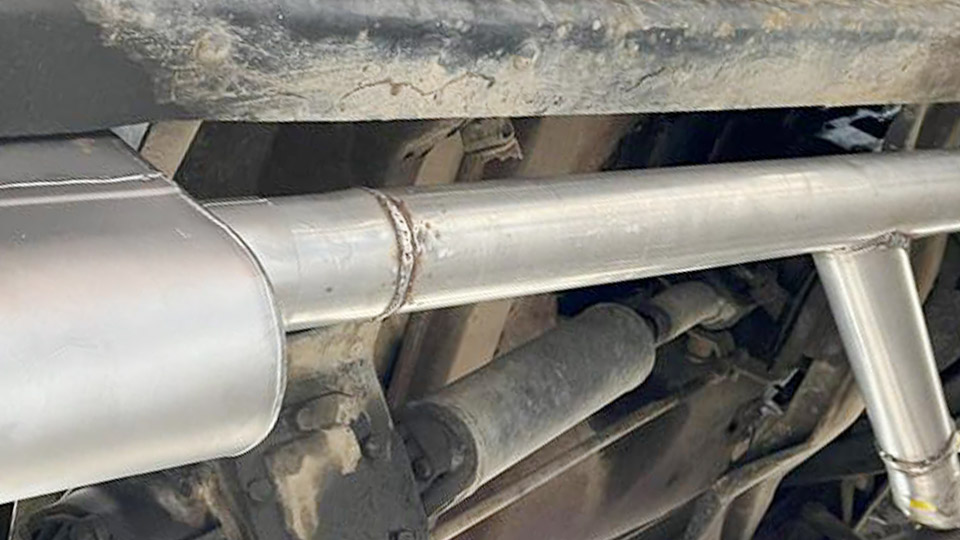
Hobbyists building custom exhausts or roll cages often default to butt welds for clean aesthetics and strength, while maintenance teams prefer socket welds for quick repairs in tight machinery spaces.
Decision-making Summary
Match the joint to the system’s real demands rather than habit. Butt welds deliver maximum integrity where it counts, while socket welds provide practical efficiency for appropriate small-bore applications.
The pro-level insight is recognizing that weld joint selection is fundamentally a risk management decision—balancing upfront fabrication economics against lifecycle reliability, inspection costs, and failure consequences in the specific service environment.
Understanding these trade-offs separates adequate welders from those who consistently deliver optimized, code-compliant systems.