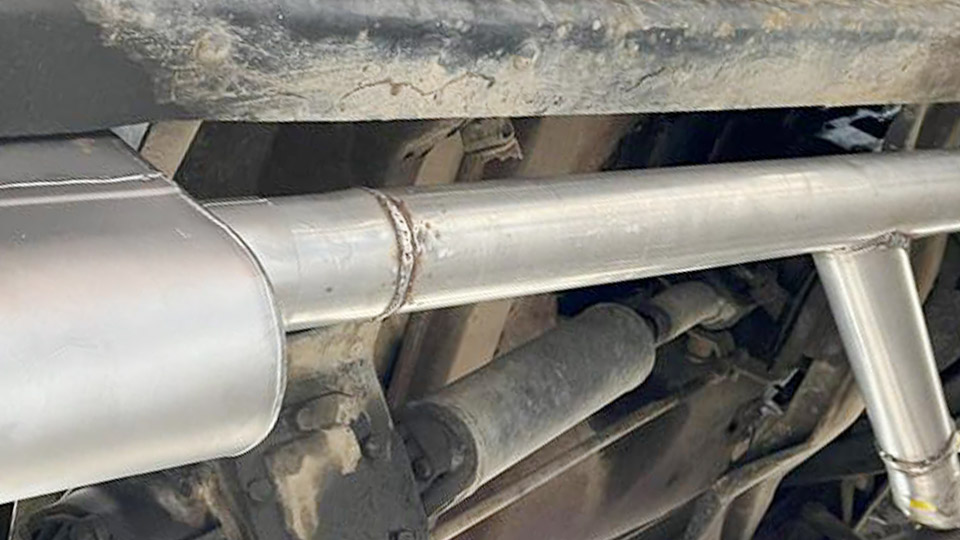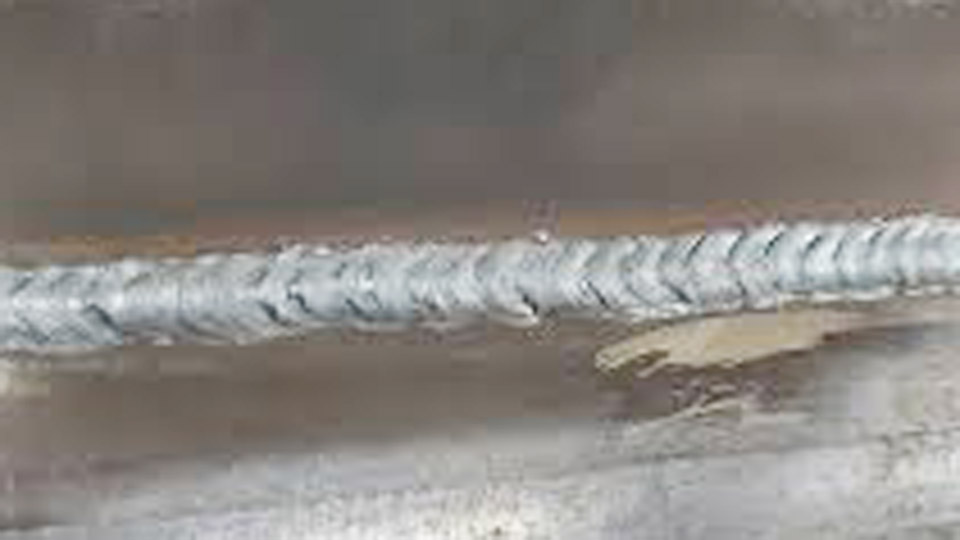
Welders often face the frustration of a joint that visually looks acceptable but fails under load due to hidden defects or suboptimal parameters. Selecting the wrong process, misjudging material prep, or overlooking inspection steps turns solid work into costly rework or safety risks.
This quick guide to welding and weld inspection delivers practical, decision-focused information for choosing processes, dialing in settings, designing joints, preventing defects, and verifying quality through targeted inspection methods.
It equips DIY enthusiasts, students, hobbyists, and professionals with the technical details needed for reliable results on real projects.
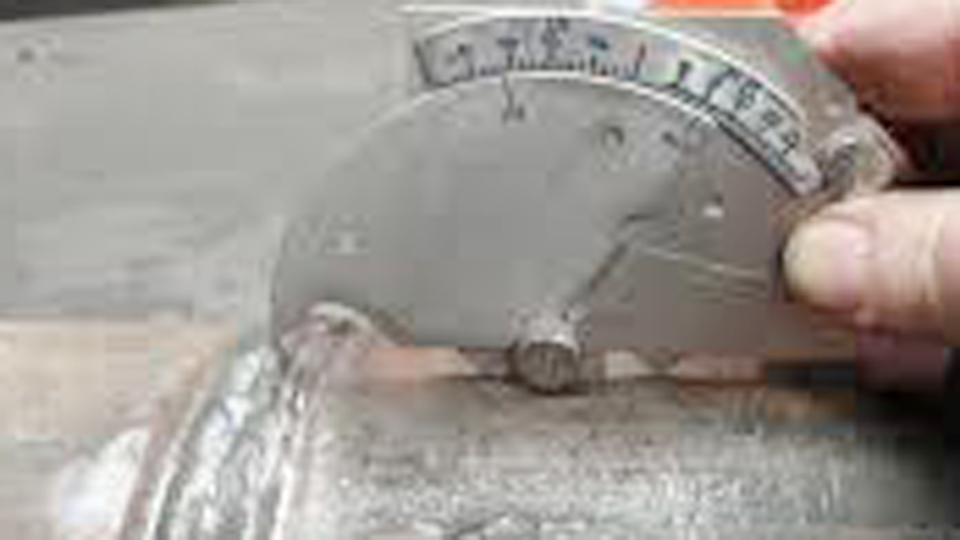
Image by ceainspection
Choosing the Right Welding Process
Process selection hinges on material type, thickness, position, environment, and required strength rather than general preference.
MIG vs. TIG: Penetration, Speed, and Control Trade-offs
MIG (GMAW) excels for thicker mild steel and production speed. It uses continuous wire feed with shielding gas, typically 75% argon/25% CO2 for mild steel. For 1/8-inch (3.2 mm) mild steel, target 125–150 amps with 0.030-inch wire at 240–300 ipm wire feed speed. Voltage around 17–19 V produces a stable arc with good penetration and minimal spatter.
TIG (GTAW) provides superior control for thin materials, aluminum, stainless, or precise root passes. It uses a non-consumable tungsten electrode and separate filler. For 1/16-inch stainless, use 50–80 amps DCEN with 1/16-inch 2% thoriated or lanthanated tungsten.
Argon flow at 15–20 CFH maintains coverage without turbulence. TIG demands slower travel but delivers cleaner beads with fewer inclusions.
Stick (SMAW) and Flux-Cored (FCAW) for Field and Thick Sections
Stick welding handles dirty or rusty surfaces and outdoor work effectively. E7018 electrodes suit structural mild steel with low hydrogen content for crack resistance. For 1/4-inch plate, run 140–180 amps on DC+ depending on electrode diameter (5/32-inch common).
Flux-cored self-shielded wires like E71T-11 run DCEN on MIG machines without gas, ideal for windy conditions. Use 3/4-inch stickout for .045-inch wire on thicker material.
Dual-shield flux-cored (gas-assisted) combines high deposition with better arc stability for heavy fabrication.
Material Selection and Joint Preparation
Base metal properties and surface condition directly affect fusion and defect rates.
Matching Filler to Base Metal
For mild steel under 1/4 inch, ER70S-6 solid wire in MIG offers good deoxidizers for slightly dirty surfaces. Stainless 304/316 requires ER308L or ER316L filler to match corrosion resistance and prevent sensitization.
Aluminum 5052 or 6061 uses ER5356 for strength or ER4043 for easier welding and less cracking. Avoid mixing dissimilar metals without proper buttering layers or specific procedures.
Cleaning and Edge Preparation Techniques
Remove mill scale, oil, rust, and moisture using acetone or dedicated degreasers followed by stainless steel wire brushing. For thicknesses over 1/4 inch, bevel edges to 30–35 degrees per side with a 1/16–1/8 inch land to allow root access without burn-through. Maintain root gaps of 1/16–3/32 inch for butt joints; excessive gaps cause lack of fusion, while tight fits trap slag.
T-joints and lap joints often need minimal prep but benefit from 45-degree bevels on thicker legs for full penetration fillets.
Welding Parameters and Techniques
Parameters must balance heat input, travel speed, and bead geometry for each material and position.
Voltage, Amperage, and Wire Speed Relationships
Voltage primarily controls arc length and bead width. Higher voltage widens the bead but risks undercut. Amperage (driven by wire feed speed in MIG/FCAW) controls penetration and deposition rate. For 0.035-inch mild steel wire on 3/16-inch plate, start at 180–220 ipm wire speed and 18–20 V, adjusting for a smooth “bacon frying” sound.
Travel speed affects cooling rates: too slow increases heat input and distortion; too fast causes lack of fusion. Target 8–12 inches per minute for many MIG passes.
Position-Specific Adjustments
Flat position allows highest currents and fastest speeds. Vertical-up requires lower settings (10–15% reduction) and stringer or slight weave beads with pause at toes to prevent undercut.
Overhead demands tight parameters and fast travel to control puddle. Use pulsed MIG for out-of-position work on thin sections to reduce heat input while maintaining fusion.
Common Weld Joint Designs
Joint design influences stress distribution and inspectability.
Butt, Lap, Tee, Corner, and Edge Joints
Butt joints (square groove for thin material, V or U for thick) provide full penetration for high-strength applications like pressure vessels. Double-V preparations reduce distortion on plates over 1/2 inch.
Lap joints use fillet welds and suit sheet metal but create eccentric loading—size fillets to at least the thickness of the thinner member (e.g., 1/4-inch leg for 1/4-inch plate).
Tee joints (fillet or groove) appear in frames and brackets; full penetration with backing bars improves fatigue life. Corner joints risk distortion and benefit from intermittent tacking before continuous welding. Edge joints suit low-load applications like flanges.
Groove vs. Fillet Weld Selection
Groove welds achieve full cross-section strength but require more preparation and passes. Fillets are faster but limited to about 70% of base metal strength in shear. Calculate throat size as 0.707 × leg length for equal-legged fillets.
Identifying and Addressing Weld Defects
Defects arise from parameter mismatches, poor technique, or material issues. Early detection prevents propagation.
Surface Defects: Undercut, Overlap, Porosity
Undercut appears as grooves along the weld toe, caused by excessive voltage, high travel speed, or incorrect angle. Repair by grinding and rewelding with lower heat.
Overlap (cold lap) occurs when weld metal flows onto un-fused base—reduce amperage or improve cleaning. Surface porosity signals contaminated material or inadequate gas coverage; increase flow rate or shorten stickout.
Subsurface and Internal Issues
Lack of fusion results from low heat, fast travel, or dirty joints. Slag inclusions trap in multi-pass welds—remove slag thoroughly between passes. Cracks (hot or cold) indicate high restraint, rapid cooling, or hydrogen—use low-hydrogen processes and preheat (200–400°F for thicker carbon steel). Distortion management involves balanced welding sequences, clamping, and peening.
Weld Inspection Methods
Inspection verifies conformance to standards and identifies issues before service.
Visual Testing (VT) as the First Line
Perform VT before, during, and after welding under proper lighting (minimum 50 foot-candles). Check for proper bead profile (convex or flat for fillets), leg sizes using fillet gauges, undercut depth (<1/32 inch typical acceptance), and surface cracks. Tools include 10x magnifiers, straight edges, and weld gauges for reinforcement height (typically 1/16–1/8 inch).
Non-Destructive Testing (NDT) Techniques
Magnetic Particle Testing (MT): Detects surface and near-surface cracks in ferromagnetic materials using yoke or prod methods with visible or fluorescent particles. Effective for fatigue-prone welds.
Liquid Penetrant Testing (PT): Reveals open surface discontinuities on any non-porous material. Apply cleaner, penetrant, developer—dwell times 10–30 minutes depending on temperature.
Ultrasonic Testing (UT): Uses high-frequency sound waves for internal defects like lack of fusion or inclusions. Phased array UT provides detailed imaging for complex geometries.
Radiographic Testing (RT): X-ray or gamma produces permanent images of volumetric defects like porosity or slag. Requires safety protocols and skilled interpretation.
Choose methods based on code (AWS, ASME), material, and criticality—VT + MT for structural steel, full NDT for pressure piping.
Post-Weld Treatments and Quality Assurance
Heat treatment relieves residual stresses. Stress relief for carbon steel involves 1100–1200°F for one hour per inch of thickness. PWHT (post-weld heat treatment) follows qualified procedures to avoid new issues like reheat cracking.
Grinding or machining improves fatigue performance on high-stress welds. Document parameters, inspector qualifications, and results for traceability.
Decision-Making Summary
Strong welds result from aligned choices: process matched to conditions, parameters tuned to thickness and position, joints designed for load paths, and inspection layered from visual to advanced NDT.
Prioritizing fusion quality and defect prevention over speed consistently yields reliable performance across mild steel frames, aluminum fabrications, or stainless repairs.
An advanced insight: controlled heat input combined with interpass temperature monitoring (typically 300–450°F max for many alloys) and temper bead techniques can restore properties in repair welding without full PWHT, extending service life in critical applications.
FAQ
What is the best way to check weld quality without expensive equipment?
Start with thorough visual testing using gauges and good lighting to verify size, profile, and surface conditions. Combine with basic PT kits for surface cracks when needed. These catch most rejectable issues before advanced NDT.
How do I set MIG voltage and wire speed for different thicknesses?
Base wire speed on amperage needs (roughly 1 amp per 0.001 inch thickness) then adjust voltage for stable arc and desired bead shape. Consult manufacturer charts and fine-tune on scrap for your specific wire and gas.
What are the most common reasons welds fail inspection?
Lack of fusion, excessive undercut, porosity from contamination, and undersized fillets top the list. These stem from inadequate cleaning, wrong parameters, or poor joint prep.
When should I use NDT methods beyond visual inspection?
Apply MT, PT, UT, or RT on code-required or load-critical welds, repairs, or when visual reveals questionable conditions. Project specifications and risk level dictate the extent.