Repairing dissimilar materials like plastic and metal creates frequent challenges in fabrication shops, automotive work, and DIY projects. A cracked bumper bracket, a broken appliance housing attached to a metal frame, or a custom fixture often requires joining these materials without access to specialized plastic welding equipment.
Does JB Weld work on plastic to metal? Yes, specific JB Weld formulations deliver reliable bonds in many non-structural and semi-structural applications when surfaces receive proper preparation.
The key lies in selecting the right product variant, understanding material compatibility, and applying engineering principles that maximize shear and tensile strength.
For welders and fabricators evaluating cold bonding options against traditional methods, this guide delivers the technical details needed for informed decisions.
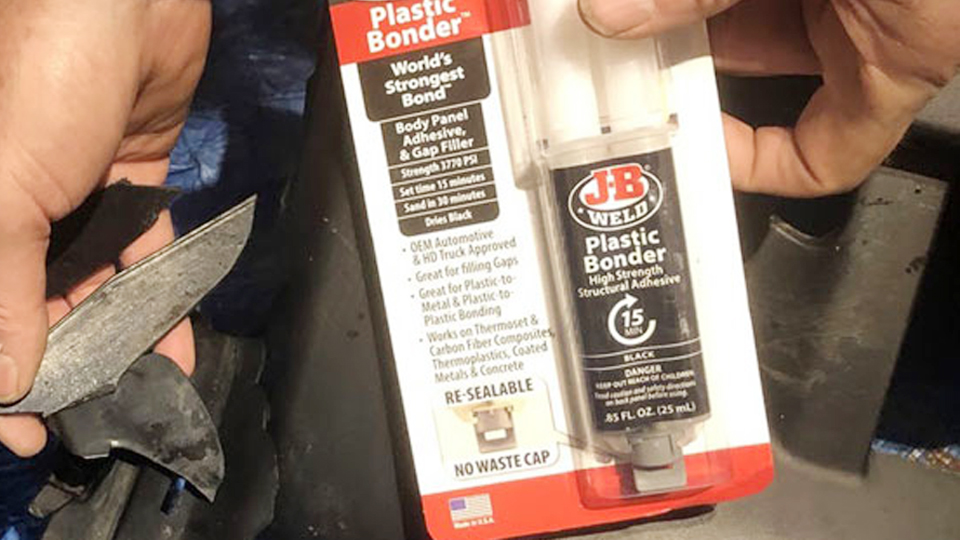
Image by stickyn
Material Compatibility Factors
Plastic Types and JB Weld Performance
JB Weld products bond effectively to many rigid plastics but show limitations with low-surface-energy materials. ABS, PVC, fiberglass composites, and many automotive-grade engineering plastics respond well to PlasticBonder or PlasticWeld formulations. These achieve tensile strengths up to 3770 PSI under optimal conditions.
Polypropylene (PP) and polyethylene (PE) present greater challenges. JB Weld officially notes cosmetic results rather than structural bonds on these. The molecular structure of these olefins resists epoxy adhesion without flame treatment, corona discharge, or specialized primers.
Practical testing insight: In automotive repairs, PlasticBonder reliably secures plastic trim to metal frames or brackets. Failures typically trace to inadequate surface roughening or contamination rather than inherent incompatibility.
Metal Substrates and Thermal Considerations
JB Weld bonds to steel, aluminum, cast iron, and most common metals without issue. The epoxy’s steel-reinforced variants offer higher compressive strength for metal-dominant joints, while PlasticBonder prioritizes flexibility for mixed material expansion differences.
Thermal expansion mismatch remains a primary failure mode. Plastics expand at rates 5-10 times higher than metals. Bonds subjected to wide temperature swings (e.g., engine compartments or outdoor equipment) require designs that accommodate movement through bead geometry or mechanical reinforcement.
Surface Preparation Techniques
Mechanical and Chemical Cleaning
Effective bonding demands removal of mold release agents, oils, oxidation, and surface contaminants. Start with degreasing using acetone or lacquer thinner, avoiding residues from alcohol-based cleaners.
Follow with mechanical abrasion using 80-120 grit sandpaper or a wire wheel. Create cross-hatch patterns on both surfaces to increase bonding area by 20-40% through mechanical interlocking. For plastics, limit depth to prevent weakening thin sections.
Critical detail: Clean surfaces again after abrasion to remove dust. Apply JB Weld within 30-60 minutes to prevent re-contamination or oxidation.
Advanced Preparation for Demanding Applications
For high-stress plastic-to-metal joints, consider:
- Drilling small holes (1/8-3/16″) into the plastic for epoxy anchors.
- Creating keyed surfaces with shallow grooves on the metal side.
- Using fiberglass cloth reinforcement embedded in the epoxy layer for larger repairs.
These techniques transform pure adhesive bonds into hybrid mechanical systems.
Application Methods and Product Selection
Choosing the Right JB Weld Formula
PlasticBonder (Black): Optimized for plastic-to-metal and plastic-to-plastic. Sets in 15 minutes, cures in 30 minutes to sandable state, with full cure in 24 hours. Designed for body panel work with good impact resistance.
Original JB Weld (Steel Reinforced): Better for metal-heavy applications or gap filling. Higher temperature resistance (up to 550°F intermittent) but more brittle on flexible plastics.
PlasticWeld: Quick-setting syringe option for small, precise repairs. Clear cure makes it suitable for visible joints.
Mix ratios must stay at 1:1 by volume. Deviations weaken the polymer matrix significantly.
Application Techniques for Maximum Strength
Apply mixed epoxy to both surfaces for optimal wetting. For vertical or overhead joints, use slightly thickened mixes or temporary fixturing. Build thickness in layers for deep gaps, allowing partial cures between layers to control heat buildup.
Clamp pressure should remain light—enough for contact but not to starve the joint of adhesive. Excess epoxy squeezed out indicates proper pressure.
Cure times matter: While initial set occurs quickly, full mechanical properties develop over 24 hours at 70°F. Lower temperatures extend this; higher temperatures accelerate but risk incomplete cross-linking if too rapid.
Strength Testing and Real-World Performance
Laboratory vs. Application Strength
Manufacturer data and independent tests show JB Weld bonds often exceed the strength of the base plastic material. In Popular Mechanics testing, samples required significant force to separate, frequently breaking the substrate first.
However, real-world performance depends on joint design. Lap joints perform better than butt joints due to increased surface area. Shear strength typically outperforms peel strength, making fillet reinforcements essential.
Temperature and Environmental Factors:
- Continuous service: Up to 250-300°F for most formulations.
- Chemical resistance: Good against oils, fuels, and water once cured.
- UV exposure: Topcoat with paint or UV-resistant coating for outdoor use.
When JB Weld Beats Traditional Welding
Plastic-to-metal joins rarely suit fusion welding due to material differences. Ultrasonic or friction welding works in production but requires expensive equipment. JB Weld provides an accessible, shop-friendly alternative for repairs and prototypes.
Advantages include no heat-affected zones in the plastic, minimal distortion, and the ability to bond painted or coated surfaces after proper prep.
Design Considerations for Hybrid Joints
Joint Geometry and Load Distribution
Maximize overlap area. Aim for at least 3-5 times the material thickness in lap length for structural loads. Incorporate fillets along edges to reduce stress concentrations.
For load-bearing applications:
- Calculate expected forces (shear, tension, peel).
- Factor in safety margins of 3:1 or higher.
- Consider cyclic loading—epoxies fatigue differently than metals.
Reinforcement Strategies
Combine JB Weld with mechanical fasteners for critical applications. Rivets, screws, or embedded metal inserts distribute loads while the epoxy seals and dampens vibration.
In automotive contexts, many fabricators use PlasticBonder for trim and brackets while relying on original clips or additional fasteners for primary structure.
Limitations and Failure Modes
JB Weld does not replace structural welding for high-load metal components. It excels in repair and non-critical fabrication but shows limitations under sustained high shear or impact in unsupported configurations.
Common failure points:
- Poor surface preparation (most frequent).
- Insufficient cure time before loading.
- Thermal cycling without accommodation for expansion.
- Application on incompatible low-energy plastics.
Comparison with Alternative Bonding Methods
Two-Part Epoxies and Specialty Adhesives
Structural acrylic adhesives offer faster cures and better performance on unprepared surfaces but often lower overall strength. Polyurethane adhesives provide more flexibility for vibration-prone assemblies.
Methyl methacrylate (MMA) adhesives bond well to many plastics and metals with high strength but shorter working times.
Mechanical vs. Adhesive Approaches
For permanent repairs, hybrid methods deliver best results. Mechanical fastening plus adhesive sealing combines the strengths of both systems. Pure mechanical fastening (rivets, screws) allows disassembly but lacks the sealing and vibration damping of epoxy.
Professional Application Guidelines
Shop Practices for Consistent Results
Maintain consistent temperatures during mixing and curing. Store products at controlled temperatures to preserve shelf life—typically 2+ years when sealed properly.
Document successful mixes with batch notes including temperature, humidity, and substrate details for repeatable repairs on similar projects.
For production or multiple repairs, use mixing nozzles and dispensers to ensure precise ratios and reduce waste.
Decision Framework for Plastic-to-Metal Projects
Evaluate the application against these criteria:
- Load type and magnitude.
- Environmental exposure (temperature, chemicals, UV).
- Required service life.
- Access for future repairs.
- Aesthetic requirements.
JB Weld suits permanent, low-to-moderate load repairs exceptionally well when these factors align. For high-vibration, extreme temperature, or safety-critical components, consider redesigning with compatible materials or professional plastic welding.
Performance Takeaway
In properly prepared plastic-to-metal joints, JB Weld formulations create bonds limited primarily by the weaker substrate rather than the adhesive itself. This characteristic makes it a valuable tool in every welder’s arsenal for repairs and fabrications where traditional methods fall short.
Advanced users combine it with mechanical reinforcement and thoughtful joint design to achieve hybrid assemblies that outperform expectations in real-world conditions.
FAQ
Does JB Weld PlasticBonder work on automotive plastic to metal parts?
Yes, it performs reliably on most automotive bumpers, trim, and brackets when surfaces are thoroughly cleaned and abraded. It handles typical road vibrations and temperature changes effectively.
How long does JB Weld take to fully cure on plastic to metal?
Initial set occurs in 15-30 minutes depending on formulation, but full cure requires 24 hours at room temperature for maximum strength. Higher temperatures speed this process.
Can you paint over JB Weld after bonding plastic to metal?
Yes, once fully cured and sanded smooth. Most automotive paints and primers adhere well to the cured epoxy surface.
Is JB Weld stronger than regular epoxy for plastic metal repairs?
The steel-reinforced and specialized PlasticBonder formulas generally outperform standard consumer epoxies in tensile strength, temperature resistance, and gap-filling capability.