You’ve spent hours prepping two dissimilar metal parts for a joint—aluminum to steel, perhaps for a custom driveshaft or aerospace bracket—only to watch fusion welding introduce porosity, cracking, or brittle intermetallics that compromise the entire assembly.
Friction welding solves this by generating heat through controlled mechanical rubbing under pressure, joining materials in the solid state without melting the base metals.
This process delivers high-integrity bonds with minimal heat-affected zones (HAZ), excellent repeatability, and the ability to weld combinations that traditional arc methods struggle with.
For DIY enthusiasts, students learning advanced techniques, hobbyists building performance parts, and professionals optimizing production, understanding friction welding means better decisions on joint design, parameter selection, and material compatibility.
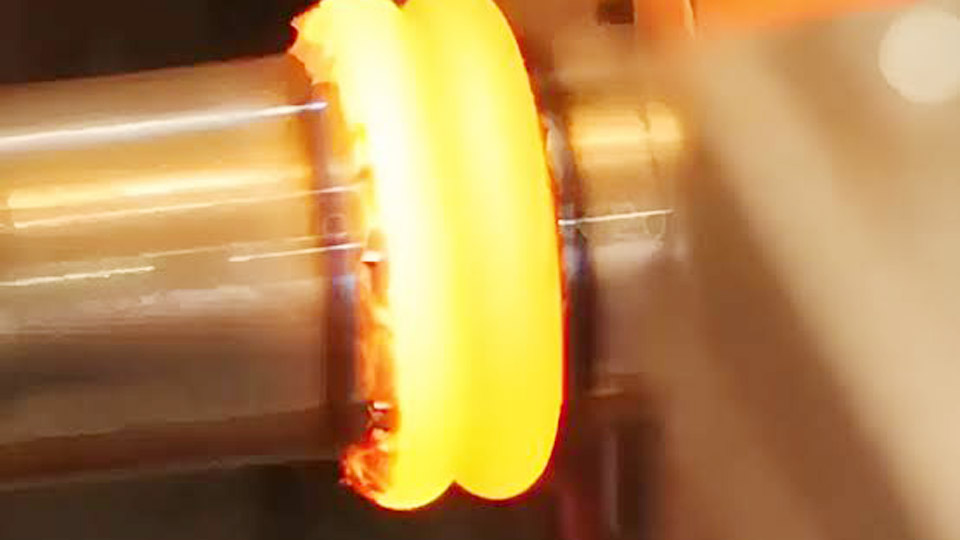
Image by baichaometal
The Science Behind Friction Welding Heat Generation and Material Flow
Frictional Heat Principles and Temperature Profiles
Friction welding relies on converting mechanical energy into thermal energy at the interface. One workpiece moves relative to the other (rotationally or linearly) while axial pressure is applied.
Surface asperities shear, generating heat that plasticizes the material without reaching the melting point—typically 0.6–0.9 of the absolute melting temperature for the softer material.
For steels, interface temperatures often peak around 900–1200°C, while aluminum alloys stay below 500–600°C. Heat dissipates quickly into the bulk material, resulting in a narrow HAZ, often just 1–5 mm wide, preserving base metal properties far better than fusion processes.
Plastic Deformation and Bonding Mechanisms
Once plasticized, material flows radially outward under forging pressure, forming flash that expels oxides and contaminants—a self-cleaning effect. Diffusion and dynamic recrystallization create a fine-grained microstructure at the joint, often stronger than the parent metal. In dissimilar welds, controlled parameters limit brittle intermetallic layers to microns thick.
Real-world insight: Higher strain rates in the process refine grains, improving fatigue resistance. Monitor upset (axial shortening) as a key quality indicator—typically 2–10 mm depending on diameter and material.
Main Types of Friction Welding Processes
Rotary Friction Welding (RFW) – Continuous Drive and Inertia Variants
Rotary friction welding is the most common for axisymmetric parts like rods, tubes, and shafts. In continuous-drive (direct-drive), a motor maintains speed (e.g., 1000–3000 rpm for steels) during the friction phase, then brakes while forging pressure increases. Inertia welding stores energy in a flywheel that decelerates to stop, providing precise energy input.
Key parameters for RFW:
- Rotational speed: 500–3000 rpm (lower for larger diameters).
- Friction pressure: 20–100 MPa for steels; 30–80 MPa for aluminum.
- Forging pressure: 100–250 MPa.
- Friction time: 1–40 seconds.
- Burn-off/upset: Controlled for joint quality.
Linear Friction Welding (LFW)
LFW uses reciprocating linear motion (typically 1–50 Hz, 2–10 mm amplitude) for non-circular parts. Ideal for aerospace blisks or large structural components where rotational symmetry isn’t possible. Oscillation stops once sufficient heat and plastic flow occur, followed by forging.
LFW handles larger contact areas and produces uniform joints across irregular geometries, though it requires more robust fixturing due to high forces.
Friction Stir Welding (FSW) and Variants
FSW uses a non-consumable rotating tool with a pin that plunges into the joint line and traverses along it. Primarily for butt or lap joints in plates and extrusions, especially aluminum. The shoulder contains the plasticized material while the pin stirs it.
Typical FSW parameters for aluminum:
- Tool rotation: 500–2000 rpm.
- Travel speed: 50–500 mm/min.
- Axial force: Several kN depending on thickness.
FSW excels in long seams and is widely used in shipbuilding, rail, and automotive panels.
Other Variants: Orbital, Friction Taper, and Low-Force
Orbital friction welding allows limited motion for specific geometries. Low-force variants add external preheat to reduce required pressure and flash, expanding applicability to thinner or delicate parts.
Material Compatibility and Real-World Parameter Selection
Welding Similar Materials
Friction welding shines with steels, aluminum alloys, titanium, and nickel-based superalloys. For carbon steels (e.g., #45 to #45), typical settings include 1000–2000 rpm, 50–80 MPa friction pressure, and 4–20 s friction time depending on diameter (16–60 mm examples show consistent high joint efficiency).
Aluminum alloys require lower speeds and careful control to avoid excessive softening. Stainless steels need higher pressures due to work hardening.
Dissimilar Material Challenges and Solutions
Joining aluminum to steel, copper to stainless, or titanium to nickel is a major strength. The process minimizes intermetallic formation through short cycle times and controlled temperatures. For Al-Cu transitions (8–50 mm diameter), low-temperature parameters include reduced speeds (200–1000 rpm), higher pressures (140–350 MPa), and precise forging to keep temperatures below eutectic points.
Practical decision guide: Match thermal conductivity and strength. Softer material often governs peak temperature. Test upset and perform tensile/shear tests—aim for joint strength ≥90% of weaker parent metal.
Use tables for quick reference in shop settings:
| Material Pair | Approx. Speed (rpm) | Friction Pressure (MPa) | Forging Pressure (MPa) | Typical Upset (mm) |
|---|---|---|---|---|
| Steel-Steel (25mm) | 1500–2000 | 50–80 | 120–200 | 3–6 |
| Al-Steel | 800–1500 | 40–70 | 100–180 | 4–8 |
| Al-Cu (20mm) | 200–500 | 200–300 | 350–450 | 2–5 |
Equipment and Process Control for Welders
Machine Types and Setup Considerations
Industrial machines range from manual lathe adaptations for hobbyists to CNC-controlled systems with hydraulic actuators and real-time monitoring. Key controls include speed, pressure (friction and forge phases), displacement, and torque feedback.
For DIY or small shop: Modified engine lathes work for small diameters with careful fixturing. Ensure rigid alignment—misalignment >0.1 mm can cause defects.
Monitoring and Quality Assurance
Track power/torque curves, upset distance, and stop time. Post-weld: Visual inspection of flash (uniform collar indicates good flow), dye penetrant or ultrasonic testing, and mechanical testing (tensile, bend, fatigue). Microstructure should show refined grains without voids.
Advantages of Friction Welding in Practice
- No consumables: Eliminates filler, flux, and shielding gas costs.
- Superior properties: Fine-grained joints with excellent fatigue and tensile strength; minimal distortion.
- Efficiency: Cycle times often seconds to minutes; high repeatability for production.
- Dissimilar capability: Joins materials incompatible with fusion welding.
- Clean process: No fumes, spatter, or porosity.
Energy efficiency and automation potential make it scalable from prototypes to high-volume automotive and aerospace parts.
Limitations and When to Choose Alternatives
Geometry constraints are primary—rotary best for round parts; linear/FSW for others. High initial equipment cost limits small shops. Large or very thin parts can be challenging. Flash removal may be needed for aesthetics or fit.
Compare to MIG/TIG for repairs or field work where portability matters. For long seams in aluminum, FSW often outperforms. Decision: Use friction welding when joint integrity, dissimilar metals, or production efficiency outweigh setup costs.
Applications Across Industries
Automotive: Axle tubes, driveshafts, valve stems. Aerospace: Turbine components, landing gear, blisks via LFW. Oil & gas: Drill pipe tool joints. Manufacturing: Hydraulic pistons, bimetallic fittings. Hobbyists use it for custom tooling and performance exhaust transitions.
Optimizing Parameters for Specific Outcomes
Rotational Speed and Pressure Effects
Higher speeds increase heat input rate but risk overheating. Optimal balances energy for plastic flow without excessive flash or grain growth. For steels, forging pressure 1.5–3x friction pressure consolidates the joint.
Time and Upset Control
Shorter friction times with adequate pressure yield narrower HAZ. Target upset ensures sufficient material extrusion for cleaning. Use DOE (design of experiments) or manufacturer charts for new combinations—Taguchi methods help optimize multi-response (strength, upset, temperature).
Advanced insight: Dynamic recrystallization at the interface depends on strain rate and temperature history—pro welders model or empirically tune for peak performance in critical applications.
Final Thoughts
Friction welding empowers precise, high-performance joining by leveraging mechanical control over heat and deformation. Selecting the right variant, dialing parameters to material and geometry, and verifying through testing delivers joints that outperform fusion welds in demanding conditions.
For pros pushing boundaries, the process’s solid-state diffusion and recrystallization offer opportunities for tailored microstructures that traditional methods cannot achieve—key to next-level component design and reliability.
FAQ
What materials cannot be friction welded effectively?
Most metals work, but very brittle materials or those with extreme melting point differences may form thick brittle layers. Plastics like polypropylene can be welded with adapted parameters, but ceramics generally require specialized variants. Test small samples first.
How does friction welding compare in cost to traditional methods for production?
Lower per-part cost due to no consumables and fast cycles, despite higher machine investment. Ideal for medium-to-high volume where quality justifies upfront expense.
Can hobbyists or small shops perform friction welding?
Yes, with lathe modifications for small diameters (<50 mm). Focus on alignment, parameter documentation, and post-weld testing. Start with similar steels.
Is post-weld heat treatment necessary?
Often not required due to the solid-state nature and refined microstructure. However, for some high-strength alloys or dissimilar joints, stress relief or aging may enhance properties—verify with application requirements.