Welding on diesel fuel tanks presents one of the most misunderstood hazards in fabrication and repair shops. Many experienced welders assume diesel’s higher flash point makes it inherently safe compared to gasoline, yet real-world incidents prove otherwise.
Residual vapors, contamination with more volatile fuels, or inadequate purging can turn a routine patch job into a Welding Diesel Tank Explosion.
This risk matters because even small amounts of vaporized diesel mixed with air in the right proportions can ignite violently when exposed to an arc. Heat from welding rapidly increases vapor pressure and temperature inside the tank, pushing mixtures into the explosive range.
Professionals and hobbyists alike need precise protocols to eliminate the fuel-oxidizer-ignition triangle. I’ll discuss the technical decisions, procedures, and parameters required for safe work on steel and aluminum diesel tanks.
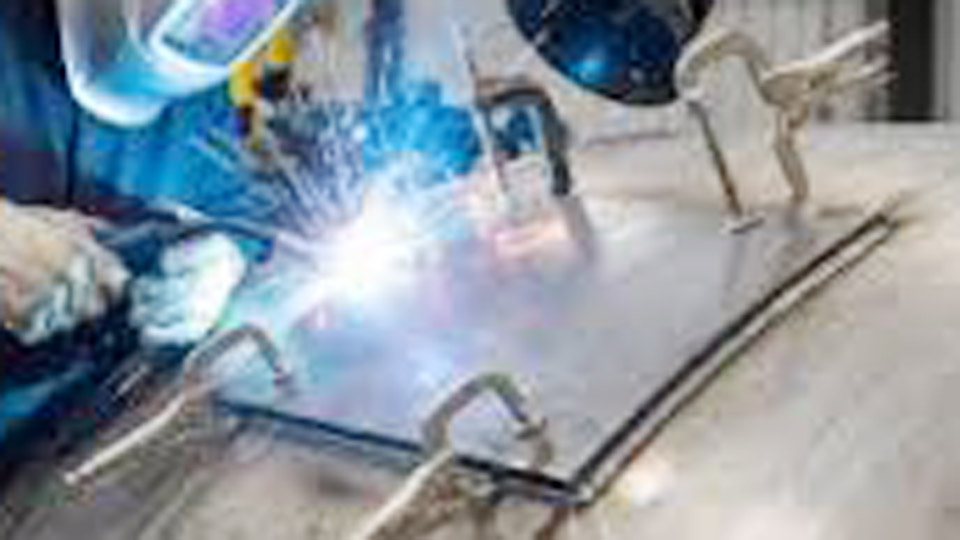
Image by armorshieldlining
Understanding Diesel Vapor Behavior in Confined Spaces
Diesel fuel differs significantly from gasoline in volatility, but it still generates dangerous vapors under welding conditions.
Flash Point, Vapor Pressure, and Explosive Limits
Diesel typically has a flash point above 55–62°C (131–144°F), far higher than gasoline’s -40°C range. However, welding arc temperatures exceed 3,000°C locally, rapidly heating tank walls and residual fuel. This drives vaporization even in “empty” tanks with just a few liters of residue or film.
The lower explosive limit (LEL) for diesel vapors in air is approximately 0.6% by volume, with an upper explosive limit (UEL) around 7.5%. Between these concentrations, any ignition source—including your arc—can cause deflagration or detonation.
Contamination with as little as 2% gasoline drops the flash point dramatically, creating an explosive mixture at ambient temperatures.
How Welding Heat Triggers Vapor Explosions
The arc or flame heats the metal, conducting energy inward. Residual diesel in seams, baffles, or on the bottom boils, releasing vapors into the headspace. If oxygen remains present and the mixture falls within the flammable range, pressure builds rapidly.
In closed or poorly vented tanks, this leads to catastrophic rupture rather than a simple flash fire. Real incidents often involve tanks that appeared “mostly empty” or had been drained but not cleaned.
Temperature also matters: diesel auto-ignition occurs around 210°C, but localized hot spots from continuous welding easily surpass this in vapor-rich environments.
Pre-Weld Assessment and Risk Evaluation
Before striking an arc, evaluate the tank thoroughly.
Tank Condition and Contamination Check
Inspect for remaining fuel, sludge, or unknown contaminants. Drain completely through the lowest point. Test for gasoline or solvent residues, as these drastically increase risk. Use a combustible gas indicator (CGI) or LEL meter calibrated for hydrocarbons to measure vapor levels—target below 10% LEL before any hot work.
Measure tank volume and calculate required purge gas. For a 100-gallon (378 L) tank, plan for 5–10 full volume displacements of inert gas.
Material Identification
Determine if the tank is mild steel, stainless, or aluminum (common in marine or custom applications). Mild steel responds well to standard processes but corrodes. Aluminum (5052, 5083, or 5086 alloys recommended) requires AC TIG for clean welds and careful heat management to avoid distortion. Stainless (316L) needs low-carbon filler to prevent sensitization.
Safe Preparation Methods for Diesel Tanks
Effective preparation removes or displaces the fuel and oxygen components.
Draining, Cleaning, and Water Displacement
Drain all fuel. Flush repeatedly with hot soapy water or detergent solution to emulsify residues. Steam cleaning works well for larger tanks.
Fill the tank completely with water for repairs on the upper sections, leaving minimal headspace at the weld area, then displace remaining air with inert gas bubbled from the bottom.
This method works because water occupies volume, limiting vapor space, but it is not foolproof alone—always combine with purging.
Inert Gas Purging Techniques
Purging with argon, nitrogen, or CO2 is the gold standard. Flow inert gas at 3–5 LPM (or scaled for tank size) into the lowest point while venting from the highest. Continue purging during welding to maintain positive pressure and displace any new vapors. For MIG on steel, match purge gas to shielding gas where possible to avoid contamination.
Calculate purge time: tank volume in cubic feet × 5–10 displacements at your flow rate. Monitor oxygen levels (<1% ideal) and LEL continuously.
Alternative Purging Options
Some field welders use exhaust from a running diesel engine routed into the tank, but this introduces carbon deposits and moisture. Dry ice (solid CO2) sublimates to provide inert blanket but requires careful handling to avoid asphyxiation and pressure issues. These are secondary to proper argon/nitrogen systems.
Welding Processes and Parameters for Diesel Tanks
Choose processes that minimize heat input while ensuring penetration.
MIG Welding on Steel Tanks
For mild steel diesel tanks, use ER70S-6 wire (0.030″ or 0.035″) with 75/25 Argon/CO2 shielding. Settings: 18–22V, 150–250A depending on thickness, short-circuit or globular transfer for control.
Keep travel speed high and use stringer beads to limit heat. Short welds (1–2 inches) with cooling intervals prevent excessive vaporization.
TIG Welding for Precision and Aluminum
TIG excels for thin materials and aluminum. Use AC balance 60–70% EN for aluminum with 3/32″ or 1/8″ tungsten. Amperage: 80–150A for 1/8″ material.
Pure argon shielding and filler (4043 or 5356 for aluminum). Post-flow 10–15 seconds. TIG allows lower overall heat input, reducing explosion risk when combined with purging.
Stick Welding Considerations
6010 or 7018 rods work in emergencies but produce more spatter and higher heat. Use only on thicker steel with excellent preparation. Not ideal for tanks due to difficulty controlling heat input.
Post-Weld Procedures and Verification
Cooling, Inspection, and Pressure Testing
Allow the tank to cool naturally. Inspect welds visually and with dye penetrant or magnetic particle testing. Pressurize with air or nitrogen to 5–10 PSI (or per manufacturer spec) and check for leaks with soapy solution. Never use flammable gases for testing.
Cleaning and Coating Restoration
Remove any slag or oxidation. Apply compatible tank sealer or lining if required for long-term fuel contact. For aluminum, ensure no galvanic couples with fittings.
Common Failure Modes and Technical Decision Points
Why “Empty” Tanks Still Explode
“Empty” tanks contain vapor-rich atmospheres. Draining alone sucks in fresh air, creating flammable mixtures. Heat from grinding or tacking can ignite before full welding begins.
Contamination and Mixed Fuels
Diesel contaminated with gasoline or solvents lowers the LEL threshold. Always assume worst-case and test.
Scale of Operation Differences
Small hobbyist tanks (under 50 gallons) allow simpler water/inert methods. Large industrial or vehicle-mounted tanks require certified gas-free procedures, confined space protocols, and continuous monitoring.
Equipment and Monitoring Requirements
Use calibrated LEL/O2 meters before and during work. Have fire extinguishers (Class B and C) rated for fuel fires nearby. Ground the tank and workpiece properly. Wear appropriate PPE, including respiratory protection for fumes.
For repeated repairs, invest in a dedicated purging setup with flowmeters and diffusers.
Advanced Techniques for Complex Repairs
For tanks with internal baffles, ensure purge gas reaches all compartments via temporary ports or multiple inlets. In critical applications, consider non-weld repairs like epoxy patches or mechanical fastening as interim solutions, but welded repairs remain the most durable when done correctly.
On aluminum, back-purging prevents oxide formation and ensures full penetration without porosity that could lead to future leaks.
Key Takeaway for Real-World Application
Successful welding on diesel tanks hinges on rigorous pre-work verification of vapor-free conditions more than on arc technique itself. Professionals prioritize full draining, multi-stage cleaning, continuous inert purging, low-heat procedures, and post-weld testing. Hobbyists and students should default to water displacement plus argon purge for small projects.
The advanced insight: treat every diesel tank as a pressure vessel in waiting—your purge effectiveness and real-time LEL monitoring determine outcomes far more than welder skill alone.
Master these parameters, and you eliminate the explosion variable while delivering structurally sound, leak-free repairs that withstand vibration, thermal cycling, and long-term fuel exposure.
FAQ
Can you weld a diesel tank with fuel still inside?
No. Even small amounts create hazardous vapors when heated. Drain completely, clean, and purge before welding.
Is filling a diesel tank with water enough to prevent explosion?
It reduces vapor space but should combine with inert gas purging for safety, especially near the weld zone. Water alone is insufficient for full confidence.
What gas is best for purging diesel tanks before welding?
Argon or nitrogen. Argon integrates well with TIG/MIG processes; both effectively displace oxygen and prevent flammable mixtures.
How do I test if a diesel tank is safe to weld?
Use an LEL meter to confirm levels below 10% LEL, verify oxygen below 1% after purging, and perform visual/chemical cleaning checks. Never rely on smell or appearance.