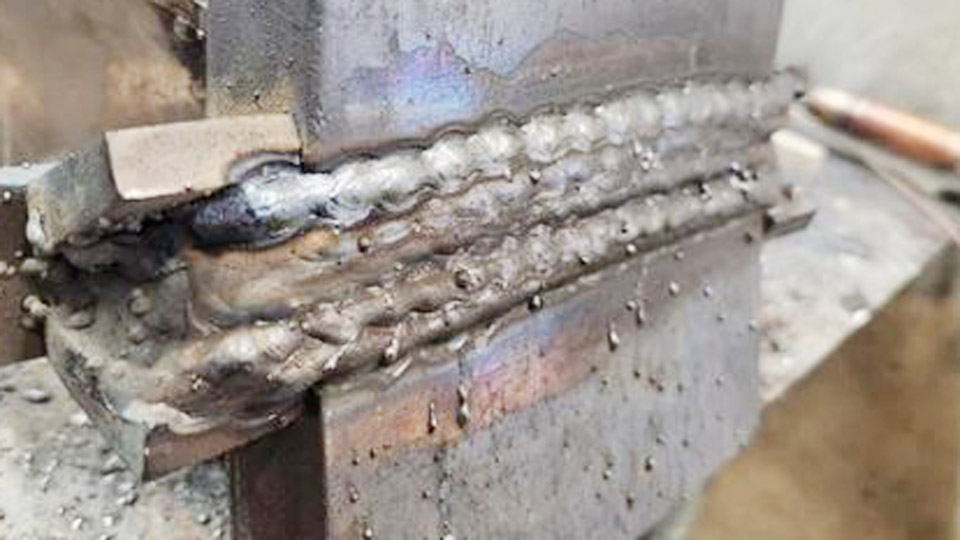
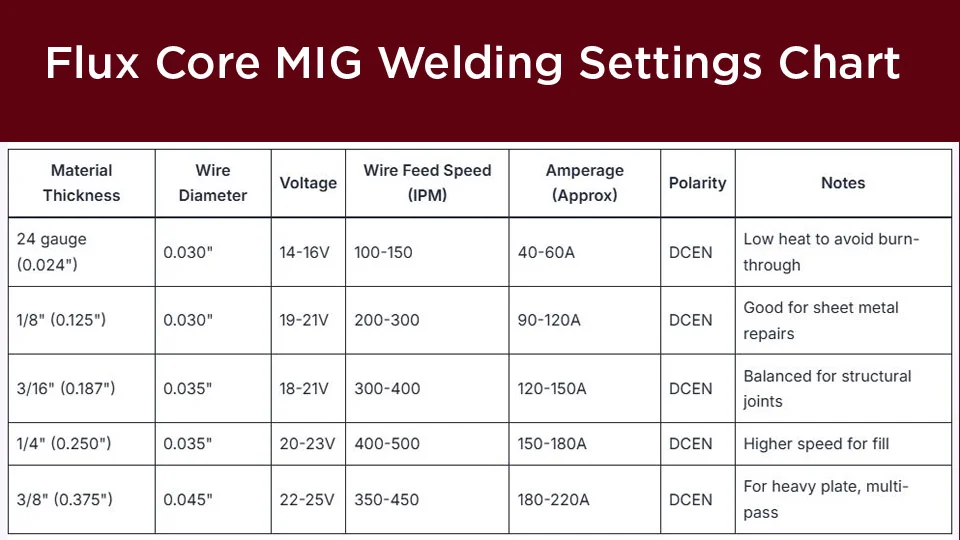
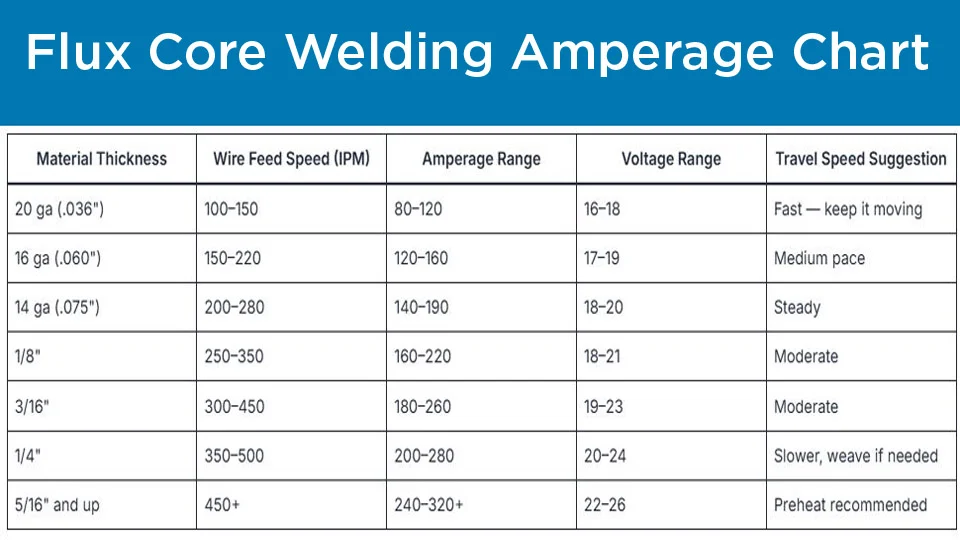
Trying to run standard self-shielded steel flux-core wire on aluminum produces immediate failure: extreme spatter, zero fusion through the oxide layer, and a porous, brittle joint that fails under load.
The search for how to weld aluminum with flux core wire stems from this exact frustration—hobbyists and shop welders with gasless MIG machines want a simple outdoor solution, yet aluminum’s chemistry rejects ordinary flux-core consumables.
Understanding the limitation prevents wasted material and unsafe repairs while pointing to the only practical path: converting a flux-core-capable machine to solid aluminum wire under argon.
That conversion delivers usable fusion welds when the oxide is controlled, polarity is correct, and heat input matches the metal’s high conductivity.
Image by yeswelder
Why Standard Flux-Core Wire Fails on Aluminum
Oxide Layer and Flux Chemistry Mismatch
Aluminum oxide melts near 3700°F while the base metal melts around 1220°F. Steel flux-core systems generate shielding gases and slag chemistry designed for iron-based oxides. Those fluxes cannot reduce aluminum oxide effectively.
The result is incomplete fusion, trapped oxide films, and porosity levels that routinely exceed 20 percent in test coupons.
Feeding and Arc Behavior Problems
Aluminum wire is soft. A tubular flux-cored version would crush under normal drive-roll pressure and bird-nest in the liner. Even if feeding succeeded, the polarity most self-shielded steel wires require (often DCEN) places the majority of heat in the electrode rather than the workpiece. Aluminum needs the opposite distribution for oxide disruption and adequate penetration.
Absence of AWS Classification
AWS A5.10 covers solid aluminum wires and rods. No corresponding flux-cored aluminum classification exists under A5.20 or related documents. Laboratory demonstrations decades ago never reached commercial production because the fluxes that work are highly corrosive and leave residues that demand complete removal between passes—impractical for production or field work.
What “Aluminum Flux-Core” Products Actually Are
Brazing and Soldering Consumables
Most products labeled aluminum flux-core are flux-cored brazing rods intended for propane or oxy-fuel torches. They melt below the base-metal temperature and create a bond through capillary action rather than fusion. Tensile strength is far lower than a true weld, and they are unsuitable for structural or pressure-containing joints.
Mislabeling of Solid Wire
Some online listings describe ER4043 or ER5356 solid aluminum MIG wire as “flux core.” These wires require external 100% argon shielding. Running them without gas produces the same porous, oxidized results as steel flux-core on aluminum.
Rare Metal-Cored Research Wires
Limited metal-cored aluminum wires have appeared in patents and specialty catalogs. They still require shielding gas and specialized feed systems. They are not drop-in replacements for common self-shielded flux-core spools and remain outside mainstream AWS classifications for general fabrication.
Converting a Flux-Core Machine for Solid Aluminum Wire
Machine Requirements
The power source must support DCEP polarity and accept a gas solenoid or external gas kit. Many inverter MIG/flux-core machines already include these features. Confirm duty cycle at the higher amperages aluminum demands—thin-sheet work can stay under 120 A, but 1/8-inch and thicker material quickly exceeds 150–200 A.
Feed System Upgrades
Replace knurled drive rolls with U-groove rolls sized to the wire diameter. Install a Teflon or nylon liner. Soft aluminum wire flattens or shaves under excess pressure; set drive-roll tension only high enough to feed without slippage. A spool gun or push-pull torch eliminates most feeding problems by shortening the wire path.
Contact Tip and Nozzle Choices
Use contact tips one size larger than the wire diameter and recess them slightly inside the nozzle. Aluminum expands more than steel and galls easily. Keep stick-out (contact-tip-to-work distance) between ⅜ and ⅝ inch depending on transfer mode.
Surface Preparation That Determines Weld Integrity
Oxide Removal Sequence
Degrease with acetone or a dedicated aluminum cleaner on a lint-free cloth. Immediately follow with a stainless-steel wire brush reserved exclusively for aluminum; brushing in one direction only prevents embedding contaminants.
Oxide reforms within minutes, so clean immediately before striking the arc. For critical joints, a light chemical etch can supplement mechanical cleaning.
Joint Fit-Up and Backing
Gaps larger than the wire diameter invite burn-through. On butt joints thicker than ⅛ inch, bevel to 30–45 degrees with a 1/16-inch root face. Copper or aluminum backing bars draw heat and support the root. Clamp every 4–6 inches to control distortion; aluminum’s high thermal expansion makes warping more severe than steel.
Polarity, Shielding Gas, and Transfer Mode Decisions
Correct Polarity
Always run DCEP (electrode positive). This places roughly two-thirds of the arc energy into the workpiece, providing the cathodic cleaning action needed to disrupt oxide while still delivering penetration. Leaving the machine on DCEN after a steel flux-core session is the most common cause of wire balling and lack of fusion.
Shielding Gas Selection
100% argon is the baseline. Flow rates of 30–40 CFH indoors and 40–50 CFH outdoors are typical. Argon-helium mixes (25–50% helium) increase heat input for thicker sections but raise cost and require higher flow. Never use CO₂ or argon-CO₂ mixes; oxygen contamination produces immediate porosity and black soot.
Short-Circuit vs Spray Transfer
Thin material (under 3/32 inch) often runs short-circuit or pulsed modes at lower voltage. Material ⅛ inch and thicker benefits from true spray transfer once voltage and wire-feed speed cross the transition current (approximately 135–150 A for 0.035-inch wire). Spray produces the classic stacked-dime appearance and deeper penetration.
Practical Starting Settings for Solid Aluminum Wire
| Thickness | Wire Diameter | Voltage | Wire Feed Speed (IPM) | Approx. Amps | Travel Speed (IPM) | Notes |
|---|---|---|---|---|---|---|
| 1/16″ | 0.030″ | 17–19 V | 200–280 | 70–100 | 20–25 | Short-circuit or pulsed; fast travel |
| 3/32″ | 0.030–0.035″ | 19–21 V | 280–380 | 100–140 | 18–22 | Push angle critical |
| 1/8″ | 0.035″ | 20–23 V | 350–480 | 140–180 | 15–20 | Spray preferred |
| 3/16″ | 0.035–0.045″ | 22–25 V | 400–550 | 170–220 | 12–16 | Preheat optional on thick 5xxx |
| 1/4″ | 0.045″ | 24–27 V | 450–600 | 200–260 | 10–14 | Multi-pass; interpass clean |
These ranges assume ER4043 or ER5356, pure argon, DCEP, and flat or horizontal position. Vertical work requires 10–15% lower wire-feed speed and voltage. Always verify on scrap of the same alloy and thickness—machine calibration, cable length, and ambient temperature shift the numbers.
ER4043 vs ER5356 Selection
ER4043 (silicon alloy) offers better fluidity, lower crack sensitivity, and good color match after anodizing on 6xxx alloys and castings. ER5356 (magnesium alloy) delivers higher as-welded strength and is preferred for 5xxx series structural work and marine applications, but it is less fluid and more prone to hot cracking if heat input is excessive.
Technique Adjustments Specific to Aluminum
Gun Angle and Travel Direction
Maintain a 10–15 degree push (forehand) angle. Pushing directs the argon forward, helps scrub oxide, and produces a flatter bead. Dragging (common with steel flux-core) traps oxide and increases porosity.
Travel Speed and Heat Input
Aluminum conducts heat so rapidly that slow travel causes burn-through or excessive HAZ softening. Keep the puddle moving; a consistent hissing arc with minimal spatter indicates correct balance. On thin sheet, continuous stringer beads are safer than weaves.
Interpass Cleaning and Crater Control
Brush every pass with the dedicated stainless brush. Fill craters by pausing briefly or using a back-step technique; crater cracks are a frequent failure mode in aluminum. For multi-pass joints thicker than ¼ inch, keep interpass temperature below 250°F on most 5xxx alloys to avoid sensitization.
Decision Framework: Conversion vs Dedicated Processes
A converted flux-core machine works for non-critical repairs, trailer work, and outdoor fabrication where gas bottles are inconvenient and appearance is secondary. It fails when code compliance, X-ray quality, or thin precision work is required.
AC TIG remains superior for sheet metal under 1/8 inch and for joints that must be visually perfect. Dedicated aluminum MIG systems with push-pull torches and pulsed programs outperform simple conversions on production volume and consistency.
Choose the conversion only after confirming the machine supports DCEP and gas, the feed system can handle soft wire, and the joint can tolerate the higher heat input of spray or short-circuit transfer. Structural or pressure-containing aluminum still demands procedures qualified to the appropriate code, not garage improvisation.
Wrapping Up
Successful aluminum welds on a converted flux-core platform rest on three non-negotiable controls: complete oxide removal immediately before welding, DCEP polarity with pure argon, and parameters that keep the puddle fluid yet moving fast enough to limit heat input.
When those conditions are met, solid ER4043 or ER5356 wire produces fusion joints that steel flux-core never can. Advanced operators further refine results by matching filler alloy to base-metal series and by using pulsed transfer on inverter machines to tighten the arc and reduce distortion on thin sections.
FAQs
Can you weld aluminum with regular flux core wire?
No. Standard self-shielded steel flux-core wire produces porosity, spatter, and incomplete fusion on aluminum because its flux chemistry cannot reduce the oxide layer.
What polarity is required for aluminum MIG on a converted flux-core machine?
DCEP (electrode positive). DCEN, common for many steel flux-core wires, causes the aluminum wire to ball and prevents proper oxide cleaning.
Do I need a spool gun to weld aluminum with solid wire?
Highly recommended. Soft aluminum wire feeds poorly through long liners; a spool gun or push-pull system eliminates most bird-nesting and feed failures.
Is flux-cored aluminum brazing wire the same as welding wire?
No. Brazing wires melt below the base-metal temperature and create a non-fusion bond. They lack the strength of a true weld and are unsuitable for structural applications.