Choosing the right shielding or fuel gas is one of the most important decisions in welding because it directly affects arc stability, penetration, bead appearance, spatter levels, and the overall quality of the finished weld.
If you’ve ever wondered what are the gases used in welding, the answer depends on the welding process, base metal, and the performance you need from the joint.
Different gases—or gas mixtures—can improve fusion, protect the molten weld pool from atmospheric contamination, or support cutting and heating operations. Using the wrong gas can lead to porosity, poor penetration, excessive cleanup, higher operating costs, and even failed weld inspections.
Understanding how each gas functions helps you select the right setup for MIG, TIG, flux-cored, oxy-fuel, and other welding applications while achieving consistent, high-quality results in both hobby and professional fabrication.
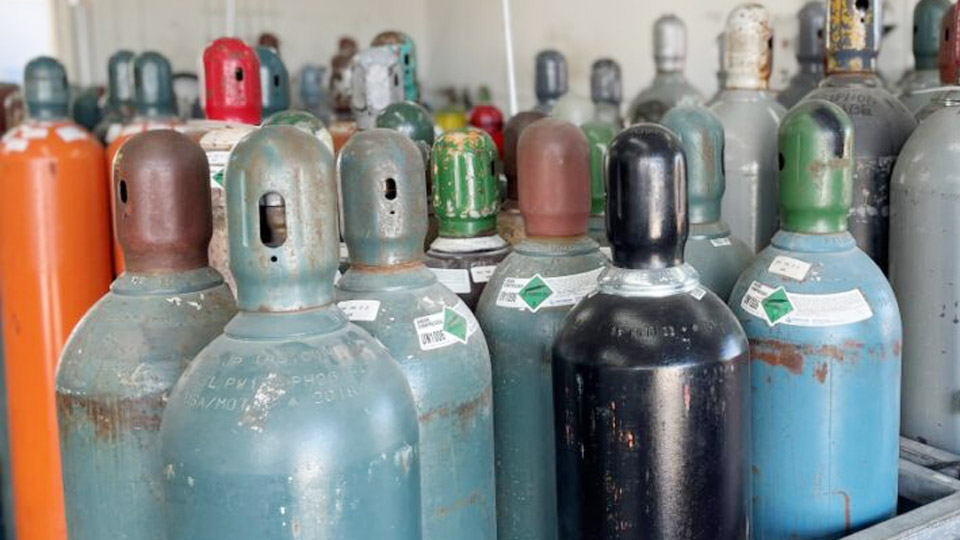
Image by pureairltd
The Role of Shielding Gases in Arc Welding Processes
Shielding gases isolate the molten weld pool and arc from atmospheric oxygen, nitrogen, and water vapor. These contaminants cause oxidation, porosity, and embrittlement. Gases also influence ionization potential, heat transfer, droplet transfer mode, and weld bead geometry.
How Gases Affect Arc Physics and Weld Outcomes
Inert gases like argon provide stable ionization with low voltage requirements, enabling smooth arcs. Active gases such as CO₂ increase thermal conductivity and reactivity, altering metal transfer from short-circuit to globular or spray.
Small additions of oxygen or hydrogen modify surface tension and fluidity. Flow rates typically range 15–25 CFH (cubic feet per hour) for MIG/TIG, adjusted for joint geometry, draft, and nozzle size. Too low causes contamination; too high creates turbulence and aspirates air.
Key Gas Properties That Drive Decisions
Density: Heavier gases (argon, CO₂) offer better coverage in flat positions; lighter helium requires higher flows or trailing shields for overhead work.
Thermal Conductivity: Helium conducts heat more efficiently, producing hotter arcs for thick or high-conductivity metals like aluminum and copper.
Reactivity: CO₂ and O₂ react in the arc to influence penetration and bead shape but risk oxidation on sensitive alloys.
Cost and Availability: Pure CO₂ is cheapest for carbon steel; argon-helium blends cost more but deliver performance gains on non-ferrous materials.
Primary Gases for MIG (GMAW) Welding
MIG welding relies on external shielding for solid wire or flux-cored applications. Gas selection balances arc stability, spatter control, penetration, and deposition rate.
Argon-Based Blends for Carbon and Low-Alloy Steel
The most common mixture is 75% argon / 25% CO₂. It supports short-circuit and globular transfer while minimizing spatter compared to pure CO₂. Use it for material thicknesses 1/8″–1/2″ in all positions. Flow: 18–22 CFH. Benefits include good wetting, reduced fumes versus pure CO₂, and reliable fusion on mild steel.
For thinner materials (<1/8″) or spray transfer, shift to 90–95% argon / 5–10% CO₂. Lower CO₂ reduces surface oxidation and supports higher travel speeds with cleaner beads. Higher argon percentages (98% Ar / 2% CO₂) suit stainless MIG to limit carbon pickup.
Pure CO₂ for Heavy Fabrication and Budget Work
100% CO₂ delivers deepest penetration on thick carbon steel (>1/2″) and works well with flux-cored wire. Expect more spatter and a harsher arc requiring aggressive voltage settings.
It remains the lowest-cost option for high-volume structural work but demands more post-weld cleanup. Limit to downhand or horizontal positions where spatter is manageable.
Argon-Oxygen Mixtures for Stainless and Thin Sheet
98% argon / 2% oxygen or similar low-oxygen blends improve arc stability and weld pool fluidity on stainless steel. Oxygen additions (up to 5%) enhance bead profile and reduce surface tension without excessive oxidation on austenitic grades. Avoid on aluminum or reactive metals.
Gases for TIG (GTAW) Welding
TIG demands high-purity inert shielding for precise, contamination-free welds, especially on thin or exotic materials.
Pure Argon as the Universal TIG Choice
Pure argon (≥99.995% purity) provides excellent arc stability, easy starts, and clean beads across aluminum, stainless, titanium, and carbon steel. Standard flow: 15–20 CFH. It excels for most manual TIG applications due to predictable puddle control and minimal turbulence.
Use high-purity argon for root passes on pipe or critical joints to prevent oxidation on the backside (back-purging).
Argon-Helium Blends for Thick Sections and High Conductivity Metals
Add helium (25–75%) to argon for increased heat input and faster travel speeds on aluminum or copper. 50/50 Ar/He or 75% He / 25% Ar suits thicker materials (>1/4″) where pure argon lacks penetration.
Helium raises arc voltage, requiring amperage adjustments, but produces wider, flatter beads with reduced distortion when controlled properly.
Helium is lighter, so increase flow rates 1.5–2x or use gas lenses for optimal coverage.
Argon-Hydrogen for Austenitic Stainless Steel
Small hydrogen additions (5–10%) in argon create a reducing atmosphere that improves wetting and travel speed on austenitic stainless. These blends clean surface oxides effectively but risk hydrogen embrittlement on susceptible alloys—test on scrap first. Not suitable for carbon steel or aluminum.
Specialized Gases and Applications
Flux-Cored Arc Welding (FCAW)
Self-shielded wires need no external gas, but gas-shielded FCAW performs best with 75/25 Ar/CO₂ or 100% CO₂. The latter maximizes penetration on outdoor structural work; argon mixes reduce fumes and improve operator comfort indoors.
Purging and Backing Gases
For stainless pipe and high-purity applications, use pure argon or nitrogen for root protection. Nitrogen is cheaper for non-critical stainless but can affect ferrite balance in duplex grades. Flow rates during purge: 5–15 CFH until oxygen levels drop below 50 ppm.
Oxy-Fuel Gases for Cutting and Brazing
Acetylene + oxygen produces the hottest flame for welding, brazing, and precise cutting. Propylene or propane alternatives offer lower cost for heating and cutting but lack the focused flame needed for fusion welding steel.
Gas Selection by Material and Thickness
| Material | Thickness | MIG Recommendation | TIG Recommendation | Key Considerations |
|---|---|---|---|---|
| Mild Steel | Thin (<1/8″) | 90% Ar / 10% CO₂ | Pure Argon | Low spatter, good wetting |
| Mild Steel | Medium | 75% Ar / 25% CO₂ | Pure Argon | Balanced penetration |
| Mild Steel | Thick (>1/2″) | 100% CO₂ or 80/20 Ar/CO₂ | N/A | Deep penetration, cost |
| Stainless Steel | All | 98% Ar / 2% O₂ or tri-mix | Ar + 5% H₂ | Low carbon pickup, clean bead |
| Aluminum | All | Pure Argon | Pure Ar or Ar/He | No CO₂—causes porosity |
| Copper Alloys | Thick | Ar/He mixes | Ar/He | Higher heat input required |
Practical Cylinder Management and Safety
Store cylinders upright, secured, away from heat. Use regulators matched to gas type—CO₂ requires heaters in cold environments to prevent freezing. Monitor for leaks with soapy water.
Always purge lines before welding to remove air. Track usage: a 125 CF cylinder of 75/25 mix lasts roughly 10–15 hours at 20 CFH continuous flow, depending on duty cycle.
For mixed gases, pre-mixed cylinders simplify setup. On-site mixing systems suit high-volume shops but require precise calibration.
Advanced Considerations for Professional Results
Gas choice directly impacts mechanical properties. Higher argon content preserves alloying elements better, yielding higher toughness and ductility.
Helium additions increase productivity on thick aluminum but raise costs significantly. In pulsed MIG, optimized blends allow spray transfer at lower average currents, reducing heat input and distortion.
Experimentation with voltage, wire feed speed, and inductance alongside gas selection fine-tunes results for specific joints. Document successful combinations for repeatability across projects.
Performance-based Takeaway
Match gas to material, thickness, position, and quality requirements rather than defaulting to the cheapest or most available option.
On critical stainless or aluminum work, investing in the right argon-helium or low-oxygen blend often pays for itself through reduced defects, faster travel speeds, and superior mechanical properties.
Pro-level insight: In automated or robotic welding, ternary mixes (Ar/He/CO₂) unlock higher deposition rates and consistent penetration that pure gases cannot match, especially on varying joint gaps.
FAQ
What is the most common gas for MIG welding mild steel?
75% argon / 25% CO₂. It balances arc stability, penetration, and spatter control for most shop and field applications.
Can I use pure argon for MIG welding steel?
Technically yes, but it produces poor penetration and unstable arcs on ferrous metals. Reserve pure argon for aluminum or TIG.
What gas works best for TIG welding aluminum?
Pure argon for most thicknesses; add helium (25–50%) for thicker sections needing more heat.
Is CO₂ safe and effective for indoor welding?
Yes, with proper ventilation. It generates more fumes than argon mixes, so monitor air quality and use fume extraction.