Thin-gauge sheet metal burns through or warps the moment a MIG or TIG arc hits it, and many shops or DIY spaces simply lack a suitable welder.
Sheet metal repair without welding solves both problems by using structural adhesives, rivets, metal-filled epoxies, and hybrid fastening systems that restore strength and corrosion resistance without heat-affected zones.
These approaches matter because modern body panels, HVAC ducting, equipment enclosures, and aluminum skins often contain high-strength or dissimilar metals that lose properties under welding heat.
Choosing the correct non-weld method prevents distortion, preserves original metallurgy, and delivers durable results when the joint is properly prepared and loaded within its design limits.
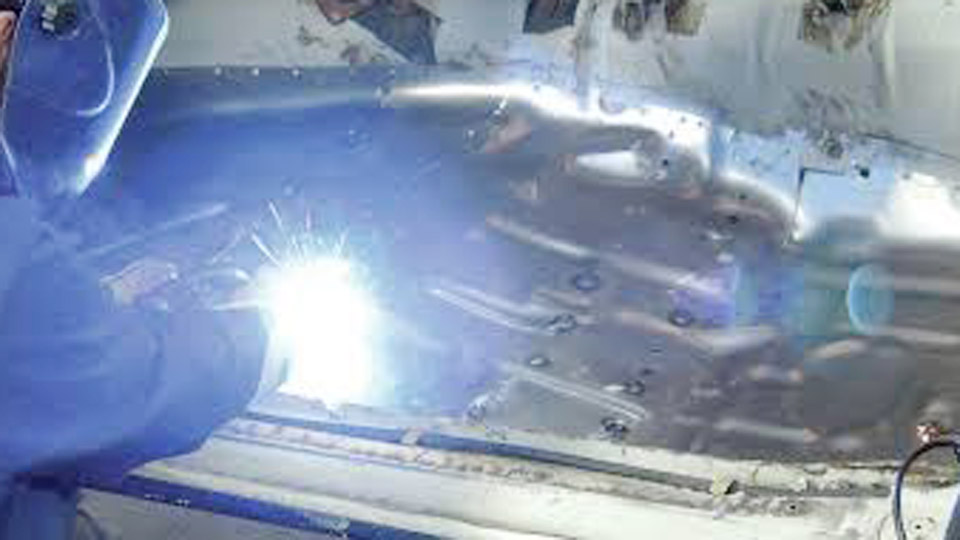
Image by hotrod
When Non-Weld Methods Outperform Welding on Thin Sheet
Heat input is the primary enemy of 18- to 22-gauge steel and most aluminum sheet. Even short MIG tacks create localized expansion that leaves oil-canning or requires extensive hammer-and-dolly work.
Distortion and Metallurgical Limits on High-Strength Steels
Advanced high-strength steels above roughly 980 MPa lose significant tensile strength in the heat-affected zone. Panel bonding adhesives introduce no heat, so the engineered properties remain intact.
Outer skins, door shells, and roof panels benefit most because the continuous bond line distributes stress instead of concentrating it at discrete weld nuggets.
Dissimilar-Metal and Access Constraints
Joining aluminum to steel or composite to metal is impractical with standard arc processes. Two-part structural epoxies isolate the metals electrically and eliminate galvanic corrosion paths when the bond line is continuous and sealed.
Restricted access behind fenders or inside cabinets further favors adhesives and blind rivets over welding guns that need clear torch angles and backing.
Choosing Between Adhesive Bonding and Mechanical Fastening
Decision criteria center on load type, accessibility, inspection requirements, and whether the repair must remain invisible.
Structural Panel Adhesives for Continuous Load Distribution
Automotive-grade panel bonding adhesives typically deliver 3,000–4,000 psi lap-shear strength and excellent fatigue resistance. They excel on overlapping flanges of quarter panels, roof skins, and box sides where the bond area can be made continuous. Peel strength is lower than shear, so joint design must keep the primary load in shear or compression.
Rivets and Screws for Immediate Mechanical Lock
Blind (pop) rivets and solid rivets provide instant clamp force and allow visual confirmation of installation. Structural blind rivets with higher shear and tensile ratings suit truck-bed skins, gates, and enclosures that experience vibration.
Self-tapping screws work for temporary or low-load covers but create stress risers and potential leak paths unless sealed.
Hybrid Rivet-Bond Systems
Combining adhesive with rivets or self-piercing rivets yields the highest overall performance. The adhesive seals the joint and distributes load while the fasteners prevent peel initiation and hold the parts during cure. Many OEM procedures for aluminum and mixed-material vehicles specify this exact combination.
Surface Preparation Requirements That Determine Success
Adhesive and epoxy performance collapses without correct preparation. Mechanical fasteners tolerate slightly more contamination but still benefit from clean metal.
Bare-Metal Exposure and Roughness Targets
Remove all paint, e-coat, rust, and scale to solid metal. 80-grit abrasive produces the preferred surface profile for most structural epoxies. Feather paint edges 1–2 inches beyond the bond area so filler and primer transition smoothly later.
Degrease with a dedicated wax-and-grease remover or acetone immediately before adhesive application; residual oils reduce bond strength dramatically.
Corrosion Protection Under the Repair
Apply a zinc-rich or weld-through primer only where mechanical fasteners will penetrate; many panel adhesives already contain corrosion inhibitors and should contact bare metal directly. For riveted patches, coat the mating faces and rivet holes before assembly so moisture cannot migrate under the patch.
Applying Structural Panel Adhesives Correctly
Proper application sequence controls both strength and longevity.
Cartridge Mixing and Bead Placement
Use the manufacturer’s static-mix nozzle so the two components combine at the correct ratio. Apply a continuous ¼-inch bead along the entire flange or overlap zone.
Excess adhesive that squeezes out should be wiped or left as a fillet depending on the product data sheet; some formulations require a specific bond-line thickness for optimal performance.
Clamping Pressure and Cure Schedules
Clamp or screw the panels together within the adhesive’s open time (typically 20–60 minutes at shop temperature). Maintain even pressure until the adhesive reaches handling strength—often 4–8 hours at 70 °F.
Full cure may take 24 hours; elevated temperature (140 °F) can accelerate many epoxies to full properties in under an hour. Never load the joint until the data sheet confirms adequate strength.
Riveted Patch Installation for Load-Bearing Skins
Mechanical patches remain the preferred solution when future inspection or disassembly is required.
Patch Geometry and Overlap Rules
Cut the patch from matching gauge and alloy. Provide at least ¾–1 inch of overlap on all sides for riveted joints. Flange the host panel if possible so the finished surface stays flush. Round the patch corners to reduce stress concentration and improve paint flow.
Rivet Selection, Spacing, and Installation Force
Match rivet material to the sheet (steel rivets in steel, aluminum in aluminum). Space structural blind rivets approximately ¾ inch apart along the overlap. Use a rivet gun capable of the required pull force—many structural rivets need 4,000 lb or more. Drill holes to the exact diameter specified for the rivet; oversized holes reduce shear capacity.
Filling Small Holes and Pits with Metal Epoxy
Epoxy putties and metal-filled compounds handle non-structural voids efficiently.
Product Selection by Hole Diameter and Service Temperature
Two-part metal epoxies rated 3,000–4,000 psi tensile strength fill holes up to roughly 1 inch when backed. They tolerate continuous service temperatures up to 300–500 °F depending on formulation.
Body fillers reinforced with aluminum or short-strand fiberglass work for cosmetic pits once the metal is sound, but they lack the structural rating of true metal epoxies.
Application Sequence for Maximum Adhesion
Stop-drill crack ends if present. Clean and roughen the surrounding metal. Mix only the quantity usable within the pot life. Force the compound into the void, overfilling slightly, then tool flush. Allow full cure before sanding; premature sanding generates heat that can weaken the bond.
Hybrid Rivet-Bond Techniques for Maximum Durability
When both peel resistance and sealing are required, combine the two systems.
Sequence for Adhesive-Plus-Rivet Assemblies
Apply adhesive to the prepared flanges, assemble the patch, then install rivets while the adhesive is still wet. The fasteners maintain clamp force during cure and add mechanical backup if the adhesive ever experiences extreme peel. Seal all rivet heads and edges afterward to block moisture.
Performance Comparison of Joint Types
A pure adhesive bond spreads load evenly and seals completely but is vulnerable to peel. A pure riveted joint resists peel and is inspectable but creates discrete stress points and potential corrosion sites. The hybrid joint mitigates both weaknesses and is the method of choice for many modern vehicle outer-panel replacements.
Limitations and When to Switch to Welding
Non-weld methods have clear boundaries.
Structural Crash Paths and OEM Restrictions
Pillars, rockers, frame rails, and any member that forms part of the crash-energy management system normally require welding, resistance spot welding, or OEM-specified structural adhesives with impact-resistant formulations. Using standard panel bonding adhesive alone on these parts can compromise safety and may void certifications.
High-Temperature or High-Impact Environments
Exhaust components, engine bays near heat sources, and areas subject to repeated heavy impact exceed the temperature or toughness limits of most epoxies. In those cases welding or mechanical fastening with high-temperature gaskets becomes necessary.
Wrapping Up
Selecting the correct non-weld approach begins with identifying whether the panel is structural or cosmetic, measuring the available bond or overlap area, and confirming the service loads and environment. Structural panel adhesives deliver the cleanest, lowest-distortion results on outer skins when surface preparation is absolute and the joint stays in shear.
Riveted or hybrid rivet-bond patches provide verifiable mechanical strength for enclosures and accessible skins. Metal epoxies close small non-structural holes efficiently. When the repair involves high-strength steel crash structures or extreme heat, welding or OEM-mandated procedures remain the only acceptable route.
Advanced shops further refine these decisions by measuring actual bond-line thickness and verifying cure with temperature strips, ensuring the finished joint meets both strength and corrosion specifications without ever striking an arc.
FAQs
Can you repair car body panels without welding?
Yes, for non-structural outer panels. Use structural panel bonding adhesive on prepared flanges or a riveted patch with adhesive. Structural members still require welding or OEM-specified methods.
What is the strongest adhesive for sheet metal repair?
Automotive panel bonding adhesives rated 3,000–4,000 psi lap shear. Products such as 3M Panel Bonding Adhesive are formulated specifically for outer body panels and include corrosion inhibitors.
How do you fix a rust hole in sheet metal without welding?
Cut out all rust to solid metal, prepare a matching-gauge patch with adequate overlap, bond with structural adhesive and/or rivets, then finish with filler only for contour. Never fill over active rust.
Is riveting stronger than adhesive for sheet metal?
Rivets resist peel better and allow inspection; adhesives distribute shear load and seal the joint. The strongest practical repair combines both.