Brazing is a widely used method for joining copper pipe in plumbing systems when stronger, more heat-resistant connections are required than standard soldered joints can provide.
Understanding how to braze copper pipe plumbing correctly is essential for preventing leaks, maintaining system integrity, and ensuring long-term performance in water, HVAC, and refrigeration applications.
Unlike soldering, brazing uses higher temperatures and a filler metal that creates a stronger bond between copper components. Improper heat control, poor joint preparation, or incorrect filler selection can lead to weak connections, costly repairs, and premature system failure.
Whether you’re working on residential plumbing, commercial installations, or specialized piping systems, proper brazing technique directly affects reliability and code compliance.
In this guide I’ll explain the brazing process, required tools, joint preparation methods, and critical techniques needed to produce durable, leak-free copper pipe connections.
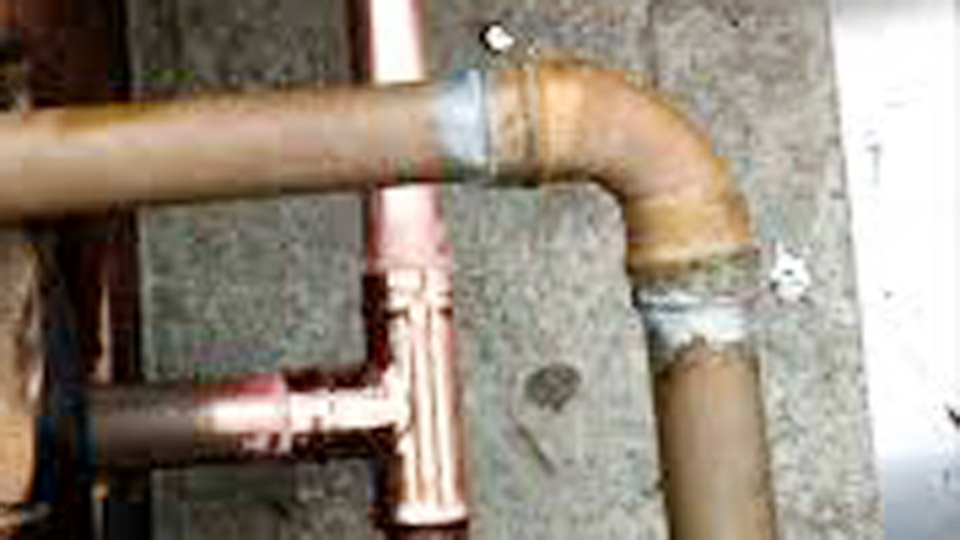
Image by mohaipod
Brazing vs Soldering: Key Technical Differences for Copper Pipe
Brazing and soldering both rely on capillary action to draw molten filler metal into the joint gap, but the processes diverge significantly in temperature, filler strength, and resulting joint performance.
Brazing filler metals melt above 840°F (449°C), typically in the 1,150–1,550°F (621–843°C) range, while solders melt below this threshold. This higher temperature allows use of stronger alloys based on copper-phosphorus (BCuP) or silver (BAg) formulations that produce joints stronger than the annealed copper tube itself.
Joint Strength and Fill Requirements
Soldered joints require near-complete capillary fill (ideally 70%+ with minimal voids) across the full socket depth to achieve rated pressure capacity.
Brazed joints follow the AWS 3-T rule: filler penetration of at least three times the thickness of the thinnest member (usually the tube wall) is sufficient for full strength due to the superior mechanical properties of the braze alloy. A well-formed external fillet further distributes stress and prevents cracking at the joint toe.
Brazing anneals the copper (softening begins around 700°F), reducing overall system pressure ratings compared to hard-drawn tube with soldered joints. Account for this when designing or repairing systems—use brazed joints where strength and durability outweigh the slight reduction in tube temper strength.
When Brazing Outperforms Soldering
Choose brazing for:
- Refrigeration and air conditioning lines subject to vibration and thermal cycling.
- High-pressure gas or hydronic systems.
- Joints exposed to elevated service temperatures.
- Applications requiring maximum fatigue resistance.
Soldering remains preferable for standard low-pressure potable water lines where ease, lower heat input, and full hard temper retention matter more.
Tools and Equipment for Effective Copper Pipe Brazing
Successful brazing depends on precise control of heat, cleanliness, and material application. Select equipment that supports consistent flame characteristics and joint access.
Core Torch and Gas Setup
Oxygen-acetylene torches provide the best control for most field work, with neutral or slightly carburizing flames preferred. Carburizing flames help reduce surface oxides on copper, producing a bright appearance rather than dull or blackened surfaces from oxidizing flames.
Air-acetylene torches with swirl tips work well for smaller diameters and offer portability without oxygen tanks. Set acetylene delivery around 5–7 psi and oxygen 10–15 psi depending on tip size and pipe diameter. Use tip sizes matched to the work—smaller tips (#2–#3) for 1/4″ to 5/8″ tubing prevent overheating.
Preparation and Application Tools
- Pipe cutter or fine-tooth hacksaw with fixture for square cuts.
- Reamer or deburring tool to remove internal and external burrs that disrupt capillary flow or create stress risers.
- Emery cloth, stainless steel wire brush, or Scotch-Brite pads for cleaning to bright metal.
- Fitting brushes sized to the cup interior.
- Flux brush (if using fluxed process).
- Brazing rods in convenient lengths; bending the end at 90 degrees aids precise feeding without hand proximity to heat.
- Nitrogen purge setup for refrigeration work to prevent internal scale.
- Safety gear: tinted goggles, heat-resistant gloves, fire blanket, extinguisher, and water spray bottle.
Choosing Brazing Alloys and Flux for Copper Plumbing
Alloy selection directly impacts flow, strength, corrosion resistance, and ease of use.
Phosphorus-Copper (BCuP) Alloys for Copper-to-Copper
These self-fluxing alloys (e.g., Stay-Silv 5, Stay-Silv 15, Dynaflow, or Sil-Fos equivalents) contain phosphorus that reduces oxides on copper surfaces. No additional flux is needed for copper-to-copper joints, simplifying the process and reducing residue inside lines.
- 5% silver (BCuP-3): Good flow, economical for general plumbing.
- 15% silver (BCuP-5): Superior flow and ductility, preferred for refrigeration and critical joints. Melts around 1,190–1,470°F range depending on exact composition.
Higher silver content improves wetting and gap bridging on imperfect fits.
Flux Requirements for Dissimilar Metals
When joining copper to brass, bronze, or steel, use phosphorus-free high-silver alloys (e.g., Safety-Silv 45 or 56) with an appropriate white brazing flux. Phosphorus-bearing rods create brittle phosphides with ferrous metals or zinc-bearing alloys. Apply flux thinly to the male tube end only, then insert and rotate to distribute.
Estimate alloy quantity using manufacturer charts—excess fillet material wastes rod and does not improve joint integrity.
Surface Preparation: Critical Steps for Sound Joints
Cleanliness determines whether the filler metal wets and flows properly. Contaminants like oil, oxide, or emery dust prevent capillary action and cause voids or weak bonds.
Cut tube square and to exact length for full insertion to the fitting stop. Deburr inside and outside thoroughly. Clean the tube exterior and fitting interior to bright, shiny metal using emery cloth or wire brushing. Wipe away all particles with a clean dry cloth. Avoid touching cleaned surfaces with bare hands.
For refrigeration or medical gas lines, purge the system with nitrogen during heating to minimize internal oxidation that could flake and cause restrictions or compressor damage later.
Proper fit-up maintains a capillary gap of approximately 0.002–0.005 inches. Excessive clearance reduces capillary action; too tight prevents filler entry.
Heat Control and Torch Techniques
Uniform heating is the most critical skill in brazing. Uneven temperatures cause the filler to flow only to the hottest area or result in cold joints.
Start heating the tube just adjacent to the fitting, then alternate the flame around the tube and fitting until both reach brazing temperature. Use a neutral or carburizing flame and keep the torch in constant short motion. Watch flux behavior as an indicator: it first bubbles, then becomes quiet, fluid, and transparent like clear water.
For horizontal joints, heat the tube circumference first, then the fitting. On larger diameters, begin feeding alloy at the bottom to create a dam that prevents runoff. For vertical (alloy-up) joints, heat the tube first then direct more heat toward the fitting to draw alloy upward.
Avoid prolonged heating that overheats the copper, leading to warping, burn-through, or excessive annealing. The goal is to bring the base metals to temperature quickly and feed rod only when the joint is ready—the alloy should flow freely into the capillary space.
Executing the Brazing Process
- Assemble the cleaned and fluxed (if needed) joint with full insertion.
- Apply heat evenly as described.
- Touch the rod to the joint only after the base metal reaches temperature. The heat from the parts, not the flame directly, should primarily melt the rod.
- Feed alloy continuously while maintaining heat balance until the joint is filled and a concave fillet forms.
- Remove heat and allow natural cooling while supporting the joint until the alloy solidifies.
- Do not quench hot joints aggressively unless removing flux residue immediately.
Practice on scrap to develop rhythm—experienced operators achieve consistent penetration with minimal filler.
Handling Different Joint Positions and Configurations
Horizontal joints allow gravity assistance but require careful starting point selection to manage flow.
Vertical upward demands precise heat direction toward the fitting to counteract gravity.
Vertical downward is easier as alloy flows naturally but still needs even base metal temperature.
For tight spaces or overhead work, pre-position supports and consider temporary heat sinks or fire blankets to protect surroundings. In confined areas, air-acetylene torches reduce the risk of overheating adjacent materials compared to oxy-acetylene.
Larger diameter pipes (>1″) benefit from multiple passes or coordinated heating with helpers to maintain uniform temperature around the circumference.
Post-Brazing Cleaning, Inspection, and Testing
Remove all flux residues promptly while the joint is still warm using hot water, a wet brush, or quenching followed by wire brushing or emery. Residual flux is corrosive and can hide defects during inspection.
Visually check for complete fillet formation, uniform appearance, and absence of porosity or cracks. Pressure test the system per code requirements—brazed joints should exceed the tube’s pressure capacity when properly executed.
For refrigeration systems, perform a nitrogen pressure test and vacuum evacuation before charging.
Advanced Considerations and Real-World Challenges
Purging with nitrogen is non-negotiable for closed-loop systems to prevent scale. Overheating large fittings can cause distortion—use heat sinks or sequence multiple joints carefully.
Material thickness affects settings: thinner tube (Type M or L) requires lighter tips and faster work than heavy-wall ACR tubing. Dissimilar metal joints need flux and compatible alloys to avoid galvanic issues long-term.
In repair scenarios on pressurized or wet systems, draining, drying, and isolating sections is essential—water turns to steam and ruins the joint.
Decision Framework: When and How to Braze Copper Pipe Plumbing
Evaluate system requirements first: pressure, temperature, vibration exposure, and code compliance. Brazing excels where mechanical strength and durability justify the higher heat input and annealing effect. For standard residential water lines, soldering often suffices and preserves tube temper.
Mastering brazing expands capability for HVAC, commercial plumbing, and specialized repairs. Consistent results come from rigorous preparation, controlled heating, and appropriate alloy selection rather than speed or excess material.
The most advanced insight: true proficiency shows in the ability to produce a minimal yet perfectly formed fillet that distributes stress efficiently while using the least filler metal possible—demonstrating complete command of heat, capillary dynamics, and material behavior under real job conditions.
FAQ
What is the main difference between brazing and soldering copper pipe?
Brazing uses higher temperatures (>840°F) and stronger filler alloys for superior joint strength and fatigue resistance, while soldering operates at lower temperatures with tin-based fillers suited to lower-demand applications. Brazed joints require less complete fill but demand precise heat control.
Do I need flux when brazing copper to copper pipe?
No, for phosphorus-bearing BCuP alloys on copper-to-copper joints, the phosphorus provides self-fluxing action. Use flux only with non-phosphorus alloys or when joining to brass, bronze, or steel.
Can I braze copper pipe with a propane or MAPP torch?
Yes for smaller diameters and light wall tubing, but oxygen-acetylene offers better control and higher temperatures for reliable results on larger sizes or thicker materials. Match tip size and technique to the torch type.
How do I prevent internal oxidation when brazing refrigeration lines?
Purge the lines with nitrogen during heating and brazing to displace oxygen and prevent scale formation inside the tube, which could later contaminate refrigerant oil or restrict flow.