Titanium welding often starts with a frustrating surprise: a seemingly solid weld bead turns brittle and discolored after cooling, failing under load or inspection.
Many welders who handle steel, stainless, or aluminum with confidence run into immediate problems with titanium because its extreme reactivity at welding temperatures demands near-perfect atmospheric control.
How hard is it to weld titanium? It ranks among the more demanding processes for most fabricators, not because the arc itself is tricky, but due to the unforgiving need for contamination-free shielding, precise heat management, and rigorous preparation.
This matters for aerospace components, chemical processing equipment, medical devices, and high-performance motorsports parts where failure is not an option.
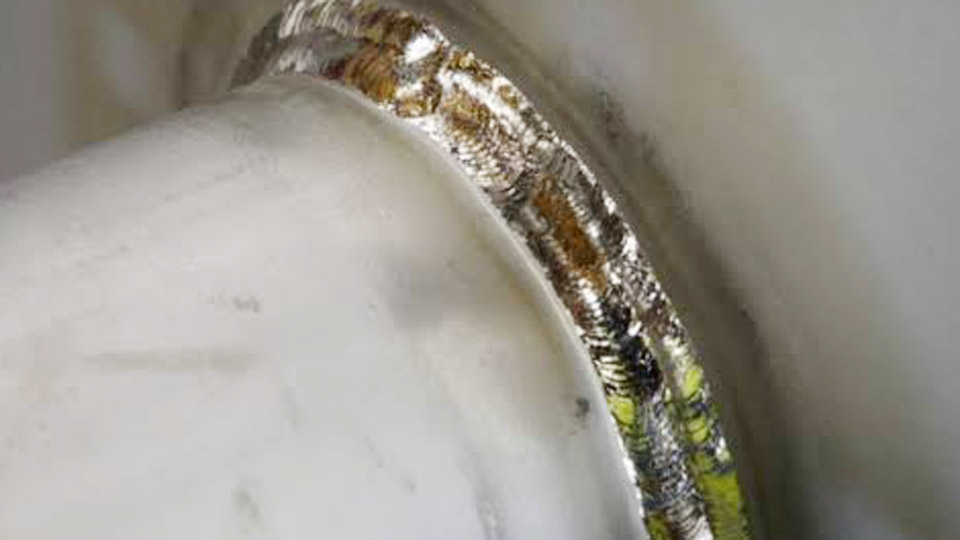
Image by kdmfab
Why Titanium Welding Demands Respect
Titanium offers an unmatched strength-to-weight ratio and superior corrosion resistance, but these benefits come with metallurgical challenges. Above roughly 500–800°F (260–427°C), titanium aggressively absorbs oxygen, nitrogen, and hydrogen from the air, forming brittle compounds like alpha case.
Even minor contamination compromises both mechanical properties and corrosion resistance, often requiring the entire joint to be cut out and redone.
Unlike steel, where small imperfections might be tolerable, titanium leaves little room for error. The process rewards discipline in preparation and shielding far more than raw welding skill.
For hobbyists and professionals transitioning from common metals, the learning curve centers on environmental control rather than puddle manipulation.
Material Properties That Make Titanium Welding Challenging
Reactivity and Atmospheric Sensitivity
Titanium acts as a universal getter when hot. It readily forms oxides, nitrides, and hydrides that embrittle the weld metal and heat-affected zone (HAZ). This reactivity persists until the metal cools below approximately 500°F, necessitating extended post-flow shielding and often trailing shields or purge systems.
Low thermal conductivity concentrates heat in the weld pool, increasing the risk of distortion or burn-through on thin sections while making it harder to achieve consistent penetration on thicker material. High melting point (around 3,034°F / 1,668°C for pure titanium) requires focused energy input without excessive overall heating.
Common Titanium Grades and Weldability Differences
Commercially Pure (CP) Grades (e.g., Grade 1–4): These are the most weldable. Grade 2 is a common choice for its balance of strength, formability, and corrosion resistance. They tolerate minor procedure variations better than alloys.
Alpha-Beta Alloys like Grade 5 (Ti-6Al-4V): The workhorse alloy offers higher strength but reduced ductility and slightly lower weldability. It is prone to increased HAZ hardening and may require post-weld heat treatment for critical applications. Grade 23 (Ti-6Al-4V ELI) provides better toughness with lower interstitial elements.
Filler selection typically matches the base metal (e.g., ERTi-2 for Grade 2, ERTi-5 for Grade 5). Matching avoids galvanic issues and maintains properties, though some procedures use lower-strength fillers for improved ductility.
Welding Processes for Titanium: TIG Dominates for a Reason
GTAW (TIG) – The Preferred Method
TIG delivers the highest quality and control essential for titanium. Use DCEN polarity with high-frequency start to avoid tungsten contamination. Pulsed current helps manage heat input, reduce distortion, and improve puddle control on thin material.
Typical Parameters (Approximate for CP Titanium, Argon Shielding):
- Thin sheet (0.040–0.060″): 30–50 amps autogenous, or up to 70 amps with filler.
- 1/16″ (1.6 mm): 60–90 amps.
- 1/8″ (3.2 mm): 90–150 amps depending on joint and technique.
- Travel speed and pulse settings vary with thickness; slower speeds for thicker sections with filler addition.
Gas flow: 15–30+ CFH depending on cup size and lens; higher for larger coverage. Use gas lenses for laminar flow. Back purge is mandatory, targeting oxygen levels below 20–50 ppm, often verified with analyzers in critical work.
Other Processes and Limitations
MIG can work for thicker sections but struggles with consistent shielding and produces lower-quality welds for most titanium applications. Plasma arc welding offers deeper penetration for medium thicknesses.
Electron beam and laser welding excel in controlled environments but require specialized equipment unsuitable for most shops. Stick and flux-cored are impractical due to contamination risks.
Preparation: The 90% of Titanium Welding Success
Cleaning and Handling Protocols
Cleanliness is non-negotiable. Wear nitrile gloves; never touch with bare hands. Dedicate tools (grinders, files, brushes) exclusively to titanium to prevent cross-contamination from steel, aluminum, or stainless.
Steps:
- Degrease with acetone or MEK using lint-free cloths.
- Remove surface oxides by grinding or filing 1 inch back from the joint on both sides.
- Wipe again and allow solvents to evaporate fully.
- Clean filler rods identically and clip the end before use to expose fresh metal.
Avoid steel wool or contaminated abrasives. Work in a clean area away from drafts and other metal dust.
Joint Design and Fit-Up
Tight fit-up is critical, especially for autogenous welds on material under 5 mm. Square butt joints work well for thin sections; V- or U-grooves for thicker. Minimize gaps to reduce heat input and filler needs. Tack welds must use the same shielding and cleanliness standards as the final weld.
Shielding Gas and Atmospheric Control Techniques
100% argon (high purity, 99.995% or better, low dew point) is standard. Helium blends may improve penetration on thicker material but can reduce arc stability. Back purging with dams, inflatable bladders, or chambers is essential for pipe, tube, and any joint with accessible root.
Trailing shields or extended post-flow (20–25+ seconds) protect the cooling bead and HAZ. For complex parts, glove boxes or purge tents provide full enclosure. Monitor oxygen content; many specs require under 10–20 ppm.
Heat Management and Distortion Control
Titanium’s low thermal conductivity demands pulsed TIG or careful amperage control to avoid overheating. Interpass temperatures should stay low (often under 150–200°F). Fixture parts securely but allow for expansion.
Sequence welds to balance heat input. Preheating is rarely needed, but stress relief or annealing may follow for certain alloys and applications.
Evaluating Weld Quality: Color as Your Guide
A successful titanium weld appears bright silver or light straw. Straw to light brown may be acceptable in some non-critical applications. Blue, purple, gray, or white indicates contamination—reject and rework the joint entirely.
Visual inspection is primary, supplemented by dye penetrant, X-ray, or mechanical testing per procedure. No repair welding on contaminated areas; cut out and start over.
Challenges in Real-World Applications
Thin-Wall Tubing and Pipe
Purging the root is critical. Use oversized cups or gas lenses. Maintain steady torch angle and travel speed to keep the puddle protected. Drafts or poor fit-up quickly ruin results.
Aerospace and Critical Components
Stricter purity requirements, documentation, and often mechanized welding apply. Grade 5 and 23 demand precise control to avoid microstructural issues affecting fatigue life.
Hobbyist and Small Shop Realities
Achieving consistent results without full enclosures is possible with practice, large gas coverage, and attention to detail, but expect a higher scrap rate initially. Start with CP Grade 2 scrap or practice coupons.
Equipment Recommendations for Titanium Work
Inverter power sources with pulsing, HF start, and good low-amp performance are ideal. Water-cooled torches improve comfort on longer jobs. Invest in quality gas lenses, trailing shields, purge kits, and oxygen analyzers for serious work. High-purity argon supply and leak-free hoses are baseline requirements.
Decision Factors: When to Take On Titanium Projects
Evaluate material cost, part criticality, available equipment, and your experience level. Titanium suits high-value applications where weight savings or corrosion resistance justify the effort and expense.
For low-volume or non-critical work, consider if another alloy suffices. Automation or outsourcing may be more economical for repetitive production.
Titanium welding tests procedural discipline more than arc skill. Master shielding, cleanliness, and heat control, and the material rewards with strong, lightweight, corrosion-resistant fabrications.
The key decision is matching your setup and patience to the demands of the specific grade, thickness, and service conditions—get those right, and what seems hard becomes reliably achievable.
FAQ
Is titanium harder to weld than stainless steel?
Yes, primarily due to stricter shielding and contamination sensitivity. Stainless forgives minor lapses better; titanium often requires full rework on contaminated welds.
Can you MIG weld titanium successfully?
It is possible on thicker sections with proper shielding but generally yields lower quality than TIG and is less common for critical applications.
What color should a good titanium weld be?
Bright silver to light straw. Any progression to blue or beyond signals contamination.
Do you need special filler rod for titanium?
Yes—use matching composition rods (e.g., ERTi-2, ERTi-5) stored cleanly and clipped before use. Generic fillers are unsuitable.