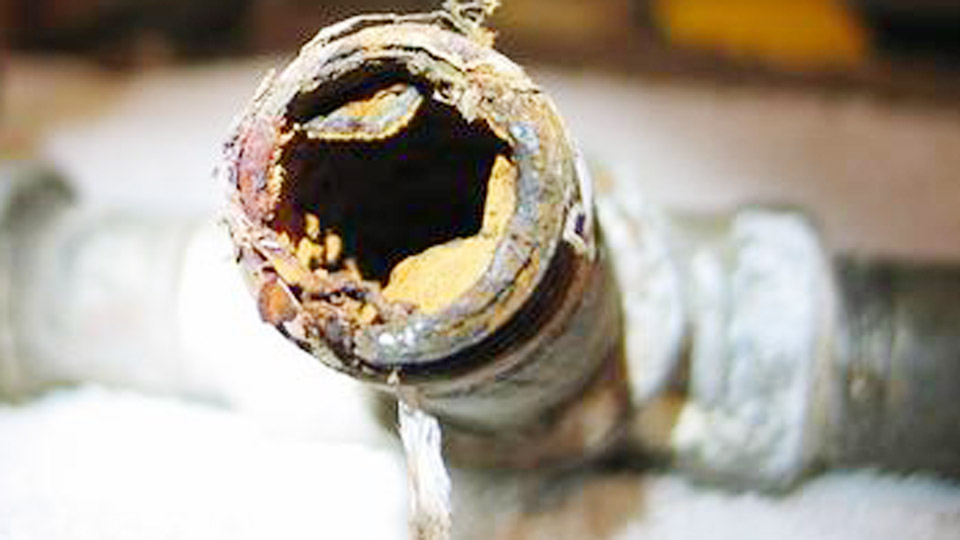
Rust inside galvanized pipe creates serious challenges for welders preparing material for fabrication, repairs, or custom projects. The zinc coating meant to protect the steel eventually breaks down in moist or aggressive environments, exposing the base metal and allowing internal oxidation that flakes, pits, or clogs the interior.
This contamination interferes with weld quality, causes porosity, inclusions, or weak joints, especially in TIG or MIG processes where cleanliness is critical.
Understanding how to remove rust from inside galvanized pipe ensures sound welds, prevents defects, and maintains structural integrity in frames, railings, exhaust systems, or structural tubing.
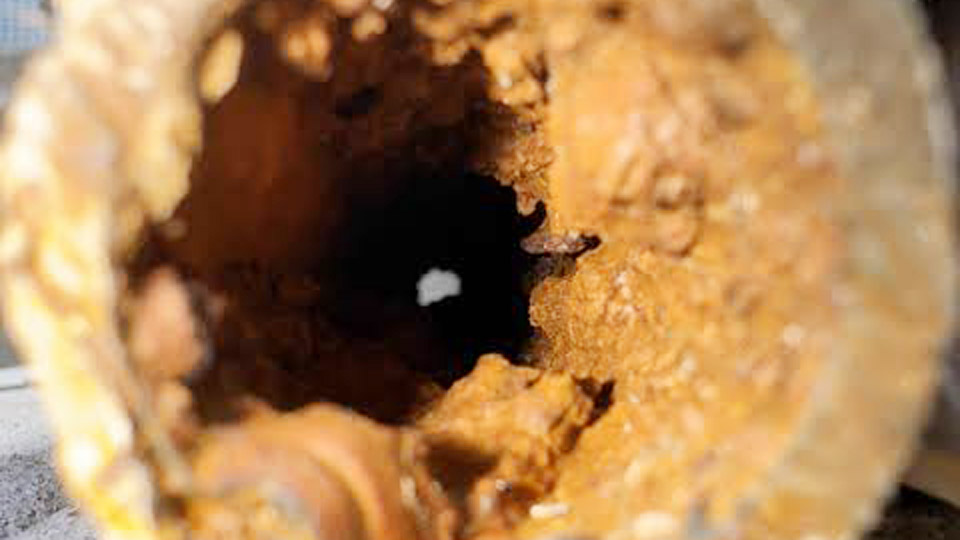
Image by r/Home
Why Internal Rust Forms in Galvanized Pipe
Galvanized pipes feature a zinc layer that sacrificially protects the steel. Over time, especially with water exposure, temperature cycling, or poor drainage, the zinc depletes. Once gone, the underlying carbon steel oxidizes, forming iron oxide that accumulates inside the bore.
In welding contexts, this rust migrates during heating, disrupts shielding gas, or introduces hydrogen, leading to cracking risks. Professionals often encounter this in reclaimed material, older installations, or outdoor structures where condensation collects internally.
Pipe diameter, length, and rust severity dictate the approach. Light surface scale responds differently than heavy, pitted buildup that has compromised wall thickness.
Assessing Rust Severity Before Removal
Visual and Mechanical Inspection
Cut a short test section or use an endoscope/borescope for longer runs. Look for loose scale, adherent red rust, or pitting. Measure wall thickness with ultrasonic tools if precision matters—excessive thinning may require replacement rather than cleaning.
Impact on Welding Decisions
Heavy internal rust near weld zones increases the chance of blowouts or incomplete fusion. For critical applications like pressure vessels or load-bearing members, quantify contamination levels. Mild cases allow chemical treatment; severe pitting often favors cutting out sections and using fresh material.
Mechanical Methods for Internal Rust Removal
Abrasive Techniques for Accessible Sections
For short pipes or open ends, flexible wire brushes, nylon abrasive rods, or custom-length sanding tools reach inside. Attach a wire brush to an extended rod or use a die grinder with appropriate attachments for diameters over 1 inch. Progress from coarse to fine grits to avoid embedding particles.
Shot Blasting or Tumbling
For batch processing shorter lengths, tumbling with media or internal sandblasting using specialized nozzles removes rust effectively. Control pressure to avoid damaging remaining zinc or thinning walls. Post-process with compressed air to clear debris.
Limitations in Practice
Mechanical methods work best on straight runs under 4-6 feet. Longer or bent pipes restrict access, risking incomplete cleaning and future corrosion traps.
Chemical Rust Removal Options for Internal Surfaces
Vinegar and Mild Acid Soaks
White vinegar (acetic acid) offers a accessible, low-aggression option. For disassembled or short sections, fill or submerge the pipe in a 1:1 vinegar-water mix. Soak for several hours to overnight, agitate periodically, then flush thoroughly with water and neutralize with baking soda solution. This dissolves light rust without excessive attack on remaining zinc.
Commercial Chelating Agents and Descalers
Products like CLR (Calcium, Lime & Rust remover) or phosphoric acid-based solutions penetrate and convert rust. Introduce via funnel or pump for longer pipes, allow dwell time per manufacturer specs, then flush extensively. These agents often leave a protective phosphate layer that aids short-term corrosion resistance before welding.
Stronger Acids (Muriatic/Hydrochloric)
Diluted muriatic acid rapidly removes heavy rust and residual zinc. Use with extreme caution—proper ventilation, PPE, and neutralization are mandatory. For internal treatment, cap one end, fill carefully, monitor reaction, then drain and neutralize. This method suits weld prep where complete bare metal is needed but requires immediate rinsing to prevent flash rust.
Molasses or Proprietary Chelators
For very long pipes without disassembly, a molasses-water solution (around 1:10) uses chelation to loosen rust over days or weeks. Slow but gentle, it minimizes base metal loss. Follow with mechanical flushing or high-pressure water.
Electrolysis for Complex Geometries
Set up the pipe as cathode in a sodium carbonate solution with a sacrificial anode. This reduces rust electrochemically. Effective for intricate or hard-to-reach internals but requires setup time and monitoring current density to avoid hydrogen embrittlement.
Hybrid Approaches: Combining Mechanical and Chemical
Start with chemical loosening to soften scale, then follow with mechanical agitation or flushing. For example, soak with vinegar or CLR, drain, then run a chain or weighted abrasive pad on a string through the pipe while rinsing. This minimizes labor while achieving cleaner results than either method alone.
For welding preparation, always finish with solvent wiping (acetone or brake cleaner) to remove any residues that could contaminate the weld pool.
Pipe Length and Configuration Considerations
Short Straight Sections (Under 3 ft)
Full disassembly or flooding with solution is straightforward. Use gravity or low-pressure pumping for even coverage.
Long Runs and Vertical Installations
Segment the pipe if possible. For in-situ treatment, use plugs or inflatable bladders to isolate sections. Pump solutions through and ensure complete drainage—standing liquid promotes new rust.
Bent or Fitted Assemblies
Access limitations require creative solutions like flexible hoses for chemical delivery or compressed air-assisted flushing. In fabrication shops, prioritize cutting and re-welding clean sections over fighting inaccessible rust.
Post-Cleaning Preparation for Welding
Once rust is removed, address the galvanized coating in weld zones. Grind or sand 1-4 inches on either side of the joint to bare metal to prevent zinc fumes and weld defects. For internal surfaces near welds, ensure no loose debris remains—use compressed air, vacuum, or solvent pull-through rags.
Inspect for flash rust after drying. Apply temporary protective coatings if welding isn’t immediate, but remove them before arc initiation.
Welding Parameter Adjustments
Clean internals support tighter parameters: lower amperage for TIG root passes to minimize burn-through on thinned areas, and proper purge for stainless or high-purity applications. Use backing gas effectively in pipes to protect the root from oxidation.
Safety and Environmental Factors in Rust Removal
Handle acids with full PPE, eye protection, gloves, and respirators. Dispose of spent solutions per local regulations—neutralize acids before disposal. Mechanical methods generate dust; use extraction and filtration. Zinc and iron oxides pose inhalation risks, reinforcing the need for thorough pre-weld cleaning.
Choosing the Right Method: Decision Framework
- Light rust, short pipe: Vinegar soak + brush.
- Heavy scale, moderate length: CLR or phosphoric acid + mechanical follow-up.
- Long inaccessible runs: Chemical circulation or molasses chelation.
- Welding-critical: Mechanical or acid to bare metal + thorough rinse and inspection.
Factor in time, cost, and material condition. Severely pitted pipes may not justify cleaning—replacement often proves more economical for long-term durability.
Advanced Techniques for Professional Fabricators
Electrochemical cleaning systems or ultrasonic agitation enhance chemical efficacy in pipes. Some shops use controlled abrasive flow or CO2 blasting for minimal residue. For high-volume work, invest in dedicated pipe cleaning stations with rotating brushes and solution recirculation.
Post-weld, consider re-galvanizing or zinc-rich coatings on repaired areas to restore protection, especially for outdoor or corrosive service.
Final Thoughts
Effective rust removal from inside galvanized pipe balances access constraints, material preservation, and weld quality requirements. Professionals select methods based on specific project demands—chemical for reach, mechanical for speed and control, hybrid for stubborn cases.
Mastering these techniques directly improves weld consistency, reduces rework, and extends service life in demanding applications.
The key decision often comes down to evaluating whether cleaning saves more time and cost than sourcing clean material—experience shows thorough prep almost always pays off in stronger, defect-free fabrications.
FAQ
Can I weld galvanized pipe without removing internal rust?
No. Internal rust introduces contaminants that cause porosity, inclusions, and weak welds. Always clean thoroughly near weld zones for reliable results.
What’s the fastest way to remove light internal rust?
CLR or similar commercial descalers introduced and flushed after short dwell time, followed by solvent cleaning. Effective for many hobbyist and light fabrication jobs.
Does removing rust inside galvanized pipe weaken the material?
Mild chemical methods have minimal impact if monitored. Aggressive acids or excessive mechanical abrasion can thin walls—measure thickness and test samples when in doubt.
How do I prevent rust from returning after cleaning?
Dry completely, apply protective coatings or oils temporarily, and store in low-humidity conditions. For finished welds, restore zinc protection via spray or hot-dip where feasible.