Rusty joint faces cause porosity, lack of fusion, and weak welds even when amperage and technique are correct. Aggressive wire brushing or coarse grinding often scratches or thins the base metal, creating stress risers or altering fit-up on precision parts.
Learning how to remove rust from metal without scratching solves both problems by prioritizing chemical dissolution or controlled low-abrasion methods that leave sound steel intact.
Clean, undamaged metal improves arc stability, reduces spatter, and delivers consistent penetration—especially critical on structural or pressure work where surface condition directly affects joint integrity.
The right approach depends on rust depth, part geometry, and whether the surface will be welded immediately.
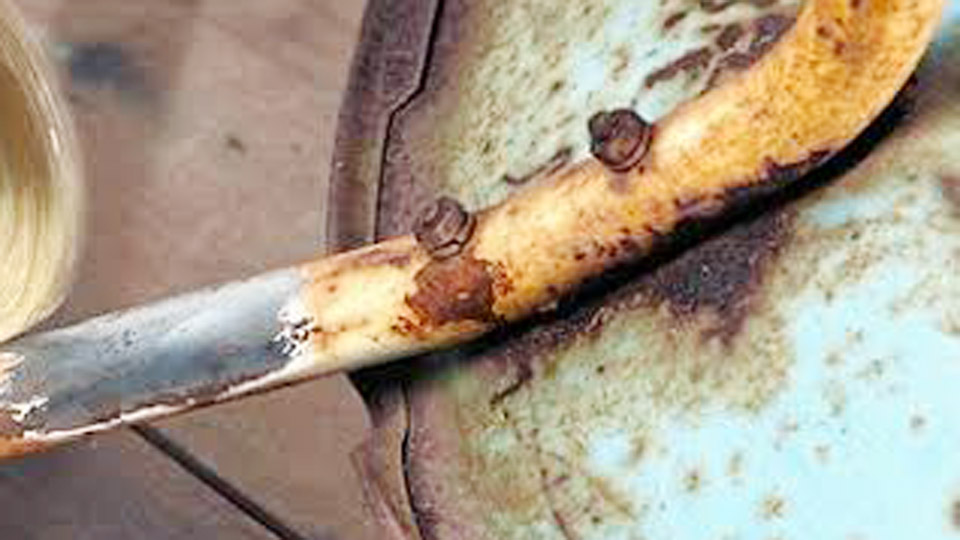
Image by familyhandyman
Assessing Rust Severity and Surface Condition First
Rust classification drives method selection more than any other factor. Surface assessment prevents over-treatment that risks dimensional change or under-treatment that leaves oxide in the weld zone.
Identifying Light Surface Oxidation Versus Scale
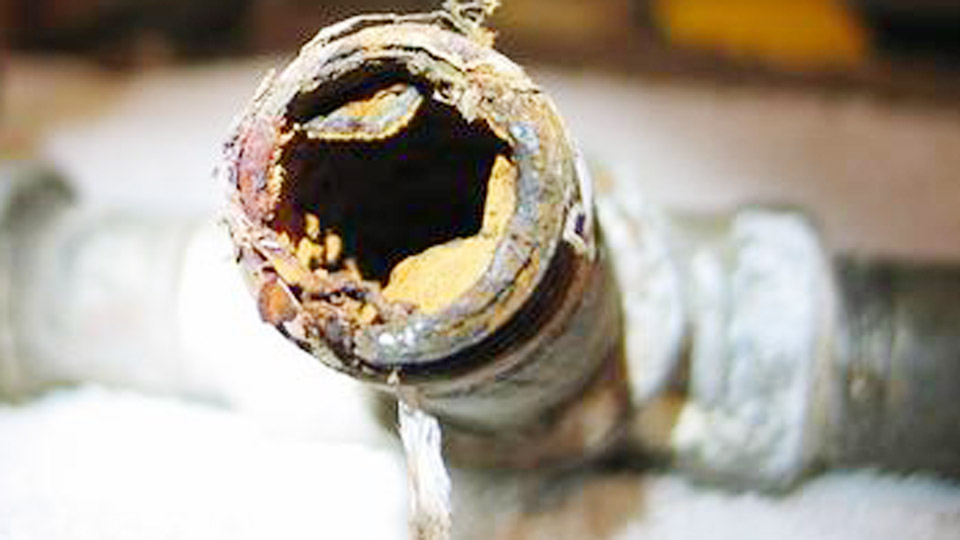
Light rust appears as a uniform orange haze or fine powder with no measurable pitting. It responds to mild acids or chelators in under a few hours and rarely requires mechanical help. Scale or heavy corrosion shows layered crust, flaking, or visible pits deeper than a few thousandths of an inch.
These demand longer exposure or multi-stage processes. Measure pit depth with a simple depth gauge or visual comparison against known good metal; pits exceeding 0.010–0.020 inch often require evaluation for structural loss before any cleaning begins.
Checking for Mill Scale, Paint, or Contaminants
Mill scale (the blue-black oxide layer from hot rolling) is denser than ordinary rust and resists many mild soaks. Paint or oil films block chemical contact and must be removed first with a solvent wipe or light abrasion.
Cross-contamination risk rises when switching between carbon steel and stainless; dedicated brushes or pads prevent iron particles from embedding in stainless surfaces.
Deciding Whether the Part Must Remain Dimensionally Exact
Machined surfaces, thin sheet, or close-tolerance fixtures cannot tolerate aggressive material removal. In these cases chemical or electrolytic methods take priority because they target iron oxide selectively and leave base metal largely untouched. Structural plate or non-critical fabrications tolerate limited mechanical cleaning if chemical options prove too slow.
Chemical Methods That Dissolve Rust Without Abrasion
Acids and chelating agents convert or lift iron oxide while sparing sound steel when dwell times and concentrations stay controlled.
White Vinegar and Citric Acid Soaks
White vinegar (5 % acetic acid) softens light to moderate rust on small parts. Fully submerge the piece in undiluted vinegar; light rust typically loosens in 1–4 hours, heavier deposits may need 12–24 hours. Check progress periodically—prolonged exposure etches steel slightly and can dull polished surfaces.
Citric acid solutions (roughly 5–10 % by weight in warm water) act similarly and often leave a cleaner finish. After soaking, scrub residual softened oxide with a soft nylon brush or non-woven pad, then neutralize with a baking-soda solution and rinse thoroughly. Immediate drying prevents flash rust.
Commercial Chelating Agents Such as Evapo-Rust
Chelating formulas bind selectively to iron ions in rust and leave base metal intact. Soak times range from 30 minutes for light films to overnight for heavy scale. These products are typically pH-neutral, reusable until saturated, and safe around rubber or plastic components.
They produce bare metal ready for welding after a water rinse and thorough dry. Cost is higher than household acids, yet the absence of etching and minimal labor make them practical for tools, fixtures, and complex shapes.
Phosphoric Acid Solutions and Converters
Phosphoric acid both dissolves and converts iron oxide into iron phosphate. Diluted solutions (often 10–40 % depending on product) work as soaks or brush-on gels.
Conversion leaves a dark protective layer useful when painting follows, but for welding the layer must be removed by light brushing or rinsing to expose clean steel.
Over-application etches the surface; follow manufacturer dwell times and neutralize residual acid. Phosphoric products suit moderate rust on larger fixed surfaces where full submersion is impractical.
Electrolysis for Intricate or Heavily Corroded Parts
Electrolysis reverses the oxidation process electrically and removes only rust, making it one of the gentlest options for dimensional preservation.
Basic Setup Parameters
A plastic container, washing soda (sodium carbonate) electrolyte at roughly 1 tablespoon per gallon of water, a sacrificial steel anode, and a low-voltage DC source (6–12 V battery charger) form the system. Connect the rusty part to the negative terminal and the anode to the positive.
Current density of a few amps per square foot of surface is typical. Hydrogen gas evolves at the cathode, so ventilation is mandatory and open flames must stay clear of the bath.
Process Time and Post-Treatment
Light rust clears in a few hours; heavy scale may require 12–24 hours or longer. Black magnetite and loose sludge form on the part and must be rinsed and brushed away with a soft pad.
The method reaches internal cavities and threads that chemical soaks or mechanical tools cannot access evenly. After cleaning, dry immediately and apply a temporary oil film if welding is delayed.
Controlled Mechanical Options When Chemicals Fall Short
Mechanical cleaning becomes necessary for heavy scale or when time constraints rule out long soaks, yet aggressiveness must stay limited to avoid scratches and metal loss.
Soft Abrasives and Non-Woven Pads
Aluminum foil crumpled and dampened with water or vinegar lifts light rust through a mild galvanic and abrasive action without scoring most steels or chrome.
Non-woven abrasive pads (Scotch-Brite type) in fine or medium grades remove oxide films while producing a consistent low-profile texture useful for paint adhesion or light weld prep. Hand pressure and short strokes prevent gouging.
Brass or Nylon Brushes Versus Steel Wire
Brass bristles are softer than carbon steel and reduce the risk of embedding iron particles or creating deep scratches. Nylon brushes suit the lightest films.
Steel wire wheels or cups remove scale rapidly but introduce scratches and must be reserved for non-critical structural surfaces where subsequent grinding or beveling will erase marks. Always match brush material to the base metal—never use carbon-steel brushes on stainless.
Power Tools with Restraint
An angle grinder fitted with a fine flap disc (80–120 grit) or a clean-and-strip disc removes heavy rust and mill scale efficiently. Keep the tool moving, use light pressure, and stop as soon as bright metal appears.
Over-grinding thins sections and alters joint geometry. For thin sheet or precision parts, power tools remain a last resort after chemical or electrolytic attempts.
Preparing the Cleaned Surface for Immediate Welding
Rust removal alone is incomplete until residual chemicals, moisture, and loose particles are eliminated.
Rinsing, Neutralizing, and Drying Protocols
Acid residues continue to attack steel if left behind. After vinegar, citric, or phosphoric treatments, a baking-soda rinse neutralizes acidity. Chelating solutions usually need only a water rinse.
Blow or wipe dry immediately; residual moisture triggers flash rust within minutes on clean steel. A final wipe with acetone or a non-chlorinated solvent removes any remaining films that could generate porosity.
Inspection Criteria Before Striking an Arc
Bright metal free of visible oxide, pits deeper than acceptable limits, and chemical residue confirms readiness. On critical joints, clean at least 1 inch beyond the weld zone on both sides.
Any remaining black conversion layer or sludge must be brushed off. If the part sat overnight after cleaning, re-inspect and re-wipe; atmospheric oxidation reforms quickly on bare steel.
Temporary Protection When Welding Is Delayed
A light film of welding-compatible anti-spatter or a thin oil coating slows re-rusting. Wipe the film completely before welding. For longer storage, a rust-inhibiting primer is appropriate only if it will later be removed from the joint area.
Matching Method to Part Geometry and Production Needs
Selection balances effectiveness, time, cost, and surface integrity against the specific job.
Small Tools, Hardware, and Removable Components
Submersion methods—vinegar, chelators, or electrolysis—excel because full contact is easy and labor is minimal. These parts often return to service or fit-up with minimal further prep.
Large Plates, Frames, and Fixed Assemblies
Brush-on gels, phosphoric converters, or localized mechanical cleaning become practical. Full submersion is rarely feasible. Focus effort on the weld zone rather than the entire structure unless the entire surface requires treatment.
High-Volume or Time-Critical Work
Commercial chelators or controlled mechanical cleaning with power tools reduce cycle time. Electrolysis and long vinegar soaks suit batch processing of small parts where overnight dwell is acceptable. Document the chosen method and parameters for repeatable results on similar jobs.
Wrapping Up
Choosing the gentlest effective method for the observed rust depth preserves metal thickness and surface quality while delivering the clean joint faces required for sound fusion.
On critical structural or pressure work, verify cleanliness with a visual and tactile check immediately before welding; residual oxide or moisture remains a common source of porosity even after careful preparation.
Advanced practice pairs selective chemical removal with minimal final abrasion only in the weld zone, then moves directly to fit-up and welding while the surface is still bright.
FAQs
Does vinegar remove rust without damaging the base metal?
Yes for light to moderate rust when soak times stay limited to a few hours and the part is neutralized and dried promptly. Extended immersion can etch steel slightly.
Is Evapo-Rust safe to use before welding?
Yes. It leaves bare metal after rinsing and drying. Ensure all residue is removed so no organic film remains in the weld zone.
Can I use electrolysis on parts that will be welded right away?
Yes. After the bath, rinse thoroughly, brush off black residue, and dry completely. The process does not leave films that interfere with arc welding when post-cleaned correctly.
What is the fastest non-scratching method for light surface rust on tools?
A short commercial chelator soak or aluminum-foil rub with water often clears light films in under an hour with almost no abrasion.