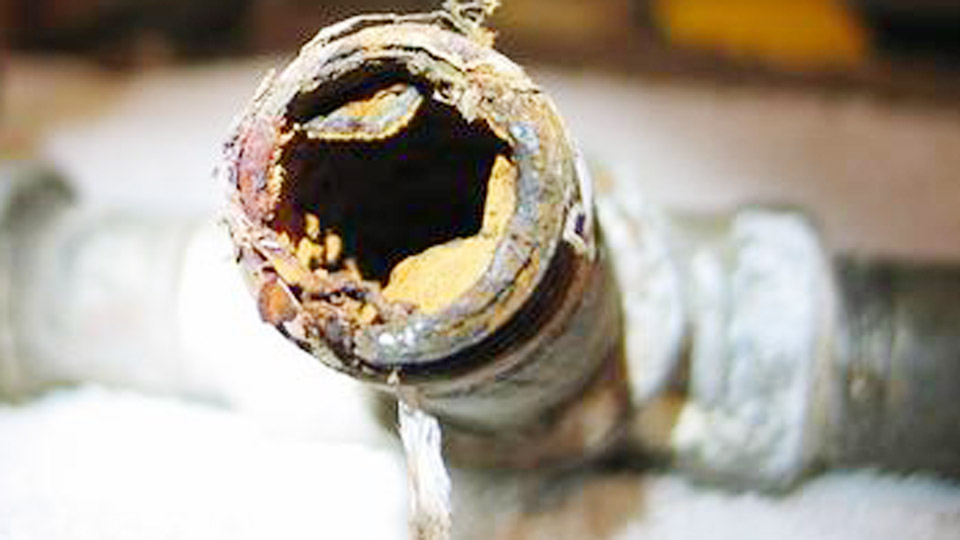
A stainless screw that looked perfect on the day of installation develops brown stains or pits within months on an outdoor welded frame, a marine bracket, or a food-equipment assembly. The question “Do stainless steel screws rust?” arises immediately because the label “stainless” creates the expectation of permanent immunity.
In practice the answer is conditional: stainless steel resists corrosion through a chromium-rich passive oxide layer, yet that layer fails under chlorides, iron contamination, oxygen-starved crevices, galvanic couples, or improper grade selection.
For welders and fabricators the distinction matters because fastener failure or surface staining can reject a structural weldment, introduce contaminants into hygienic systems, or force costly field replacements.
Understanding the metallurgy and the shop variables that compromise the passive film allows correct grade choice and installation practices before the job leaves the floor.
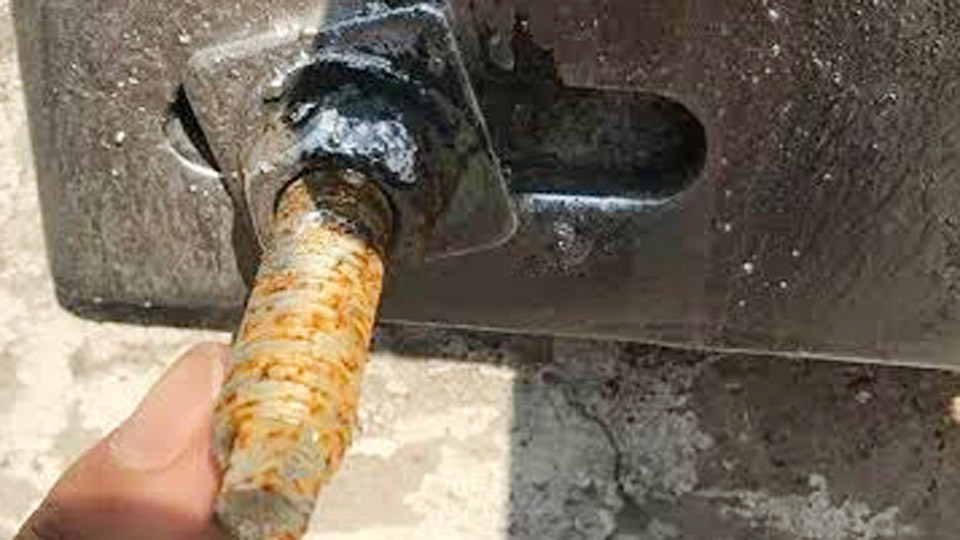
Image by a2fasteners
How the Passive Layer Protects Stainless Steel Fasteners
Chromium at a minimum of 10.5 % reacts with atmospheric oxygen to form a continuous, self-healing chromium-oxide film only a few nanometers thick. This film isolates the iron content of the alloy from further oxidation.
As long as oxygen can reach the surface and aggressive ions remain below critical thresholds, the layer reforms after minor mechanical damage and keeps the fastener free of bulk iron oxide.
Conditions That Break the Passive Film
Chloride ions are the most aggressive disruptors. They adsorb preferentially at weak points, locally dissolve the oxide, and create anodic sites that deepen into pits. Once a pit stabilizes, the internal chemistry becomes acidic and self-sustaining, so pitting continues even after the external chloride concentration drops.
Crevice geometries under washer faces, in thread roots, or against overlapping plates create the same oxygen-depleted, chloride-concentrated environment and produce crevice corrosion.
Both mechanisms are far more common in coastal air, de-icing salt exposure, swimming-pool atmospheres, and chemical wash-down areas than in clean inland outdoor service.
Surface Contamination Versus True Alloy Corrosion
Iron particles transferred from carbon-steel wire brushes, grinding discs, or tooling embed in the stainless surface and oxidize. The resulting brown stains look identical to rust of the stainless itself, yet the substrate remains sound once the particles are removed.
True alloy corrosion appears as discrete pits or under-head attack rather than uniform surface discoloration. Distinguishing the two determines whether simple cleaning and passivation restore performance or whether the fastener must be replaced.
Grade Selection Decisions That Control Long-Term Performance
Not every stainless alloy performs equally. Chromium, nickel, and molybdenum contents dictate pitting resistance and therefore suitability for a given environment.
304 / A2 Versus 316 / A4 for Outdoor and Industrial Service
Type 304 (approximately 18 % Cr, 8 % Ni) supplies adequate resistance for indoor assemblies, mild outdoor inland exposure, and non-chloride industrial atmospheres. Its Pitting Resistance Equivalent Number (PREN) typically falls in the 18–20 range.
Type 316 adds 2–3 % molybdenum, raising PREN to roughly 24–28 and markedly improving resistance to chloride pitting and crevice attack.
In coastal zones, marine fittings, or any location subject to road salt or pool chemicals, the molybdenum addition is the decisive factor that keeps fasteners free of visible corrosion for decades rather than years.
When 410 or Other Martensitic Grades Are Acceptable
Martensitic grades such as 410 contain only about 12 % chromium and little or no nickel. They can be hardened for higher shear strength and are common in self-drilling screws, yet their thinner passive film allows surface rust in moist outdoor air within a single season.
They remain useful only where the environment is dry, abrasion resistance is the primary requirement, and cosmetic staining is acceptable.
Practical Matching of Grade to Service Environment
Inland structural steelwork with occasional rain: 304 (A2-70) is normally sufficient. Coastal or salt-laden industrial sites: specify 316 (A4-70 or A4-80).
Permanent immersion or severe chemical exposure: consider duplex or higher-alloy grades rather than relying on standard 316. Matching the PREN of the fastener to the expected chloride and temperature profile prevents the majority of field failures.
Contamination Risks Specific to Welding and Fabrication Shops
Weld shops generate iron-bearing dust and use tools that transfer free iron far more readily than clean assembly environments.
Tooling and Grinding Cross-Contamination
Carbon-steel wire brushes, grinding wheels previously used on mild steel, and even ordinary steel clamps leave microscopic iron particles on stainless fasteners. Once the assembly is exposed to humidity, those particles rust and stain the surrounding metal.
Dedicated stainless tooling, separate storage of stainless fasteners, and covering nearby stainless components during carbon-steel grinding reduce the incidence dramatically.
Post-Fabrication Cleaning and Passivation
After any mechanical working or accidental contamination, chemical passivation with citric or nitric acid formulations removes free iron and restores a uniform chromium-oxide film.
For critical hygienic or marine work the sequence of thorough cleaning followed by passivation is often written into the procedure; skipping it leaves residual iron that later appears as rust spots.
Galvanic Coupling When Stainless Screws Fasten Dissimilar Metals
Stainless steel occupies a noble position on the galvanic series. When it contacts a less noble metal in the presence of an electrolyte, the less noble metal becomes the anode and corrodes preferentially.
Stainless Fasteners in Mild-Steel or Galvanized Assemblies
A stainless screw driven into a large galvanized or carbon-steel structure experiences only modest acceleration of zinc or steel corrosion because the anode area is large relative to the cathode.
The reverse arrangement—galvanized screws in a stainless assembly—produces rapid fastener failure. Isolation washers or coatings interrupt the electrical path and eliminate the couple when mixed metals cannot be avoided.
Aluminum and Stainless Combinations
Aluminum is more anodic than austenitic stainless. In wet or saline conditions the aluminum member suffers accelerated attack around the fastener. Nylon or PTFE isolation components, or the use of aluminum fasteners where strength permits, prevent the problem.
Effects of Welding Heat on Nearby Stainless Fasteners
Heat from adjacent welding can compromise the passive layer even when the fastener itself is not welded.
Sensitization and Heat-Tint Risks
Austenitic stainless held between approximately 425 °C and 815 °C forms chromium carbides at grain boundaries, depleting local chromium and creating paths for intergranular corrosion. Heat tint on the surface indicates the same chromium depletion in the outer layers.
Fasteners located close to a weld zone can experience enough thermal exposure to become vulnerable once the assembly enters service. Low-heat processes, shielding, and post-weld cleaning or passivation of the entire assembly mitigate the risk.
Practical Shop Sequencing
Install critical stainless fasteners after welding and final cleaning whenever possible. When fasteners must be present during welding, protect them with heat sinks or covers and verify the absence of heat tint before the job is released.
Decision Framework for Choosing and Installing Stainless Screws on Welded Work
Identify the maximum chloride exposure, temperature, and presence of dissimilar metals first. Select 316 when chlorides are present at any sustained level; default to 304 only for clean inland service. Specify the mechanical property class (A2-70, A4-80, etc.) according to load requirements rather than assuming higher strength automatically improves corrosion performance.
During installation use stainless or non-ferrous tools, avoid over-torquing that can damage threads and create stress-corrosion sites, and isolate galvanic couples with non-conductive washers when mixed metals are unavoidable.
Wrapping Up
After installation, clean any visible iron contamination and consider passivation for high-value or corrosive-service assemblies. These steps convert the theoretical corrosion resistance of stainless steel into reliable field performance.
When the correct grade is matched to the environment and shop contamination is controlled, stainless steel screws deliver decades of service without bulk rust.
The advanced insight for production work is that the most frequent “rust” complaints originate from free-iron contamination or an under-specified 304 fastener in a chloride environment rather than from any inherent failure of the stainless alloy itself; addressing those two variables eliminates the majority of visible corrosion on finished fabrications.
FAQs
Do stainless steel screws rust in saltwater or coastal air?
Yes, if the grade is 304. Chlorides attack the passive layer and produce pitting or tea staining. Specify 316 (A4) for any sustained salt exposure.
Why do my stainless screws show rust spots after fabrication?
Most often free-iron particles transferred from carbon-steel tools or grinding dust. Clean with a citric-acid passivation treatment; the stainless substrate itself is usually intact.
Can I use stainless steel screws with mild-steel or galvanized parts?
Yes, provided the stainless is the fastener and the mild-steel area is large. Isolate with non-conductive washers if the environment is wet or the surface-area ratio is unfavorable.
Are 410 stainless screws as corrosion-resistant as 304?
No. 410 has lower chromium and no nickel, so it develops surface rust more readily in moist outdoor conditions. Use it only where hardness is the priority and corrosion exposure is limited.