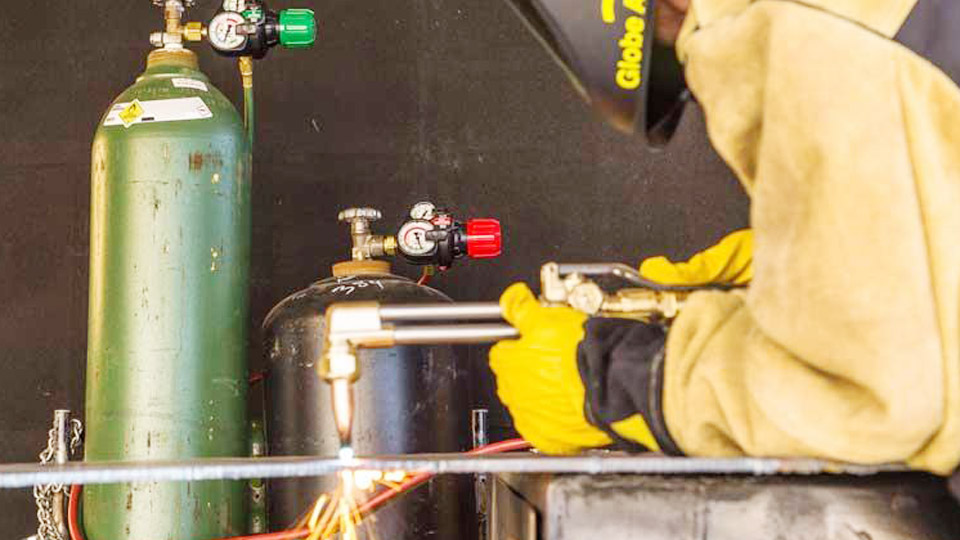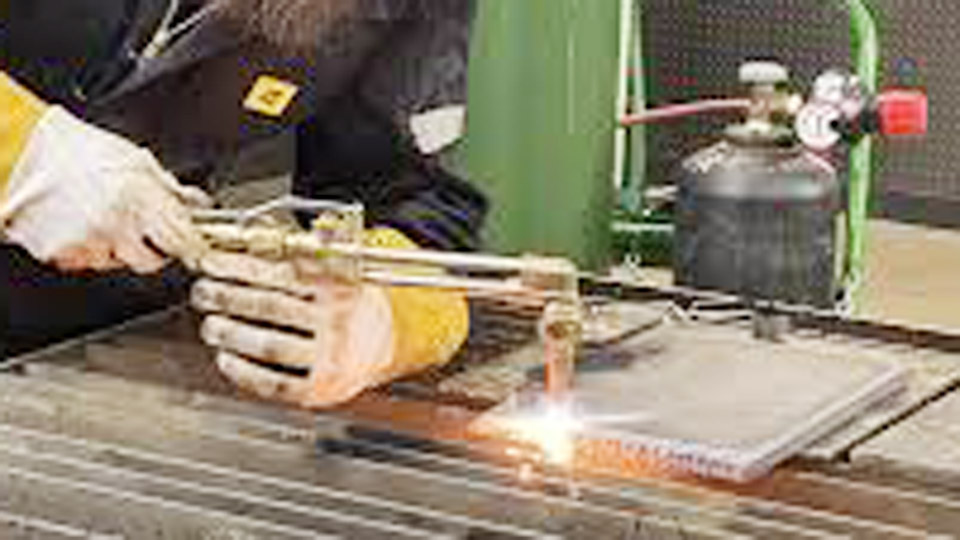
Understanding how oxy-acetylene cutting works requires more than knowing that a torch produces a hot flame. The process relies on a controlled combination of oxygen and acetylene to preheat steel to its ignition temperature, followed by a high-pressure oxygen jet that rapidly oxidizes and removes the heated metal.
The quality of the cut depends on factors such as preheat intensity, oxygen pressure, nozzle selection, torch distance, and cutting speed. If these variables are mismatched, the result can be excessive slag, a rough kerf, poor edge quality, or incomplete cutting.
For fabrication, repair, and metalworking applications, understanding the sequence of preheating, oxygen injection, oxidation, and material removal makes it easier to set up the torch correctly and produce consistent cuts.
This foundation also helps explain why oxy-acetylene cutting performs differently across various steel thicknesses and cutting conditions.
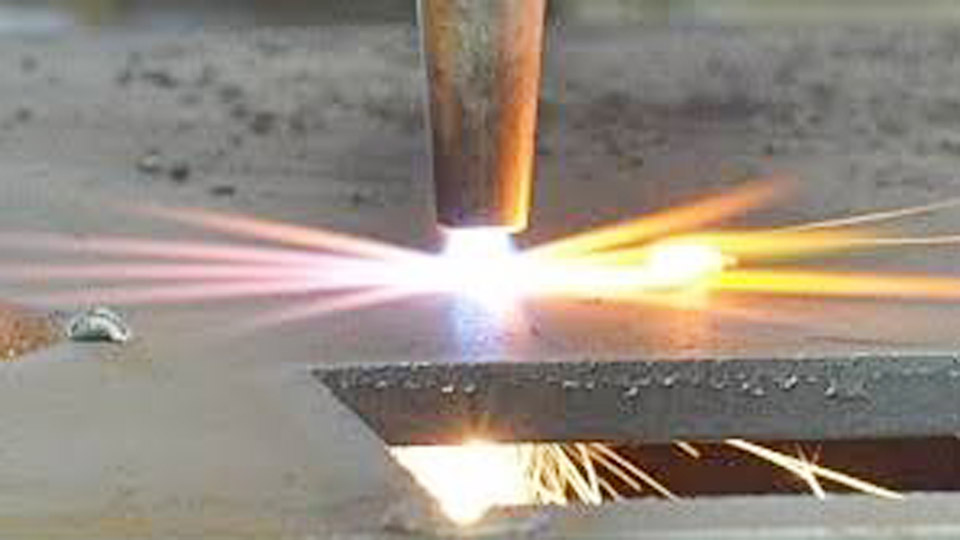
Image by esab.com
What Actually Removes the Metal During an Oxy-Acetylene Cut
The process is oxidation, not melting. Steel reaches its kindling temperature (approximately 1600–1800 °F / 870–980 °C), then a high-purity oxygen stream reacts with the iron to form molten iron oxide that is blown out of the kerf.
Role of the Preheat Flame in Reaching Kindling Temperature
A neutral oxy-acetylene flame (roughly equal volumes of oxygen and acetylene) produces an inner cone temperature near 5600–5800 °F (3100–3200 °C). The outer envelope is cooler but supplies secondary heat.
The operator holds the flame so the inner cone tips are about 1/16–1/8 in from the surface until a bright cherry-red spot appears. At that point the steel is ready to oxidize but has not yet melted.
Excess acetylene (carburizing flame) leaves a longer, feathery secondary cone and deposits carbon; excess oxygen shortens and intensifies the cone, risking surface melting before the cut starts.
The Pure Oxygen Cutting Stream and the Exothermic Reaction
Once the kindling temperature is reached, the cutting lever releases a concentrated jet of oxygen at higher pressure through the central orifice. Iron combines with oxygen according to the primary reaction
(with secondary oxides also forming). The reaction is strongly exothermic and supplies most of the heat that sustains the cut. The kinetic energy of the oxygen stream ejects the molten oxide (slag) from the bottom of the kerf.
Preheat flames continue to run around the oxygen jet to keep the leading edge at temperature. Oxygen purity below about 99.5 % slows the reaction dramatically and widens the kerf.
Why Acetylene Remains the Preferred Fuel for Manual and Precision Cutting
Acetylene delivers the highest flame temperature and the most focused primary cone of common fuel gases. That combination shortens preheat time and reduces the heat-affected zone on thinner sections.
Flame Temperature Advantage and Focused Heat Delivery
Acetylene in pure oxygen reaches approximately 3160 °C (5720 °F) at the tip of the inner cone. Propane and propylene peak 300–400 °C lower and release more of their heat in the secondary flame.
The tighter acetylene cone allows faster piercing and cleaner starts on plate under 2 in. For short cuts or multi-pierce work the reduced preheat time often outweighs acetylene’s higher cost.
Situations Where Alternate Fuels Become Practical
On thick plate or long production runs where total heat of combustion matters more than peak temperature, propane or propylene can match overall cutting speed while lowering fuel cost. These gases also allow higher withdrawal rates from bulk tanks without the 15 psi acetylene limit.
For pure heating or scarfing of large surfaces the broader secondary flame of propane is often preferred. Tip design must match the fuel; acetylene tips will not perform correctly with propane without conversion.
Matching Tip Size and Regulator Pressures to Plate Thickness
Tip size is selected by the diameter of the central cutting-oxygen orifice. Larger orifices deliver the volume of oxygen needed for thicker sections. Acetylene pressure stays relatively low; cutting oxygen pressure rises with thickness.
Practical Tip Size and Pressure Ranges for Common Thicknesses
| Steel Thickness | Typical Tip Size | Cutting O₂ (psi) | Acetylene (psi) | Approximate Speed (ipm) |
|---|---|---|---|---|
| Up to 1/4 in | 000–0 | 20–30 | 3–5 | 25–32 |
| 3/8–1/2 in | 0–1 | 30–40 | 3–6 | 18–25 |
| 3/4–1 in | 1–2 | 35–45 | 4–8 | 14–20 |
| 1-1/2–2 in | 2–3 | 40–55 | 5–10 | 10–15 |
| 3–4 in | 4–5 | 45–60 | 6–12 | 7–12 |
| 6 in and above | 5–6+ | 55–80+ | 8–15 | 4–8 |
Pressures are measured at the regulators with 25 ft of 1/4-in hose for smaller tips; longer or smaller-diameter hose requires slight increases. Acetylene must never exceed 15 psi under flow. Flashback arrestors can require up to 25 % higher delivery pressure.
Balancing Preheat Oxygen Against Cutting Oxygen
On two-hose torches the preheat oxygen is drawn from the same regulator as the cutting oxygen, so the cutting-oxygen setting also governs preheat intensity. Three-hose machine torches allow independent preheat control.
Too little preheat oxygen produces a soft, carburizing flame and delayed starts; too much creates an oxidizing flame that can melt the surface before the oxygen jet is applied.
A correctly adjusted neutral flame shows a sharp, well-defined inner cone roughly equal in length to the secondary envelope.
Edge Starts Versus Piercing Through the Middle of a Plate
Starting technique determines whether the cut begins cleanly or leaves a large, irregular hole that must later be ground.
Establishing Kindling Temperature on an Edge
For an edge start, position the preheat cones so they heat the top edge and a portion of the vertical face simultaneously. When the edge reaches bright cherry red, open the cutting oxygen and move the torch into the plate at a slight leading angle.
The oxygen jet should exit the bottom of the plate almost immediately. Continuing the oxygen stream past the far edge produces a clean “drop cut.”
Piercing Technique and Control of Blowback
Piercing requires more careful heat management. Hold the torch nearly vertical and preheat a small spot until it is fully cherry red.
Raise the torch slightly (½–¾ in) and open the cutting oxygen in a brief pulse to begin the reaction, then lower the tip and move immediately to avoid trapping slag.
On plate thicker than 1 in, a short pause after the initial pierce allows the reaction to establish before full travel begins. Excessive oxygen pressure during the first second of a pierce can throw molten slag upward onto the tip face and operator.
Travel Speed, Torch Angle, and Kerf Quality Indicators
Correct speed keeps the oxidation reaction balanced with the oxygen jet’s ability to clear slag. Angle controls the direction of slag flow and the final edge geometry.
Reading Drag Lines and Kerf Width
At proper speed the drag lines on the cut face lean slightly backward (drag of roughly 1/16–1/8 in on 1-in plate). Excessive speed produces pronounced lag, incomplete penetration, and a narrow top kerf that flares at the bottom.
Too slow a speed widens the kerf, rounds the top edges, and deposits heavy slag that is difficult to remove. Kerf width should stay close to the cutting-orifice diameter—typically 0.05–0.15 in for common tip sizes.
Torch Angle Effects on Bevel and Slag Clearance
A 90° torch angle produces a square edge. A 5–15° lead angle in the direction of travel helps the oxygen jet clear slag on thicker sections.
For bevel cuts the torch is tilted to the required angle and the tip standoff is adjusted so the preheat cones still contact the surface evenly. On vertical cuts the torch is usually held so the oxygen stream points slightly upward to assist slag removal.
Which Metals Respond to Oxy-Acetylene Cutting and Which Do Not
The process depends on the metal forming an oxide whose melting point is lower than that of the base metal and whose reaction releases enough heat to sustain itself.
Carbon and Low-Alloy Steels
Mild steel and most low-alloy structural grades cut readily because Fe₃O₄ melts below the melting point of the steel and the oxidation reaction is strongly exothermic. Higher carbon content increases the risk of hardening in the heat-affected zone; preheat and post-heat may be required on steels above approximately 0.30 % carbon or on restrained sections.
Metals That Resist or Produce Poor Results
Stainless steels form a high-melting chromium oxide that shields the underlying metal; powder injection or plasma is preferred. Cast iron produces a sticky slag that is difficult to eject and often leaves a rough edge.
Aluminum and copper conduct heat so rapidly that the kindling temperature is hard to maintain, and their oxides do not behave favorably. High-alloy tool steels and some nickel alloys also resist clean oxygen cutting.
Wrapping Up
When the oxygen jet, preheat balance, and travel speed are matched to thickness, the cut face shows uniform drag lines, minimal top-edge rounding, and slag that separates with light tapping.
The decisive variables remain tip orifice size, cutting-oxygen volume, and the operator’s ability to keep the leading edge at kindling temperature without surface melting.
Advanced operators further refine results by adjusting oxygen purity and by using slightly richer preheat on heavily scaled plate so the reaction initiates through the oxide layer rather than being delayed by it.
FAQs
What pressure should I set for cutting 1/2-inch steel with oxy-acetylene?
Use a size 0 or 1 tip with cutting oxygen at 30–40 psi and acetylene at 3–6 psi. Adjust the flame to neutral and verify the cut produces light drag lines.
Why does my oxy-acetylene cut stop halfway through the plate?
The leading edge has dropped below kindling temperature. Slow the travel speed slightly, increase preheat intensity, or ensure the cutting oxygen pressure is high enough to clear slag and sustain the reaction.
Can oxy-acetylene cut stainless steel cleanly?
No. Chromium oxide forms a protective barrier that stops the oxidation reaction. Plasma or powder-injection oxygen cutting is required for acceptable results on stainless.
How do I know if my tip size is too small for the thickness?
The cut fails to penetrate fully, drag lines become extreme, and heavy slag builds on the bottom edge. Move to the next larger tip size and raise cutting oxygen pressure accordingly.