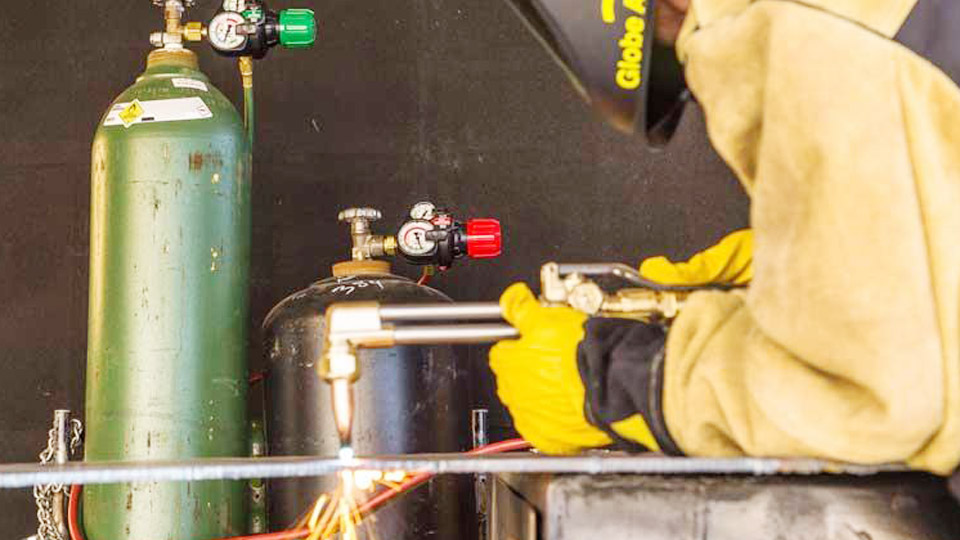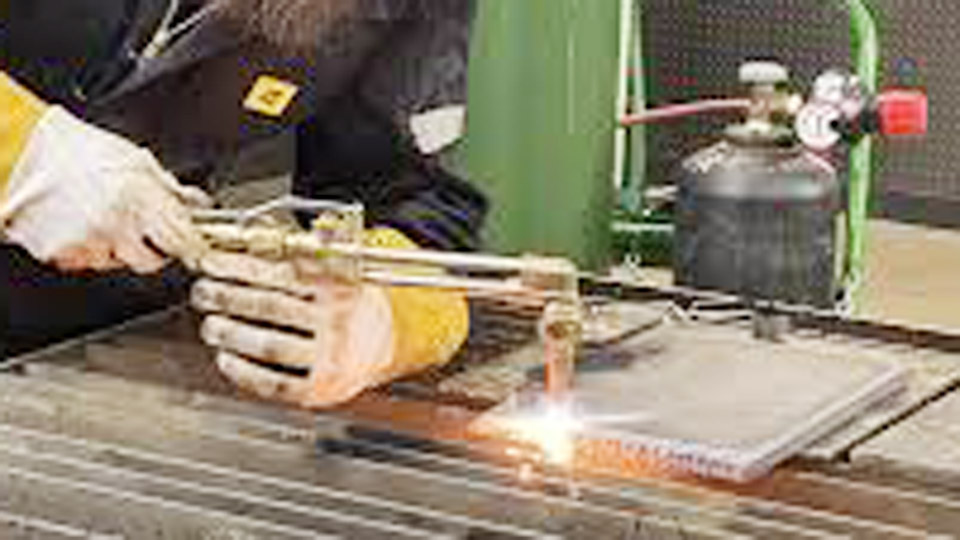
Many welders encounter frustration when a cut wanders, leaves excessive dross, or fails to penetrate cleanly on carbon steel plate, especially when switching between manual work and thicker sections. How does oxy-acetylene cutting work addresses this by delivering a reliable, portable method that relies on controlled oxidation rather than melting.
This process remains essential for DIYers, students, hobbyists, and professionals because it handles thick materials cost-effectively where other methods struggle with power requirements or precision on heavy stock.
Understanding the chemistry, equipment settings, and technique decisions directly impacts cut quality, speed, and material usability. The exothermic reaction between iron and pure oxygen generates the cutting action, with the preheat flame maintaining ignition temperature.
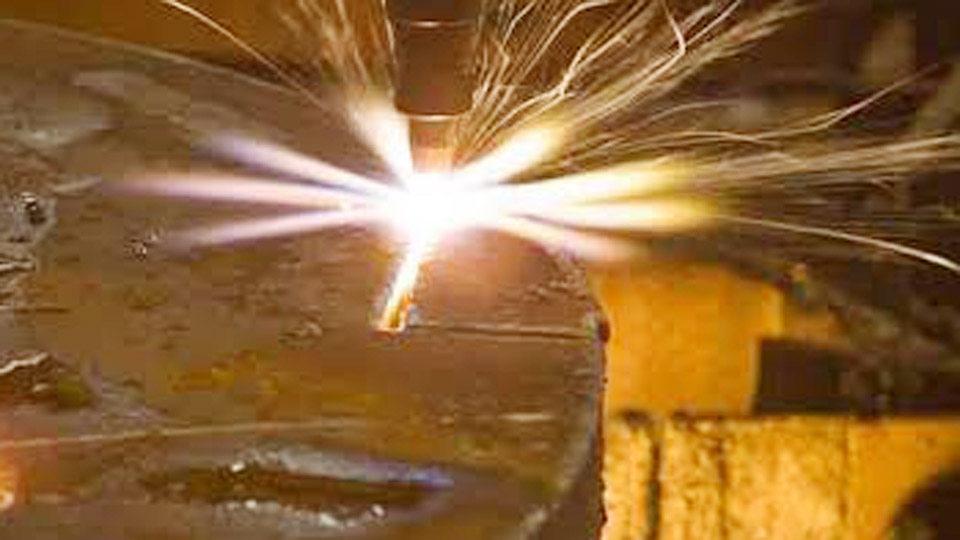
Image by thefabricator
The Chemistry Behind Oxy-Acetylene Cutting
Ignition Temperature and Exothermic Reaction
Oxy-acetylene cutting preheats low-carbon steel to its kindling temperature of approximately 700–900°C (bright red heat), well below the melting point of steel (~1,500°C). A high-pressure stream of pure oxygen (cutting oxygen) then triggers rapid oxidation, forming iron oxide (slag) with a lower melting point than the base metal.
This reaction releases significant heat, sustaining the process as the torch advances. The oxygen jet ejects the molten slag, creating the kerf. Unlike melting processes, this is rapid, controlled rusting that requires the oxide to remain fluid for removal.
Role of Acetylene and Oxygen Mixture
Acetylene provides the hottest primary flame (~3,160°C) among common fuel gases, enabling fast piercing. The preheat mixture uses a neutral or slightly oxidizing flame for efficient heating without excess carbon.
Pure cutting oxygen (typically 99.5%+ purity) drives the oxidation; even a 1% drop in purity can reduce speed by ~25% and increase gas consumption.
Other fuels like propane offer lower flame temperatures (~2,828°C) and slower piercing but suit some applications due to cost or availability.
Equipment Setup for Reliable Cuts
Cylinder, Regulator, and Hose Configuration
Secure cylinders upright and chain them. Use regulators to drop high cylinder pressure to working levels. Oxygen hoses are green (right-hand threads), acetylene red (left-hand). Install flashback arrestors and check valves to prevent reverse flow.
Purge lines before lighting: crack valves briefly to clear debris, then set pressures with torch valves open for accurate readings. Never exceed 15 psi on acetylene to avoid instability.
Cutting Torch Components and Tip Selection
A cutting torch includes preheat orifices surrounding a central cutting oxygen bore. Tips vary: cylindrical bores for thinner material, divergent for thicker. Select tip size based on plate thickness—smaller tips for precision on light gauge, larger for heavy plate.
Example Tip and Pressure Guidelines (Acetylene, Approximate for Common Tips):
| Metal Thickness | Tip Size | Cutting O2 (PSIG) | Preheat O2 (PSIG) | Acetylene (PSIG) | Speed (IPM) |
|---|---|---|---|---|---|
| 1/4″ | 00 | 20-25 | 3-5 | 3-5 | 27-30 |
| 1/2″ | 0 | 30-35 | 3-6 | 3-5 | 20-24 |
| 1″ | 2 | 35-40 | 4-9 | 3-6 | 15-19 |
| 2″ | 3 | 40-45 | 5-14 | 4-9 | 12-15 |
Consult manufacturer charts for exact torches, as variations exist between positive-pressure and injector styles.
Flame Adjustment and Starting the Cut
Achieving the Proper Preheat Flame
Light the torch with acetylene only for a sooty flame, then add oxygen until the feather disappears, yielding a neutral flame with a sharp inner cone. For cutting, a neutral to slightly oxidizing preheat works best. The inner cone should be sharp and focused for maximum heat transfer.
Piercing Technique for Different Thicknesses
Position the torch perpendicular or at a slight angle for edge starts. Heat to cherry red, then depress the cutting oxygen lever. For thick plate (>1″), use a slight lead angle and ensure full penetration before moving. Pierce time increases with thickness and decreases with acetylene’s hotter flame compared to propane.
Maintain tip-to-work distance of 1/8″ to 1/2″ depending on tip size—too close risks clogging, too far reduces efficiency.
Cutting Techniques and Speed Control
Manual Cutting Variables
Travel speed must balance with oxygen flow and preheat. Too fast: incomplete cut or lost preheat. Too slow: excessive dross, wide kerf, or warping. Drag lines on the cut face indicate quality—near-vertical lines signal optimal speed.
For straight lines, use a guide or track. Beveling requires torch angle adjustment (e.g., 45° for common prep). Stack cutting multiple plates demands precise alignment and higher oxygen flow.
Machine vs. Hand Cutting Considerations
Mechanized setups allow consistent speed and multiple torches for production. Hand cutting offers portability for field repairs, scrap, or irregular shapes but requires steady hands and experience to maintain constant speed and height.
Material Suitability and Limitations
Ideal Materials: Low-Carbon Steels
The process excels on mild and low-alloy steels where oxides melt and flow easily. Thickness range spans thin sheet to over 12″ with appropriate equipment.
Challenges with Stainless, Aluminum, and High-Alloys
Stainless steels form tenacious chromium oxides that block further oxidation. Powder cutting or alternative processes (plasma) become necessary. Cast iron and non-ferrous metals generally require modifications or different methods due to refractory oxides or melting behavior.
Quality Control and Cut Evaluation
Characteristics of a High-Quality Cut
Look for square top edges, flat vertical faces with minimal undercut, smooth near-vertical drag lines, and easily removable bottom slag. Top corner radius should be minimal.
Common Defects and Adjustments
- Excessive dross: Increase speed, check oxygen pressure, or clean tip.
- Wandering cut: Stabilize travel speed or use guides.
- Undercut: Adjust angle or reduce preheat.
- Rough surface: Verify gas purity, flame balance, and tip condition.
Regularly clean tips with appropriate reamers; replace damaged ones.
Gas Consumption, Cost, and Alternatives
Optimizing Efficiency
Acetylene offers fastest piercing but higher cost. Propane or propylene may reduce expenses for long cuts on thick material despite slower starts. Track consumption against job thickness and length for better planning.
When to Choose Oxy-Acetylene Over Plasma or Other Methods
Oxy-acetylene shines in portability (no electricity needed), thick material capability (up to 12″+ economically), and versatility for heating, gouging, or welding with the same rig. Plasma provides faster, cleaner cuts on thinner or non-ferrous metals but requires power and compressed air.
Decision factors include job site access, material type/thickness, precision needs, and budget.
Advanced Applications and Variations
Beveling, Gouging, and Multi-Torch Setups
Adjust torch angle for weld prep bevels. Gouging uses special tips for removing welds or defects. Multi-torch machine setups boost productivity for stripping or contouring.
Fuel Gas Alternatives in Depth
Beyond acetylene, MAPP or propylene balance heat and cost. Natural gas suits large-scale operations. Each affects pierce time, cut speed, and HAZ differently due to flame characteristics and oxygen ratios.
Fuel Gas Comparison (Key Properties):
- Acetylene: Highest flame temp (3,160°C), best for fast piercing.
- Propane: Lower temp, higher secondary heat, economical for volume.
- Others: Tailored for specific environments like underwater (MAPP stability).
Maintenance and Troubleshooting
Daily Equipment Checks
Inspect hoses for cracks, regulators for creep, and tips for clogs. Test for leaks with soapy solution, never flame. Store acetylene upright and away from heat.
Resolving Poor Performance
Flashback: Check valves/arrestors and pressures. Uneven flame: Clean orifices or adjust ratios. Inconsistent cuts: Verify regulator output and gas supply levels.
Wrapping Up
Mastering oxy-acetylene cutting comes down to matching tip size, pressures, and speed to the material while maintaining flame discipline. Professionals consistently achieve square, dross-minimal edges on heavy plate by prioritizing oxygen purity and steady travel over rushed setups.
This positions the process as a foundational skill that complements modern tools, enabling versatile, on-site decisions that save time and material in real fabrication environments.
FAQ
What is the ideal oxygen pressure for oxy-acetylene cutting on 1-inch steel?
Typically 35-45 PSIG cutting oxygen with matching tip size; fine-tune by observing cut quality and dross. Always reference your torch manufacturer’s chart.
Can oxy-acetylene cut stainless steel effectively?
Standard setups struggle due to chromium oxides. Flux or powder additions help but often make plasma or other processes preferable for clean results.
How do I choose between acetylene and propane for cutting?
Acetylene for quick starts and thinner or detailed work; propane for cost savings on thick, long cuts where piercing speed matters less.
What causes excessive slag on the bottom of cuts?
Slow travel speed, low oxygen pressure, dirty tip, or incorrect standoff distance. Increase speed and verify settings for cleaner ejection.