Welders frequently face a common dilemma: balancing the demands of precise arc control, material selection, and production speed against invisible health risks that accumulate over years. Many assume basic PPE suffices, yet prolonged exposure to fumes, radiation, and physical strain reveals a more serious picture.
How bad is welding for your health? The answer depends on process type, materials, ventilation, and exposure duration—but data from OSHA, NIOSH, and IARC show clear elevated risks for respiratory disease, neurological effects, cancer, and musculoskeletal damage.
Understanding these hazards with specific exposure limits and mitigation strategies helps professionals and hobbyists make informed decisions that protect long-term performance and viability.
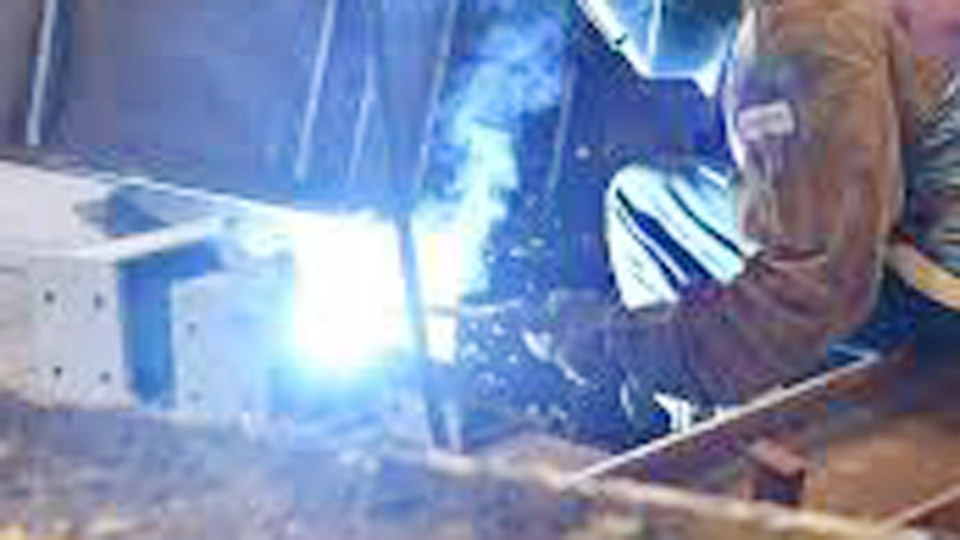
Image by henlex
Respiratory Hazards: The Primary Threat in Welding Environments
Welding fumes consist of complex metal oxides and gases whose composition varies sharply by base metal, filler, and process parameters. Inhalation delivers particles deep into the alveolar region, where size distribution (often submicron) determines deposition efficiency and biological impact.
Fume Composition and Key Toxicants
Mild steel welding primarily generates iron oxide with manganese (typically 2-14% by weight in fume), while stainless steel introduces significant hexavalent chromium (Cr(VI), often 0.3-8%) and nickel.
Aluminum processes produce aluminum oxide, and galvanized materials release zinc oxide. These particulates carry varying solubility and reactivity.
Manganese concentrations matter particularly in high-tensile or flux-cored applications. Hexavalent chromium forms readily during the high-temperature arc on chromium-bearing alloys, converting trivalent forms into the more toxic hexavalent state.
Cadmium from plated materials or certain consumables adds acute toxicity. Carbon monoxide levels rise in poorly ventilated or confined spaces, especially with incomplete combustion or gas shielding issues.
Acute and Chronic Respiratory Effects
Acute exposure often triggers metal fume fever—flu-like symptoms (fever, chills, muscle aches, cough) appearing 4-12 hours post-exposure, commonly from zinc oxide but possible with other metals. Symptoms usually resolve in 24-48 hours with rest, but repeated episodes indicate inadequate controls.
Chronic effects include bronchitis, reduced lung function, and occupational asthma. Welders show higher rates of pneumonia severity and duration. Siderosis (iron oxide accumulation) appears benign on imaging but signals broader particulate burden.
Long-term studies link cumulative exposure to increased chronic obstructive pulmonary disease (COPD) risk, though causation strength varies.
IARC classifies welding fumes as Group 1 carcinogens, with sufficient evidence for lung cancer and suggestive links to kidney cancer. Welders face approximately 20-40% elevated lung cancer risk in meta-analyses, independent of smoking in some cohorts. Hexavalent chromium and nickel drive much of this potency.
Exposure Limits and Real-World Monitoring
OSHA lacks a specific standard for total welding fume but regulates components: Cr(VI) at 5 µg/m³ (8-hour TWA), manganese at 5 mg/m³ ceiling (recently lowered in some contexts), and general respirable particulates. NIOSH recommends lower limits and notes harm can occur below OSHA PELs for complex mixtures.
Personal sampling remains the gold standard. Position pumps in the breathing zone under the helmet. For hobbyists, qualitative indicators include visible fume plumes persisting or post-shift respiratory irritation. Confined spaces demand continuous monitoring for oxygen, CO, and flammables alongside fume assessment.
Radiation Exposure: UV, IR, and Visible Light Risks
The welding arc emits intense ultraviolet (UV), infrared (IR), and visible radiation, with intensity scaling to current and arc time. Without proper shielding, this spectrum damages skin and eyes rapidly.
Ocular Damage and Arc Eye
Photokeratitis (“arc eye” or “welder’s flash”) results from UVB absorption in the cornea, causing painful inflammation, tearing, and light sensitivity hours after exposure. Recovery typically occurs in 24-48 hours, but repeated incidents accelerate cataract formation. IR radiation contributes to retinal burns and long-term lens opacities.
Auto-darkening helmets with appropriate shade (e.g., DIN 9-13 depending on amperage) and proper fit minimize this. Lens reaction time under 0.1 seconds proves critical for high-frequency processes like TIG.
Skin Effects and Cancer Risk
UV exposure produces acute “welder’s sunburn” and chronic photoaging, with elevated non-melanoma skin cancer risk. IARC also classifies UV radiation from welding as Group 1 carcinogenic. Exposed neck, arms, and wrists require flame-resistant clothing with UV-blocking properties; untreated cotton degrades under repeated arc exposure.
Musculoskeletal Strain in Welding Operations
Welding demands awkward postures—overhead work, confined spaces, and repetitive torch manipulation stress the neck, shoulders, back, and wrists. Cumulative trauma disorders develop over years.
Common Injury Patterns
Cervical and lumbar strain predominate from sustained neck flexion under helmet weight and forward trunk lean. Shoulder impingement and rotator cuff issues arise from overhead positioning. Carpal tunnel and hand-arm vibration syndrome appear in prolonged grinder or needle scaler use.
Ergonomic positioning—using adjustable jigs, turntables, or lifts—reduces load. Process selection influences posture: mechanized or robotic setups for repetitive production lower human strain significantly.
Long-Term Implications
Degenerative changes accelerate in welders compared to age-matched controls. Preventive strength training targeting core, scapular stabilizers, and grip, combined with micro-breaks and posture resets, helps maintain career longevity.
Noise-Induced Hearing Loss
Arc processes, grinding, chipping, and hammering generate noise often exceeding 90-100 dB. OSHA’s action level sits at 85 dBA 8-hour TWA, requiring hearing conservation programs.
Double protection (earmuffs over plugs) becomes necessary near high-amplitude sources. In-helmet communication systems preserve situational awareness while attenuating noise. Annual audiometric testing detects early threshold shifts.
Electrical and Thermal Hazards
While less chronic, electrical shock and burns contribute to acute injuries that sideline welders. Wet conditions or damaged leads amplify risk. Proper grounding, insulated gloves, and dry work areas remain non-negotiable.
Regulatory Framework and Workplace Controls
OSHA 1910.252 and 1926.353 outline ventilation requirements: 2,000 cfm per welder in general fabrication spaces under 10,000 cu ft per operator, or local exhaust capturing at the source. Confined space rules mandate supplied-air respirators when ventilation proves insufficient.
Hierarchy of controls prioritizes substitution (low-fume consumables), engineering (fume extractors, push-pull systems), administrative (rotation, training), and PPE. Source-capture extractors outperform general ventilation for most stationary work.
Ventilation System Selection
- Portable fume arms: Effective within 6-12 inches of the arc for fixed positions.
- Downdraft tables: Suitable for small parts but require maintenance to avoid filter loading.
- Powered air-purifying respirators (PAPR): Excellent for mobility and stainless work, with NIOSH-approved systems delivering positive pressure.
Filter ratings (e.g., P100 for particulates) and gas/vapor cartridges for ozone or CO must match the hazard.
Material and Process-Specific Considerations
Stainless steel welding demands heightened Cr(VI) controls—fume extraction plus PAPR often required. Aluminum produces copious oxide but lower toxicity profile than chromium or manganese. Flux-cored arc welding generates higher fume volumes than solid wire GMAW. TIG typically produces lower fume but higher UV.
Consumable choice influences outcomes: basic electrodes versus low-hydrogen or metal-cored options alter fume generation rates and composition.
Health Monitoring for Welders
Baseline and periodic pulmonary function tests, blood metals (manganese, chromium), and neurological screening aid early detection. Hobbyists should track symptoms and seek medical advice for persistent cough, fatigue, or coordination changes.
Decision-Making Summary for Safer Welding Practice
Welding carries measurable health costs that scale with exposure intensity and duration, but engineering controls, proper PPE selection, and process optimization dramatically reduce risks.
Professionals should prioritize source capture ventilation and respirators for stainless or high-volume work, while hobbyists invest in adequate extraction and fit-tested protection rather than relying on open-air dilution.
An advanced insight: fume generation rate correlates strongly with current density and arc voltage—optimizing parameters for the specific joint not only improves weld quality and travel speed but directly lowers total particulate output, offering dual performance and health benefits.
Welders who master parameter control alongside hazard controls achieve both superior results and sustained careers.
FAQ
What is the biggest long-term health risk for welders?
Lung cancer and other respiratory diseases from cumulative fume exposure represent the most documented chronic risk, classified as Group 1 carcinogenic by IARC. Neurological effects from manganese add another serious concern for high-exposure roles.
Do respirators fully protect against welding fumes?
Respirators provide essential protection when engineering controls cannot reduce exposure below limits, but they work best combined with local exhaust. PAPR systems offer superior comfort and protection factors for mobile or confined work. Fit testing and proper maintenance remain critical.
Is welding stainless steel more dangerous than mild steel?
Yes, primarily due to hexavalent chromium formation, which carries higher carcinogenicity and toxicity. Enhanced ventilation, Cr(VI)-specific monitoring, and respiratory protection become more important.
Can hobby welders in a garage ignore professional safety standards?
No. Even intermittent exposure accumulates risk, and confined or poorly ventilated home setups amplify fume and gas hazards. Basic extraction, proper PPE, and awareness of limits protect against both acute incidents and long-term effects.