Welders who switch from general-purpose rods to critical structural or pressure work often discover delayed cracks forming hours or days after the bead looks perfect. That failure almost always traces back to excess diffusible hydrogen trapped in the weld metal or heat-affected zone.
What are low hydrogen electrodes used for is exactly this problem: they keep hydrogen levels low enough to stop cold cracking on high-strength steels, thick sections, and restrained joints.
The difference is not cosmetic. Codes, inspectors, and service loads demand crack-free deposits with verified toughness. Choosing the wrong electrode class can void a procedure qualification or produce a joint that fails under cyclic loading or low temperature.
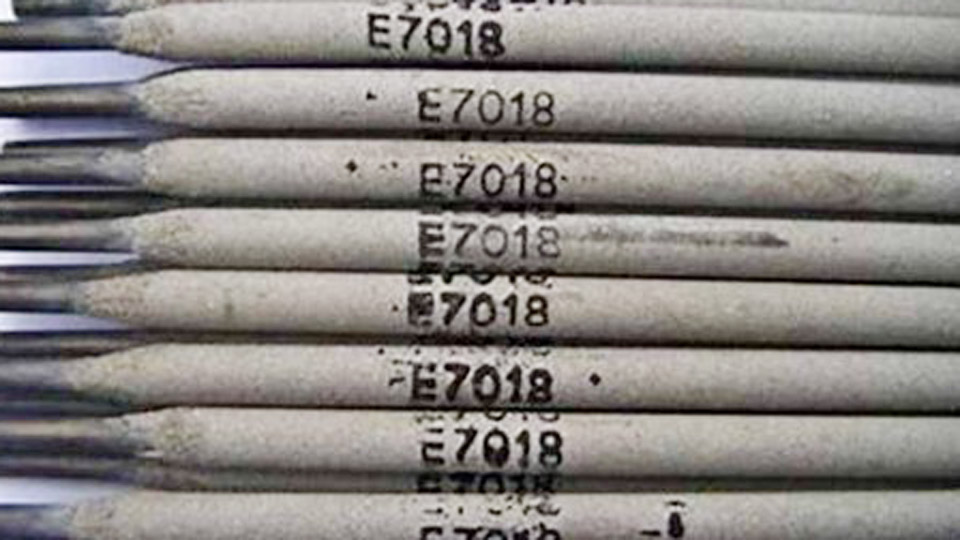
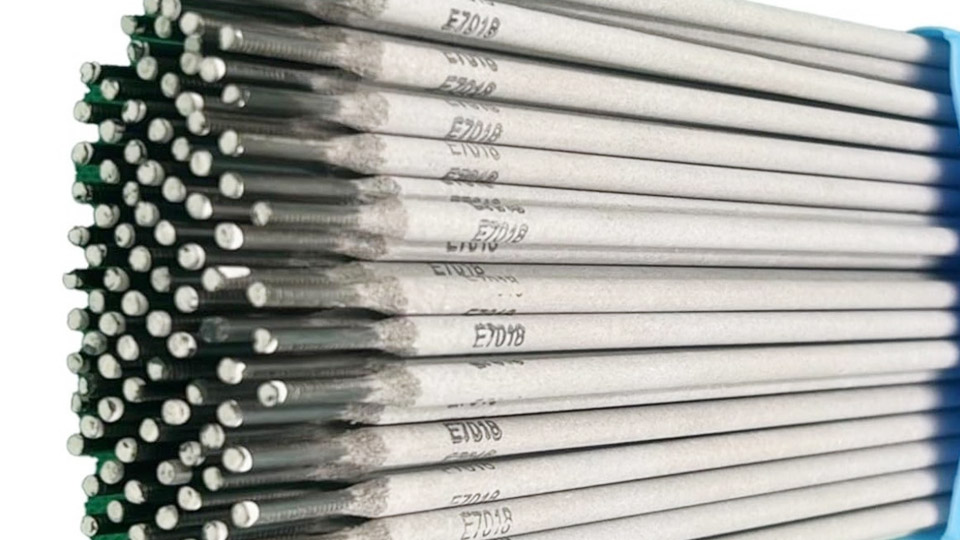
Image by shipstorespares
When Hydrogen Cracking Forces the Switch to Low-Hydrogen Consumables
Hydrogen-induced cracking appears only when three conditions coincide: sufficient diffusible hydrogen, a susceptible microstructure, and tensile residual stress. Low-hydrogen electrodes attack the first variable directly.
High-Carbon and Low-Alloy Steels
Steels with higher carbon equivalent harden more readily in the HAZ. The resulting martensite or bainite traps hydrogen and raises cracking risk. E7018, E8018, and higher-strength variants are specified because their coatings limit diffusible hydrogen to 16 ml/100 g or less (H16, H8, or H4). On quenched-and-tempered grades the tighter H4 limit is often mandatory.
Thick Sections and High Restraint
Plate thicker than about ¾ in. cools slowly and develops high residual stress. Joints that cannot expand freely—box sections, heavy fillets, or repair welds in existing structures—amplify that stress. Low-hydrogen electrodes reduce the hydrogen contribution so the combined stress stays below the fracture threshold.
Code-Mandated Applications
AWS D1.1 structural steel, ASME Section IX pressure equipment, and API pipeline standards frequently require low-hydrogen filler metal once strength or toughness levels rise. The electrode classification and any H-designator become essential variables on the WPS.
Primary Industrial Uses of Low Hydrogen Electrodes
Low-hydrogen electrodes dominate work where weld failure carries high consequence.
Structural Steel Frames, Bridges, and Buildings
E7018 remains the workhorse for beams, columns, and moment connections. The iron-powder coating delivers medium penetration, high deposition, and X-ray quality deposits that meet Charpy requirements at –20 °F or lower when the –1 suffix is specified. Vertical-up and overhead capability lets fabricators complete full-penetration joints without changing processes.
Pressure Vessels, Boilers, and Piping
ASME-coded vessels and boilers demand both strength and toughness under cyclic pressure and temperature. E7018 and E8018 series electrodes produce deposits that survive radiographic inspection and hydrostatic testing.
Higher-alloy versions (E9018, E10018) match the base-metal strength of chrome-moly and other low-alloy pressure steels.
Pipeline Construction and Repair
Girth welds and repair sleeves on transmission lines often require low-hydrogen fill and cap passes after a cellulosic root. The combination controls hydrogen while still allowing the deep-penetration root needed for open-root pipe. Vertical-up procedures on heavy wall pipe rely on the slag control and freeze characteristics of EXX18 electrodes.
Shipbuilding, Offshore, and Heavy Equipment
Hull plating, crane booms, and excavator frames combine thick plate with dynamic loading. Low-hydrogen electrodes provide the ductility and impact toughness needed to resist brittle fracture under shock or low ambient temperatures.
How Low-Hydrogen Classification and Designators Guide Selection
AWS A5.1 and A5.5 classify the electrodes and add optional suffixes that quantify hydrogen performance.
Core Classifications
- EXX15 – low-hydrogen sodium coating, DC+ only
- EXX16 – low-hydrogen potassium coating, AC or DC+
- EXX18 – low-hydrogen potassium with iron powder, AC or DC+, highest deposition
- EXX28 and EXX48 – higher iron-powder variants for flat and horizontal high-deposition work
The “70,” “80,” or “90” indicates minimum tensile strength in ksi. The final digit encodes coating type and usable polarity/position.
Diffusible-Hydrogen and Moisture-Resistance Suffixes
H16, H8, and H4 limit maximum diffusible hydrogen to 16, 8, or 4 ml per 100 g of deposited metal. The optional R designator confirms the coating meets moisture-resistance tests (typically ≤0.4 % moisture after controlled humidity exposure).
An electrode marked E7018-1 H4R therefore guarantees improved toughness, ultra-low hydrogen, and resistance to ambient moisture pickup.
Matching Strength and Toughness to Base Metal
Select the tensile class that equals or slightly exceeds the base-metal requirement. For impact-critical service, the –1 suffix or a higher-manganese formulation improves Charpy values at –50 °F. Over-matching strength without corresponding toughness can increase cracking risk in the HAZ.
Storage, Handling, and Exposure Limits That Preserve Low-Hydrogen Performance
The coating starts dry. Once opened it absorbs moisture, and the hydrogen benefit disappears.
Oven Holding and Reconditioning
Hermetically sealed cans keep electrodes dry until opened. After opening, place them in a holding oven at the manufacturer’s recommended temperature (commonly 250–300 °F).
Reconditioning of electrodes that have exceeded exposure limits typically requires 1–2 hours at 500–600 °F, followed by return to the holding oven. Repeated high-temperature cycles degrade the coating, so limit reconditioning cycles.
Atmospheric Exposure Windows
Typical limits after removal from the oven are:
- H16: up to 9 hours
- H8: up to 4 hours
- H4: as little as 2 hours or less
Project specifications and the electrode manufacturer’s data sheet override general figures. Once the limit is exceeded, the electrode must be reconditioned or discarded.
Field Practices That Maintain Integrity
Carry only the quantity needed for a shift. Use portable heated quivers. Reject any electrode whose coating shows white powder, cracks, or soft spots. Clean base metal thoroughly; residual moisture, oil, or rust can introduce hydrogen even when the electrode itself is dry.
Practical Decisions: When Low Hydrogen Is Required Versus When It Is Optional
Not every mild-steel job needs low-hydrogen electrodes. The decision rests on material, thickness, restraint, and code.
Situations That Demand Low-Hydrogen Electrodes
- Base metal carbon equivalent above approximately 0.40–0.45
- Plate thickness greater than ¾–1 in. with high restraint
- Service temperatures below 0 °F or cyclic loading
- Any WPS that lists a low-hydrogen classification as an essential variable
Situations Where Other Electrodes Remain Acceptable
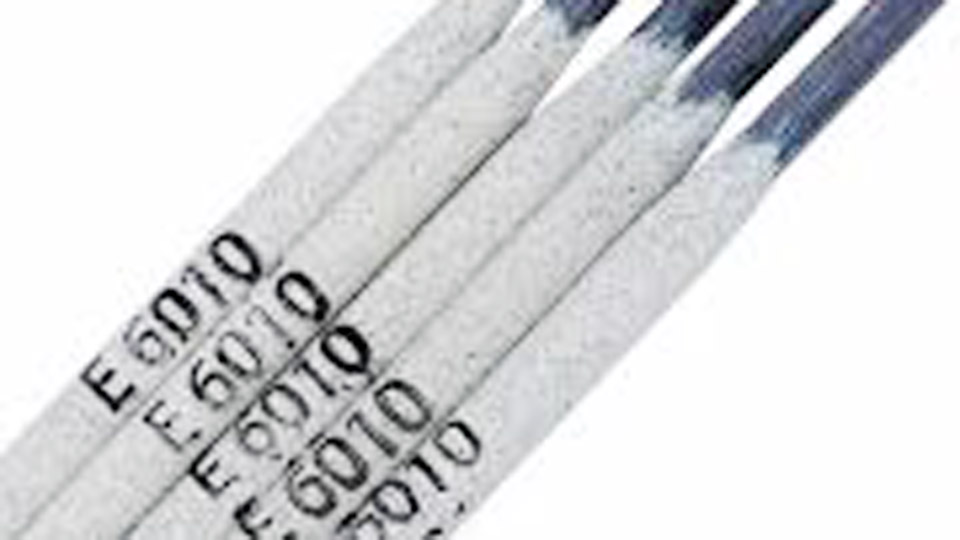
Thin-gauge mild steel, non-critical repair of low-carbon plate, or work on dirty surfaces often runs better with E6010, E6011, or E6013. These electrodes tolerate contamination and require no special storage.
Substituting them on high-strength or thick restrained joints, however, reintroduces the cracking risk the low-hydrogen process was designed to eliminate.
Hybrid Procedures
Many pipeline and structural procedures use a cellulosic root for penetration and gap bridging, then switch to low-hydrogen fill and cap passes. The sequence must be qualified; hydrogen from the root pass can still diffuse into subsequent layers if interpass temperature and timing are not controlled.
Performance Characteristics That Affect Technique and Joint Design
Low-hydrogen electrodes run differently from cellulosic or rutile types.
Arc and Bead Behavior
The arc is quieter and more stable than a 6010. Penetration is medium rather than deep. Slag is heavier but usually self-peeling. A short arc length (approximately equal to electrode diameter) is required; long arcs introduce porosity and increase hydrogen pickup from the atmosphere.
Position and Travel Limitations
Most EXX18 electrodes are rated for all positions except vertical-down. Vertical-up and overhead demand lower amperage and tighter puddle control than flat work. High-deposition EXX28 and EXX48 variants are restricted to flat and horizontal fillets.
Deposition Rate and Heat Input
Iron-powder coatings raise deposition efficiency above 100 %. Higher deposition allows faster travel or fewer passes, which can reduce total heat input and residual stress—beneficial on crack-sensitive steels provided fusion remains complete.
Wrapping Up
Selecting low-hydrogen electrodes is a materials and procedure decision, not a preference. When the base metal, thickness, restraint, or code indicates cracking risk, the electrode class, hydrogen designator, and storage discipline become non-negotiable.
Matching tensile strength and toughness while keeping diffusible hydrogen below the threshold for the specific steel produces joints that survive both inspection and service.
Advanced fabricators further control residual stress through sequenced welding, controlled interpass temperature, and, where required, post-weld heat treatment—steps that multiply the benefit already gained from the low-hydrogen consumable itself.
FAQs
What is the difference between E7018 and E6013 electrodes?
E7018 is a low-hydrogen iron-powder electrode designed for crack-sensitive steels and critical structural work. E6013 is a rutile electrode suited to clean mild steel and general fabrication; it does not control hydrogen to the same level and is not used where delayed cracking is a concern.
Do low hydrogen electrodes need to be kept in an oven?
Yes. After the sealed package is opened they must be held in a heated oven (typically 250–300 °F) and returned to the oven if atmospheric exposure limits are exceeded. Failure to do so raises diffusible hydrogen and defeats the purpose of the electrode.
Can I use low hydrogen electrodes on rusty or dirty steel?
They perform best on clean, dry surfaces. Surface contaminants introduce additional hydrogen and can cause porosity. For heavily contaminated material a cellulosic electrode is usually preferred for the root or cleaning passes, followed by low-hydrogen fill if the procedure allows.
What does the H4 or H8 marking mean on a 7018 electrode?
The H designator states the maximum diffusible hydrogen in the weld metal: H4 ≤ 4 ml/100 g, H8 ≤ 8 ml/100 g, H16 ≤ 16 ml/100 g. Tighter limits are specified for higher-strength steels, thick restrained joints, or fracture-critical applications.