A welder runs the same joint twice with slightly different amperage, travel speed, or preheat and one coupon passes inspection while the other fails radiographic or bend testing. That inconsistency is exactly why shops require a controlled document.
What is WPS in Welding Technology becomes the practical answer: the Welding Procedure Specification is the written set of parameters that forces every production weld to stay inside proven limits for process, materials, heat input, and technique.
Without it, mechanical properties drift, code audits fail, and rework costs multiply. The document exists so that a qualified welder following the listed ranges produces repeatable results that meet the applicable construction code—AWS D1.1, ASME Section IX, ISO 15614, or project-specific requirements.

Image by fb/Building and construction
Why Uncontrolled Welding Parameters Produce Rejectable Welds
Consequences When Variables Drift Outside Proven Limits
Heat input, preheat, interpass temperature, filler classification, and joint geometry directly control tensile strength, ductility, toughness, and the presence of defects such as lack of fusion or hydrogen cracking.
A change of only 10–15 % in amperage or travel speed can push the weld outside the mechanical property window established by testing.
In pressure piping or structural steel the result is cut-out, re-welding, and delayed delivery. On critical service the same drift can produce a weld that looks acceptable visually yet fails under load or cyclic stress.
Code and Client Mandates That Require Written Procedures
ASME Section IX and AWS D1.1 both require a written WPS for production welding. ASME demands that every WPS be supported by a Procedure Qualification Record except in limited cases.
AWS D1.1 allows prequalified WPSs under strict joint, process, and material limits, but still requires the document itself to be written and available at the work station.
Clients frequently add contractual language that the fabricator must supply approved WPSs before any production welding begins. Failure to produce the document during an audit is treated as a nonconformance.
Required Technical Content That Defines a Usable WPS
Joint Design, Root Opening, and Backing Requirements
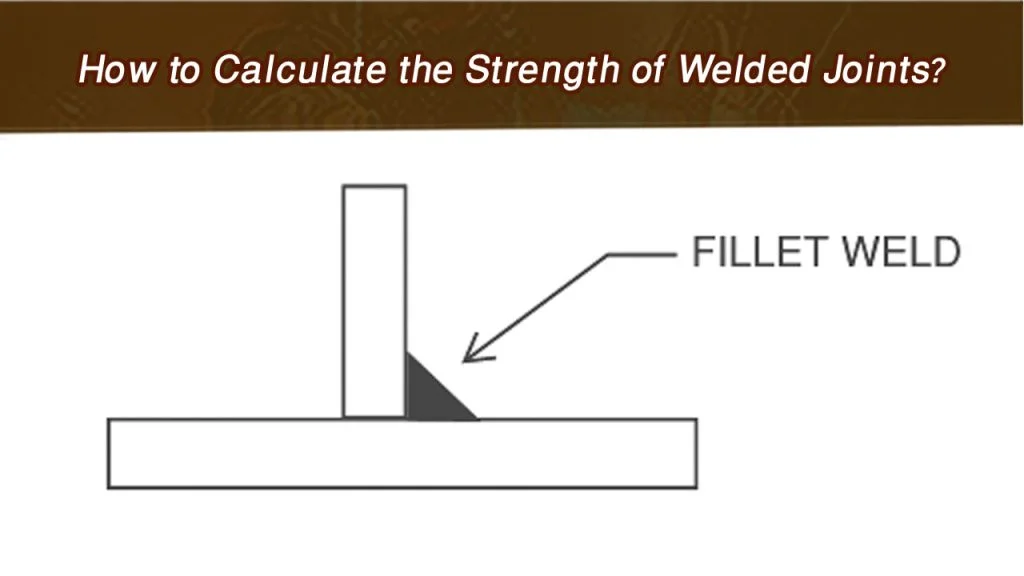
The WPS states the groove type (single-V, double-bevel, fillet, etc.), included angle, root face, root opening tolerance, and whether backing or back-gouging is permitted. These limits keep the actual joint geometry inside the range that was qualified.
A root opening that exceeds the WPS maximum changes the required penetration and can introduce incomplete fusion or excessive reinforcement that later fails visual or NDE criteria.
Base-Metal and Filler-Metal Groupings with Thickness Limits
Base metals are listed by specification, grade, and P-number (ASME) or group number (AWS). The qualified thickness range is taken directly from the supporting PQR and the applicable code tables. Filler metal appears by AWS classification, F-number, and A-number where required.
Changing from one P-number group to another or from one F-number electrode to another is almost always an essential-variable change that invalidates the existing WPS.
Electrical Characteristics, Technique, and Thermal Controls
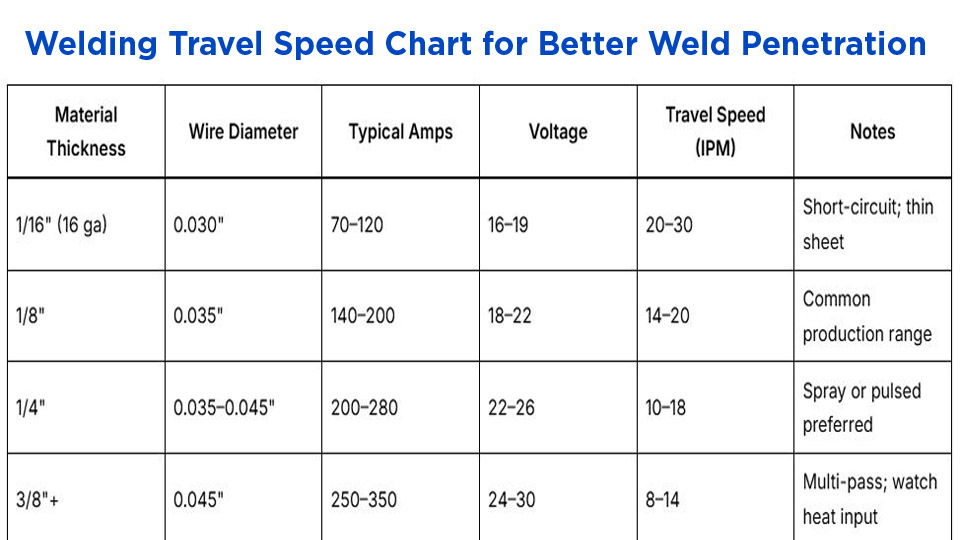
Polarity, amperage or wire-feed-speed range, voltage range (where applicable), travel-speed limits, contact-tip-to-work distance, and stringer versus weave technique are listed with allowable windows.
Preheat minimum, interpass maximum, and any post-weld heat-treatment temperature and hold time appear as explicit values.
These numbers are not suggestions; they are the boundaries that keep heat input and cooling rates inside the envelope that produced acceptable mechanical test results.
Essential Variables That Force Requalification Versus Nonessential Adjustments
Changes That Require a New Supporting PQR
Essential variables are those whose alteration affects the mechanical properties of the completed weld. Typical examples under ASME Section IX include a change in welding process, a change in P-number of the base metal, a change in F-number of the filler metal, a reduction in preheat greater than the code allowance, addition or deletion of post-weld heat treatment, and certain changes in heat-input limits when toughness is required.
Any such change means the existing WPS can no longer be used until a new test coupon is welded, tested, and documented on a new or revised PQR.
Adjustments Allowed Without New Mechanical Testing
Nonessential variables may be revised on the WPS without requalification. Common examples include minor changes in joint details within the qualified range, electrode diameter (within limits), shielding-gas flow rate (within a stated band), and certain technique details such as electrode angle.
The revised WPS must still list the new values so that welders and inspectors have a current document. Supplementary essential variables become essential only when the construction code requires impact testing; otherwise they are treated as nonessential.
Relationship Between the WPS and Its Supporting PQR
Qualification Sequence for Non-Prequalified Procedures
A preliminary WPS is written with proposed parameters. A test coupon is welded exactly to those parameters while actual values are recorded. The coupon undergoes nondestructive examination followed by mechanical testing—tensile, bend, and impact when required.
Successful results are documented on the Procedure Qualification Record. The final production WPS is then written using the ranges permitted by the code tables that apply to the thickness and materials of that PQR. Multiple WPSs can often be derived from a single well-planned PQR.
Prequalified WPS Options Under AWS D1.1
AWS D1.1 Clause 3 (or the corresponding clause in later editions) lists joint details, processes, filler metals, and preheat requirements that have been proven by industry experience. When a fabricator stays strictly inside those prequalified limits, a supporting PQR is not required.
The WPS must still be written, must reference the prequalified status, and must contain all the same technical content as a qualified WPS. Any departure from the prequalified rules immediately forces full procedure qualification.
How a Welder and Inspector Use the WPS During Production
Staying Inside the Stated Parameter Windows
The welder sets machine controls to values that fall inside the amperage, voltage, and travel-speed ranges shown on the WPS. Preheat is verified with a temperature-indicating device before the first pass. Interpass temperature is checked between layers.
Electrode or wire classification and size must match the listing exactly. Any intentional departure requires engineering approval and, if the change is essential, a new qualification path.
Monitoring, Recording, and Audit Expectations
Many contracts require welders or welding operators to record actual parameters on a traveler or electronic log. Inspectors compare those recorded values against the WPS ranges. Heat-input calculations (when required) use the formula that incorporates voltage, amperage, and travel speed.
Continuous monitoring of these values is the primary method of demonstrating that production welds remain within the qualified envelope.
Practical Decisions When Choosing or Writing a WPS for a New Job
Matching Code, Material, and Service Conditions
The first decision is which construction code governs the work. ASME Section IX is mandatory for boilers and pressure vessels; AWS D1.1 is the usual choice for structural steel; ISO 15614 governs many European and international contracts.
Base-metal chemistry and required toughness then determine whether impact testing (and therefore supplementary essential variables) will be required. Service temperature, cyclic loading, and corrosion environment further refine filler-metal selection and any need for post-weld heat treatment.
Thickness Coverage and Multi-Process Combinations
A single PQR on a given thickness qualifies a defined range of base-metal and deposited-weld-metal thicknesses according to the code tables. When production joints span a wide thickness range, multiple PQRs or carefully chosen coupon thicknesses are required.
Combination procedures (GTAW root + SMAW fill, for example) need each process qualified for the thickness it will deposit. Planning the qualification matrix in advance avoids later gaps that stop production.
When a shop maintains a controlled library of WPSs tied to valid PQRs and keeps every production weld inside the listed ranges, mechanical properties stay predictable and audit findings remain minimal.
The advanced practice is to treat heat-input and interpass-temperature control as tightly as the essential variables themselves; modern data-logging power sources make continuous verification practical and turn the WPS from a static document into a living process-control tool.
FAQs
What is the difference between a WPS and a PQR?
The WPS is the instruction document the welder follows on the shop floor. The PQR is the test record that proves those instructions produce welds with the required mechanical properties.
Does every production weld require a WPS?
Under ASME Section IX and most AWS structural codes, yes. AWS D1.1 permits prequalified WPSs that do not need a supporting PQR, but the written WPS itself is still required.
Can one WPS cover multiple thicknesses and positions?
Yes, within the ranges qualified by the supporting PQR and the code tables. Thickness limits and position restrictions are taken directly from those sources and must be stated on the WPS.
What happens if a welder exceeds a parameter listed on the WPS?
If the exceeded parameter is an essential variable, the weld is outside the qualified procedure and is normally rejected until engineering evaluation or requalification occurs. Nonessential deviations may be accepted with documentation, but the preferred practice is to stay inside all stated ranges.