Many welders hit a wall when a job demands deep penetration on dirty or painted metal, but their machine or setup doesn’t cooperate with the rod they’ve grabbed. The difference between 6010 and 6011 welding rods often decides whether you achieve a clean root pass with full penetration or fight arc instability and poor fusion.
These cellulosic electrodes share fast-freeze characteristics and aggressive digging action, yet subtle flux and power differences create distinct real-world performance.
Understanding them prevents rework, ensures code compliance on pipe, and matches the right rod to your equipment and material conditions.
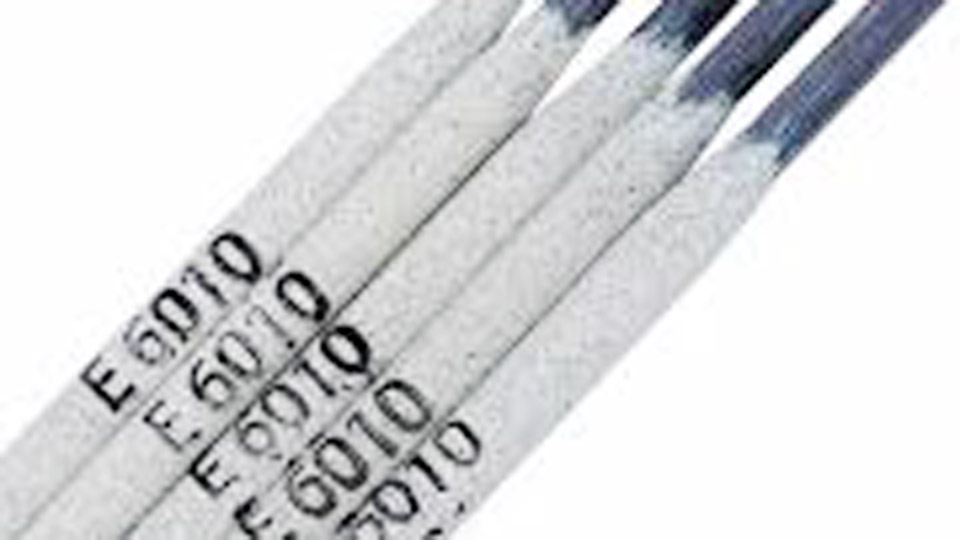
Image by weldingweb
AWS Classification and Core Specifications
Decoding the Electrode Numbers
Both rods fall under AWS A5.1 as E6010 and E6011. The “60” indicates minimum 60,000 psi tensile strength. The “1” confirms all-position capability (flat, horizontal, vertical, overhead). The final digit reveals coating type and compatible current.
E6010 uses a high-cellulose sodium coating. E6011 employs high-cellulose potassium. Sodium supports a forceful DCEP arc. Potassium adds arc stabilizers for AC compatibility and easier operation on varied machines.
Flux Composition Impact
Cellulose in both coatings decomposes into hydrogen and carbon dioxide shielding gas, driving deep penetration and a fast-freezing puddle. Sodium in 6010 creates a more aggressive, digging arc with slightly higher voltage requirements.
Potassium in 6011 ionizes the arc better across polarity reversals on AC, reducing dropout on lower open-circuit voltage machines.
This yields similar mechanical properties: typical yield around 330 MPa and tensile 430 MPa as-welded, with good low-temperature impact values. Neither is low-hydrogen, so avoid critical high-strength applications without proper procedures.
Power Source Compatibility and Arc Behavior
Polarity and Machine Requirements
E6010 operates exclusively on DCEP (DC electrode positive). It demands stable DC output with sufficient open-circuit voltage (often 70+ V) for smooth running. Many small inverters struggle here, causing arc instability or extinguishing.
E6011 runs on AC, DCEP, or DCEN. This versatility suits AC-only transformers common in farms, maintenance, or older shops. Potassium stabilizers maintain the arc during zero-crossings on AC, making starts easier and operation more forgiving on lower-end equipment.
Arc Characteristics in Practice
Both produce a violent, digging arc ideal for burning through rust, paint, or mill scale. 6010 often feels harsher with deeper penetration and a tighter, more controllable puddle when whipped. Many experienced welders report smoother overall operation and better slag release with 6010 on DC.
6011 offers a slightly softer arc on AC with potentially less spatter in some setups, though slag can be slightly more stubborn. On DC, performance approaches 6010 but may show marginally less penetration due to stabilizers.
Amperage Settings and Diameter Selection
Recommended Ranges by Rod Size
Proper amperage prevents undercut, lack of fusion, or burn-through. Start in the middle of the range and adjust for travel speed, position, and joint fit-up.
Typical settings (approximate; consult manufacturer for exact):
- 3/32″ (2.4 mm): 6010/6011 — 40-90 A. Suited for thin material or root passes on small pipe.
- 1/8″ (3.2 mm): 75-125 A (6010), 70-130 A (6011). Most common for general fabrication and pipe root.
- 5/32″ (4.0 mm): 110-170 A. For thicker sections or fill passes.
- 3/16″ (4.8 mm): 140-250 A. Heavy plate or structural work.
Adjust downward 10-15% for vertical-up or overhead. Increase slightly for flat or downhill. DC+ generally allows higher effective settings with 6010 for deeper penetration.
Matching to Material Thickness
Use 3/32″ for material under 1/8″. 1/8″ handles 1/8″ to 1/4″ effectively. Larger diameters suit heavier stock but sacrifice some out-of-position control. Both rods excel on unclean surfaces, but pre-cleaning critical joints improves results.
Welding Techniques and Position-Specific Performance
Root Pass and Keyhole Welding
These rods shine in stovepipe or open-root applications. Maintain a short arc or slight whip-pause technique: drag forward, pause to build puddle, whip ahead to freeze the keyhole. 6010 edges out for critical pipeline root passes due to superior slag release and penetration consistency on DC.
6011 works well for field repairs or non-code work where AC is the only option. Both support downhill progression common in pipe welding, speeding production while maintaining penetration.
All-Position Control
Fast-freeze slag allows vertical and overhead welding without excessive runoff. In vertical-up, use a slight weave or whip to control the puddle. Overhead demands tight arc length and quick travel to prevent dripping. 6010’s aggressive arc helps achieve full penetration in tight joints; 6011’s stability aids beginners or AC setups.
Real-World Applications and Decision Factors
Pipeline and Structural Work
Pipeline welders favor E6010 for root passes followed by 7018 hot/fill/cap. Its deep penetration and ability to handle contaminants make it standard for code work. 6011 serves as a capable substitute on AC machines or for non-critical repairs.
Maintenance, Repair, and Farm Use
E6011 dominates here due to AC compatibility and tolerance for dirty metal. Repair rusted equipment, galvanized structures, or field fixes where power sources vary. Both rods perform on painted or scaled surfaces, but 6011’s versatility wins for mobile work.
Fabrication and General Construction
Choose based on machine and joint requirements. 6010 for maximum penetration on clean DC setups. 6011 for mixed polarity needs or when arc force is limited. Both suit decking, joists, bridging, and applications needing speed and all-position flexibility.
When to Choose One Over the Other
Select 6010 for: Pipeline root passes, DC machines with good OCV, maximum penetration and slag control, critical structural work.
Select 6011 for: AC-only machines, inverter welders with lower output, farm/maintenance on dirty metal, greater versatility across jobsites.
Consider joint fit-up, thickness, position, and post-weld requirements. Neither is low-hydrogen, so hydrogen cracking risk exists on thick, restrained, or high-strength steel.
Mechanical Properties and Weld Quality
Strength and Toughness
Both deliver similar tensile strength around 60-70 ksi deposited metal. Fast-freeze nature produces convex beads with good fusion when parameters are correct. Slag is thin and flaky, easy to remove on 6010 especially.
Common Defects and Avoidance
Watch for worm tracks or porosity if whipping too aggressively or using damp rods. Store in dry conditions. Undercut appears with excessive amperage or long arc. Lack of fusion results from too-cold settings or poor technique. Proper whip-pause and arc length minimize issues.
Advanced Considerations for Professionals
Interpass Cleaning and Multi-Pass Welding
Remove slag thoroughly between passes. 6010’s cleaner release speeds this. For fill and cap, transition to low-hydrogen rods like 7018 for higher strength and crack resistance in critical applications.
Polarity Effects on Penetration
DCEP maximizes penetration for both. AC on 6011 reduces it slightly but improves arc stability. Test on scrap to dial in settings for your specific machine and material.
Electrode Storage and Handling
Cellulosic coatings absorb moisture. Keep rods in sealed containers or rod ovens at low temperatures (around 100-120°F) to maintain performance. Re-drying may help but can degrade cellulose effectiveness.
Wrapping Up
The difference between 6010 and 6011 welding rods ultimately comes down to matching power source, penetration needs, and job demands. 6010 delivers peak DC performance for pipeline and structural roots.
6011 provides unmatched versatility across machines and field conditions. Master both, and you’ll handle a wider range of repairs and fabrications with confidence.
The next time a tight root or dirty joint appears, the right choice between these cellulosic workhorses separates adequate welds from code-quality results. Experiment on scrap, document successful parameters for your setup, and build the procedural knowledge that defines pro-level stick welding.
FAQ
Can I use 6011 instead of 6010 for pipe root passes?
Yes, in non-code or AC-only situations. 6010 remains preferred for its smoother DC performance and slag release on critical welds, but 6011 delivers adequate penetration for many repairs.
Which rod works better on rusty or painted metal?
Both excel due to the digging arc. 6011 often edges out on heavily contaminated surfaces with AC setups; 6010 provides deeper cleaning on strong DC machines.
What amperage should I run for 1/8″ 6010 vs 6011?
Start at 90-110 A for both on 1/8″ material. Fine-tune: 6010 may prefer slightly higher on DCEP for optimal keyhole; 6011 runs comfortably across a broader range on AC/DC.
Do 6010 and 6011 require different storage than 7018?
Yes. Avoid high-heat ovens used for low-hydrogen rods. Keep cellulosic electrodes dry but not overheated to preserve coating integrity.