Welders often run short on electrodes mid-project or overestimate needs, leading to wasted material, downtime, and inflated costs. Accurate calculation of welding rod consumption directly impacts project budgeting, material ordering, and overall efficiency—whether you’re fabricating a small bracket or a large structural assembly.
Understanding how to calculate welding rod consumption prevents these issues by linking weld geometry, process efficiency, and real deposition rates.
I’ll discuss the precise methods for SMAW (stick welding), with comparisons to other processes, using actual formulas, cross-section calculations, and decision factors professionals rely on daily.
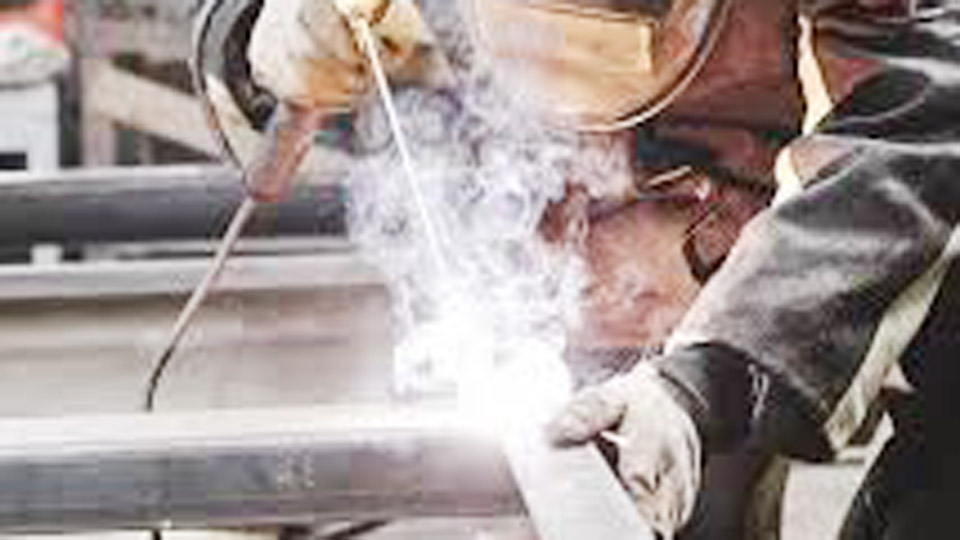
Image by midlandtool
Why Accurate Consumption Calculation Matters in Practice
Misjudging rod needs affects more than just inventory. Underestimating halts progress on critical welds, while overbuying ties up capital and risks storing rods that absorb moisture. For professionals, it influences bid accuracy; for hobbyists and students, it builds better material planning habits. Factors like joint type, position, and electrode classification introduce variables that generic estimates ignore.
Core Principles of Welding Rod Consumption
Weld Metal Volume as the Foundation
All consumption calculations begin with the theoretical volume of weld metal required to fill the joint. This depends on the cross-sectional area of the weld groove or fillet multiplied by the weld length.
For a simple fillet weld with leg length w (in cm):
- Cross-sectional area ≈ (w × w) / 2
- Add a reinforcement factor (typically 1.1–1.3) for convex bead shape.
For butt joints, break the groove into geometric shapes: rectangles for root faces, triangles for bevels, and additional areas for root gaps and reinforcement.
Example Calculation (Single V-Groove):
- Plate thickness: 15 mm
- Bevel angle: 60° (30° each side)
- Root gap: 2 mm
- Root face: 1 mm
- Reinforcement height: 2 mm
Calculate areas separately (triangle + rectangle + cap) and sum them before multiplying by length.
Density and Theoretical Weld Metal Weight
Steel density is 7.85 g/cm³. Multiply volume (cm³) by density to get theoretical deposited metal weight in grams, then convert to kg.
This theoretical weight represents perfect deposition with zero losses—rarely achieved in real welding.
Deposition Efficiency: The Critical Multiplier
Deposition efficiency is the percentage of electrode weight that becomes useful weld metal. For SMAW covered electrodes, it typically ranges from 50–65%, averaging around 55% due to stub loss (unused 50–75 mm ends), slag, spatter, and coating.
Formula for Electrode Consumption:
Consumption (kg) = (Theoretical weld metal weight in kg) / (Deposition efficiency as decimal)
Or more practically:
Electrode weight = Weld metal weight × 1.6–1.8 (for standard SMAW).
Calculating for Fillet Welds: Most Common Application
Basic Fillet Consumption Formula
For carbon steel fillet welds:
- Area (cm²) = (Leg length cm × Leg length cm) / 2 × Reinforcement factor (1.2 typical)
- Volume (cm³) = Area × Length (cm)
- Deposited metal (g) = Volume × 7.85
- Electrode consumption (g) = Deposited metal / Efficiency (0.55)
Quick Thumb Rule (SMAW): ≈ 0.0065 kg per meter per mm of leg length squared.
Influence of Weld Position and Technique
Vertical and overhead fillets require more careful control, often leading to slightly larger beads or additional passes, increasing consumption by 10–20%. Downhand (flat) positions achieve highest efficiency.
Electrode angle and travel speed affect bead profile. Stringer beads minimize over-welding compared to wide weaves in some cases.
Multi-Pass Fillets and Layer Effects
Larger fillets (over 6–8 mm leg) need multiple passes. Each pass adds its own reinforcement and potential overlap losses. Calculate total area by summing individual pass contributions or use overall effective throat.
Butt Joint and Groove Weld Calculations
Single V, Double V, and U-Grooves
Groove welds demand more precision:
- Single V-Groove Area: Root gap rectangle + two bevel triangles + reinforcement cap.
- Formula components: Area = (Root gap × thickness) + 2 × (0.5 × bevel depth × tan(bevel angle)) + reinforcement area.
Use detailed breakdowns for thick plates (>20 mm) where double-V reduces total volume significantly.
Root Gap and Fit-Up Variables
Every 1 mm increase in root gap can add 5–15% to weld metal volume depending on thickness. Poor fit-up dramatically raises consumption—emphasizing preparation importance for cost control.
Practical Decision: For production, tighter tolerances (1–2 mm gap) justify fixturing time over extra filler.
Electrode-Specific Factors
Diameter and Type Impact
Larger diameter electrodes (5.0 mm vs 3.2 mm) deposit more metal per rod but may require higher amperage and produce more spatter on thin materials. Consumption per kg of weld metal remains similar, but arc time and stub loss vary.
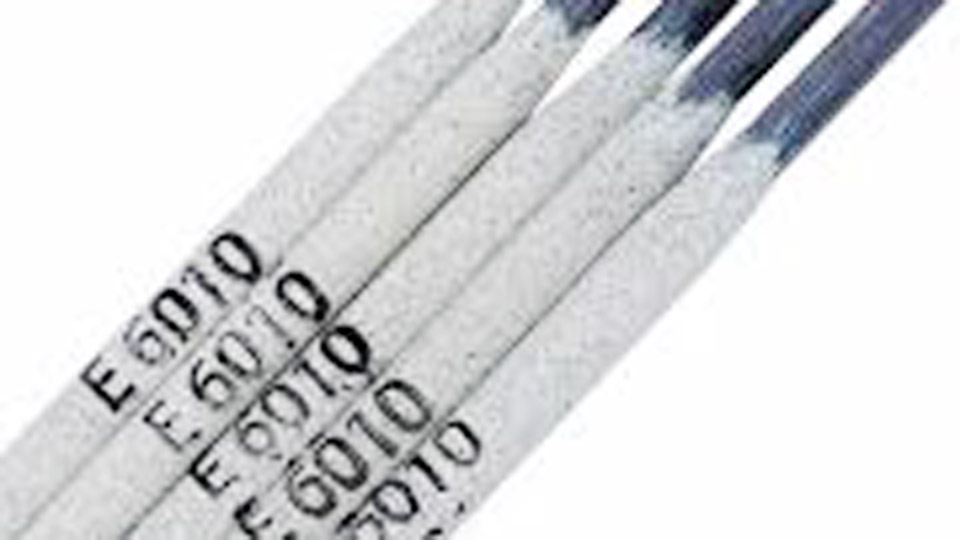
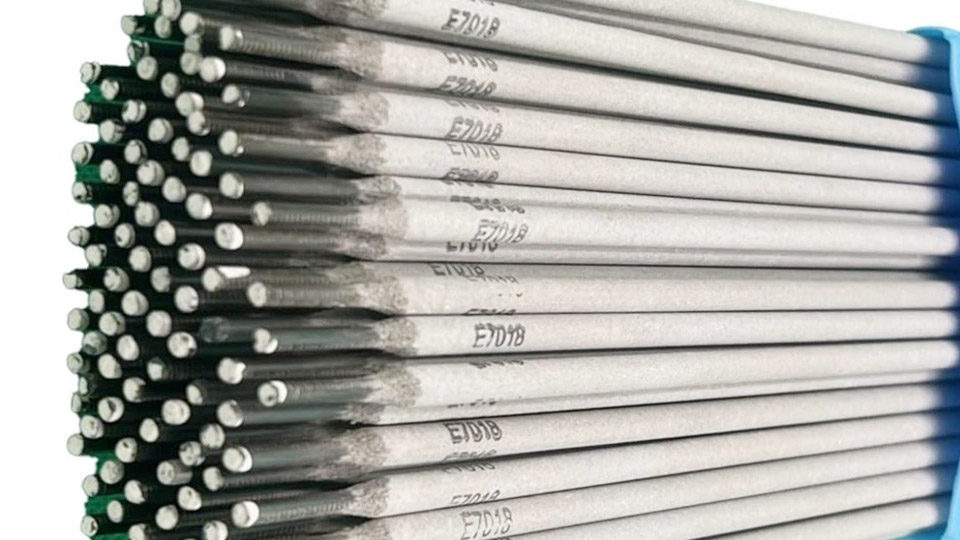
Low-hydrogen electrodes (E7018) often have higher iron powder content, improving efficiency (up to 60–65%) compared to E6010 cellulosic types.
Classification and Coating Effects
- Rutile coatings: Smoother arc, moderate efficiency.
- Basic coatings: Lower spatter but careful storage needed.
- Iron powder additions: Directly boost deposition efficiency.
Process Comparisons: SMAW vs. Alternatives
When SMAW Consumption Differs from MIG/FCAW
SMAW typically requires 1.6–1.8× weld metal weight. GMAW (MIG) uses 1.04–1.10× due to continuous feeding and minimal losses. FCAW sits in between.
For the same 10 kg weld metal:
- SMAW: ~16–18 kg electrodes
- MIG: ~10.5 kg wire
Hybrid Decisions on Site
Choose SMAW for portability and access despite higher consumption. Switch to wire processes for long production runs to cut material costs.
Real-World Calculation Examples
Example 1: 5-Meter Fillet Weld
- Leg length: 6 mm (0.6 cm)
- Area: (0.6 × 0.6)/2 × 1.2 = 0.216 cm²
- Length: 500 cm
- Volume: 108 cm³
- Deposited weight: 108 × 7.85 ≈ 848 g
- Electrode (55% eff.): 848 / 0.55 ≈ 1.54 kg
Example 2: 10 mm Thick Butt Joint, 3 Meters Long
Detailed groove calculation yields higher consumption due to volume. Adjust for passes and expected reinforcement.
Table: Approximate SMAW Consumption (kg/m) for Carbon Steel
| Joint Type | Size/Thickness | Consumption (kg/m) |
|---|---|---|
| Fillet | 5 mm leg | 0.16 |
| Fillet | 8 mm leg | 0.42 |
| Single V Butt | 12 mm | 0.65–0.85 |
| Double V Butt | 25 mm | 1.8–2.2 |
Values assume standard reinforcement and 55% efficiency. Actuals vary.
Advanced Variables Affecting Accuracy
Operating Factor and Duty Cycle
Consumption calculations focus on arc time, but total project rods include non-arc time. Operating factor (arc time percentage) is typically 20–40% for SMAW, influencing how many rods a welder consumes per shift.
Environmental and Material Conditions
Windy outdoor sites increase spatter. Rusty or contaminated plates demand more cleaning passes or higher amperage. Stainless and alloy steels have different densities (e.g., 8.0 g/cm³ for 304 SS) and may need specialized electrodes with adjusted efficiencies.
Amperage and Travel Speed Optimization
Higher amperage increases melt-off rate but risks undercut or excessive reinforcement if travel speed doesn’t match. Balance for optimal bead profile to avoid over-welding.
Tools and Methods for Faster Estimation
Spreadsheets and Software
Build simple Excel calculators with inputs for leg length, thickness, angles, length, efficiency. Advanced tools like ESAB QWPA or manufacturer calculators provide detailed outputs.
On-Site Quick Methods
Use pre-made tables for common joints or apps that compute from photos/measurements. Always add 10–15% contingency for real projects.
Scaling Calculations for Projects
Total Material Ordering
Sum individual joint calculations, group by electrode type/diameter. Factor in waste from test coupons, procedure qualifications, and repairs (typically 5–10% extra).
For large fabrications, percentage-based estimates (e.g., total steel weight × weld factor) provide rough checks against detailed take-offs.
Performance-Based Takeaway
Mastering welding rod consumption calculation transforms reactive material management into precise control. By combining accurate weld volume geometry with process-specific efficiency multipliers—such as 1.6–1.8× for SMAW—you make informed decisions on electrode selection, joint design, and process choice that directly improve profitability and quality.
An advanced insight: Top fabricators optimize not just consumption but total deposited metal by refining joint designs (e.g., narrower grooves where code allows) and technique, sometimes reducing filler needs by 15–25% without compromising strength.
FAQ
How much welding rod is needed per meter of fillet weld?
For a 6 mm leg fillet in carbon steel with SMAW, expect roughly 0.25–0.35 kg per meter, depending on reinforcement and efficiency. Use the leg length squared formula for quick scaling.
Does electrode diameter affect total rod consumption?
Diameter mainly influences deposition rate and number of rods used, not the total weight required for a given weld volume. Larger rods may reduce stub losses slightly in long runs.
What is a good deposition efficiency for 7018 electrodes?
Typically 55–65%. Iron powder variants perform at the higher end when used with proper parameters and minimal stub waste.
How do I adjust calculations for stainless steel welding?
Use density around 7.9–8.0 g/cm³ and verify electrode efficiency, which may differ slightly. Account for higher material cost by tightening fit-up and minimizing reinforcement.