The Types of Electrodes Used in Arc Welding directly influence weld quality, arc stability, penetration characteristics, deposition efficiency, and overall fabrication performance. Selecting the wrong electrode can lead to defects such as lack of fusion, excessive spatter, poor mechanical properties, or costly rework.
Because different electrodes are designed for specific base metals, welding positions, current types, and service conditions, understanding their classifications is essential for achieving consistent results in both structural and industrial applications.
In real welding environments, electrode choice affects more than just weld appearance. It impacts productivity, inspection acceptance rates, heat input control, and the ability to maintain a stable arc under varying job-site conditions.
Whether working with mild steel, low-alloy materials, or specialized applications, welders must match electrode characteristics to project requirements.
A clear understanding of electrode types helps improve welding performance, reduce errors, and support sound decision-making throughout the fabrication process.
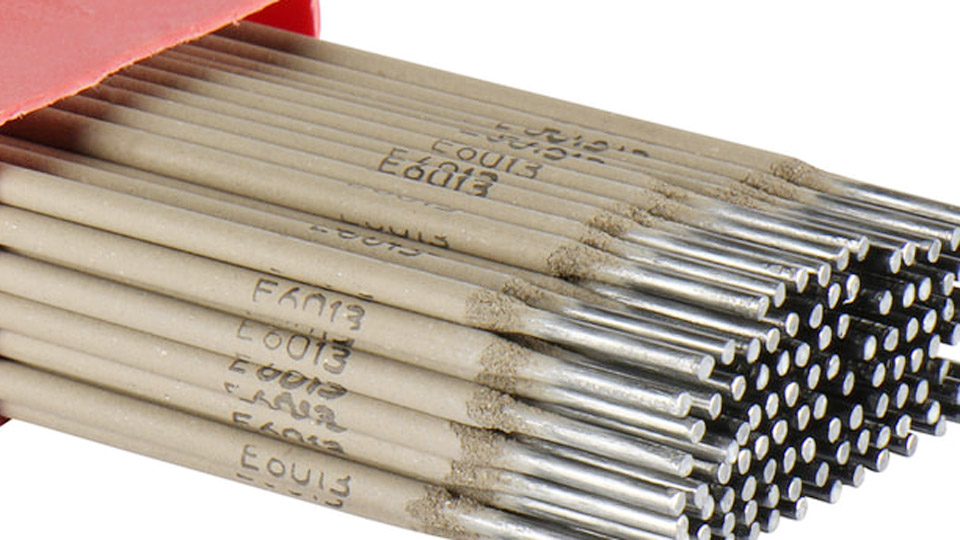
Image by themarketingthings
Understanding AWS Electrode Classification System
The American Welding Society (AWS) classification provides a standardized code that reveals key performance characteristics at a glance.
Decoding the AWS Designation (EXXXX or EXXX)
- E: Electrode for arc welding (SMAW).
- First two or three digits: Minimum tensile strength in ksi (e.g., 60 = 60,000 psi, 70 = 70,000 psi).
- Penultimate digit: Welding positions (1 = all positions; 2 = flat and horizontal fillets; 4 = flat, horizontal, vertical down, overhead).
- Last digit(s): Coating type, current, and polarity compatibility.
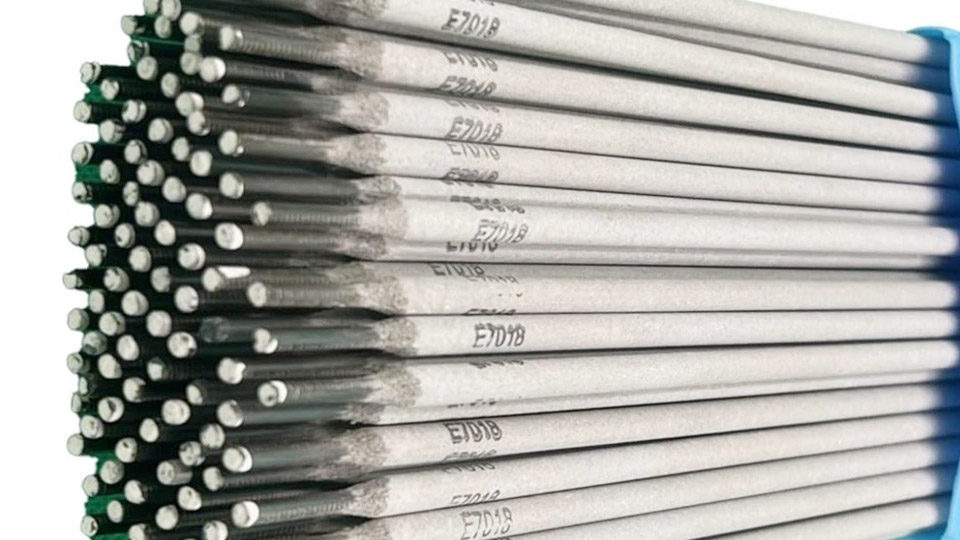
Example: E7018 means 70,000 psi tensile strength, all-position capable, low-hydrogen potassium coating with iron powder, usable on AC or DCEP.
This system eliminates guesswork. Matching tensile strength to base metal requirements prevents under-matching (weak weld) or over-matching (excessive hardness and cracking risk).
Key Coating Categories and Their Metallurgical Effects
Electrode coatings determine arc stability, slag formation, gas shielding, penetration, and mechanical properties of the deposit.
Cellulosic Coatings (e.g., EXX10, EXX11): High cellulose content (around 30%) decomposes to produce a forceful arc with deep penetration and high hydrogen content in the shielding gas. Ideal for root passes on dirty or rusty material. They create a thin, fast-freezing slag.
Rutile Coatings (e.g., EXX13, EXX14): Titanium dioxide provides easy arc ignition, smooth arc, low spatter, and excellent bead appearance. Medium penetration with fluid slag that releases easily. Best for general fabrication and thin-to-medium sections.
Basic (Low-Hydrogen) Coatings (e.g., EXX15, EXX16, EXX18): Calcium compounds and low moisture yield very low diffusible hydrogen (<8 ml/100g weld metal typically). They produce tough, ductile welds resistant to cracking in thick sections or high-restraint joints. Slag is often more viscous.
Iron Powder Additions: Increase deposition rate (up to 30-50% more metal deposited) while improving arc smoothness in compatible coatings.
Cellulosic Electrodes: Deep Penetration for Demanding Root Passes
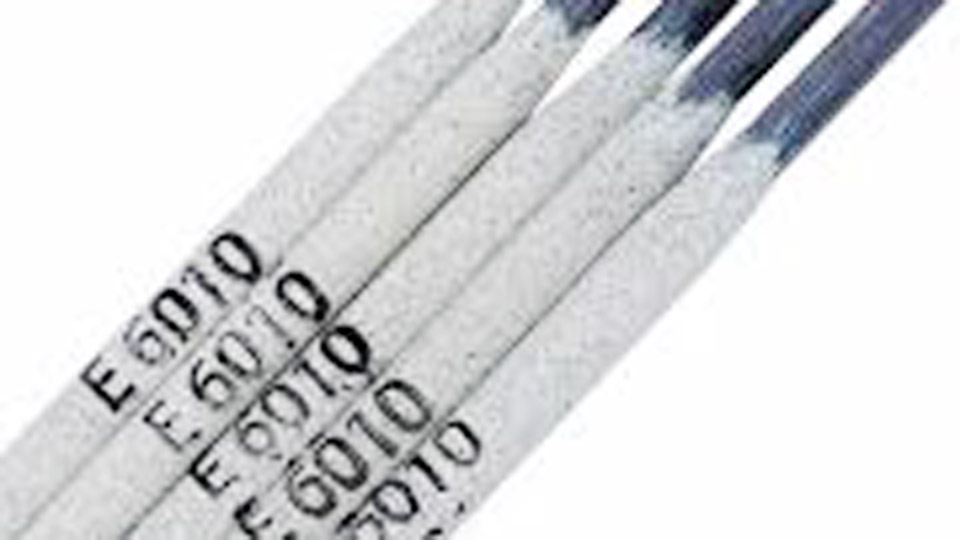
E6010 Characteristics and Parameters
E6010 delivers a digging arc with deep penetration on DC electrode positive (DCEP). Typical amperage: 3/32″ at 40-70A, 1/8″ at 75-125A. It excels on rusty, painted, or scaled surfaces due to the forceful arc that burns through contaminants.
Use for pipeline root passes, vertical-down welding, and applications needing full penetration. The high hydrogen content requires careful control on crack-sensitive materials.
E6011: AC-Compatible Alternative
E6011 shares deep penetration and all-position capability but works on AC or DCEP thanks to potassium in the coating for better ionization. Slightly less digging than E6010 but more forgiving on machines without strong DC output. Amperage ranges similar; expect comparable mechanical properties with slightly smoother arc.
Real-world decision: Choose E6010 for maximum penetration on DC machines; switch to E6011 when AC is the only option or for slightly reduced spatter.
Rutile Electrodes: Ease of Use and Versatile Fabrication
E6013 for General-Purpose Welding
E6013 features high titania potassium coating for easy arc start, minimal spatter, and smooth beads. Suitable for AC, DCEP, or DCEN. Typical settings: 1/8″ electrode at 80-130A. Medium penetration makes it ideal for sheet metal, light fabrication, and repair work on clean mild steel.
It produces attractive fillet welds with easy slag removal, suiting hobbyists and students. Limitations: Lower strength than 70-series and shallower penetration than cellulosic types.
Iron Powder Rutile Variants (E7014, E7024)
E7014 adds iron powder for higher deposition while maintaining all-position use. E7024 is optimized for flat/horizontal with even higher efficiency (often 140-180% deposition rate). These reduce welder fatigue on production runs but sacrifice some out-of-position control.
Low-Hydrogen Electrodes: Structural Integrity and Crack Resistance
E7018: The Go-To for High-Quality Welds
E7018 combines low-hydrogen coating with iron powder for high tensile strength (70 ksi), excellent toughness, and ductility. All positions on AC or DCEP. Typical amperage: 1/8″ at 90-150A. It produces X-ray quality welds resistant to hydrogen cracking in thick plates, pressure vessels, and structural steel.
Storage Critical: Keep in heated ovens (250-300°F) or hermetically sealed packs. Re-dry if exposed to moisture per manufacturer specs to maintain low hydrogen levels.
Variants: E7016 and E7018-1
E7016 offers similar low-hydrogen benefits without iron powder for better control in certain positions. E7018-1 provides improved toughness at low temperatures for applications like offshore or cryogenic structures.
Specialty Electrodes for Non-Mild Steel Applications
Stainless Steel Electrodes
E308, E309, E316 series match specific stainless grades. E309 is often used for dissimilar welds (e.g., stainless to mild steel) due to higher alloy content that tolerates dilution. Use low-carbon “L” grades (e.g., E308L) to minimize carbide precipitation and corrosion risk. Maintain short arc length and control heat input.
Cast Iron Electrodes
ENi-CI (nickel) or ENiFe-CI (nickel-iron) electrodes minimize dilution and cracking. Nickel types offer better machinability. Preheat to 500-1200°F depending on casting thickness and use peening to relieve stresses. Short beads (1-2 inches) with slow cooling are essential.
Hardfacing and Maintenance Electrodes
High-chromium or tungsten carbide types for abrasion resistance. Select based on wear type: impact (austenitic), abrasion (martensitic or carbide). Deposition in multiple layers requires matching base and interpass temperatures.
Electrode Selection Decision Framework
Matching to Base Metal and Joint Requirements
- Mild steel, low restraint: E6013 or E7014.
- Thick sections, high restraint, or code work: E7018.
- Root pass on pipe: E6010/E6011 followed by fill with E7018.
- Stainless or dissimilar: Alloy-specific electrodes accounting for dilution.
Consider tensile strength overmatch by no more than 10-15 ksi typically. For high-strength low-alloy steels, consult specific AWS or material specs.
Position and Power Source Considerations
All-position (1) electrodes provide flexibility but may require technique adjustments. Flat/horizontal-only (2 or 4) maximize deposition speed. Verify machine output: many modern inverters handle AC/DC; older transformers favor AC-compatible rods.
Deposition Rate vs. Control Trade-offs
Iron powder electrodes boost travel speed and reduce passes but demand better puddle control. For thin material or root passes, prioritize non-iron powder types.
Practical Usage Parameters and Techniques
Amperage must stay within manufacturer ranges for the electrode diameter and position. Too low causes lack of fusion; too high risks undercut or burn-through. Travel speed affects bead profile—faster for stringers, slower for weave on wide grooves.
Maintain arc length approximately equal to electrode diameter for most rods. Short arc for low-hydrogen to minimize hydrogen pickup. Weave width limited to 3-4 times core wire diameter in vertical positions.
Polarity Impact: DCEP generally provides deeper penetration and better cleaning; DCEN higher deposition but less penetration. AC balances both with some machines.
Storage, Handling, and Reconditioning
Moisture is the enemy of low-hydrogen electrodes. Store in holding ovens at recommended temperatures. Re-bake per specs (e.g., 500-800°F for 1-2 hours) if moisture suspected. Rutile and cellulosic are more tolerant but still benefit from dry conditions.
Inspect coatings for cracks or chips before use. Proper handling extends shelf life and prevents porosity.
Advanced Considerations for Professional Results
For critical applications, diffusible hydrogen testing (AWS A4.3) and mechanical testing validate choices. In multi-pass welding, interpass temperature control (typically 300-500°F max for many steels) prevents cracking. Post-weld heat treatment may be required for stress relief in basic-coated welds on thick material.
Performance-Based Takeaway
Electrode choice is a balance of penetration, mechanical properties, deposition efficiency, and defect resistance tailored to the specific joint, material, and service conditions.
Mastering AWS classifications and coating behaviors allows consistent high-quality welds across projects—from hobby repairs to structural fabrication. For demanding work, low-hydrogen E7018 combined with proper preheat and technique often delivers the most reliable long-term performance.
FAQ
What is the difference between E6010 and E7018 electrodes?
E6010 provides deep penetration with a cellulosic coating for root passes on dirty material using DCEP. E7018 is low-hydrogen for high-strength, crack-resistant welds in structural applications, usable on AC/DCEP with higher deposition.
How do I choose electrode size for a given thickness?
Match diameter to material thickness and joint: 3/32″ for thin sheet (<1/8″), 1/8″ for 1/8-1/4″ common work, 5/32″ or larger for thicker plates. Larger diameters increase deposition but reduce control in out-of-position welding.
Can I use E7018 on AC machines?
Yes, most E7018 electrodes are designed for AC or DCEP. Confirm the specific classification; potassium types perform well on AC.
What electrodes work best for welding rusty steel?
Cellulosic E6010 or E6011 handle rust and scale effectively due to their forceful arc. Clean to bare metal when possible for best results, especially with low-hydrogen rods.