Paint peels, blisters, or fails to bond on welded projects far more often from residual mill scale, slag residue, oils, or grinding dust than from the paint itself. Knowing what to clean metal with before spray painting determines whether the coating lasts years or fails within months.
Welded steel and fabricated parts carry unique contaminants—flux residues, spatter, heat-affected oxides, and handling oils—that standard shop wipes leave behind. These layers block primer adhesion and create pathways for moisture.
The right sequence of mechanical removal followed by specific solvents or acid-based converters produces a surface that accepts self-etching or epoxy primers and holds topcoats under outdoor or structural service.
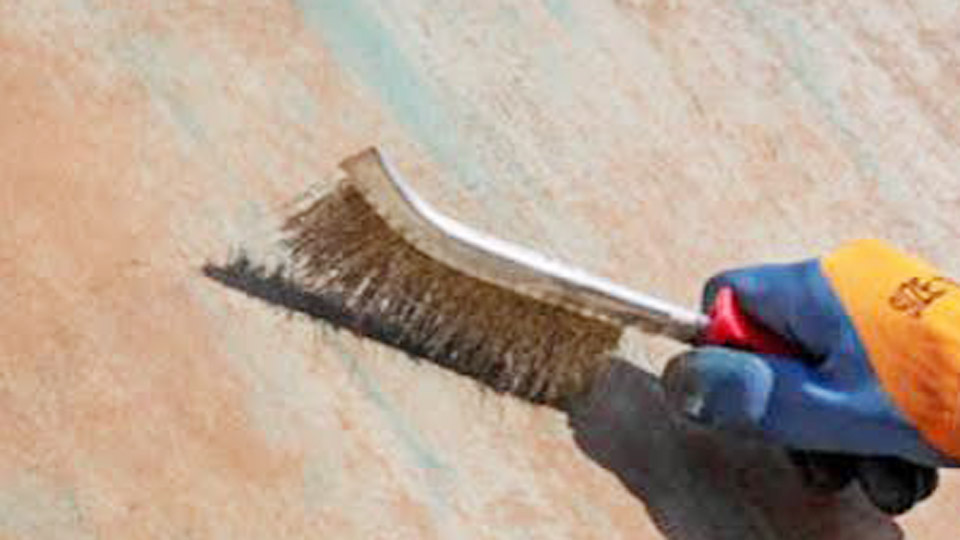
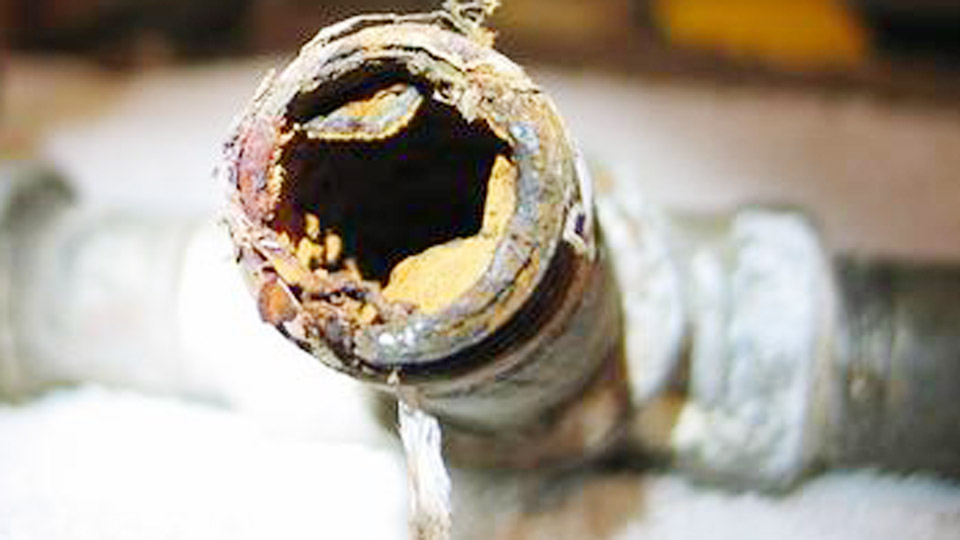
Image by enviro-tech-coatings
Contaminants That Prevent Paint Adhesion on Welded Surfaces
Welded metal carries more than visible dirt. Each contaminant requires a different removal approach before any solvent or chemical can succeed.
Mill Scale and Heat-Affected Oxides
Hot-rolled steel arrives covered in mill scale—a tightly adherent iron oxide layer formed during manufacturing. Welding heat creates additional oxides in the heat-affected zone. Paint applied over intact mill scale eventually lifts as the scale detaches under thermal cycling or moisture.
Mechanical abrasion or chemical conversion must remove or convert this layer; simple solvent wiping does nothing to it.
Welding Slag, Spatter, and Flux Residues
SMAW and flux-cored processes leave slag that chips incompletely. Spatter embeds carbon and oxides. Even after grinding, microscopic residues remain in weld toes and undercuts. These alkaline or glassy deposits interfere with primer wetting and create localized corrosion cells under the paint film.
Oils, Cutting Fluids, and Handling Contaminants
Cutting oils, anti-spatter sprays, fingerprints, and residual lubricants form thin hydrophobic films. Many commercial anti-spatter compounds contain silicones that are extremely difficult to remove and poison paint adhesion across large areas. Solvent selection must dissolve these films completely without leaving its own residue.
Mechanical Cleaning Requirements Before Any Chemical Treatment
Solvents and acids only work on surfaces free of heavy scale and slag. Skipping mechanical steps wastes chemical effort and leaves weak spots.
Removing Slag and Spatter Effectively
Chip heavy slag with a chipping hammer, then follow with a wire wheel or flap disc. For spatter, a 36- or 40-grit flap disc or dedicated spatter-removal disc removes the majority without excessive base-metal removal. Inspect weld toes under good light; residual slag appears as dark glassy lines that must be ground flush.
Addressing Mill Scale on Structural Sections
On flat bar, plate, and tube, a 40-grit flap disc or 3M woven abrasive pads strip scale efficiently with minimal metal loss. For larger assemblies, abrasive blasting with garnet or crushed glass provides uniform profile. Chemical methods alone rarely remove heavy mill scale completely on thick sections; they work best after mechanical reduction.
Surface Profile Targets for Spray Paint
A light profile equivalent to 1–2 mils improves mechanical keying for primers. Over-polishing to a mirror finish reduces adhesion. After mechanical work, blow off all dust with clean compressed air or vacuum; residual grinding dust acts as a barrier layer.
Solvent Selection for Degreasing Welded Metal
Once mechanical cleaning is complete, solvents remove oils and residual films. Choice depends on evaporation rate, residue, and compatibility with subsequent acid treatments or primers.
Acetone Performance Characteristics
Acetone dissolves most shop oils and evaporates rapidly with almost no residue. It is highly effective as a final wipe but evaporates so quickly that large panels require section-by-section application.
Use lint-free rags and change them frequently; a dirty rag simply redistributes contaminants. Acetone is aggressive on some plastics and gloves—nitrile or chemical-resistant gloves are required.
Mineral Spirits and Paint Thinner Limitations
Mineral spirits cut heavy greases effectively but dry slowly and can leave a thin oily film if not wiped to dryness. Many painters follow mineral spirits with a second wipe of acetone or a dedicated wax-and-grease remover to eliminate residue. On welded frames, this two-step approach is common when heavy cutting oil is present.
Lacquer Thinner and Non-Chlorinated Brake Cleaner
Lacquer thinner removes a broader range of contaminants than mineral spirits and evaporates faster. Non-chlorinated brake cleaner is popular in shops because it flashes off cleanly and is widely available. Chlorinated versions should be avoided if any future welding will occur on the part, as chlorine residues can cause porosity or cracking.
Dedicated Wax and Grease Removers
Products formulated as wax-and-grease removers or PRE-type cleaners (Eastwood and similar) are designed specifically for paint preparation. They lift silicone and residual oils that simple solvents sometimes miss. Apply, allow brief dwell, then wipe thoroughly with clean rags before the solvent dries.
Chemical Conversion and Etching Options for Steel
After degreasing, phosphoric-acid-based treatments convert remaining rust and light oxides into a stable iron-phosphate layer that improves primer adhesion and slows flash rusting.
Phosphoric Acid Conversion Coatings
Commercial products such as Ospho, Naval Jelly (in controlled use), or diluted phosphoric acid solutions react with iron oxide to form iron phosphate. Typical working concentrations range from 10–20 % for light rust conversion.
Apply by brush or spray, allow the reaction to complete (surface turns dark gray or black), then either wipe or follow manufacturer instructions regarding rinsing.
Some formulations are designed to dry in place and receive primer directly; others require a water rinse followed by thorough drying and a final solvent wipe to prevent flash rust.
After-Weld Panel Prep Formulations
Specialized aqueous cleaners marketed for post-weld use (Eastwood After Weld and equivalents) combine cleaning and light etching. They remove residual weld contaminants and leave a surface ready for primer. These are particularly useful on patch panels and thin sections where aggressive grinding is undesirable.
Timing Between Chemical Treatment and Primer
Phosphate layers and cleaned steel begin to form new oxides within minutes to hours depending on humidity. Apply primer as soon as the surface is dry and clean—ideally within the same work session. If delay is unavoidable, a light re-wipe with solvent immediately before priming restores the surface.
Aluminum and Specialty Metal Considerations
Aluminum requires different chemistry. Phosphoric acid treatments intended for steel can leave undesirable residues on aluminum. Use dedicated aluminum cleaners or mild alkaline degreasers followed by a thorough rinse and dry.
Self-etching primers formulated for aluminum or chromate-free etch primers provide the necessary adhesion layer. Avoid steel wool or carbon-steel brushes that embed particles and cause galvanic corrosion under paint.
Sequence That Produces Reliable Adhesion
A practical working order for most welded steel projects is:
- Mechanical removal of slag, spatter, and heavy mill scale.
- Degrease with acetone, lacquer thinner, or wax-and-grease remover.
- Optional phosphoric conversion on any remaining rust or light oxide.
- Final solvent wipe with clean acetone or dedicated prep solvent.
- Immediate application of self-etching or epoxy primer.
Skipping the final solvent wipe after acid treatment is a frequent cause of later paint failure. Residual acid or reaction products must be removed or fully neutralized according to the product instructions.
Products and Practices That Compromise Paint Adhesion
Silicone-containing anti-spatter sprays, mold-release agents, and some aerosol lubricants leave films that solvents struggle to remove completely. Once present, they can cause fisheyes and delamination across large areas. Water-based cleaners that are not fully dried promote flash rust.
Over-application of heavy rust converters that leave thick, unreacted films also interferes with primer. Always verify that any cleaner is compatible with the primer system that will follow.
Wrapping Up
Choosing the correct cleaner for metal before spray painting is a sequence decision, not a single-product choice. Mechanical removal first, solvent degreasing second, and optional phosphate conversion third produce a surface that primers can lock onto. The final solvent wipe and immediate priming close the process.
Advanced fabricators often add a light scuff with a fine abrasive pad after the last solvent wipe on critical appearance parts; this increases surface area without reintroducing contaminants and further improves long-term coating performance under UV and moisture exposure.
FAQs
What is the best solvent to wipe metal with right before spray painting?
Acetone or a dedicated wax-and-grease remover used with clean lint-free rags. Both evaporate cleanly and remove residual oils that remain after heavier degreasers.
Do I need to remove all mill scale before spray painting welded steel?
Yes for durable outdoor or structural coatings. Mill scale eventually detaches and takes the paint with it. Mechanical removal or conversion is required.
Can I use brake cleaner to clean metal before painting?
Non-chlorinated brake cleaner works well for degreasing and flashes off cleanly. Avoid chlorinated versions if the part may be welded later.
How soon after cleaning should I apply primer?
As soon as the surface is dry and free of residue—ideally within the same session. Clean steel begins forming new oxides quickly in humid air.