Air leaks in shop compressors waste energy, reduce tool performance, and disrupt workflows—especially critical for welders relying on consistent pressure for plasma cutters, pneumatic grinders, or spray systems. A leaking air compressor often leads to frequent cycling, overheating, or insufficient PSI at the torch or gun.
Learning how to fix a leaking air compressor restores reliability without unnecessary downtime or replacement costs. I’ll discuss the targeted diagnostics and repairs suited to the demands of welding shops.
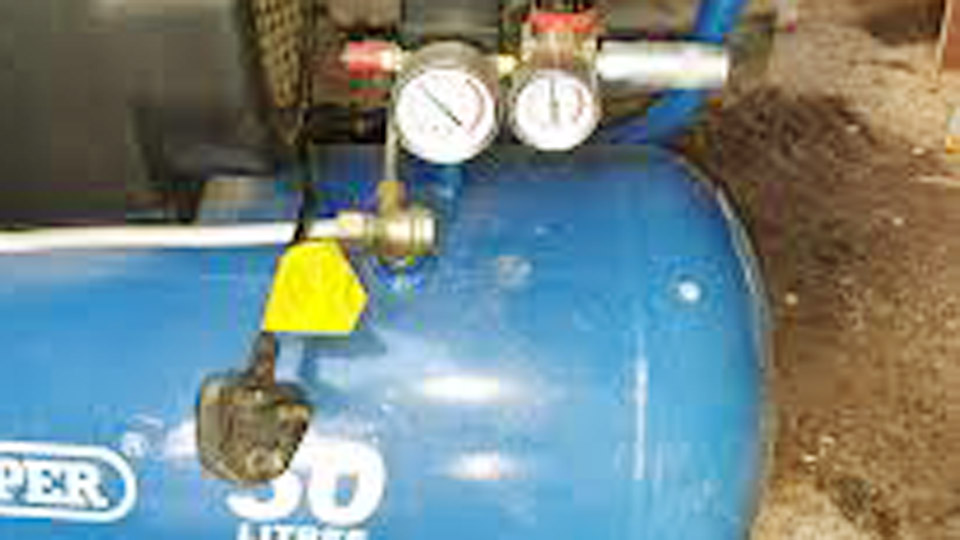
Image by codgers.diy
Diagnosing the Source of the Leak
Effective repair begins with precise identification. Random tightening or part swapping wastes time and risks further damage.
Using Soapy Water and Auditory/Visual Inspection
Depressurize the tank completely by pulling the safety valve ring. Mix dish soap with water in a spray bottle. Pressurize the system and spray every connection, fitting, hose, valve, and seam. Bubbles pinpoint the exact location. Listen for hissing during operation and shutdown—leaks often appear at fittings under vibration or at seals after cycles.
For welders, focus on high-use areas: quick-connect couplers for air tools and regulator outlets feeding welding equipment. Small pinholes in hoses near abrasive work areas are common.
Pressure Drop Testing and Component Isolation
Monitor the tank pressure gauge over 30–60 minutes with no tools connected. A drop exceeding 10–20 PSI indicates a significant leak. Isolate sections by capping lines or closing valves. This helps distinguish tank issues from line or valve problems.
Note cycling frequency: excessive run time often signals backflow through a failed check valve rather than external leaks.
Common Leak Locations in Welding Shop Compressors
Welding environments accelerate wear through vibration, heat, metal dust, and inconsistent maintenance.
Fittings, Couplers, and Threaded Connections
Loose or poorly sealed NPT threads are frequent culprits. Vibrations from reciprocating pumps loosen them over time. Apply PTFE (Teflon) tape or pipe dope to male threads (3–4 wraps, avoiding the first two threads to prevent contamination).
Avoid over-tightening aluminum components, which strip easily—use a torque wrench where manufacturer specs are available, typically 15–25 ft-lbs for common fittings.
Quick-connect couplers wear from repeated tool changes. Inspect O-rings inside the female end; replace if flattened or cracked. Industrial-style (Type D) couplers hold better under high-duty cycles than automotive (Type C) versions.
Hoses and Tubing
Abrasion from shop floors or sparks creates pinholes. Polyurethane or hybrid hoses resist kinking better than basic rubber in welding settings. For minor damage, cut out the bad section and install a coupler or barb fitting with hose clamps.
Severe wear requires full replacement with matching ID (usually 1/4″ or 3/8″) and pressure rating (at least 200 PSI working pressure). Route hoses away from hot exhaust or sharp edges.
Valves: Check Valve, Safety Valve, and Drain Valve
The check valve (one-way valve between pump and tank) fails commonly, allowing backflow that mimics pressure switch leaks. When the compressor shuts off, air escapes through the unloader valve on the pressure switch. Test by isolating: if pressure holds in the tank but drops when the motor is off, replace the check valve.
Safety valves (pop-off) rarely leak unless contaminated; clean or replace if they hiss continuously. Drain valves at the tank bottom corrode from trapped moisture—replace with ball valves for better sealing and easier draining.
Step-by-Step: Replacing the Check Valve
This is one of the most common fixes for apparent pressure switch leaks.
- Unplug the compressor and drain the tank fully.
- Disconnect the pressure switch tube and outlet line from the check valve using appropriate wrenches.
- Unscrew the old check valve from the tank port (it may be threaded into the tank top).
- Install the new valve with PTFE tape on threads. Orient it correctly for flow direction (arrow toward tank).
- Reconnect lines and test for leaks with soapy water.
Select OEM or high-quality brass check valves rated for your PSI and CFM. Cheap imports often fail quickly under continuous welding loads.
Repairing or Replacing Gaskets and Seals
Pump head gaskets and O-rings degrade from heat and oil contamination. Symptoms include external oil misting combined with air leaks.
Disassemble the pump head after depressurizing and cooling. Clean mating surfaces thoroughly. Install new gaskets with high-temperature RTV silicone where specified. Torque bolts in a crisscross pattern to manufacturer values (often 15–20 ft-lbs). Over-tightening warps heads and creates new leaks.
For piston ring or reed valve issues in oil-lubricated units, consult the service manual—deeper disassembly may require special tools.
Addressing Tank Leaks: Temporary vs. Permanent Solutions
Tank leaks from corrosion or weld seams pose safety risks and are harder to fix reliably.
Surface Pinhole Repairs with Epoxy
For small external pinholes (often from internal rust), clean the area with a wire brush or grinder to bare metal. Use high-strength steel epoxy like JB Weld: roughen the surface, apply generously (pushing some material into the hole), and let cure fully (15–24 hours). Test at operating pressure. This is a temporary measure—internal corrosion often continues.
When to Weld or Replace the Tank
Welding on a pressure vessel is extremely dangerous and often not recommended due to unknown internal condition and heat-affected zones weakening the tank. If attempting, drain completely, purge with inert gas, and use appropriate filler (e.g., nickel rods for ductility).
Many professionals advise replacement for any significant tank leak, as patched tanks may fail catastrophically under repeated pressure cycles.
Monitor for rust by draining daily—condensate is the primary killer of tanks in humid welding shops.
Optimizing Your System for Leak Prevention in Welding Applications
After repairs, integrate best practices:
- Install an inline water separator and coalescing filter before regulators to protect tools.
- Use a larger receiver tank or add a secondary tank for high-demand welding to reduce cycling.
- Set cut-in/cut-out pressures appropriately (e.g., 90–120 PSI for many plasma systems) to minimize wear.
- Schedule quarterly full inspections, focusing on vibration-prone areas.
Track energy use or run time before and after fixes—leaks can waste 20–30% of compressor output.
Choosing Replacement Parts and Tools for Long-Term Reliability
Match parts to your compressor model for thread size, pressure rating, and material compatibility. For welding shops, prioritize heavy-duty components: metal couplers over plastic, reinforced hoses, and oil-free or synthetic-lubricated pumps if dust is heavy. Keep a basic repair kit: assorted O-rings, PTFE tape, spare check valve, and common wrenches.
Performance Takeaway
A well-maintained compressor delivers stable 90–150 PSI with minimal cycling, directly improving weld quality and tool life. The key decision is proactive isolation of leaks versus reactive part swapping—mastering diagnostics like soapy water tests and check valve verification separates reliable shop setups from constant frustration.
For advanced users, consider adding leak detection ultrasonics or permanent pressure logging for high-output welding operations.
FAQ
How do I know if my air compressor check valve is bad?
If the compressor loses pressure quickly after shutdown and air hisses from the unloader valve on the pressure switch, the check valve is likely stuck open or failed. Confirm by isolating and testing pressure hold in the tank.
Can I weld a leaking air compressor tank?
Generally no—welding pressure vessels is hazardous and can create weak points. Temporary epoxy repairs work for minor pinholes, but replacement is safest for structural integrity.
Why does my compressor leak air from the pressure switch?
This is usually backflow from a faulty check valve, not the switch itself. Replacing the check valve resolves most cases.
How often should I drain my air compressor tank?
Daily in welding environments to prevent internal corrosion and tank leaks. Install an automatic drain or easy-access ball valve for convenience.