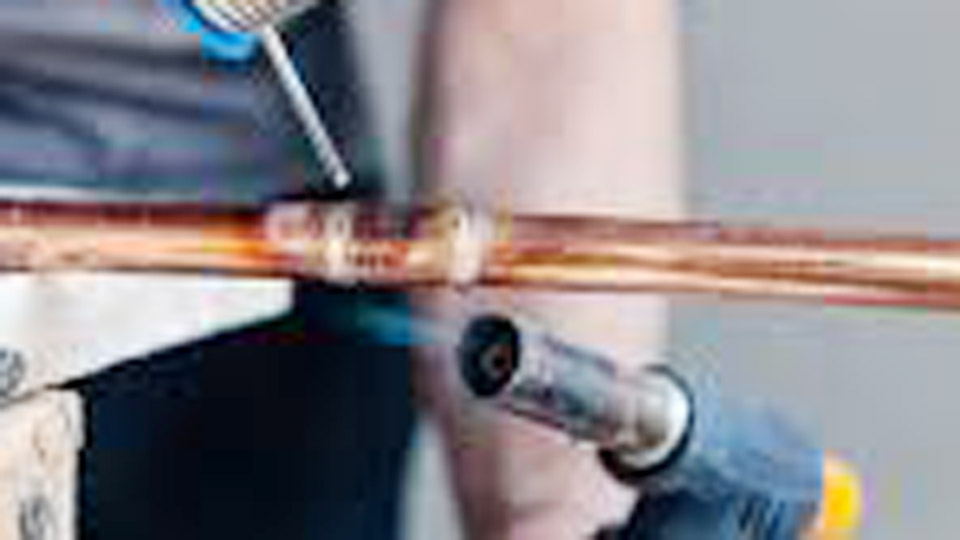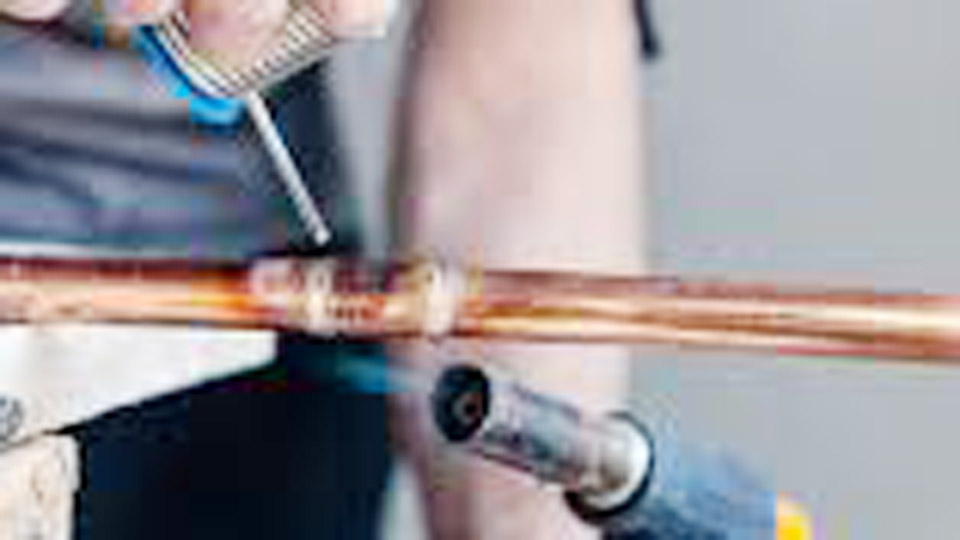
Silver soldering often fails due to rapid oxidation at high temperatures, especially with sterling silver containing copper. Oxides block solder flow, leading to weak joints, pits, or excessive fire scale that requires heavy cleanup.
Homemade flux for silver soldering addresses this by providing an effective oxygen barrier and oxide remover at a fraction of commercial costs, giving precise control over consistency and performance.
This approach matters for DIYers, hobbyists, and professionals who handle frequent or custom work. It delivers reliable results across joint types while minimizing waste and dependency on specialty suppliers.
The following covers practical formulations, application, and integration into soldering workflows with exact ratios, temperatures, and decisions that impact joint integrity.
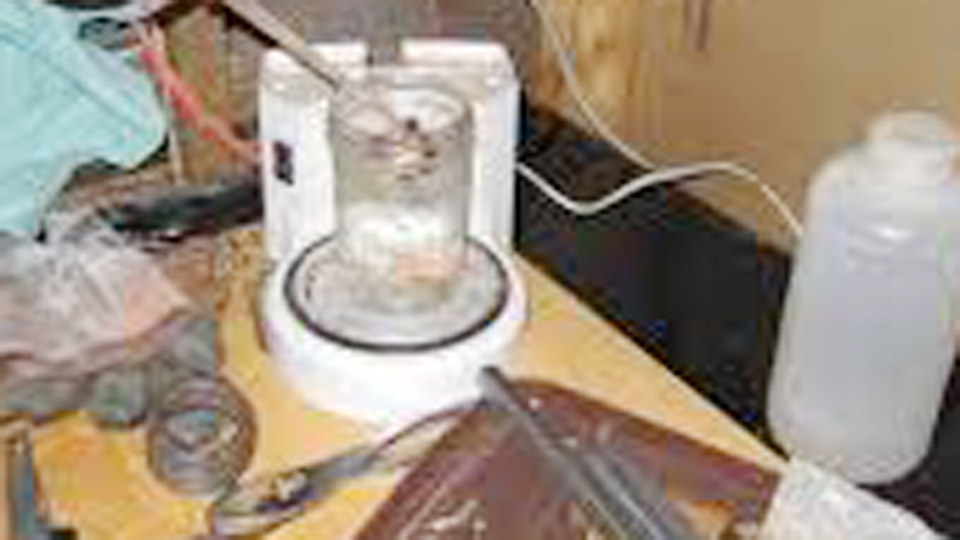
Image by edmontonlapidary
The Chemistry and Function of Flux in Silver Soldering
Flux lowers the surface tension of molten solder, promotes wetting, and dissolves metal oxides. In silver soldering (typically 1100–1500°F / 593–816°C for hard solders), it must remain active long enough to handle prolonged heat without breaking down prematurely.
Borax (sodium tetraborate) serves as the primary base in most homemade options. It forms a glassy borate layer that shields surfaces from atmospheric oxygen. Boric acid enhances this by creating a more fluid protective coating at temperature. Additives like trisodium phosphate (TSP) in advanced mixes improve cleaning of refractory oxides.
Key performance factors:
- Active temperature range: Must activate below solder flow point and hold through peak heat.
- Viscosity and coverage: Liquid or paste forms penetrate tight joints (0.001–0.005″ clearance ideal).
- Residue management: Post-solder cleanup via pickling removes glassy borates without damaging the base metal.
Homemade versions match or exceed basic commercial fluxes for non-ferrous work when properly formulated, particularly for sterling silver, copper, brass, and nickel silver.
Oxidation Challenges Specific to Silver Alloys
Sterling silver (92.5% Ag, 7.5% Cu) forms cuprous oxide (fire scale) and subsurface cupric oxide (fire stain) rapidly above 1000°F. Homemade fluxes mitigate this through repeated barrier applications rather than single-use activity. Precise heat control and flux layering prevent deep penetration of oxides, reducing post-process polishing time.
Simple Borax-Based Homemade Flux Recipes
Start with basic borax formulations for most hobby and light professional work. These provide adequate oxide protection for easy-to-medium silver solders.
Borax-Water Solution for General Use
Dissolve 30 grams (about 2 tablespoons) of anhydrous borax powder in 1 liter of water. Boil in a stainless steel container until volume reduces by half, concentrating the solution. Cool and store in a sealed glass jar. This yields a stable liquid flux usable for weeks to months.
Application: Brush or dip onto cleaned joints. Reapply as it dries during preheat. Effective for temperatures up to 1400°F with good flow on tight-fitting joints. Adjust concentration for paste-like thickness by reducing water further or adding more powder.
Shelf life and adjustments: Refrigerate for extended storage. Thicker mixes suit vertical joints; thinner versions work for capillary action in tubing or lap joints.
Borax Cone Paste Method
Traditional jewelers’ approach uses a borax cone ground against a ceramic dish with distilled water. Add drops of water to the dish and grind the cone to form fresh paste on demand. This minimizes contamination and ensures peak activity.
The paste excels for spot application on intricate pieces. It dries to a hard protective coating when gently preheated, then activates fully as temperature rises. Ideal for one-off repairs or when avoiding bulk storage.
Advanced Homemade Flux Formulations
For superior fire scale prevention and high-temperature performance, move to multi-component mixes.
Prips Flux (Barrier and Anti-Firestain Formula)
Prips flux, developed for silversmithing, combines boric acid, borax, and TSP for a sprayable or brushable barrier.
Standard recipe (1 liter batch):
- 120 grams boric acid
- 80 grams borax
- 80 grams trisodium phosphate (pure TSP, not substitutes)
- 1 liter distilled water
Bring water to boil, add ingredients gradually while stirring until fully dissolved. Additional water may be needed for complete solubility. Store in a spray bottle or jar. Dilute further for lighter coatings.
Application protocol
Heat piece gently to ~300–400°F. Spray or brush in short bursts for even drying. Apply 3–4 layers before soldering. This creates a glassy barrier that reduces oxygen access to copper in sterling silver, minimizing subsurface stain. Use in conjunction with standard flux at the joint for optimal solder flow. Not a full substitute for joint flux but excellent for surface protection on larger or multiple-joint assemblies.
Variations
Scale ratios proportionally for smaller batches. Some omit TSP for simpler boric acid-borax mixes when TSP sourcing is difficult, though cleaning action decreases slightly.
Boric Acid-Alcohol Barrier Flux
Mix boric acid powder with denatured or isopropyl alcohol (50/50 by volume or saturated paste). Boric acid dissolves until saturation forms a thin slurry.
Dip or brush the entire workpiece multiple times, drying between coats with low heat. This forms a robust anti-oxidation layer effective up to soldering temperatures.
Alcohol evaporates quickly, leaving a uniform coating ideal for complex geometries. Use caution with flammability—work in well-ventilated areas away from open flames until dry.
This formulation pairs well with borax paste at joints, providing dual-layer protection: barrier on broad surfaces, active flux in the joint gap.
Sourcing Materials and Practical Considerations
Borax powder or cones, boric acid, and distilled water are available from pharmacies, hardware stores, or online chemical suppliers.
TSP requires pure trisodium phosphate; many modern cleaners use substitutes that reduce effectiveness. Verify labels for anhydrous forms to avoid hydration issues in recipes.
Storage: Glass or HDPE containers prevent contamination. Label with dates and concentrations. Borax solutions last months refrigerated; alcohol mixes have shorter shelf life due to evaporation.
Cost comparison: A 1-liter Prips batch costs under $5–10 in bulk ingredients versus $20+ for equivalent commercial volumes, with customizable performance.
Joint Preparation and Flux Application Techniques
Success depends more on preparation than flux quality. Degrease with acetone or alcohol, then mechanically clean with emery paper, files, or abrasive pads to bright metal. Fit joints tightly—solder flows best in 0.002–0.005″ gaps; wider gaps require more filler and risk voids.
Apply flux to both mating surfaces and surrounding areas. For paste, use a fine brush; for liquids, dip or spray. Preheat gently to drive off moisture without activating fully, then ramp to soldering temperature. Reapply during heat if flux becomes glassy and inactive.
For multi-step soldering: Use progressively higher-temperature solders (easy, medium, hard) with flux reapplied between steps. Homemade options support this sequence reliably when joints stay clean.
Integrating Homemade Flux into the Silver Soldering Workflow
Torch and heat control: Use a neutral or slightly reducing flame (oxy-acetylene, propane, or butane). Focus heat on the mass of the workpiece rather than the joint directly. Solder flows toward the hottest point—direct flame away from filler once it melts.
Monitor flux behavior: It bubbles, clears, and becomes glassy at activation. Solder melts and flows smoothly into the joint when conditions are right. Overheating depletes flux activity and promotes fire scale.
Joint-specific strategies:
- Butt and lap joints: Ensure full flux penetration; use pallions (small solder pieces) placed strategically.
- Tube or wire work: Capillary action excels with thin flux layers.
- Large assemblies: Preheat evenly, use Prips barrier, and apply localized joint flux last.
Post-solder: Cool naturally, then pickle in warm acid solution (e.g., citric or Sparex) to remove residues. Rinse thoroughly and neutralize. Flux residues are water-soluble but benefit from mechanical brushing for stubborn glass.
Troubleshooting Common Soldering Failures with Homemade Flux
Solder not flowing: Insufficient cleaning, poor fit, inadequate flux, or incorrect temperature ramp. Increase flux coverage or add fresh application mid-heat. Check solder compatibility—homemade borax works across standard silver alloys (e.g., 45% Ag content for general use).
Excessive fire scale/stain: Overheating, thin flux layers, or oxygen-rich flame. Apply multiple Prips coats and use charcoal blocks to locally reduce oxygen. Limit dwell time at peak temperature.
Cracking or weak joints: Thermal shock from uneven heating or contamination. Fixture pieces to maintain alignment and use lower initial heat for delicate work.
Residue issues: Incomplete pickling. Extend pickle time or agitate solution for thick borate glass.
Adjust formulations based on observed results—more boric acid for fluidity, higher borax for longevity.
Homemade vs. Commercial Flux: Decision Framework
Commercial fluxes (e.g., Handy Flux, Batterns) offer consistent performance and extended temperature ranges with fluorides for refractory oxides. Homemade versions provide equivalent results for most sterling and copper work at lower cost and with full ingredient transparency.
Choose homemade for:
- Cost-sensitive or high-volume hobby work.
- Custom viscosity needs.
- Situations requiring barrier protection (Prips).
Opt for commercial when:
- Working stainless, high-chrome alloys, or needing ultra-wide temperature windows.
- Regulatory or production consistency demands standardized products.
Many professionals layer both: homemade barrier + commercial or borax joint flux.
Real-World Performance Takeaways and Advanced Insight
Homemade flux for silver soldering empowers controlled, repeatable results when matched to specific alloys, joint designs, and heat inputs. Prioritize tight fit, thorough cleaning, layered application, and measured heating over perfect recipes. Test small batches on scrap to dial in ratios for your torch and materials.
For pro-level work, combine Prips barrier with boric acid dips and targeted borax paste. This minimizes fire stain to near-zero on sterling while maintaining excellent capillary flow, allowing high-polish finishes with minimal material removal.
Experiment with flame chemistry and dwell times—the best flux systems integrate seamlessly with operator technique for joints that outperform the base metal in shear and fatigue.
FAQ
How long does homemade borax flux last?
Refrigerated borax-water solutions last 6–12 months; alcohol-based mixes 1–3 months. Discard if contaminated or separated. Fresh mixing ensures maximum activity.
Can I use homemade flux for all silver solder grades?
Yes for easy, medium, and hard grades on non-ferrous metals. Adjust layers and heat for higher-temperature hard solders. Pair with Prips for sterling to control oxidation.
Is Prips flux a replacement for regular soldering flux?
No. It excels as a surface barrier against fire stain but works best alongside joint-specific flux like borax paste for optimal solder wetting and flow.
What substitutes work if I can’t find TSP for Prips?
Omit TSP or increase boric acid slightly. Performance drops in oxide removal on dirty metal but remains viable for clean work. Source pure ingredients to avoid reduced efficacy.