Estimating the cost of arc welding often leads to confusion, especially when quotes vary widely or projects overrun budgets. Many welders struggle to balance labor time, consumable usage, and process efficiency without accurate breakdowns.
Learning how to estimate the cost of arc welding provides a reliable framework for pricing jobs, comparing processes like SMAW, GMAW, and GTAW, and making informed decisions that protect profitability while delivering quality welds.
This matters because labor and overhead typically dominate (often 70-85% of total costs), while poor estimates lead to lost bids or unprofitable work.
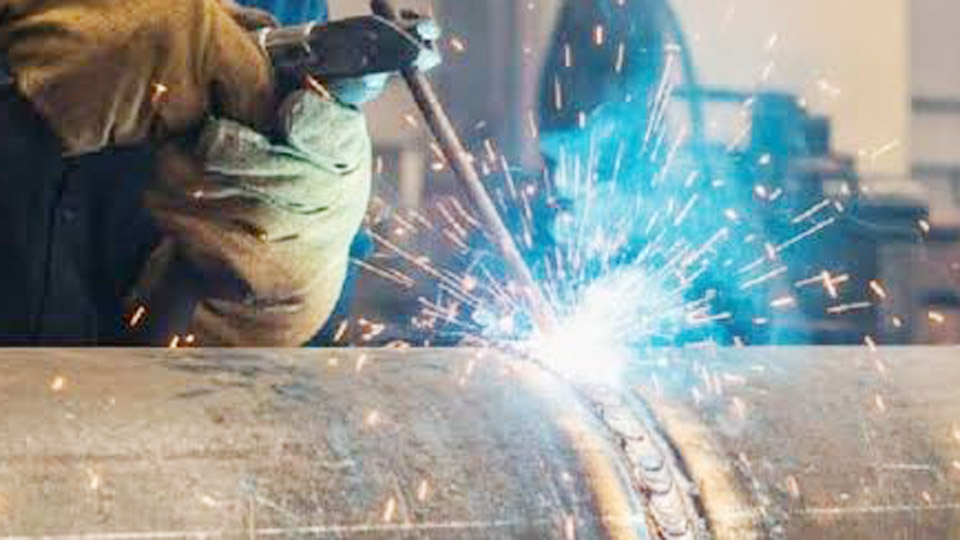
Image by yeswelder
Key Factors Influencing Arc Welding Costs
Material and Joint Design Variables
Joint design directly dictates weld metal volume, which drives consumable and time costs. Calculate the cross-sectional area of the weld groove or fillet first. For a fillet weld, volume per linear foot equals leg size squared times 1.0 (adjusted for reinforcement, typically +10-20%). Multiply by material density (e.g., 0.283 lb/in³ for steel) to get deposited weld metal weight.
Thicker materials or complex preparations (e.g., double-V vs. single-V grooves) increase preparation time and filler needs. Root openings and included angles affect volume significantly—a 1/16″ root opening on a 1/4″ plate can add 20-30% more weld metal.
Factor in base material type: carbon steel is straightforward, but stainless or aluminum raises filler costs and may require specific processes.
Process Selection and Productivity Metrics
Different arc processes yield different economics. SMAW (stick) has low equipment costs but moderate deposition rates (2.5-5.5 lb/hr for common E7018 electrodes) and low operating factors (15-35%).
GMAW (MIG) offers higher deposition (up to 8-15 lb/hr in spray transfer) and better efficiency (92-98%). GTAW (TIG) excels in quality for thin or exotic materials but deposits slowly (1.5-3 lb/hr).
Deposition rate measures pounds of weld metal deposited per hour of arc time. Deposition efficiency accounts for losses (e.g., SMAW ~65%, GMAW ~95%, GTAW ~98%).
Operating factor (duty cycle) reflects actual arc-on time versus total welder time, including setup, cleaning, and electrode changes. Typical values: SMAW 20-30%, semi-auto GMAW/FCAW 30-45%, mechanized 70-90%.
Labor and Overhead Breakdown
Labor plus overhead usually comprises the largest share. Use your actual hourly rate (welder wage + benefits + shop overhead). Multiply by total time, derived from arc time adjusted by operating factor.
Formula for labor/overhead cost per foot:
(Labor + Overhead Rate $/hr) / (Deposition Rate lb/hr × Operating Factor) × Pounds of Weld Metal per Foot
For a shop with $50/hr combined rate, 4 lb/hr deposition, 30% operating factor, and 0.106 lb/ft for a 1/4″ fillet: arc time per foot = 0.106 / 4 = 0.0265 hr; total time = 0.0265 / 0.3 ≈ 0.088 hr; cost ≈ $4.40/ft.
Position affects this—flat/horizontal is fastest; overhead or vertical increases time by 20-50% due to lower travel speeds and more passes.
Calculating Consumables Consumption and Cost
Electrode/Wire Usage
Determine required filler weight, then adjust for efficiency and process losses. For SMAW, multiply deposited weight by ~1.5 to account for stubs and slag. For GMAW, ~1.05.
Example for 1/4″ fillet weld (0.106 lb deposited/ft steel):
- SMAW (65% efficiency): ~0.163 lb electrode/ft.
- At $0.45/lb: ~$0.073/ft.
- GMAW (95% efficiency): ~0.112 lb wire/ft at $1.50/lb solid wire: ~$0.168/ft (but faster process often offsets).
Use manufacturer data for specific electrodes/wires. Account for spatter (higher in short-circuit MIG) and stub loss (2″ typical for stick).
Shielding Gas and Flux Costs
Gas consumption ties to flow rate and arc time. Typical GMAW: 12-15 L/min (25-35 cfh). For a cylinder providing ~10-12 hours arc time, calculate per-foot based on travel speed. CO2 is cheaper than argon mixes but may increase spatter. Flux for SAW or FCAW: ~1:1 ratio with deposited metal.
Power costs remain minor (<1-2%): (Amps × Volts × Arc Time in hr × Power Source Efficiency Factor) / 1000 × $/kWh. Efficiency ~80-90% for inverters.
Process-Specific Cost Estimation Methods
SMAW (Shielded Metal Arc Welding) Costing
SMAW suits field repairs and all-position work but requires frequent electrode changes. Use tables for electrode consumption per weld size. For a 1/4″ fillet with E7018 (deposition ~4.8 lb/hr at 250A, 35% operating factor): labor dominates. Compare electrode types—high-efficiency iron powder electrodes (e.g., E7024) boost deposition to 9+ lb/hr, cutting time significantly.
Real-world adjustment: Add time for slag removal between passes (critical for multi-pass welds).
GMAW/FCAW (MIG and Flux-Cored) Productivity Focus
These semi-automatic processes shine in shop fabrication. Key variables: wire diameter (0.035″ common), voltage, WFS (wire feed speed), and transfer mode. Spray transfer maximizes deposition but needs thicker material and proper gas. Calculate wire consumption directly from WFS and duty cycle.
FCAW offers higher deposition in out-of-position work than solid wire but lower efficiency (~85-90%) due to slag. Gasless variants eliminate shielding costs but may need more post-weld cleaning.
GTAW (TIG) Precision Costing
TIG costs more per pound deposited due to low rates but minimizes rework on critical joints. Filler rod usage is near 100% efficient. Factor in tungsten electrode consumption (minimal) and precise gas flow (back-purging for stainless adds cost). Ideal when quality justifies slower speeds.
Advanced Considerations for Accurate Estimates
Joint Preparation and Ancillary Costs
Preparation (cutting, beveling, grinding) can exceed welding costs for thick sections. Machined J-preps reduce volume vs. flame-cut V but raise upfront expense. Assembly, tacking, fixturing, and post-weld cleaning (slag, spatter) add time—often captured in lower operating factors. Include NDT, PWHT, or painting if required.
Scaling for Project Size and Volume
Per-foot or per-pound methods work for bidding. For production: cost per unit = (total weld length × cost/ft) + fixed setup. Larger runs amortize equipment and improve operating factors via mechanization. Track actuals vs. estimates to refine future bids (e.g., via spreadsheets or tools like ESAB QWPA).
Equipment depreciation, maintenance, and electricity factor into overhead. For hobbyists/DIY: focus on consumables + time value. Professionals: full burdened rate.
Comparing Processes Quantitatively
For identical 1/4″ fillet welds (assume $50/hr labor/overhead, steel):
- SMAW: Higher labor due to lower speed; lower consumables.
- GMAW: Faster, balanced costs.
- Automation: Dramatically lowers labor share.
Labor/overhead sensitivity means even small gains in travel speed or duty cycle yield big savings. Filler metal price impacts less than time for mild steel but more for alloys.
Practical Decision Framework for Welders
Data Collection Steps
- Define weld specs: length, size, process, position, material.
- Calculate deposited weight (geometry + density + reinforcement).
- Select parameters from WPS or data sheets (deposition rate, efficiency).
- Compute arc time = weight / deposition rate.
- Adjust for operating factor to get total labor time.
- Add consumables (filler adjusted + gas/flux) and power.
- Sum and apply markup/contingency (10-20% typical).
Use online calculators or custom spreadsheets for speed, but validate with shop trials.
Real-World Variables and Adjustments
Environmental factors (wind affecting gas, field vs. shop) alter operating factors. Welder skill impacts speed and defect rates (repairs multiply costs). Material condition (mill scale, rust) requires more prep. Seasonal labor rates or supply chain fluctuations for wire/gas matter for long-term estimates.
For students/hobbyists: Start simple—track electrode usage and hours on small projects to build intuition. Professionals: Integrate into quoting software for consistency.
Wrapping Up
Mastering how to estimate the cost of arc welding empowers better process choices, tighter quotes, and higher margins. Focus on labor efficiency as the primary lever—faster deposition and higher operating factors through proper technique, equipment, and workflow deliver the strongest performance gains.
For complex fabrications, combining detailed per-weld math with production data creates a robust, repeatable system that scales from hobby projects to professional contracts. This technical precision separates competitive welders from the rest.
FAQ
How accurate are online welding cost calculators?
They provide solid starting points using standard formulas but require your specific rates, parameters, and adjustments for operating factor and joint details. Always cross-check with historical job data.
Does welding position significantly change cost estimates?
Yes—vertical or overhead positions reduce travel speed and deposition efficiency, increasing labor time by 30-100% compared to flat. Factor this into process and parameter selection.
What is the biggest hidden cost in arc welding projects?
Labor and overhead time outside pure arc time (setup, inter-pass cleaning, handling). Improving workflow and duty cycle often yields greater savings than cheaper consumables.
How do I estimate costs for dissimilar metals or exotic alloys?
Base calculations on higher filler prices, specialized gases/preheat, and potentially slower qualified procedures. Deposition data for stainless or nickel alloys differs; consult WPS and add qualification/testing costs.