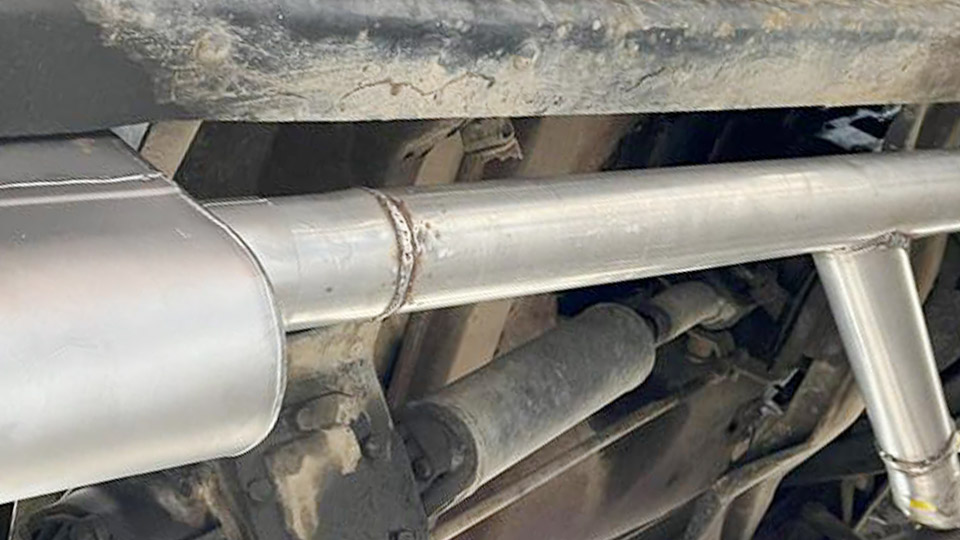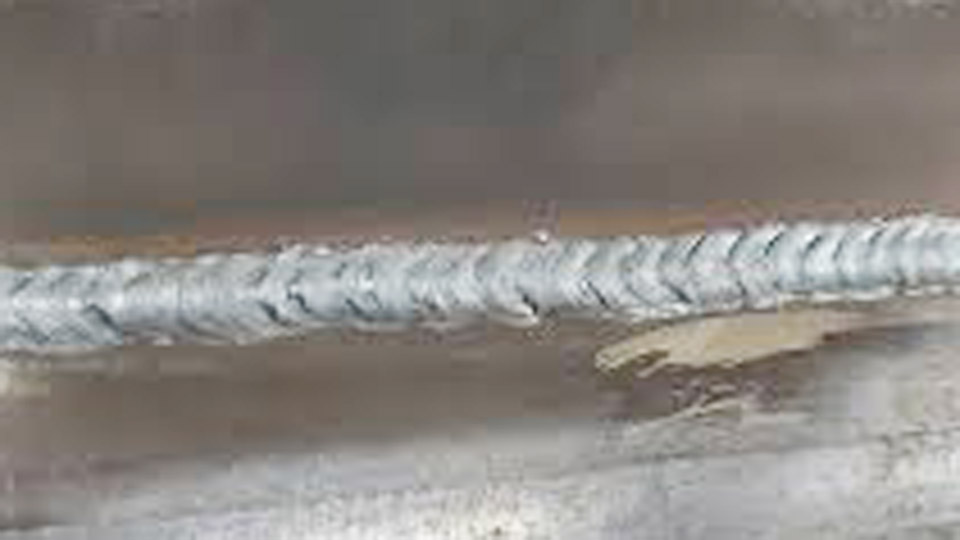
Spray welding is a metal restoration and surface enhancement process used to rebuild worn components, improve corrosion resistance, and extend the service life of industrial parts.
If you’ve been wondering what is spray welding and how does it works, understanding the process is essential because the quality of the deposited coating directly affects wear resistance, bonding strength, machining requirements, and overall repair costs.
Unlike conventional fusion welding, spray welding applies molten or semi-molten material onto a prepared surface, making process selection and proper technique critical for achieving durable results.
Choosing the wrong filler material or operating parameters can lead to poor adhesion, premature coating failure, and costly rework.
Whether you’re involved in equipment maintenance, fabrication, or repair welding, knowing how spray welding works will help you determine when it’s the right solution and how to achieve reliable, long-lasting surface restoration.
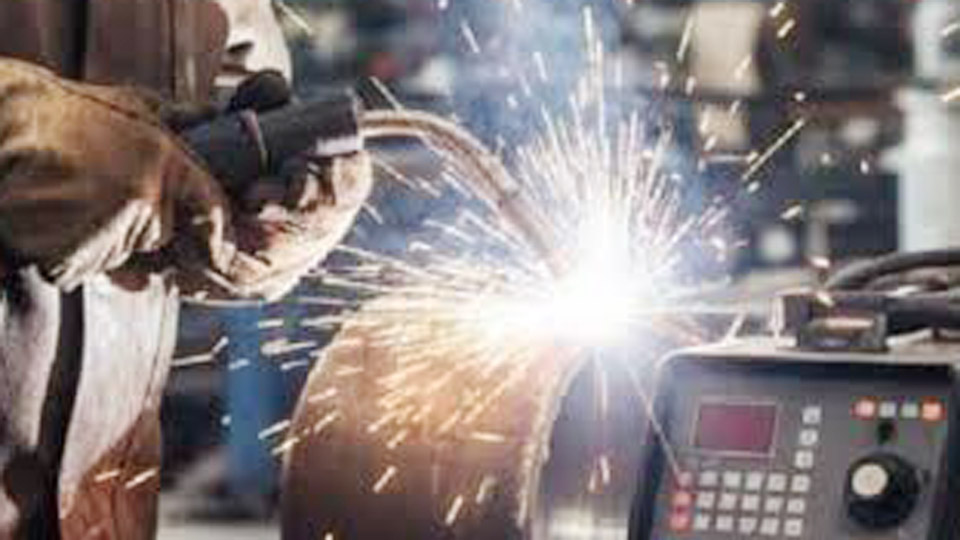
Image by yeswelder
Core Mechanics of Spray Welding
Spray Transfer in GMAW/MIG
In GMAW spray transfer (also called axial spray), the electrode wire melts into a continuous stream of tiny droplets smaller than the wire diameter. Electromagnetic forces propel these droplets axially across a stiff, columnar arc directly into the weld pool.
This differs from short-circuit (low current, frequent contact) or globular transfer (larger drops, more spatter). Spray mode requires crossing a transition current threshold, typically achieved with higher voltage and current, argon-rich shielding gas (minimum 80% argon), and appropriate wire diameters. The result is a stable arc with little spatter, excellent wetting, and high deposition rates.
Thermal Spray Processes Overview
Broader “spray welding” often refers to thermal spray techniques, where molten or semi-molten particles (wire, rod, or powder) are propelled onto a substrate to form a coating rather than a fusion weld. Key variants include:
Arc Spray (Twin-Wire): Two wires create an arc; compressed air atomizes and propels the molten material. High deposition (up to 20+ kg/h), mechanical bonding.
Flame Spray: Oxygen-fuel flame melts wire/powder; air or gas propels particles. Cost-effective for simpler applications.
Plasma Spray: High-temperature plasma jet (up to 15,000°C) melts powder feedstock for versatile, high-performance coatings.
HVOF (High-Velocity Oxy-Fuel): Combines combustion with high particle velocity for dense, low-porosity coatings with strong adhesion.
In powder-based spray-and-fuse variants, a self-fluxing alloy is sprayed then remelted (often 1000–1300°C) to achieve metallurgical bonding.
Key Parameters for Reliable Spray Performance
Voltage, Current, and Transition Thresholds
Spray transfer demands sufficient energy for droplet detachment without short-circuiting. Typical ranges:
- Voltage: 24–37 V (often 26–32 V for stability).
- Current: 150–650 A, depending on wire size and material (e.g., 180–440 A common for many setups).
For 0.045-inch (1.2 mm) wire on mild steel, transition often occurs around 180–220 A with 90/10 Ar/CO₂. Higher argon content stabilizes the arc and reduces spatter. Wire feed speed (WFS) directly influences current—calibrate so the arc sounds like a steady “hiss” or “whoosh” rather than crackling.
Example Parameter Table for Mild Steel GMAW Spray (Approximate):
| Wire Diameter | Voltage (V) | Current (A) | Gas Mix | Typical Deposition |
|---|---|---|---|---|
| 0.035″ (0.9 mm) | 24–28 | 150–250 | 90% Ar / 10% CO₂ | Moderate |
| 0.045″ (1.2 mm) | 26–32 | 180–350 | 95% Ar / 5% O₂ | High |
| 1/16″ (1.6 mm) | 28–37 | 250–450+ | High Ar blend | Very High |
Adjust for material thickness, joint type, and position. Test on scrap to fine-tune for your power source and inductance settings.
Shielding Gas and Wire Selection
Argon-rich mixtures (80–98% Ar with CO₂ or O₂) are essential for true spray transfer. Pure CO₂ or low-argon blends favor globular transfer and increase spatter. Oxygen additions improve wetting on steels; helium blends suit aluminum or thicker sections for hotter arcs.
Choose solid wires matching base material (ER70S-6 for mild steel). Larger diameters support higher currents for spray mode. Flux-cored wires can achieve spray-like transfer in gas-shielded variants but behave differently.
Torch Technique and Stand-Off
Maintain a 10–15° torch push angle (forehand) and consistent ½–¾ inch (12–19 mm) contact tip-to-work distance (CTWD). Too short risks instability; too long reduces penetration and increases oxidation. Travel speed must balance deposition to avoid undercut or lack of fusion—typically faster than short-circuit due to fluid puddle.
For thermal spray, stand-off is 100–200 mm; keep the gun perpendicular to minimize porosity.
Equipment Requirements and Setup Considerations
Robust constant-voltage (CV) power sources with high duty cycle (at least 60% at 300+ A) are mandatory. Smaller machines often cannot sustain spray currents. Dedicated spray arc guns or thermal spray systems include wire feeders capable of high speeds and precise control.
Essential accessories: water-cooled torches for prolonged high-amperage use, proper grounding, and reliable gas delivery (high-flow regulators). For thermal spray, add grit-blasting equipment for surface prep and dust collection.
Setup checklist:
- Verify power source capacity and polarity (DCEP).
- Select and install correct drive rolls and contact tips.
- Purge lines and check for leaks.
- Preheat substrate where needed (200–400°C for some steels in powder processes; avoid for reactive metals like aluminum).
Applications and Real-World Decision Factors
Structural Fabrication and Thick Materials
Spray GMAW excels on plate ¼ inch and thicker in flat or horizontal positions. Shipbuilding, heavy equipment, and structural steel benefit from high travel speeds and deep penetration with low distortion relative to processes with higher overall heat input.
Choose spray when productivity trumps all-position flexibility. For out-of-position work, switch to pulsed spray or short-circuit.
Repair and Surface Restoration
Thermal spray variants shine for dimensional buildup on worn shafts, valves, turbine blades, or pump housings. Coatings restore geometry without excessive base metal dilution. Arc spray suits large-area zinc/aluminum corrosion protection; HVOF or plasma for wear-resistant carbides or ceramics.
Specialized Coatings
- Wear resistance: Chrome carbide, tungsten carbide via HVOF.
- Corrosion protection: Zinc, aluminum, stainless.
- Thermal barriers: Ceramics in aerospace or power generation.
- Medical/precision: Biocompatible coatings on implants.
Advantages and Limitations in Practice
Strengths:
- High deposition rates (significantly faster than SMAW or short-circuit MIG).
- Smooth beads, minimal spatter, excellent appearance and mechanical properties.
- Good penetration and fusion on thicker sections.
- Versatile for many metals; thermal spray extends to non-metallics and low-heat applications (minimal distortion).
Limitations:
- Primarily flat/horizontal positions for conventional spray GMAW.
- Higher gas costs due to argon-rich mixes.
- Requires capable equipment and operator skill to maintain parameters.
- Thermal spray coatings often provide mechanical (not full metallurgical) bonding unless fused; line-of-sight process limits complex geometries.
Compare to alternatives: Short-circuit for thin materials or positional work; FCAW for outdoor or thick dirty steel; SMAW for portability.
Material-Specific Considerations
Steels: Standard ER70S series wires work well. Higher carbon or alloy steels may need preheat and matching filler to control cracking.
Stainless and Nickel Alloys: Use tri-mix gases or helium additions; control heat to avoid sensitization. Spray helps minimize distortion in thin stainless.
Aluminum: Spray transfer possible but pulsed modes often preferred. Pure argon, clean surfaces, and push technique critical due to oxide layer.
Hardfacing: Select compatible alloys; thermal spray often preferred over weld overlay for minimal dilution.
Monitor interpass temperatures and use appropriate post-weld treatments (e.g., stress relief) for critical applications.
Process Variants and Advanced Techniques
Pulsed spray (GMAW-P) modulates current between high peak (spray) and low background, reducing average heat input while retaining spray benefits. Ideal for positional welding, thinner materials, or heat-sensitive alloys.
In thermal spray, cold spray uses kinetic energy (no melting) for oxygen-sensitive materials. Detonation gun offers ultra-dense coatings but is specialized and noisy.
Automation (robotic spray systems) improves consistency for production runs.
Quality Control and Common Challenges
Inspect for lack of fusion, porosity, undercut, or poor adhesion. Use visual, dye penetrant, ultrasonic, or magnetic particle testing as appropriate. Measure coating thickness with micrometers or eddy current.
Challenges like inconsistent arc (often voltage/WFS mismatch), excessive porosity (gas contamination or stand-off issues), or poor bonding (inadequate surface prep) are solved through parameter verification, clean surfaces (grit blast to Sa 2.5 or equivalent), and proper preheat.
Track deposition efficiency—spray modes achieve high electrode efficiency with minimal waste.
Wrapping Up
Spray welding delivers superior productivity and quality when parameters, equipment, and technique align with the job. Evaluate material thickness, position, required properties, and available setup to decide between GMAW spray transfer for joining or thermal spray variants for protective coatings. Mastering the transition current thresholds and gas selection unlocks clean, efficient results that outperform mismatched processes—ultimately letting you focus on the weld that holds under real loads. For critical applications, validate with procedure qualification and testing to ensure long-term performance.
FAQ
What materials can be spray welded effectively?
Spray GMAW works best on steels, stainless, and aluminum 5 mm+ thick. Thermal spray handles a wider range including ceramics, carbides, and polymers for coatings. Match feedstock to substrate properties and service environment.
Is spray welding suitable for beginners or hobbyists?
It requires a capable MIG machine (200+ A output) and practice to hit transition parameters. Start with pulsed machines for easier control. Hobby setups often stick to short-circuit; upgrade for production spray benefits.
How does spray welding compare to TIG or stick for repair work?
Spray offers higher speed and deposition than TIG (precision but slow) or stick (versatile but slag and slower). Thermal spray excels for surface buildup where low heat input and minimal dilution matter more than deep fusion.
What safety and maintenance steps are unique to spray processes?
Use higher argon flows and ensure excellent ventilation for fumes. Thermal spray adds dust and noise considerations. Maintain contact tips, liners, and gas diffusers frequently due to high currents and wire speeds. Always follow PPE and equipment manuals.