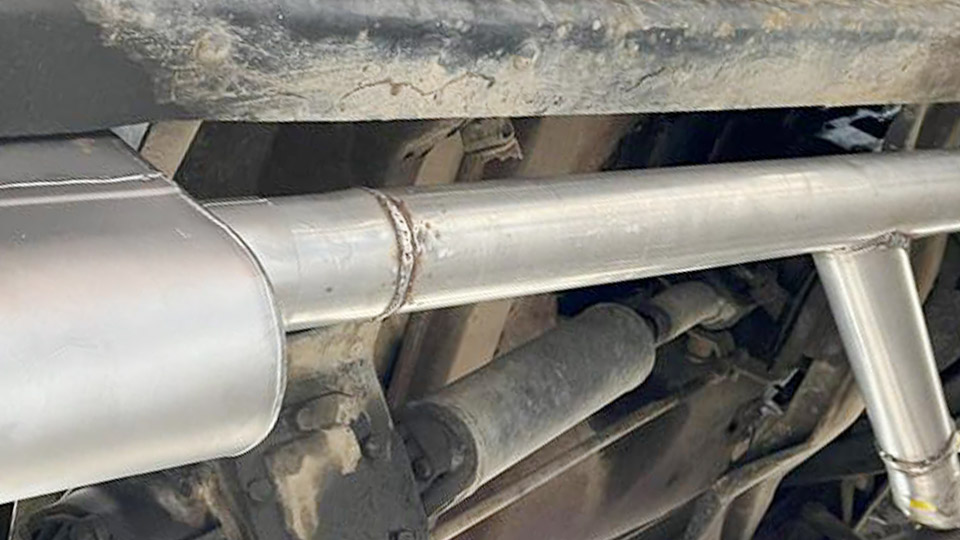
Many welders encounter weak joints, lack of fusion, or cracking when joining thick materials or working in demanding positions. A single heavy pass often fails to deliver full penetration and consistent properties across the joint depth.
This is where passes in welding become critical. A welding pass is a single progression of the electrode, torch, or blowpipe that deposits a layer of weld metal.
Mastering passes allows precise control over penetration, heat input, fusion, and final weld integrity—essential for structural reliability in pipework, pressure vessels, repairs, and fabrication.
Proper pass sequencing and technique directly influence mechanical properties like tensile strength, toughness, and fatigue resistance. Incorrect application leads to defects such as slag inclusions, undercut, or distortion.
I’ll discuss the practical, process-specific guidance for choosing, executing, and optimizing passes across common scenarios.
Image by fb/I See You Don’t Know Shit About Welding
Single Pass vs. Multi-Pass Welding: Core Differences
Single-pass welding deposits all required filler in one continuous operation. Multi-pass welding builds the joint layer by layer. The choice depends on material thickness, joint geometry, process, position, and code requirements.
When Single-Pass Welding Makes Sense
Single-pass suits thin materials (typically under 1/4 inch or 6 mm for many processes) and fillet welds where full penetration is achievable without excessive heat. In MIG/GMAW, a 0.045-inch wire at appropriate parameters can produce sound 1/4-inch fillets in flat position in one pass. GTAW/TIG excels on thin stainless or aluminum with single-pass autogenous or filler-added techniques.
Advantages include speed, minimal distortion on thin sections, and simpler execution. Limitations appear quickly on thicker stock: insufficient penetration at the root, excessive reinforcement, burn-through risk, or poor sidewall fusion. High heat input from a single large pass can also coarsen grain structure and reduce toughness.
Advantages and Necessity of Multi-Pass Welding
Multi-pass welding is standard for thicker sections, groove welds requiring full penetration, and critical applications. It enables controlled filling of V-grooves, U-grooves, or bevels while managing heat input per layer. Each pass refines previous layers through tempering effects, improving grain structure and mechanical properties.
Key benefits:
- Better control of heat input and distortion.
- Improved fusion and penetration through sequential layers.
- Ability to correct defects between passes.
- Higher deposition rates with smaller electrodes or wires without sacrificing quality.
- Compliance with codes limiting maximum pass thickness (e.g., AWS D1.1 restrictions on single-pass fillet sizes by process and position).
For example, welding 1/2-inch plate in vertical position often requires 4–8 passes depending on groove angle and electrode diameter, versus 1–2 in flat.
Main Types of Welding Passes and Their Roles
Groove welds typically use a sequence of distinct passes, each with specific objectives.
Root Pass: Establishing Foundation and Penetration
The root pass is the first deposited in the joint root. It must achieve complete penetration and fusion to the backing or opposite side while maintaining a consistent root face or gap. In pipe welding, this often uses a stringer bead with tight parameters for keyhole or open-root techniques.
Typical settings (SMAW example on carbon steel):
- Electrode: 3/32″ or 1/8″ E6010/E7018.
- Amperage: 70–110 A depending on diameter and position.
- Travel speed: Controlled to produce a 1/16–1/8 inch wide bead.
Common challenges include incomplete penetration (too fast/cold), excessive melt-through (too hot/slow), or suck-back in open roots. Proper root pass sets up all subsequent layers; defects here propagate.
Hot Pass: Cleaning and Conditioning
The hot pass follows immediately or soon after the root. Its primary purposes are to remelt and remove slag inclusions (“wagon tracks”) from the root, improve fusion to sidewalls, and create a flat or slightly convex surface for fill passes. In stick welding, it often runs slightly hotter.
Parameters: Increase current 10–20% over root or maintain with faster travel. Focus on cleaning the toes. This pass is especially critical in SMAW and positions where slag traps easily. Skipping proper hot pass cleaning leads to inclusions detectable only by NDT.
Fill Passes: Building Thickness and Strength
Fill (or intermediate) passes build the joint volume. They can be stringers or weaves, depending on width and requirements. Multiple layers may be needed, with each layer consisting of one or more beads.
Decisions here include:
- Layer thickness: Often limited to 1/8–1/4 inch max per code.
- Bead placement: Overlap previous beads by 30–50% to avoid lack of fusion.
- Sequence: Backstep or block sequencing for distortion control on long joints.
On thick sections (e.g., 1-inch plate), fill passes dominate time and filler consumption.
Cap Pass: Final Contour and Surface Quality
The cap (or cover) pass provides the visible surface, ensuring proper reinforcement (typically 1/16–1/8 inch), smooth transition to base metal, and no undercut. It may use a weave for wider coverage or stringers for controlled profile.
Aesthetic and functional requirements matter: flush for machined joints, slight convexity for fatigue resistance. Poor cap technique causes stress risers.
Stringer Beads vs. Weave Beads: Technique Selection
Stringer beads move linearly with little or no side-to-side oscillation. They deliver deeper penetration, lower heat input per pass, better control in vertical/overhead, and superior mechanical properties through finer grain structure in multi-pass builds.
Weave beads oscillate side-to-side (e.g., crescent, figure-8, or whip patterns). They cover wider areas faster, improve sidewall fusion in grooves, and create better-looking caps but introduce higher heat input, risk of slag inclusions if paused too long at edges, and potential for reduced toughness.
Practical guidelines:
- Root and hot passes: Almost always stringers.
- Fill passes on wide grooves: Weaves or combination.
- High-strength or low-alloy steels: Favor stringers to minimize heat.
- Testing shows stringers often outperform wide weaves in tensile and impact properties due to controlled heat.
Limit weave width to 3–4 times electrode diameter for most applications.
Determining the Number of Passes Required
No universal formula exists—joint design, thickness, process, position, and electrode/wire size govern it. Approximate estimation starts with groove cross-sectional area divided by typical deposition per pass, plus reinforcement.
Factors influencing count:
- Material thickness and groove angle: Narrower grooves (e.g., 60°) require more passes but less filler.
- Electrode/wire diameter: Larger diameters deposit more per pass but limit access.
- Position: Vertical/uphill needs smaller passes for puddle control (more total passes).
- Process deposition rate: FCAW deposits faster than SMAW.
Example: For a 3/4-inch thick plate with 60° V-groove, SMAW 1/8-inch electrodes might require 1 root + 1 hot + 4–6 fills + 1–2 caps. Always verify against WPS or qualified procedure. Codes limit maximum bead size to ensure proper fusion and avoid defects.
Heat Management: Interpass Temperature Control
Interpass temperature is the weld zone temperature immediately before depositing the next pass. Control is non-negotiable for quality.
Minimum interpass temperature (often equal to preheat) slows cooling to prevent hydrogen cracking in carbon and low-alloy steels. Maximum interpass temperature prevents grain coarsening, sensitization in stainless (typically <150–175°C), or loss of properties in quenched/tempered steels.
Measurement: Use tempilsticks, infrared thermometers, or thermocouples on the weld area (not just surface). Maintain consistency across the joint. On large fabrications, use blankets, induction, or torches for control. Poor management causes distortion, cracking, or unacceptable microstructures.
Process-Specific Pass Strategies
SMAW (Stick): High slag volume demands thorough cleaning between passes. Hot passes critical. Excellent for field work and out-of-position.
GMAW/FCAW (MIG/FCAW): Higher deposition; pulsed modes improve control on fills. Spray transfer for flat fills, short-circuit for roots. Multi-pass wires differ in deoxidizers from single-pass.
GTAW (TIG): Precise, low-heat. Often fewer passes on thin material; filler added manually. Great for root passes in pipe.
Other processes: SAW for high-deposition automated fills; specialized for thick sections.
Avoiding Defects in Multi-Pass Welding
- Lack of fusion: Low heat, poor cleaning, incorrect angle. Prevent with proper parameters, dwell at sidewalls, and inter-pass grinding if needed.
- Slag inclusions: Inadequate removal. Always chip/grind between passes in SMAW.
- Porosity: Contamination or shielding issues.
- Cracking: Excessive restraint, high hydrogen, or improper temps.
- Distortion: Unbalanced sequencing or excessive heat.
Mitigation relies on joint prep cleanliness, correct parameters, and disciplined layering.
Final Thought
Mastering passes transforms welding from guesswork into engineered reliability. The right sequence, bead technique, and temperature control deliver joints that withstand real-world loads, inspections, and service conditions.
For professionals, the next level involves procedure qualification data, NDT correlation, and optimizing for specific alloys and positions—turning good welds into code-compliant, high-performance fabrications. Focus on disciplined layering and data-driven decisions for consistently superior results.
FAQ
How many passes are needed for a 1/2-inch thick weld?
It varies by joint type, process, and position—typically 4–10 passes. A 1/2-inch fillet might need 2–4; a groove weld more. Consult WPS and test fit-up.
What is the difference between a hot pass and a fill pass?
Hot pass cleans slag from the root and improves fusion immediately after. Fill passes build volume and thickness in subsequent layers.
Are stringer beads always better than weaves?
Stringers often provide better properties and control for structural welds, but weaves are faster for wide caps or filling. Match technique to requirements and code.
Does multi-pass welding always produce stronger welds?
When done correctly with proper heat control, yes—due to grain refinement and defect correction. Poor execution can introduce more opportunities for flaws.