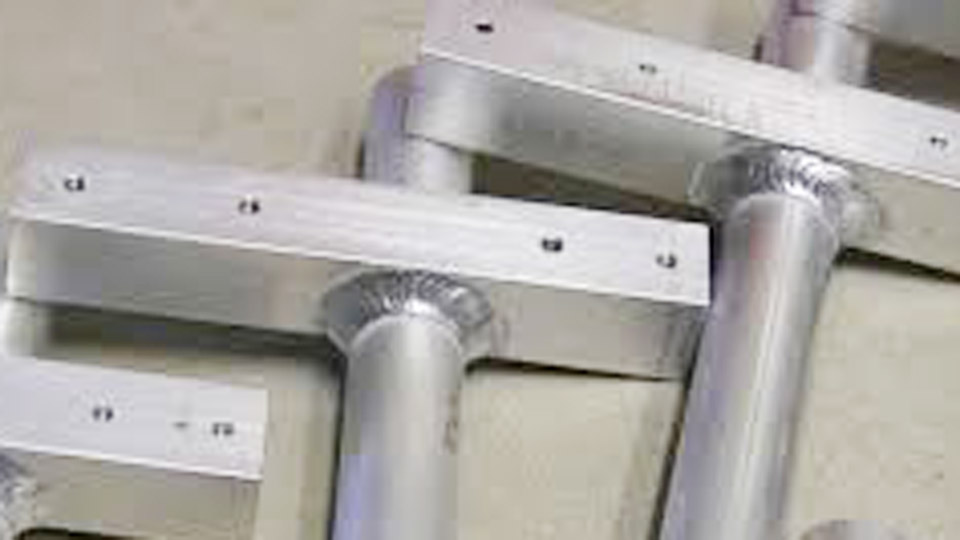
TIG welding is not a single process. Different types of TIG welding are used to handle specific materials, joint conditions, and weld quality requirements across fabrication, pipe welding, aerospace, automotive, and precision repair work.
Choosing the wrong TIG method can lead to poor penetration, excessive heat input, tungsten contamination, arc instability, or unnecessary rework—especially when welding aluminum, stainless steel, or thin-gauge metals.
Understanding how each TIG welding variation works is important for controlling amperage, shielding gas behavior, filler application, and overall weld consistency in real shop conditions. Processes such as DC TIG, AC TIG, pulsed TIG, and orbital TIG each solve different production and performance challenges depending on the material and welding environment.
I’ll explain the main TIG welding types, where each process performs best, and how welders select the right approach for strength, appearance, heat control, and efficiency.
Image by wcr-tools
DC TIG Welding: Core Process for Ferrous and Exotic Metals
DC TIG (Direct Current) delivers consistent polarity for stable arcs and controlled heat. Most applications use DC Electrode Negative (DCEN), directing ~70-80% of heat into the workpiece for deep penetration with minimal electrode erosion.
DCEN Settings and Arc Characteristics
In DCEN, electrons flow from the tungsten (negative) to the workpiece (positive). This concentrates heat at the joint. Typical parameters for 1/8-inch (3.2 mm) stainless steel include 90-120 amps, 100% argon at 15-20 CFH, and a 2% thoriated or lanthanated tungsten (3/32″ or 2.4 mm diameter) sharpened to a 30-45° point.
Arc length should stay 1-2 mm for focus. Longer arcs spread heat and invite oxidation. Travel speed of 4-8 inches per minute maintains a small, fluid puddle without excessive buildup.
When DC TIG Excels Over AC
DC TIG dominates on carbon steel, stainless steel, titanium, nickel alloys, and copper. It provides superior penetration and arc stability compared to AC. For stainless pipe or pressure vessels, DCEN minimizes heat-affected zone (HAZ) size, reducing sensitization and distortion risks.
On titanium, full argon shielding (including trailing and back purging) prevents embrittlement. Use extra-low interstitial (ELI) filler like ER Ti-6Al-4V for Grade 5 titanium to match base properties.
AC TIG Welding: Oxide Removal for Aluminum and Magnesium
AC TIG alternates polarity, balancing penetration (EN) and cleaning (EP). This breaks the tenacious oxide layer on aluminum without flux.
AC Balance and Frequency Control
Modern inverters let you adjust EN/EP ratio and frequency. Set 65-75% EN for deeper penetration on thicker aluminum (above 1/8 inch). Higher EP (more cleaning) suits heavily oxidized or dirty material but increases electrode heating—use pure or zirconiated tungsten that balls naturally.
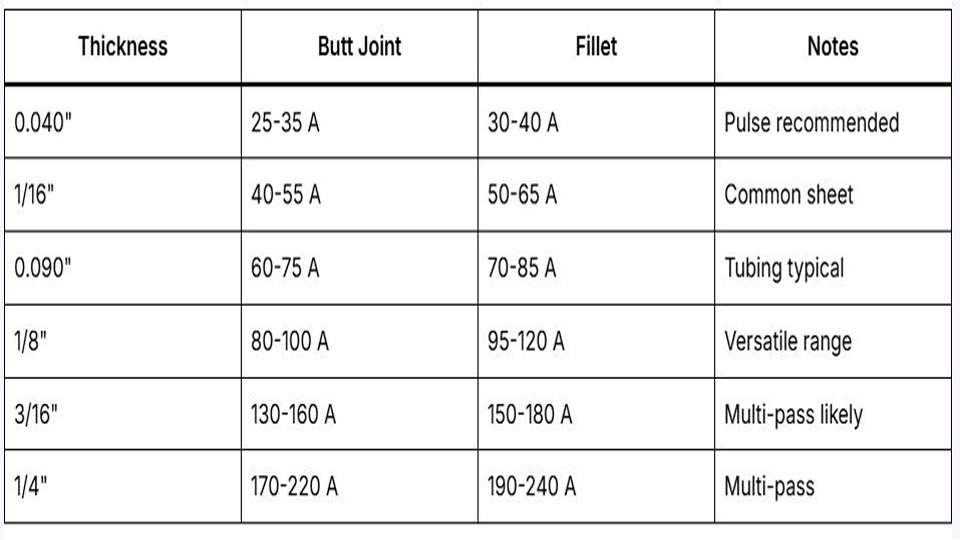
Frequency affects arc focus: 60-120 Hz for general work; higher (150-250 Hz) narrows the arc for precision on thin sheets or fillets. For 1/8-inch 6061 aluminum, start at 110-150 amps, 15-25 CFH argon, and 4043 or 5356 filler depending on strength or corrosion needs.
Material-Specific AC Techniques
Magnesium requires similar AC settings but lower amperage due to higher thermal conductivity. Pre-heat thin sections to 200-300°F to reduce cracking. Avoid excessive heat on both aluminum and magnesium to prevent burn-through or loss of alloying elements.
Joint preparation matters: bevel thicker material, ensure root gap for full penetration, and clean with stainless brushes dedicated to aluminum plus acetone or dedicated solvents.
Pulsed TIG Welding: Heat Management for Thin and Critical Joints
Pulsed TIG alternates high peak current (for fusion) with low background current (for cooling). This reduces overall heat input while maintaining puddle control.
Pulse Parameters and Waveform Decisions
Set peak amps for good fusion (e.g., 120-150A for 1/16-inch stainless), background at 30-50% of peak (40-60A), pulse frequency 1-4 Hz for visible “stack of dimes,” or higher (20-100+ Hz) for smoother beads and faster travel. Duty cycle (peak time percentage) typically runs 40-60%.
On thin stainless or titanium tubing, pulsing prevents burn-through and controls distortion. Out-of-position welding benefits from the freezing background phase that holds the puddle.
Applications Requiring Pulse Control
Aerospace, food-grade stainless, and automotive exhaust often mandate pulsed settings. For root passes on pipe, low-frequency pulse with filler dab technique produces consistent penetration without suck-back. On aluminum, combine pulse with AC for even better heat control on thin sheets.
Material-Specific TIG Variations and Techniques
Stainless Steel TIG Practices
Use DCEN with low heat input. Back-purge with argon to prevent sugaring on the root side. 308L filler for 304 stainless; 316L for higher corrosion resistance. Short arc, pulsed modes, and 2% thoriated or ceriated electrodes deliver clean beads with minimal cleanup.
Titanium TIG Requirements
Titanium demands the cleanest process. Use dedicated tools—no cross-contamination with steel or aluminum. Triple argon shielding (torch, trailing shield, back purge) until the weld cools below 600°F. DCEN at lower amps than stainless (roughly 0.8-1 amp per thousandth of thickness). Pure argon or argon-helium mixes for thicker sections.
Copper and Nickel Alloys
High thermal conductivity in copper requires higher amperage and sometimes preheat. Silicon bronze filler helps on dissimilar joints. Nickel alloys follow stainless rules but prioritize low heat and clean filler to avoid hot cracking.
Advanced TIG Process Variations
Hot-Wire TIG
Hot-wire TIG feeds filler wire preheated by separate current, boosting deposition rates while keeping base heat low. It suits thick sections or overlay work where standard cold-wire TIG is too slow.
Orbital and Automated TIG
Orbital TIG rotates the torch around pipe or tube for consistent 360° welds. Programmed parameters ensure repeatability in critical applications like pharmaceuticals or power generation. Manual programmers allow custom current ramps for complex joints.
Dabber TIG
Dabber variation precisely deposits small amounts of filler on thin edges or for buildup. It automates oscillating wire feed synced with the arc, ideal for turbine blade repair or delicate tool work.
Equipment and Consumable Choices Across TIG Types
Tungsten selection impacts performance:
- Pure (green): AC aluminum, balls naturally.
- 2% Thoriated (red): Excellent DC arc stability (note handling precautions).
- Lanthanated or ceriated: Versatile, good for both AC/DC, non-radioactive alternatives.
Shielding gases: Pure argon for most; argon-helium (75/25 or 50/50) for thicker aluminum or copper to increase heat and travel speed. Gas lenses improve coverage and allow higher flow without turbulence.
Torch setup: Smaller cups (e.g., #5-#7) for tight spaces; larger with gas lenses for better shielding on titanium or stainless.
Real-World Decision Framework
Match the TIG type to material thickness, joint position, and quality requirements. For thin aluminum sheet, prioritize AC with balanced pulsing. For stainless pipe roots, use DCEN pulsed with back purge. Titanium always needs maximum cleanliness and shielding.
Consider machine capabilities: true square-wave AC inverters with independent balance and frequency outperform older transformer machines. Foot pedal control remains essential for puddle manipulation across all types.
Performance-based Takeaway
The best TIG welders select current type, pulse settings, and shielding based on thermal properties and oxide behavior of the base metal, not habit. This produces welds with optimal mechanical properties, minimal defects, and appearance that requires little post-processing.
Pro-level insight comes from recognizing that heat input control—via pulsing, balance, and travel—often matters more than raw amperage for long-term joint integrity.
FAQ
What is the main difference between AC and DC TIG welding?
AC TIG alternates polarity for oxide cleaning on aluminum and magnesium. DC TIG (usually DCEN) provides deeper penetration and arc stability for steels, stainless, titanium, and most other metals.
When should I use pulsed TIG welding?
Use pulsed TIG on thin materials, out-of-position welds, or when minimizing distortion and heat input is critical, such as stainless tubing or titanium components. It improves puddle control and bead appearance.
Can the same TIG machine handle all types of TIG welding?
Many modern inverter machines support AC/DC and pulsing for broad capability. Older or basic DC-only machines limit you to ferrous and select exotic metals, excluding effective aluminum work.
What gas and electrode work best for titanium TIG?
Pure argon with a gas lens and dedicated trailing shield/back purge. Lanthanated or ceriated tungsten sharpened to a point performs well in DCEN. Absolute cleanliness is non-negotiable.