Whether you can MIG weld with 100% argon depends largely on the type of metal you’re welding and the results you expect. While pure argon is the standard shielding gas for TIG welding and aluminum MIG welding, it is not the best choice for most mild steel applications.
Using the wrong shielding gas can reduce arc stability, limit weld penetration, increase spatter, and produce weak or inconsistent welds that may require costly rework. Understanding when 100% argon works—and when a mixed shielding gas is the better option—is essential for achieving reliable weld quality.
I’ll explain how pure argon affects the MIG welding process, which materials it supports, and how to choose the right shielding gas for stronger, cleaner, and more consistent welds.
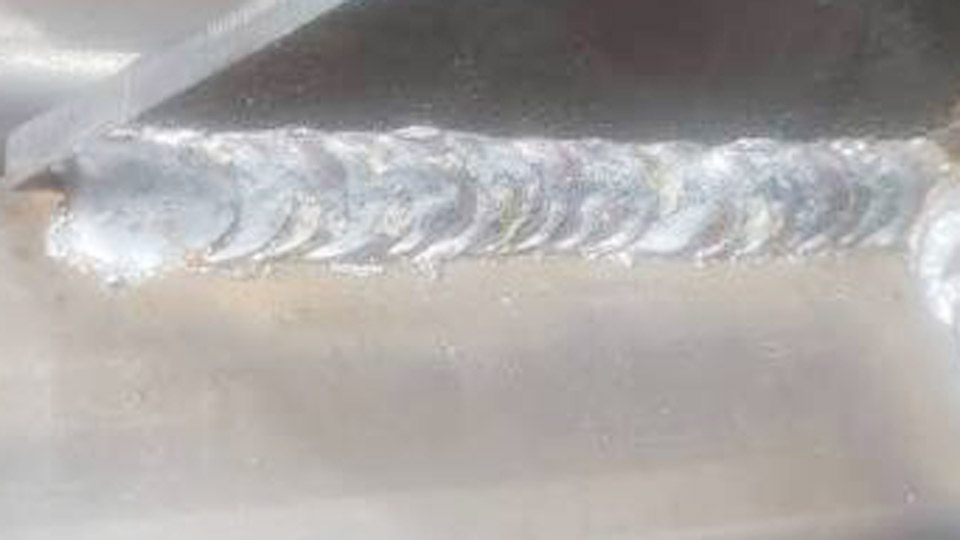
Image by welderamazing
MIG Welding Fundamentals with Pure Argon
Arc Characteristics and Metal Transfer Modes
Pure argon, an inert gas, creates a stable, low-ionization-potential arc ideal for spray transfer. This mode produces smooth wire deposition with minimal spatter on compatible metals.
Voltage and amperage requirements shift compared to active gas mixes; expect slightly lower arc voltage, which affects heat input and puddle fluidity.
On steel, the arc feels “lazy.” Lower thermal conductivity keeps outer arc edges cooler, restricting the molten pool’s ability to wet the base metal. Short-circuit transfer becomes erratic, while globular transfer increases. Spray transfer is harder to achieve consistently without adjustments to wire speed and voltage.
Shielding Effectiveness
Argon displaces atmospheric oxygen and nitrogen effectively in still air, protecting the weld pool from contamination. Flow rates of 15–25 CFH typically suffice indoors, but drafts demand higher flows or screens.
Unlike CO2-containing mixes, pure argon introduces no additional carbon or oxygen, preserving base metal chemistry—critical for aluminum but insufficient for activating fusion on ferrous metals.
Performance on Carbon Steel and Mild Steel
Weld Bead Profile and Penetration Issues
100% argon on mild steel produces tall, narrow, ropey beads with limited sidewall fusion and frequent undercutting. Penetration depth suffers because argon lacks the reactive properties that CO2 provides for broader heat distribution. The result is filler metal that sits atop the joint rather than integrating deeply.
Real-world testing shows these welds lose ductility. Joints crack under bending or vibration, making them unsuitable for load-bearing applications like frames, trailers, or repairs.
Mechanical Properties and Long-Term Durability
Brittleness stems from inadequate fusion and altered microstructure in the heat-affected zone. Ductility drops noticeably compared to 75/25 argon-CO2 welds. For hobbyists or students practicing on scrap, it may hold temporarily, but professionals reject it for any structural work. Post-weld grinding reveals weak toes and potential porosity if settings drift.
When Pure Argon Might Suffice on Steel
In absolute emergencies—finishing a non-critical tack or thin sheet where appearance trumps strength—pure argon works if parameters are pushed (higher voltage, slower travel). However, expect more cleanup and inconsistent results. Switch back to mixed gas immediately for reliability.
Optimal Use: MIG Welding Aluminum and Non-Ferrous Metals
Why Pure Argon Excels on Aluminum
Aluminum’s oxide layer requires argon’s cathodic cleaning action. 100% argon enables stable spray or pulsed spray transfer, preventing oxidation and delivering clean, bright welds. It maintains corrosion resistance without introducing reactive elements.
For thicknesses up to 1/4 inch, pure argon pairs well with ER4043 or ER5356 wire. Thicker sections benefit from argon-helium blends for added heat, but straight argon handles most DIY and hobby aluminum projects effectively.
Settings and Technique Adjustments
Use push technique (forehand) for better coverage. Wire feed speed and voltage must match aluminum’s high thermal conductivity—typically higher than steel settings. Preheat heavy sections to 200–250°F if needed to reduce cracking risk. Maintain short arc length and consistent travel speed to avoid lack of fusion.
Other Non-Ferrous Applications
Magnesium, copper, and titanium respond similarly well to pure argon. The inert atmosphere prevents unwanted reactions, preserving material properties. Silicon bronze MIG brazing on thin steel also performs cleanly with 100% argon, offering good wetting without excessive penetration.
Comparing Shielding Gas Options for MIG Welding
Argon-CO2 Mixtures for Steel
The industry standard 75% argon / 25% CO2 (C25) balances arc stability from argon with penetration and wetting from CO2. It reduces spatter versus pure CO2 while delivering stronger, more ductile welds than pure argon. Lower CO2 mixes (5–10%) suit thinner materials for even cleaner beads.
Higher CO2 content increases heat and penetration but raises spatter and fumes. Choose based on material thickness and desired finish.
Pure CO2 and Specialty Blends
Pure CO2 offers deep penetration and low cost for thick, dirty mild steel but produces harsher arcs and more post-weld cleanup. Stainless steel demands low-CO2 blends (e.g., 98/2 Ar/CO2) or tri-mixes to maintain corrosion resistance. Helium additions enhance heat for thick aluminum or copper.
| Material | Recommended Gas | Key Benefits | Limitations |
|---|---|---|---|
| Mild Steel | 75/25 Ar/CO2 | Balanced penetration, low spatter | Higher cost than pure CO2 |
| Aluminum | 100% Argon | Oxide cleaning, stable spray transfer | Limited heat on thick sections |
| Stainless Steel | 98/2 Ar/CO2 or Tri-mix | Corrosion resistance | Carbon pickup risk if CO2 high |
| Silicon Bronze | 100% Argon | Good wetting for brazing | Not for structural steel |
Equipment and Practical Setup Considerations
Gas Delivery and Flow Dynamics
Regulators must deliver consistent pressure. Pure argon cylinders hold more volume than CO2 mixes due to density differences. Check for leaks at connections; argon escapes more readily in imperfect seals. Indoor welding minimizes turbulence, maximizing shielding efficiency.
Machine Settings and Wire Selection
Solid wire (e.g., ER70S-6 for steel) performs adequately with argon but demands precise voltage tuning. Flux-cored wire is less dependent on external gas but changes the process. For aluminum, use spool guns or push-pull systems to prevent feeding issues. Test settings on scrap: increase voltage slightly with pure argon to compensate for lower conductivity.
Cost and Availability Factors
Pure argon suits multi-process shops (MIG + TIG). Mixed gases cost more per cubic foot but improve productivity through faster travel speeds and less cleanup. Calculate total cost including labor and rework when choosing.
Advanced Techniques and Decision Framework
Match gas to material first, then thickness and position. For mixed projects, stock both pure argon and C25. In pulsed MIG or advanced machines, pure argon expands usable transfer modes on aluminum. Monitor weld cross-sections periodically—macro-etch tests reveal true penetration differences invisible on the surface.
Pro-level insight: Gas selection influences not just immediate bead appearance but heat-affected zone metallurgy and fatigue life. On critical fabrications, qualifying procedures with the exact gas-wire combination ensures compliance and performance under real loads.
Experimenting with small percentages of oxygen or helium in argon opens spray transfer on steel in controlled setups, but pure argon remains the specialist choice for non-ferrous precision.
FAQ
Can you MIG weld stainless steel with 100% argon?
No. It produces unstable arcs, poor fusion, and risks carbon contamination or loss of corrosion resistance. Use dedicated low-CO2 blends or tri-mixes instead.
Is 100% argon better than mixed gas for thin materials?
For aluminum, yes. For thin steel, a high-argon mix (90/10 or 95/5 Ar/CO2) offers smoother arcs with adequate penetration while avoiding pure argon’s brittleness issues.
How does pure argon affect spatter and cleanup?
It minimizes spatter on compatible metals like aluminum but increases it on steel due to erratic transfer. Overall cleanup time rises on steel from grinding poor beads and undercuts.
What voltage adjustments help when using 100% argon on steel?
Raise voltage 1–3 volts over mixed gas settings and slow travel speed. Even then, expect compromised results—better to obtain proper mix for consistent quality.