Welders frequently encounter projects requiring bonds between dissimilar materials, such as attaching plastic components to metal frames, repairing automotive parts, or fabricating hybrid assemblies where traditional fusion welding fails.
Plastic and metal expand at different rates under heat, and many plastics cannot withstand welding temperatures without degradation. This is where understanding what is the strongest glue for plastic and metal becomes essential for maintaining structural integrity in real-world fabrication and repair scenarios.
Proper adhesive selection directly impacts joint performance under load, vibration, temperature cycling, and environmental exposure. Incorrect choices lead to failures that mechanical fasteners or welds might otherwise avoid.
This guide delivers precise technical comparisons, substrate-specific recommendations, and performance data tailored for welders who need reliable alternatives or supplements to arc, MIG, TIG, or plastic welding processes.
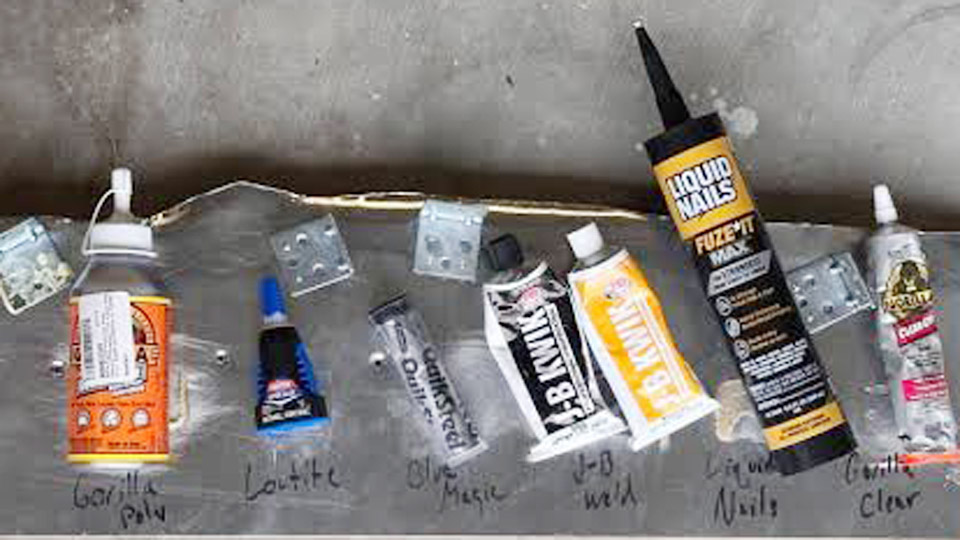
Image by bobvila
Material Challenges in Plastic-to-Metal Bonding
Thermal Expansion and CTE Mismatch
Metals like steel (CTE ~11-13 × 10⁻⁶/°C) and aluminum (~23 × 10⁻⁶/°C) expand far less than common plastics such as polypropylene (PP, ~100-200 × 10⁻⁶/°C) or ABS (~70-90 × 10⁻⁶/°C). Rigid bonds crack under thermal cycling. Flexible or toughened adhesives accommodate this differential movement better than brittle options.
In welding shops, this mismatch appears in vehicle repairs (plastic bumpers to metal chassis) or custom fixtures (polycarbonate guards on steel frames). Adhesives must maintain shear strength while allowing micro-flexion.
Surface Energy and Preparation Requirements
Metals offer high surface energy for good wetting, but many plastics—especially low-surface-energy (LSE) polyolefins like PE and PP—resist adhesion. Abrasion, degreasing with isopropyl alcohol or acetone, and primers increase bond reliability.
For welders accustomed to clean metal prep before welding, the same discipline applies here: contaminants reduce strength by 50% or more in testing.
Load Types and Failure Modes
Shear loads favor high-tensile adhesives. Peel and cleavage stresses demand toughness. Impact and vibration (common in mobile equipment) require elastomeric properties. Data shows structural bonds should target lap shear strengths exceeding 15-25 MPa for load-bearing applications.
Comparing Adhesive Chemistries for Strength and Durability
Two-Part Epoxies: Highest Structural Strength
Two-part epoxies deliver the highest tensile and shear strengths, often 20-40+ MPa on prepared steel to engineering plastics. They excel in gap-filling (up to 5 mm in some formulations) and provide excellent chemical and heat resistance (up to 150-200°C continuous in specialized grades).
Key performance metrics:
- Lap shear on steel: 25-40 MPa
- Temperature range: -50°C to +150-200°C
- Cure: 5-60 minutes fixture; full cure 24 hours
- Best for: Rigid, high-load joints like brackets or reinforcements
Toughened epoxies add flexibility for vibration resistance. Examples include J-B Weld products or 3M Scotch-Weld DP420, which maintain integrity under fatigue.
Limitations include slower cure and lower peel strength compared to acrylics. Overmixing or incorrect ratios weaken the cross-linked network.
Structural Acrylics (MMA): Best Overall Balance
Methyl methacrylate (MMA) adhesives, such as Plexus MA300/MA310 or Permabond TA4204, combine high strength (20-30+ MPa) with faster cure and better impact resistance. They bond well to many plastics with minimal preparation and tolerate slight surface contamination.
Advantages for welders:
- Fixture time: 5-20 minutes
- Working time: Adjustable formulations
- Toughness: High elongation handles vibration and thermal shock
- Versatility: Excellent on ABS, polycarbonate, nylon to aluminum or steel
MMA adhesives often outperform epoxies in peel and fatigue tests for hybrid assemblies.
Cyanoacrylates (Super Glues): Speed for Non-Structural or Temporary Fixes
Industrial-grade cyanoacrylates (e.g., Loctite variants) set in seconds with shear strengths up to 15-25 MPa on suitable substrates. They suit small parts or fixturing before welding but remain brittle and limited in temperature (~80-120°C) and gap-filling.
Use primers for LSE plastics. Toughened formulations improve impact performance but do not replace structural options for primary load paths.
Polyurethanes: Flexibility for Dynamic Applications
Polyurethanes offer lower peak strength (10-20 MPa) but superior flexibility and vibration damping. They handle movement from CTE differences effectively and perform well outdoors with good weather resistance.
Ideal for panels, seals, or assemblies experiencing repeated flexing.
Hybrid and Specialty Adhesives
Hybrids (CA-epoxy or CA-acrylic) merge fast fixture with structural performance. UV-curable options enable on-demand curing for precision alignment in shop environments.
Substrate-Specific Recommendations
Bonding to Common Engineering Plastics
ABS, Polycarbonate, PVC, Acrylic: Standard two-part epoxies or MMAs achieve near-substrate failure. Surface abrasion and cleaning suffice. Shear strengths routinely exceed 20 MPa.
Polyethylene (PE) and Polypropylene (PP): LSE challenges require specialized MMAs (e.g., 3M DP8005/DP8010) or primers with standard adhesives. These formulations chemically interact with inert surfaces for reliable bonds.
Nylon and Composites: Toughened epoxies or MMAs handle moisture absorption in nylons. Fiberglass or carbon fiber benefits from adhesives matching the matrix resin properties.
Metal Substrate Considerations
Aluminum requires oxide removal or compatible primers. Galvanized steel benefits from low-odor MMAs designed for coated metals. Stainless steel pairs excellently with epoxies for corrosion resistance.
Clean all metals of oils, scale, or weld slag—standard shop practice.
Surface Preparation and Application Best Practices
Effective bonding starts with mechanical abrasion (80-120 grit) for better interlocking, followed by solvent wipe. Apply uniform pressure during cure to eliminate voids. For larger areas, use fixtures or clamps mimicking welding jigs.
Temperature affects cure: warmer shop conditions (20-25°C) accelerate reactions predictably. Avoid application below 10°C for most systems.
Gap management matters—epoxies fill larger voids; thin cyanoacrylates demand tight fits (<0.1 mm).
Performance Testing and Real-World Validation
Independent lap shear tests show substrate failure more often than adhesive failure with proper prep using top MMAs or epoxies. In weld-bonding hybrids (adhesive + spot welds), epoxies preserve integrity in high-heat processes, while acrylics suit lower-heat methods.
Environmental testing reveals epoxies maintain >80% strength after humidity/thermal cycling in structural applications. Always validate with shop-specific conditions.
Comparison Table: Adhesive Selection Guide
| Adhesive Type | Lap Shear Strength (MPa) | Fixture Time | Flexibility | Heat Resistance (°C) | Best Plastic-Metal Pairs | Shop Use Case |
|---|---|---|---|---|---|---|
| Two-Part Epoxy | 25-40+ | 5-60 min | Low-Medium | 150-200 | ABS/Al, PC/Steel | High-load structural |
| MMA/Acrylic | 20-30+ | 5-20 min | Medium-High | 100-150 | PP/Al, Nylon/Steel | Fast production/repair |
| Cyanoacrylate | 10-25 | Seconds | Low | 80-120 | Small ABS/Steel | Fixturing/quick fixes |
| Polyurethane | 10-20 | 15-60 min | High | 80-120 | Flexible panels | Vibration/outdoor |
Data aggregated from manufacturer specs and independent tests; actual values depend on substrates and prep.
When to Choose Adhesives Over or With Welding
Adhesives shine for dissimilar materials where welding risks distortion, burn-through, or material incompatibility. In weld-bonding, adhesives damp vibration and seal joints while welds provide primary strength. For repairs on thin sections or heat-sensitive plastics, adhesives prevent warping common in TIG or MIG.
Consider joint design: overlap for shear, avoid peel-prone configurations. Combine with mechanical fasteners for redundancy in critical applications.
Advanced Considerations for Professional Welders
High-performance shops evaluate fatigue life, creep resistance, and long-term durability under service loads. Toughened formulations mitigate brittleness. For elevated temperatures, select heat-cured epoxies. Automation-friendly options (cartridge dispensing) speed throughput in fabrication.
Regulatory compliance (e.g., VOC, food-contact) may dictate choices in certain industries.
Decision-Making Summary for Strongest Plastic-to-Metal Bonds
For maximum structural performance in most welding-adjacent applications, structural acrylic (MMA) adhesives provide the optimal balance of strength, speed, and versatility across plastics and metals.
Reserve high-modulus epoxies for ultimate load-bearing where rigidity matters most. Always prioritize surface preparation and match chemistry to specific substrates and service conditions.
In hybrid weld-bonded joints, lower-heat processes like friction stir preserve adhesive properties better than high-heat resistance welding, yielding superior fatigue life through combined mechanical and chemical interlocking. Test your specific assembly under expected loads to confirm.
FAQ
What is the strongest glue for plastic and metal in high-vibration environments?
Toughened MMA structural adhesives or toughened epoxies outperform standard options due to superior peel and fatigue resistance. They accommodate movement while maintaining high shear strength.
Can super glue replace welding for plastic-to-metal repairs?
No for structural or load-bearing joints. Cyanoacrylates work for small, non-critical fixes but lack durability under heat, chemicals, or sustained loads compared to epoxies or MMAs.
How do I prepare surfaces for the strongest bond?
Degrease thoroughly, abrade with 80-120 grit, and wipe again. Use primers for LSE plastics like PP/PE. Clean application prevents voids and maximizes strength.
Are there adhesives suitable for outdoor or marine plastic-metal joints?
Polyurethanes and specialized toughened epoxies with high moisture and UV resistance perform best. Verify temperature and chemical compatibility for the environment.