Many welders face a common dilemma on job sites or in workshops: choosing a process that balances portability, versatility, and weld quality without relying on electricity or complex setups.
For DIY enthusiasts, students, hobbyists, and professionals tackling repairs on thin materials or remote locations, oxy-acetylene gas welding often emerges as a contender.
Understanding its advantages and disadvantages helps determine when this classic process delivers reliable results versus when modern arc methods outperform it.
I’ll discuss the technical realities of oxy-acetylene welding (OAW), focusing on real-world performance metrics, flame control, material interactions, and decision factors for practical applications.
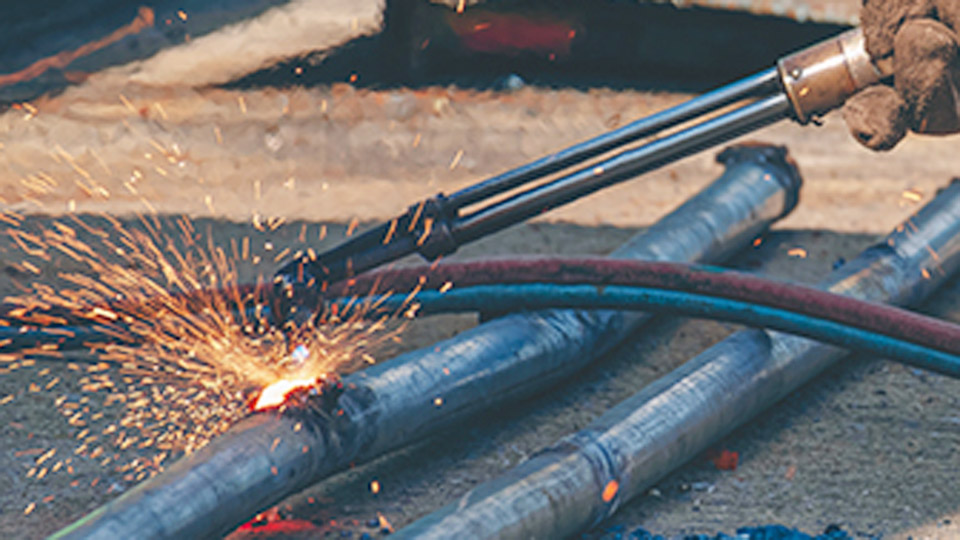
Image by red-d-arc
What Makes Oxy-Acetylene Welding Distinct in Practice
Oxy-acetylene welding generates heat through combustion of acetylene (C2H2) and pure oxygen, producing a flame temperature around 3,100–3,200°C (5,600–5,800°F). This flame melts base metals and optional filler rods to create fusion welds.
Unlike arc processes reaching 5,000°C+ at the arc core, OAW provides a broader, more controllable heat distribution ideal for thin sections but limiting for heavy plate.
Flame Chemistry and Adjustment for Specific Metals
Flame type directly influences weld metallurgy:
Neutral Flame (1:1 oxygen-to-acetylene ratio by volume): Features a sharp white inner cone (~3,100°C) and bluish outer envelope. Produces minimal chemical alteration, suiting mild steel, stainless steel, and cast iron. This is the default for most fusion welding.
Carburizing (Reducing) Flame (excess acetylene): Creates a feathery outer zone. Adds carbon to the weld pool, beneficial for high-carbon steels, nickel alloys, and non-ferrous metals like aluminum or brass to prevent oxidation. Excess carbon can lead to brittle welds if overused.
Oxidizing Flame (excess oxygen): Shorter, hotter inner cone (~3,500°C). Cleans surfaces effectively for brass, bronze, copper, and zinc but risks oxidation and porosity in steels.
Adjust regulators to achieve these: typical welding pressures range from 3–10 psi acetylene and 5–15 psi oxygen for small tips, never exceeding 15 psi acetylene for safety.
Proper flame selection preserves mechanical properties—neutral flames minimize carbon pickup or decarburization in steels.
Typical Equipment Setup and Operating Parameters
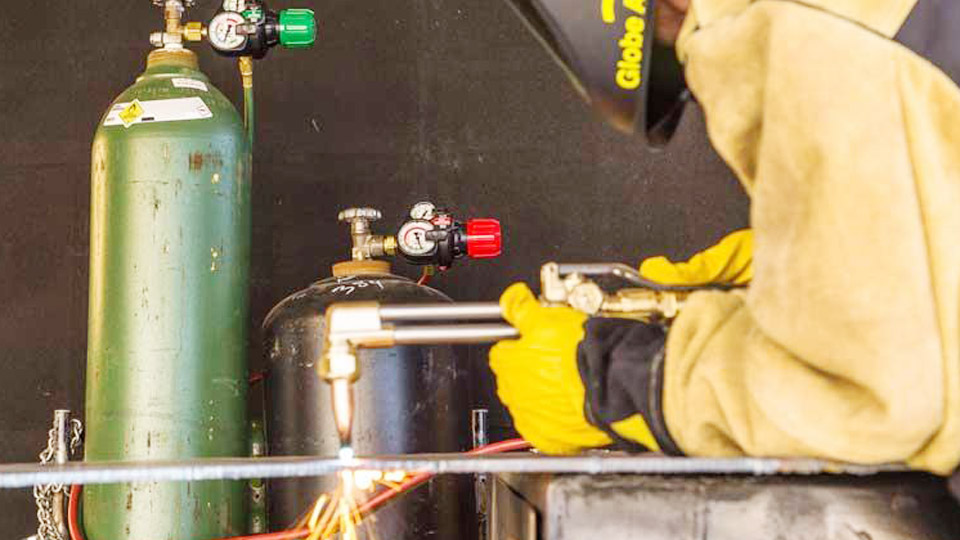
Standard setups use high-pressure cylinders, regulators, flashback arrestors, hoses, and torch with interchangeable tips. Tip size correlates with material thickness: smaller orifices (e.g., #0–#2) for sheet metal up to 1/8 inch, larger for thicker stock.
Welding speed is slower than MIG or TIG—often 4–8 inches per minute on thin material—due to manual filler addition and heat transfer characteristics.
Key Advantages of Oxy-Acetylene Gas Welding
OAW excels in scenarios where electricity is unavailable or versatility across processes matters.
Portability and Independence from Power Sources
No electrical power requirement makes OAW ideal for field repairs, remote sites, or mobile fabrication. A complete kit with cylinders, torch, and hoses fits in a truck bed or cart, enabling work on pipelines, farm equipment, or automotive frames far from outlets.
This portability supports maintenance in active job sites without generators or extension cords, reducing downtime.
Versatility Across Materials and Processes
One system handles ferrous and non-ferrous metals: mild steel, cast iron, aluminum, copper, brass, stainless, and alloys. Flame adjustments accommodate different melting points and chemistries without swapping machines.
The same equipment switches to cutting (with a cutting attachment), brazing, soldering, heating for bending/straightening, or preheating. This multi-functionality reduces tool investment for small shops or hobbyists.
Low Initial Cost and Simplicity
Equipment costs significantly less than MIG/TIG setups. Basic regulators, hoses, and torch kits are affordable, with ongoing expenses mainly in gas refills. The process requires minimal training for basic operations compared to setting up wire feeders or gas shielding parameters.
No need for complex power settings or polarity adjustments simplifies troubleshooting.
Precise Heat Control for Thin Materials and Repairs
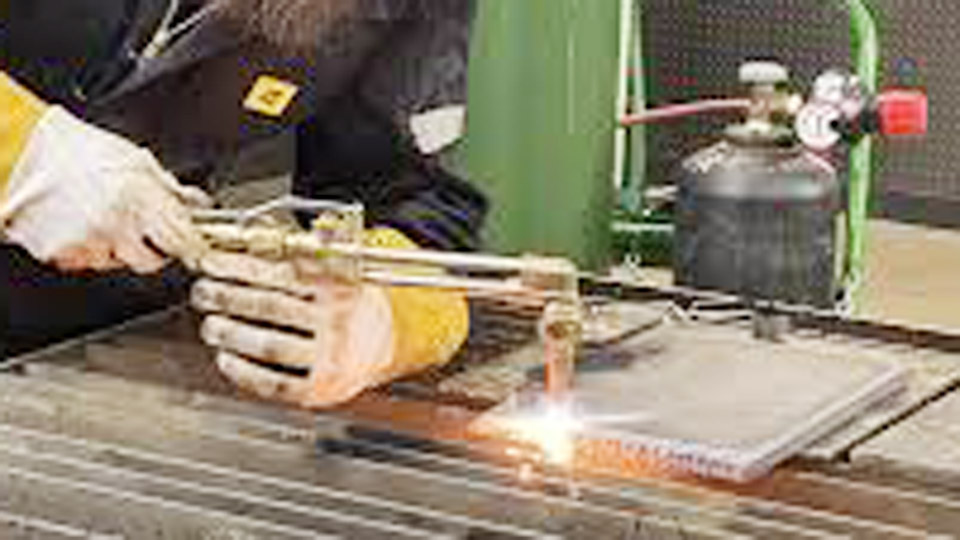
The flame allows fine control over heat input, minimizing distortion on thin sheets (under 1/4 inch). This suits automotive bodywork, exhaust repairs, or artistic fabrication where arc processes might burn through.
Manual filler rod addition lets skilled welders build up material or match contours precisely.
Significant Disadvantages of Oxy-Acetylene Gas Welding
Despite strengths, OAW has clear limitations in production or high-performance contexts.
Slower Speed and Lower Productivity
Heat input is gradual compared to concentrated arc energy. Welding thin plates requires patience, and thicker sections (>1/4–3/8 inch) demand multiple passes or become impractical. Productivity lags behind MIG (continuous wire) or stick welding for structural work.
This makes it unsuitable for high-volume fabrication where time equals cost.
Limited Penetration and Suitability for Thick Materials
The process struggles with deep penetration on heavy plate. Heat dissipates broadly, risking warping or incomplete fusion in sections over 1/4 inch without beveling and multiple passes. Arc methods like SMAW or FCAW handle thicker stock more efficiently.
Weld Quality and Protection Challenges
No inherent shielding gas protection exposes the molten pool to atmospheric contamination, increasing risks of porosity, oxidation, or inclusions. Post-weld cleaning and finishing are often necessary for aesthetics or strength.
High heat-affected zone (HAZ) can alter properties in heat-sensitive alloys, and it’s generally not recommended for high-strength steels where mechanical integrity is critical.
Safety and Handling Considerations in Operation
Acetylene is unstable at high pressures; cylinders must be stored upright, and regulators carefully managed to prevent flashbacks. Gas costs accumulate over time, and cylinder logistics add overhead compared to electric processes.
Flame intensity requires consistent technique—poor flame control leads to defects.
Comparing Oxy-Acetylene to Arc Welding Processes
Oxy-Acetylene vs. MIG/TIG/Stick: OAW offers better portability and no electricity needs but lower speed and penetration. MIG excels in speed on thin-to-medium steel; TIG provides superior control and quality on non-ferrous; Stick handles dirty/outdoor conditions on thick material.
Choose OAW for repairs, brazing dissimilar metals, or when arc access is limited. Arc processes dominate production due to efficiency and consistency.
Cost Analysis for Hobbyists and Professionals
Initial setup favors OAW, but long-term gas consumption and slower operation increase per-weld costs. Arc welders have higher upfront costs but faster throughput and lower consumable expenses in volume.
Practical Applications and Decision Factors
OAW remains relevant for:
- Automotive repair and restoration (thin panels, exhausts).
- Plumbing and HVAC brazing/soldering.
- Maintenance in remote or agricultural settings.
- Artistic metalwork and sculpture.
- Schools and training for foundational skills.
Decision criteria: Assess material thickness (best <1/4″), location (power availability), volume (one-off vs. production), and required properties (strength, appearance).
For precision on thin stock or multi-process flexibility, OAW delivers. For speed and thick materials, transition to arc.
Technique Optimization for Better Results
Leftward (Forehand) Welding: Torch moves left, filler follows—common for thin plates up to 5mm. Provides good visibility.
Rightward (Backhand): Torch leads, filler trails—better penetration and less distortion on thicker sections, faster travel speeds.
Maintain consistent torch angle (60–70°), travel speed matched to puddle size, and filler addition to avoid undercutting or excess reinforcement.
Tip selection and pressure matching to thickness are critical—consult manufacturer charts for optimal settings.
When to Choose Oxy-Acetylene: Real-World Guidance
Evaluate project specifics:
- Thin materials or repairs in the field? Prioritize OAW.
- High-volume or thick structural? Opt for arc.
- Need for cutting/brazing in same session? OAW’s versatility wins.
Skilled operators achieve strong, clean welds on appropriate jobs, but proficiency in flame control separates adequate from excellent results.
Performance Takeaway
In an era of automated arc welding, oxy-acetylene gas welding persists as a low-barrier, highly adaptable tool. Its advantages in portability and material flexibility shine in niche applications, while disadvantages in speed and penetration define its boundaries.
Master flame chemistry and technique for optimal outcomes, then pair it strategically with other processes for comprehensive welding capability. This hybrid approach maximizes shop efficiency and weld quality across diverse demands.
FAQ
Is oxy-acetylene welding still worth learning?
Yes, for hobbyists, repair specialists, and those working off-grid. It builds foundational skills in heat control and remains unmatched for certain thin-material repairs and multi-use versatility.
How does oxy-acetylene compare to propane for welding?
Acetylene provides higher flame temperature and a reducing zone ideal for steel welding. Propane suits cutting or heating but lacks sufficient heat and chemistry for quality fusion welds on most metals.
What thickness of metal is oxy-acetylene best suited for?
Primarily up to 1/4 inch (6mm). Thinner sheets benefit from low distortion; thicker requires beveling and multiple passes, reducing efficiency.
Can oxy-acetylene weld aluminum effectively?
Yes, with a carburizing flame, proper flux, and technique to manage oxide layer. However, TIG is often preferred for critical aluminum work due to better control and cleanliness.