A weld on medium-carbon or alloy steel that looks perfect on the surface can still crack days later if the heat-affected zone hardens into untempered martensite.
That uncontrolled transformation is exactly what what is the hardening process in heat treatment addresses—and why every welder who works with hardenable steels must understand it.
Hardening raises strength and wear resistance by converting austenite into martensite through rapid cooling, but the same mechanism occurs unintentionally during welding when cooling rates exceed the critical value for the steel.
The result is a brittle, high-hardness band that invites hydrogen cracking and residual-stress failure. Knowing the temperatures, quench rates, and carbon limits lets you decide when preheat, interpass control, or post-weld tempering is mandatory versus optional.
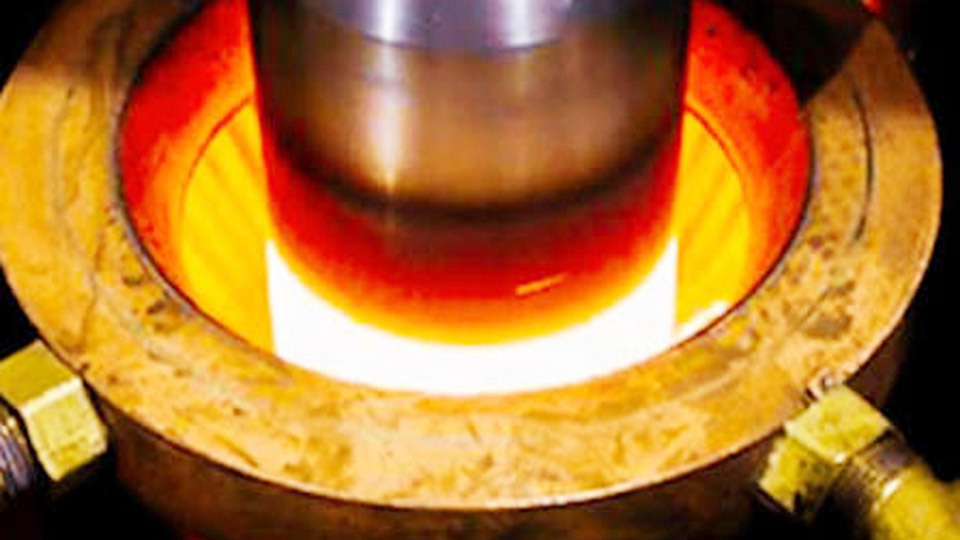
Image by effee-induction
How Austenitizing Sets the Stage for Maximum Hardness
Hardening begins only after the steel reaches a fully austenitic structure. Below that temperature the carbon remains locked in ferrite or carbide networks and cannot produce a uniform martensite lattice on quenching.
Critical Temperatures for Common Weldable Steels
Hypoeutectoid steels (carbon below 0.77 %) must be heated 30–50 °C (50–90 °F) above the upper critical temperature Ac3. Typical shop values are:
- AISI 1045: 800–845 °C (1475–1550 °F)
- AISI 4140: 830–860 °C (1525–1575 °F)
- AISI 4340: 815–845 °C (1500–1550 °F)
Hypereutectoid steels are heated just above Ac1 to avoid excessive retained austenite and grain growth. Exceeding these ranges by more than 50 °C coarsens prior-austenite grains and lowers final toughness even if hardness is achieved.
Soak Time and Section Thickness Rules
Carbide dissolution and homogenization require time proportional to thickness. Industry practice uses one hour per inch of cross-section, with a minimum of 20–30 minutes for thin sections.
Incomplete soak leaves undissolved carbides that act as soft spots after quenching and reduce achievable hardness by 5–10 HRC in local areas.
Quenching Rate Requirements That Produce Martensite
Once the part is fully austenitic, cooling must outrun the pearlite and bainite noses on the continuous-cooling-transformation diagram. Only then does the face-centered-cubic austenite shear into body-centered-tetragonal martensite, trapping carbon in supersaturated solid solution.
Matching Quench Media to Steel Hardenability
Plain carbon steels such as 1045 demand severe quenches—water or brine—to reach full hardness through sections thicker than ½ inch.
Alloy steels with chromium, molybdenum, or nickel (4140, 4340) shift the transformation curves to longer times and can be oil- or polymer-quenched with less risk of cracking.
Air-hardening tool steels form martensite even in still air because of high alloy content. Selecting the wrong medium either leaves soft cores or produces quench cracks from excessive thermal gradients.
As-Quenched Hardness Limits by Carbon Content
Maximum hardness is controlled almost exclusively by carbon:
- 0.20 % C ≈ 40–45 HRC
- 0.40 % C ≈ 55–60 HRC
- 0.60 % C ≈ 62–65 HRC
Alloy additions improve hardenability (depth of hardness) but add little to peak hardness once full martensite is obtained. Retained austenite above 10–15 % softens the structure and must be minimized by proper quench severity or subsequent refrigeration.
Why Welding Thermal Cycles Create Unwanted Hard Zones
The weld heat-affected zone experiences peak temperatures well above Ac3 near the fusion line and cooling rates that frequently exceed the critical cooling rate of the base metal. The result is a narrow band of hard, brittle martensite even when the rest of the plate remains soft.
Carbon Equivalent Thresholds That Signal Risk
When the carbon equivalent (IIW formula) exceeds approximately 0.40–0.45, HAZ hardness commonly climbs above 350 HV. At 450 HV and higher, hydrogen-assisted cracking becomes probable under residual tensile stress unless preheat and low-hydrogen consumables are used.
Measured HAZ hardness after welding therefore serves as a practical go/no-go indicator for procedure qualification.
Cooling-Rate Control Through Preheat and Interpass
Raising the starting temperature of the plate slows the post-weld cool. For 4140 plate 1 inch thick, a 150–200 °C (300–400 °F) preheat can drop HAZ hardness from >450 HV into the 300–350 HV range, converting potential martensite into tougher bainite or tempered martensite.
Interpass temperature must stay at or above the preheat value; allowing the joint to cool between passes reintroduces the rapid quench on every subsequent bead.
When Full Re-Hardening Versus Simple Tempering Is the Correct Decision
After welding, two distinct paths exist. Tempering alone softens existing martensite and relieves stress. Full re-hardening restores design hardness throughout the part but requires austenitizing the entire weldment—an operation limited by size, distortion risk, and furnace capacity.
Post-Weld Tempering Windows for Structural Grades
Most carbon and low-alloy weldments receive a subcritical temper at 540–650 °C (1000–1200 °F). This range converts brittle as-welded martensite into tempered martensite, drops hardness toward base-metal levels, and reduces residual stress by 70–85 %. Soak times follow one hour per inch, with controlled heating and cooling rates to avoid new thermal stresses.
Conditions That Force Complete Quench-and-Temper Restoration
Components whose service hardness is specified (gears, shafts, wear plates) usually cannot tolerate the softened HAZ left by welding. The entire part is then re-austenitized, quenched, and tempered to the original specification. Distortion must be anticipated; fixturing or machining allowances are mandatory.
In many cases the more economical decision is to weld in the annealed or normalized condition and perform the final hardening cycle after all fabrication is complete.
Hardenability Data Welders Use to Choose Base Metals and Filler Metals
Hardenability—not peak hardness—governs whether a given section will form martensite under the cooling rates of welding or quenching. Jominy end-quench curves quantify this behavior and guide material selection.
Practical Jominy Correlations for Common Grades
AISI 1045 shows rapid hardness drop away from the quenched end; sections thicker than about ¾ inch rarely reach full martensite with oil quench. AISI 4140 maintains high hardness farther along the Jominy bar, allowing through-hardening of 2–3 inch sections.
When welding high-hardenability steels, matching or undermatching fillers with lower carbon are preferred so the weld metal itself does not form brittle martensite under the same cooling conditions.
Surface Hardening Alternatives When Through-Hardening Is Impractical
Carburizing, nitriding, or induction hardening produce hard surface layers without changing the core microstructure of large or already-fabricated parts. These processes avoid the distortion and cracking risks of full-section quenching and are frequently applied after welding and machining are finished.
Wrapping Up
Selecting the correct hardening path—whether intentional quench-and-temper or controlled avoidance of HAZ martensite—determines both the final mechanical properties and the risk of delayed cracking.
Match austenitizing temperature and quench severity to the steel’s carbon and alloy content, keep HAZ cooling rates below the critical value through preheat when necessary, and apply subcritical tempering or full re-hardening according to the service hardness requirement.
Advanced fabricators further refine the decision by measuring actual HAZ hardness on procedure-qualification coupons and adjusting heat input or preheat until the value stays safely under the cracking threshold for the hydrogen level of the process being used.
FAQs
What temperature is used for hardening 4140 steel?
Austenitize 4140 at 830–860 °C (1525–1575 °F), then oil quench. Temper immediately afterward at the temperature that yields the required final hardness.
Does welding harden the heat-affected zone?
Yes, if the steel has sufficient carbon and the cooling rate exceeds the critical value. HAZ hardness can exceed 400 HV, creating a crack-sensitive microstructure that usually requires tempering or preheat control.
What is the difference between hardening and tempering?
Hardening (austenitize + quench) produces hard, brittle martensite. Tempering reheats that martensite below Ac1 to reduce brittleness and set final hardness and toughness.
Can you harden steel after welding?
Yes. The completed weldment can be fully re-austenitized, quenched, and tempered provided size and distortion limits allow it. Many shops prefer to weld in the soft condition and harden afterward.