Most welders who try side work either underprice jobs until materials and fuel erase the profit or chase complex projects that eat evenings without reliable pay.
Learning how to make money welding on the side starts with matching real local demand—trailer frames, farm gates, equipment brackets—to the processes and rates that cover overhead while leaving margin.
Side welding succeeds when the operator treats every call as a measured decision on time, heat input, material cost, and liability rather than free extra practice.
Demand for mobile and small-batch work remains steady because full shops quote longer lead times and higher minimums.
Correct choices on niche, process, and pricing turn limited free hours into consistent supplemental income without requiring a full shop build-out.
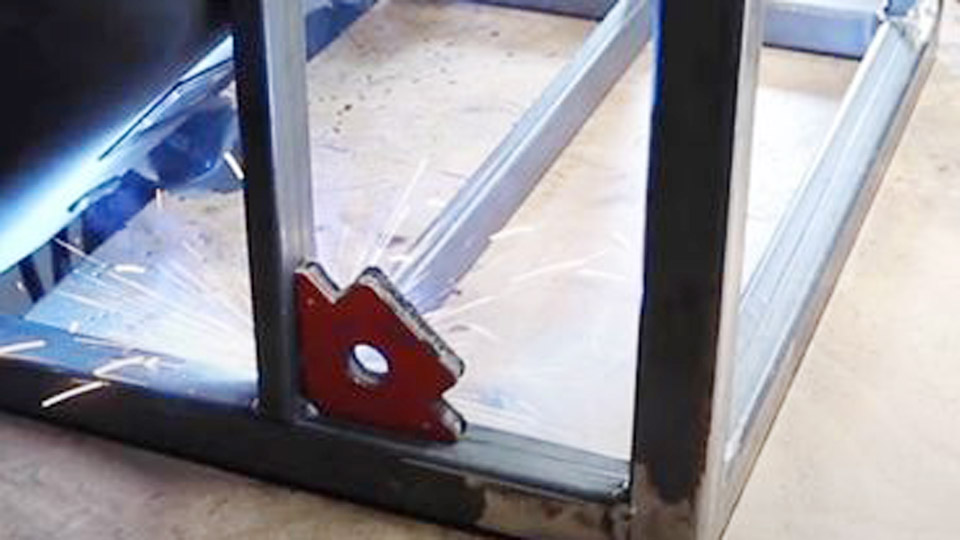
Image by yeswelder
Which Side Welding Jobs Actually Generate Consistent Cash
Side income concentrates in repairs and small fabrications that customers need immediately and cannot easily haul to a commercial shop.
Trailer and Equipment Repairs
Trailer tongue cracks, coupler failures, frame rail repairs, and leaf-spring hanger replacements form one of the highest-volume side categories. Typical completed jobs fall in the $200–$600 range depending on access and steel required. A tongue replacement on common 2–3 inch tube often takes 2–3 hours once material is on hand.
Landscapers, contractors, and recreational owners generate repeat seasonal demand, especially spring and fall. Self-shielded flux-cored or short-circuit MIG handles outdoor, slightly dirty steel efficiently and keeps setup simple.
Gate, Fence, and Farm Fixes
Pipe gates, hinge replacements, latch plates, and livestock panel repairs pay $150–$450 for straightforward work. Rural and semi-rural areas produce steady calls because downtime costs farmers more than the repair.
Skid-steer bucket edge rebuilds or loader arm cracks can reach $400–$800 when multi-pass 7018 or FCAW is used on thicker sections. These jobs favor operators who can travel and work on-site with portable power.
Custom Fabrication Items That Sell Fast
Fire pits, basic smokers, handrail sections, and simple brackets convert garage time into higher-margin product sales. A basic 24-inch fire pit with grate commonly sells for $350–$450 against $80–$120 material cost. Ornamental handrails often price at $75–$120 per linear foot installed.
These items move through Facebook Marketplace and local groups with photos of finished work; buyers respond to firm pricing and pickup availability.
When Mobile Service Outperforms Shop Work
Mobile calls capture jobs that customers refuse to transport—large gates already hung, equipment in the field, or trailers that cannot be moved easily.
The trade-off is lower arc-on time and higher fuel cost, so rates and minimums must reflect portal-to-portal time. Shop-based small fabrication suits higher-volume product builds once a pattern and cut list exist.
Equipment and Process Choices That Keep Overhead Low
Startup cost and daily operating expense determine whether side hours produce net income.
Minimum Viable Setup for Side Work
A 200–250 A multiprocess inverter capable of MIG and stick, a portable generator or access to 220 V, basic grinding and cutting tools, and a truck or trailer with secure rod/wire storage cover the majority of profitable side calls.
Many operators begin with a quality MIG unit and add stick capability for outdoor farm work. Consumable inventory stays limited to common mild-steel wire or 1/8-inch 7018 and 6010 electrodes plus grinding discs. Avoid large plasma tables or press brakes until product volume justifies the capital.
MIG vs Stick vs TIG for Profitability
Short-circuit MIG with 0.030–0.035 ER70S-6 wire and 75/25 gas covers the bulk of trailer, gate, and bracket work at higher deposition speed. Outdoor or windy farm repairs favor self-shielded flux-cored or stick with 7018 at typical ranges of 110–165 A for 1/8-inch electrodes on 3/16–1/4-inch material.
TIG commands premium rates on aluminum boat brackets, stainless details, or visible automotive pieces but slows production and raises gas and tungsten cost. Most side operators run MIG as the primary process and keep stick available for conditions where gas shielding fails.
| Process | Best Side Applications | Typical Operating Window | Margin Impact |
|---|---|---|---|
| MIG (short-circuit) | Trailers, gates, brackets, fire pits | 18–22 V / 250–350 ipm on 1/8–1/4″ | Highest speed, lowest skill barrier for volume |
| Stick (7018/6010) | Farm equipment, outdoor repairs | 110–165 A (1/8″) | Reliable in wind, higher cleanup time |
| TIG | Aluminum, stainless, visible custom | 80–150 A depending on thickness | Highest rate per hour, lowest throughput |
How to Price Welding Jobs So You Cover Costs and Profit
Underpricing is the most common reason side welding fails to produce meaningful income.
Hourly Rates and Minimums Used by Mobile Operators
Working rates for qualified mobile side work commonly fall between $75–$150 per hour, with many operators settling in the $90–$125 band for general mild-steel repair. A two-hour minimum or separate trip/mobilization fee of $75–$250 protects against short calls that consume drive and setup time.
After-hours or emergency farm calls often carry a 50–100 % premium. Metro areas and certified structural work push the upper end; rural markets may sit lower on the hourly but still support solid flat fees.
Flat-Rate Quoting for Common Repairs
Once a job type is repeated, convert to flat rates for faster acceptance. Trailer hitch or tongue work often quotes $250–$450. Gate hinge or frame repairs land at $150–$350.
Farm equipment bracket or crack repairs range $200–$600. Flat rates reduce haggling and protect against scope creep when the customer “just needs one more thing.”
Material Markup and Trip Charges
Steel and consumables are marked up 20–50 % or calculated at 2–2.5 times cost. Collect material money upfront on larger purchases. Trip charges or portal-to-portal billing recover fuel and non-arc time.
A simple internal formula used by many operators is material cost × 2–2.5 plus hourly labor rounded to the nearest convenient cash figure. Track actual arc-on time versus total job time for several weeks to refine the numbers.
Finding Customers Without Paid Advertising
Local visibility and proof of completed work outperform broad advertising for side welding.
Local Platforms and Direct Outreach That Work
Facebook Marketplace and local buy/sell/trade groups generate the majority of initial calls when finished jobs are posted with clear photos and firm prices. A magnetic vehicle sign listing “Mobile Welding – Call/Text” creates passive leads during normal driving.
Leaving cards with farm supply stores, trailer dealers, and small equipment rental shops places the contact in front of people who already deal with broken metal. Direct contact with landscapers, property managers, and independent contractors builds overflow work.
Building Repeat Business from Farms and Contractors
Reliability and clean communication produce more return calls than perfect bead appearance alone. Schedule around the customer’s operating hours when possible, especially for agricultural equipment.
Keep a simple log of completed jobs, materials used, and contact details so follow-up is easy when seasonal work returns. Word-of-mouth from one satisfied farm or trailer owner routinely produces multiple additional jobs within the same circle.
Legal, Insurance, and Tax Realities for Side Welding Income
Treating the activity as a business from the first paid job protects both income and personal assets.
Business Structure and Liability Coverage
Most side operators begin as sole proprietors or file a DBA; an LLC becomes useful once revenue and risk increase. General liability insurance is the critical coverage for work performed on customer property or equipment. Commercial auto coverage is required if the vehicle is used for business.
Rates vary widely by location and claims history, but the cost is a necessary overhead item rather than optional. Confirm local contractor licensing or permit requirements before taking structural or public-access work.
Tracking Income and Expenses Cleanly
Separate business banking or at minimum clear records of every cash and electronic payment, material purchase, fuel, and consumable keep tax filing accurate.
Self-employment tax and quarterly estimates apply once net earnings reach the threshold. Accurate records also support correct pricing decisions by revealing true cost per billable hour.
Matching Skill Level to Job Risk and Pay
Not every welding skill translates equally into safe, payable side work.
Entry-Level Projects vs Higher-Liability Work
Beginners and intermediate operators should prioritize non-critical items—fire pits, brackets, simple gate repairs, lawn equipment decks—where a less-than-perfect weld does not create structural or public safety exposure.
Vehicle frames, load-bearing handrails, pressure systems, and certified structural joints require higher skill, proper joint design, and often documentation. The liability and potential for callbacks rise sharply on the latter group.
When Certifications Justify Higher Rates
AWS D1.1 structural or similar qualifications allow higher hourly rates and access to commercial or inspected work. For pure residential and farm repair side income, demonstrated competence and clean completed jobs usually matter more than paper certifications.
Add credentials only when the local market pays a clear premium that recovers the testing cost and ongoing maintenance.
Wrapping Up
Side welding income is determined by the intersection of available free hours, local demand for immediate repairs, disciplined pricing that includes travel and materials, and deliberate selection of low-to-moderate liability jobs that match current skill.
Operators who lock in a core set of repeatable services—trailer work, gates, basic custom items—then protect margin with minimums and markups convert evenings and weekends into measurable cash flow.
The advanced distinction lies in treating every quote as a calculation of true cost plus required return rather than a guess based on what the customer hopes to pay; that single habit separates sustainable side income from unpaid overtime.