Many welders see online claims of $300,000 salaries for underwater work on oil rigs and assume every commercial diver reaches that level quickly.
The reality is narrower: most offshore oil rig underwater welder salary figures fall well below the saturation-diving peak, and the path requires commercial diving certification, documented bottom time, and specific hyperbaric welding qualifications before the highest day rates appear.
Understanding the actual ranges, how depth pay and rotations stack compensation, and which credentials move earnings upward prevents wasted training investment and mismatched expectations.
Accurate numbers matter because the work combines extreme physical demand with irregular schedules, and only a small percentage of divers consistently access the top-tier contracts.
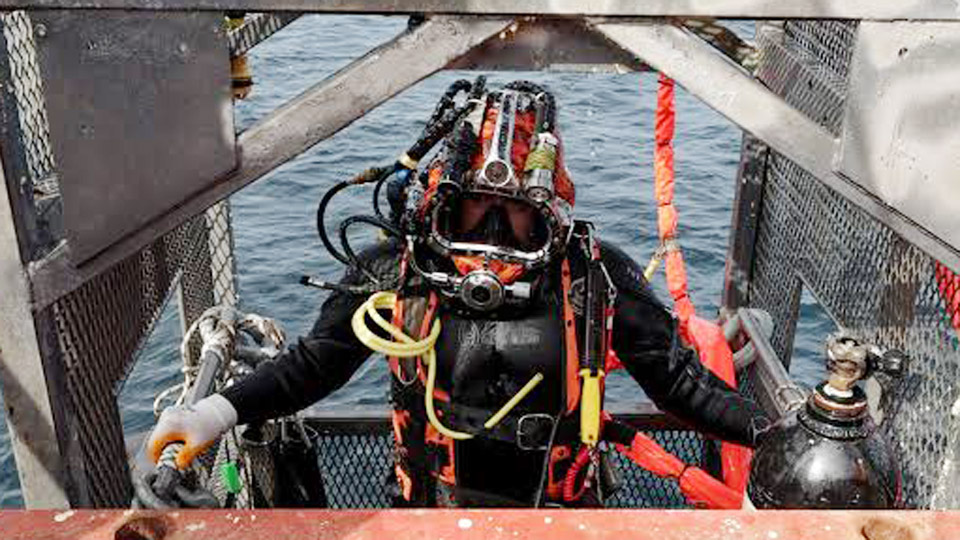
Image by popularmechanics
Actual Pay Ranges for Offshore Underwater Welders
Compensation for underwater welders on offshore oil and gas structures splits into clear tiers driven by diving mode and experience rather than simple years on the job.
Entry and Mid-Level Offshore Figures
New commercial divers with basic welding qualifications typically start in the $40,000–$65,000 range when limited to shallow or nearshore support roles. Once they secure consistent offshore air-diving work on platforms or pipelines, mid-level earnings commonly reach $75,000–$120,000 annually.
These figures include base day rates plus limited depth and hazard add-ons. Glassdoor and industry aggregators place average reported underwater welder pay around $70,000–$80,000, reflecting a mix of inland and offshore work. Pure offshore mid-career divers with solid logbooks trend higher within that band.
Saturation and Elite Day-Rate Earnings
Saturation diving produces the highest documented figures. Experienced saturation diver-welders on Gulf of Mexico or North Sea oil and gas projects routinely clear $180,000–$300,000 in active years. Day rates commonly run $1,000–$1,500, with complex deep or emergency work pushing toward $2,000–$2,500 per day while in saturation.
A 28-day saturation rotation at $1,200–$1,500 per day can generate $30,000–$40,000 before additional depth bonuses. Annual totals depend on the number of completed saturations (often three to six) and weather or project downtime. These rates apply only after several years of surface-supplied experience and formal saturation qualification.
How Location and Region Change the Numbers
Geography exerts strong influence because oil and gas infrastructure density, regulatory regimes, and labor agreements differ.
Gulf of Mexico Rates
The Gulf remains the primary U.S. market. Experienced offshore underwater welders and saturation divers working Louisiana and Texas waters commonly report $100,000–$200,000+ total compensation. Depth pay and high project volume support consistent days. Day rates for qualified saturation work typically sit between $1,000 and $1,500.
North Sea and International Premiums
North Sea (UK/Norway) contracts frequently post higher daily rates under collective agreements—often £1,000–£1,500+ equivalent while in saturation—driven by stricter safety regimes and harsher conditions.
West Africa, Middle East, and Asia-Pacific LNG or oil projects can match or exceed Gulf figures for qualified personnel, sometimes with tax advantages. Inland or harbor work in the same countries pays substantially less.
Depth Pay, Day Rates, and Compensation Structure
Offshore underwater welding pay rarely functions as a fixed annual salary. Most contracts use day rates or hourly structures augmented by depth and saturation premiums.
Standard Day-Rate Mechanics
Contractors pay a fixed amount per day on site or per day in saturation. Surface-supplied air diving on shallower platform work may start lower; mixed-gas and saturation work escalate rapidly.
Travel, standby, and mobilization days often receive partial rates. Rotations such as 28 days on / 28 days off mean annual earnings depend on successful project placement rather than continuous employment.
Depth and Saturation Add-Ons
Depth pay adds incremental compensation per foot or meter beyond a threshold. Saturation living (pressurized chamber time) carries its own hourly or daily bonus on top of the base day rate.
Combined, these elements explain how some divers reach effective rates well above $1,500 per day during deep work. Wet welding at moderate depths receives lower premiums than habitat or saturation hyperbaric welding.
Certifications and Experience That Drive Higher Pay
Credentials and documented bottom time determine access to the higher brackets more than raw welding skill alone.
Required Commercial Diving and Welding Credentials
Entry requires graduation from an accredited commercial diving school (ADCI or equivalent standards) plus welding qualifications recognized for underwater use, typically AWS D3.6 or company-specific hyperbaric procedures.
Surface-supplied air diving experience builds the logbook hours needed before mixed-gas or saturation training. Without these, divers remain limited to lower-paying inland or shallow work.
Progression Timeline and Earnings Impact
Most divers spend two to five years accumulating surface-supplied hours before saturation eligibility. Mid-career divers with solid offshore time move into the $90,000–$150,000 zone.
Those who complete saturation qualifications and maintain high utilization of deep contracts reach the $180,000–$300,000 tier. Supervisory or inspection-specialist roles can further increase earnings without constant bottom time.
Wet Welding Versus Habitat and Saturation Differentials
The welding method itself affects both technical difficulty and pay.
Wet Welding Compensation
Direct wet welding (electrode in water) forms the majority of shallower offshore repairs. Rates sit within standard commercial diver-welder bands. Visibility, current, and joint access limit productivity and therefore total project earnings.
Dry Habitat and Saturation Hyperbaric Work
Welding inside a pressurized habitat or during saturation deployments commands a 20–40 % premium or higher day rates because of the equipment complexity, longer continuous work windows, and elevated risk.
These methods enable higher-quality code-compliant welds on critical structural or pipeline components and therefore attract the top compensation packages on oil-rig projects.
Realistic Career Timeline to High Earnings
Reaching the upper end of offshore oil-rig underwater welder salary requires sequential milestones rather than rapid jumps. Commercial dive school (several months and significant tuition) is followed by entry-level tender or support roles, then working diver positions with progressive welding responsibility.
Documented hours, clean safety records, and additional certifications in non-destructive testing or mixed-gas diving open saturation opportunities. Many divers never enter saturation; those who do typically need five or more years of prior commercial experience.
Physical longevity also constrains the high-earning window—many exit or transition to supervisory roles after 10–15 years of heavy diving.
Factors That Reduce Realized Take-Home Pay
Day rates look high on paper, yet several elements lower net income. Training and equipment costs are front-loaded. Weather delays, vessel downtime, and project cancellations reduce billable days. Self-employed or contractor status means the diver covers insurance, medical surveillance, and travel between rotations.
Tax treatment of offshore income varies by jurisdiction and residency. Health and decompression risk can force early retirement or medical restrictions that limit future high-paying work.
Wrapping Up
Decision-makers evaluating this career path should treat saturation-level figures as the exception earned by a minority with specific deep-water qualifications and consistent project access, not the baseline.
Match training investment to realistic mid-career offshore ranges first; only then pursue saturation credentials if the physical and lifestyle demands align.
Advanced operators further protect long-term earnings by combining welding certification with inspection or supervisory qualifications, extending income potential beyond pure bottom time.