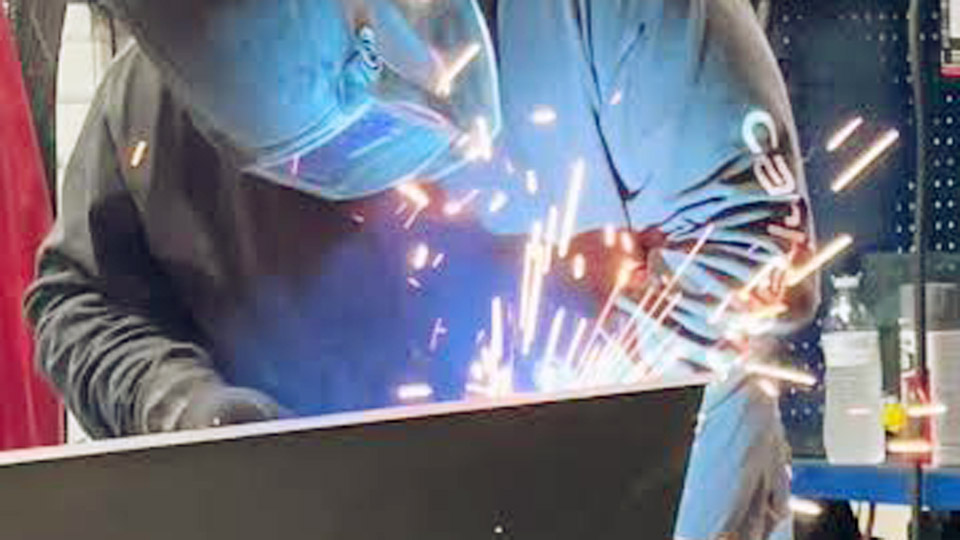
A single unprotected glance at a welding arc leaves many operators wondering whether permanent vision loss has already begun.
The question “How long does it take to go blind from welding?” arises because the intense ultraviolet output can produce severe pain and temporary visual impairment within hours, yet the actual timeline and severity of damage differ sharply from the fear of instant blindness.
Correct understanding of photokeratitis (arc eye or welder’s flash) versus cumulative long-term risks determines whether a brief exposure requires only rest or signals a need for medical evaluation and stricter PPE protocols.
Accurate data on exposure duration, symptom onset, recovery, and helmet performance remove guesswork and prevent both unnecessary anxiety and preventable injury.
Image by tktk
What Actually Happens to the Eyes During Unprotected Arc Exposure
UV Spectrum Emitted by Welding Arcs
Electric arcs generate ultraviolet radiation across UV-A (315–400 nm), UV-B (280–315 nm), and UV-C (100–280 nm). UV-C and most UV-B are absorbed almost entirely by the corneal epithelium. UV-A reaches the lens.
Arc temperatures exceed 6,000 °C and produce far higher irradiance than natural sunlight, so even short unprotected exposure exceeds the corneal damage threshold. Distance, angle of incidence, amperage, and process type (SMAW, GMAW, GTAW) alter the effective dose reaching the eye.
Photokeratitis Mechanism
UV photons damage epithelial cells on the cornea. Hours later those cells slough off, exposing underlying nerve endings. The result is intense pain, photophobia, tearing, and a foreign-body sensation.
This process is analogous to a severe sunburn confined to the ocular surface. Retinal injury (photoretinitis) is far less common and requires more intense, focused exposure that reaches the macula.
Time to Symptom Onset After Welding Flash Exposure
Delayed Onset Window
Symptoms of photokeratitis almost never appear during the exposure itself. The characteristic delay is 3–12 hours, most often 6–12 hours. Many welders first notice pain or light sensitivity during the night after an afternoon session. The lag occurs because epithelial cell death and subsequent shedding take time.
Factors That Change Severity
Higher amperage, closer proximity, longer total exposure time, and reflective surfaces (polished metal, concrete floors) increase the UV dose. Individual corneal sensitivity and prior recent exposures also influence intensity.
Bystanders standing nearby without side shields or curtains can receive enough reflected radiation to develop full arc-eye symptoms.
Recovery Timeline for Welder’s Flash
Typical Healing Progression
The corneal epithelium regenerates rapidly. Most cases follow this sequence:
- 6–12 hours: symptoms begin and intensify
- 12–24 hours: peak pain and photophobia
- 24–48 hours: measurable improvement
- 48–72 hours: majority of discomfort resolved
Mild cases clear in under 24 hours; severe cases may retain residual grittiness for several additional days. Vision usually returns to baseline once re-epithelialization is complete. Permanent scarring is rare when secondary infection is avoided.
When Symptoms Indicate Need for Professional Care
Seek evaluation if pain remains severe beyond 48 hours, vision stays blurred after 72 hours, discharge appears, or only one eye is affected (raising the possibility of a foreign body or different diagnosis).
Topical anesthetic drops must never be used for home treatment; they delay healing and raise the risk of further corneal injury.
Permanent Vision Loss Risk from Welding UV
Single-Exposure Outcomes
A solitary episode of photokeratitis almost never produces permanent blindness. The cornea heals without scarring in the great majority of cases. Rare documented instances of macular injury have occurred after prolonged unprotected viewing of high-intensity arcs in confined spaces, but these remain exceptions rather than the rule.
Cumulative Damage Over Years
Repeated unprotected or under-protected exposure raises lifetime risk of cataracts, pterygium, and age-related macular changes. Chronic low-level UV dose accumulates.
Welders who routinely raise the helmet to inspect the weld or rely solely on passive sunglasses accumulate measurable risk over decades. Proper helmet use eliminates essentially all of this incremental damage.
Minimum Exposure Duration That Causes Photokeratitis
Seconds Versus Minutes
Laboratory and field data show that a few seconds of direct arc viewing at typical working distances can exceed the photokeratitis threshold (reported values range from approximately 0.12 J/m² in newer measurements to higher older estimates).
Ten to fifteen minutes of continuous unprotected arc work has produced both severe photokeratitis and, in isolated case reports, macular injury.
There is no safe “quick look” once the arc is established. Distance reduces intensity by the inverse-square law, yet shop distances of 0.5–1 m still deliver hazardous doses within seconds.
Correct Helmet Shade and UV Blocking Requirements
Shade Selection by Process and Amperage
Filter shade controls visible light transmission; certified filters simultaneously block essentially 100 % of UV and IR regardless of shade number. Minimum recommended shades (ANSI Z49.1 / OSHA guidance) are:
| Process | Current (A) | Minimum Shade |
|---|---|---|
| SMAW (stick) | < 60 | 7 |
| SMAW | 60–160 | 8 |
| SMAW | 160–250 | 10 |
| SMAW | 250–550 | 11 |
| GMAW / FCAW | < 60 | 7 |
| GMAW / FCAW | 60–500 | 10 |
| GTAW (TIG) | < 50 | 8 |
| GTAW | 50–150 | 8–10 |
| GTAW | > 150 | 10–12 |
| Plasma cutting | < 300 | 8 |
| Plasma cutting | 300–400 | 9 |
Auto-darkening filters must meet ANSI Z87.1 and retain permanent UV/IR protection in the light state. Shade selection should allow clear puddle visibility while remaining at or above the minimum; many operators choose one or two shades darker for comfort.
Bystander and Reflected Arc Hazards
Curtains, screens, and fixed barriers block line-of-sight and scattered radiation. Safety glasses with side shields worn under the helmet protect against incidental flashes when the helmet is raised and against slag or grinding particles.
Reflective floors and nearby stainless or aluminum surfaces can redirect UV; matte finishes and strategic screening reduce this secondary exposure pathway.
Final Thoughts
Choosing full-time certified eye protection eliminates the scenario that produces arc eye and removes the cumulative UV dose that elevates long-term cataract risk. The practical decision is binary: either the filter is in place before the arc starts, or the exposure clock is already running.
Advanced operators treat every helmet lift as a potential exposure event and maintain secondary safety glasses as continuous insurance against both UV and mechanical injury.