A welder finishes several hours of stainless or galvanized work, steps outside, and by the next morning experiences fever, chills, metallic taste, and muscle aches that feel like the flu. That sequence is metal fume fever, one of the most common acute reactions to welding fumes.
The same airborne particles that produce short-term illness also drive long-term risks of lung cancer, neurological damage, and chronic respiratory disease.
How dangerous are welding fumes? They are classified by the International Agency for Research on Cancer as Group 1 carcinogens—known to cause cancer in humans—and contain metals regulated at microgram or low milligram levels because chronic low-level exposure still produces measurable harm.
Understanding composition, exposure limits, process differences, and control effectiveness lets welders and shop managers make decisions that keep breathing-zone concentrations below levels linked to disease.
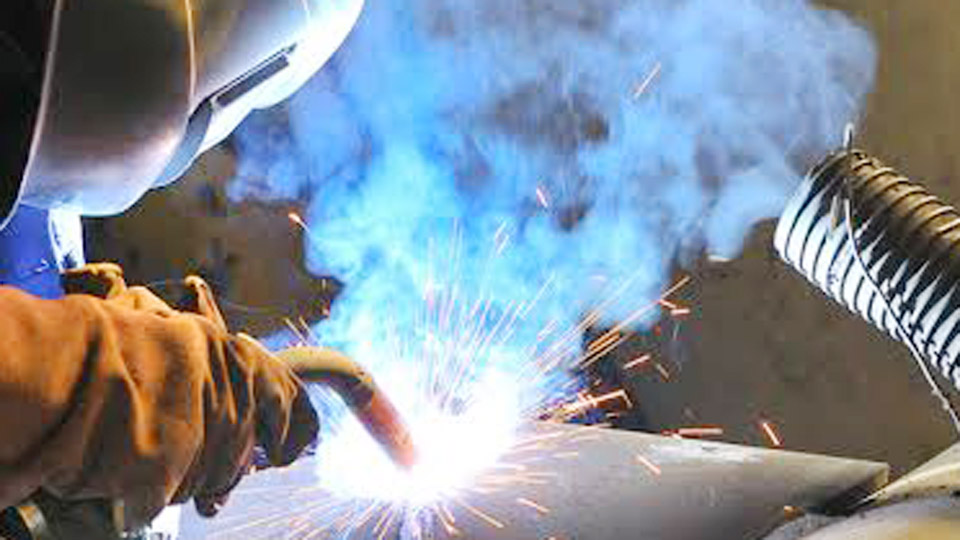
Image by safe-welding
Particle Size and Composition Drive Toxicity
Welding fumes form when metal vaporizes in the arc and rapidly condenses into solid particles. Most particles measure under 1 µm and many fall into the ultrafine range, allowing them to bypass upper-airway defenses and deposit deep in the alveoli.
Key Toxic Metals and Their Primary Sources
Mild-steel fumes consist mainly of iron oxide with smaller percentages of manganese, silicon, and other elements from the electrode or wire. Stainless-steel welding converts chromium in the base metal and filler into hexavalent chromium (Cr(VI)), a potent carcinogen. Galvanized steel releases zinc oxide.
Nickel appears in stainless and high-alloy work. Cadmium, lead, and beryllium appear when coated or specialized alloys are welded. Fluxes and coatings can add fluorides or other compounds. The exact mix depends on base metal, consumable chemistry, and process parameters.
Gases That Accompany the Particulate
The arc also generates ozone, nitrogen oxides, carbon monoxide, and, in confined spaces, can displace oxygen with argon, helium, or carbon dioxide. These gases cause irritation, pulmonary edema risk at high concentrations, and asphyxiation hazards independent of the metal particles.
Acute Effects Appear Within Hours of Overexposure
Short-term high exposures produce symptoms that resolve once exposure stops, yet they signal that the breathing zone concentration has already exceeded safe levels.
Metal Fume Fever Timeline and Triggers
Zinc oxide from galvanized steel is the classic cause, although copper and magnesium oxides can produce similar reactions.
Symptoms typically begin 3–12 hours after exposure and include fever (usually under 102 °F / 39 °C), chills, headache, metallic taste, muscle and joint pain, fatigue, and sometimes nausea or cough.
The episode lasts 24–48 hours. Many welders experience it at least once in a career; repeated episodes indicate inadequate control.
Irritation, Dizziness, and Oxygen Displacement
Eye, nose, and throat irritation, dizziness, and nausea occur with elevated total fume or nitrogen oxides and ozone. In enclosed spaces, inert shielding gases or carbon monoxide can drop oxygen below safe levels, creating an immediate asphyxiation risk that requires continuous monitoring and forced ventilation.
Long-Term Risks Confirmed by Epidemiology and Toxicology
IARC’s 2017–2018 reclassification of welding fumes to Group 1 rests on consistent excess lung-cancer risk across multiple cohort and case-control studies, observed for both mild-steel and stainless welding and not fully explained by smoking or asbestos confounding.
Cancer Risk Magnitude and Target Sites
Welders show roughly a 20–40 % relative increase in lung-cancer risk in large studies. Positive associations also appear for kidney cancer. Hexavalent chromium and nickel compounds in stainless fumes are themselves Group 1 carcinogens and drive nasal, sinus, and lung cancer risk.
The excess risk persists even when average exposures fall near or below older total-fume limits, indicating that particle composition and ultrafine size matter.
Neurological Damage Linked to Manganese
Manganese is present in most carbon-steel consumables. Chronic inhalation can produce manganism—Parkinson-like symptoms including tremor, slowed movement, gait disturbance, and cognitive changes.
Effects have been documented at average exposures well below the OSHA ceiling limit. The ACGIH respirable TLV of 0.02 mg/m³ reflects this neurotoxicity evidence.
Respiratory and Systemic Outcomes
Repeated exposure is associated with chronic bronchitis, reduced lung function, occupational asthma, siderosis (iron-oxide deposition), and increased susceptibility to respiratory infection.
Kidney damage appears with cadmium and certain other metals. Cardiovascular associations have also been reported in particle-exposure literature.
Exposure Limits That Actually Guide Shop Decisions
OSHA does not enforce a single universal “welding fume” PEL for all processes. Compliance is component-specific.
Critical OSHA Permissible Exposure Limits
- Hexavalent chromium: 5 µg/m³ (8-hour TWA); action level 2.5 µg/m³ under 29 CFR 1910.1026.
- Manganese: 5 mg/m³ ceiling (never to be exceeded).
- Iron oxide fume: 10 mg/m³ (8-hour TWA).
- Zinc oxide fume: 5 mg/m³ (8-hour TWA).
- Nickel: 1 mg/m³ (8-hour TWA).
These are legal ceilings. Exceeding them triggers mandatory controls, monitoring, and in the case of Cr(VI), medical surveillance and hygiene facilities.
Why Lower Recommended Limits Matter More for Health Protection
ACGIH TLVs and NIOSH RELs are frequently far stricter. The ACGIH respirable manganese TLV of 0.02 mg/m³ is more than two orders of magnitude below the OSHA ceiling. NIOSH recommends keeping chromium (VI) as low as feasible.
Many industrial-hygiene programs adopt the lower values as internal targets because the OSHA PELs for several metals date from earlier decades and do not fully reflect current toxicology on chronic low-level effects.
Process and Material Choices That Change Fume Generation Rates
Emission rates vary by more than an order of magnitude across common processes.
Relative Fume Output by Process
Shielded-metal-arc (SMAW/stick) and flux-cored-arc welding (FCAW) typically generate the highest mass of fume per unit of electrode or wire consumed—often 5–13 mg/g or higher depending on current and consumable.
Gas-metal-arc (GMAW/MIG) solid-wire processes produce substantially less, with pulsed-spray and advanced low-heat modes (CMT, STT, RMD) among the lowest.
Gas-tungsten-arc (GTAW/TIG) generates the least particulate of the common arc processes because the electrode is non-consumable and filler addition is limited. Higher current, longer arc length, and CO₂-rich shielding gases increase generation rates within a given process.
High-Risk Base Metals and Coatings
Stainless and high-chromium alloys produce Cr(VI). Galvanized and zinc-coated stock produce zinc oxide and metal-fume-fever risk. Painted, plated, or solvent-contaminated surfaces can release additional toxicants (lead, cadmium, phosgene precursors).
Cleaning coatings before welding and selecting lower-fume consumables or processes reduces the hazard load before ventilation is applied.
Control Decisions That Keep Breathing-Zone Concentrations Low
The hierarchy of controls prioritizes source reduction over personal protective equipment.
Local Exhaust Ventilation Performance Requirements
Capture at the arc is the most effective engineering control. Fume-extraction guns, flexible arms, or hoods must be positioned within roughly 300 mm of the plume source and maintain sufficient face velocity to entrain the rising fume.
General dilution ventilation alone rarely keeps the welder’s breathing zone below recommended limits during continuous work. Outdoor welding does not automatically provide adequate protection if the welder remains in the plume path.
Positioning, Process Substitution, and Respiratory Protection Triggers
Keep the head out of the plume by body position and work angle. Prefer lower-fume processes and consumables when joint requirements allow.
When engineering and work-practice controls cannot reduce exposures below the PEL or chosen internal limit, NIOSH-approved respirators (half-mask or powered air-purifying with appropriate particulate filters, or supplied-air systems for high Cr(VI) or confined spaces) become mandatory.
Air monitoring inside the helmet or breathing zone confirms whether controls succeed.
Wrapping Up
Selecting process, consumable, ventilation configuration, and respirator based on measured or expected component concentrations—not on total visible smoke—determines whether a welder’s cumulative exposure stays below levels linked to cancer and neurological disease.
Advanced shops treat manganese and Cr(VI) as the primary drivers and design source-capture systems to meet the stricter ACGIH or NIOSH targets rather than the older OSHA ceilings, because those lower numbers better track the epidemiology of long-term harm.
FAQs
Are welding fumes carcinogenic?
Yes. The International Agency for Research on Cancer classifies welding fumes as Group 1 (carcinogenic to humans), primarily on the basis of lung-cancer evidence that applies to both mild-steel and stainless welding.
What causes metal fume fever?
Inhalation of freshly formed zinc oxide (most common from galvanized steel), and less often copper or magnesium oxides. Symptoms appear hours after exposure and resolve within 1–2 days once exposure stops.
What is the OSHA limit for hexavalent chromium in welding?
5 µg/m³ as an 8-hour time-weighted average, with an action level of 2.5 µg/m³ that triggers additional requirements under the Chromium (VI) standard.
How much lower is the ACGIH manganese limit than OSHA’s?
OSHA sets a 5 mg/m³ ceiling. The ACGIH respirable TLV is 0.02 mg/m³—more than 200 times lower—reflecting evidence of neurological effects at chronic low exposures.