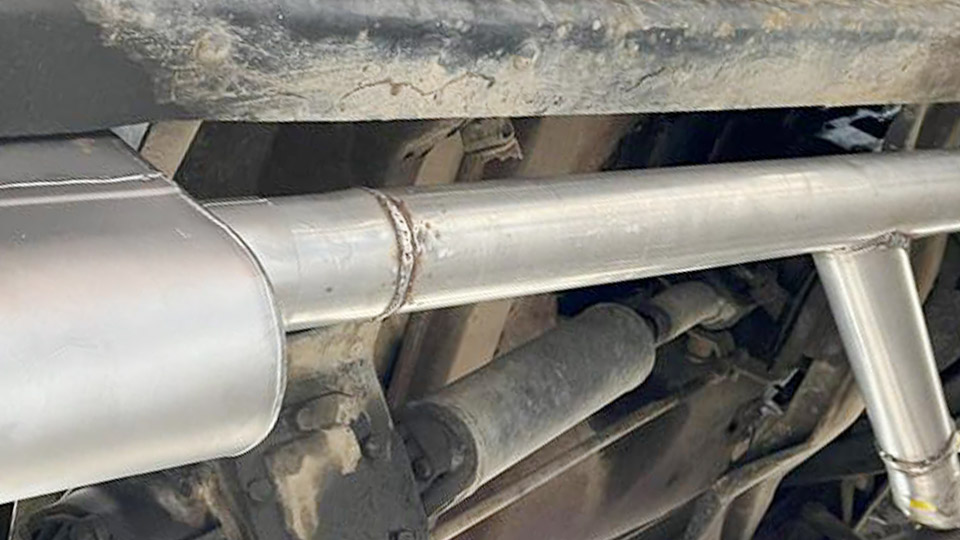
A welder clamps the ground lead to a frame rail, strikes an arc on a rocker panel, and finishes the repair in minutes. Days later the check-engine light appears, the radio loses presets, or an expensive control module fails.
The root cause is often a connected 12-volt battery that allowed welding current and voltage transients to travel through the vehicle’s electrical system.
Do you have to disconnect the car battery when welding? In nearly every practical case the answer is yes. Leaving the battery connected creates a closed loop that lets high-amperage welding current and induced spikes reach ECUs, sensors, the alternator, and airbag modules.
Disconnecting the battery is the first and most effective step for protecting modern vehicle electronics while still allowing safe structural or body repairs.
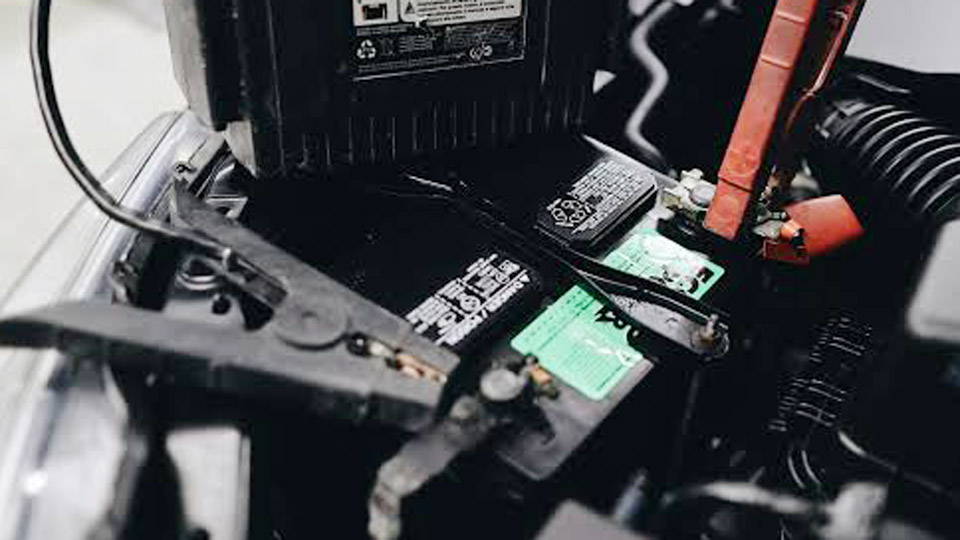
Image by davesautorepairgoshen
Why Welding Current Damages Vehicle Electronics
Transient Voltage Spikes and Induced Currents
Welding arcs generate rapid changes in current. When the arc starts or stops, inductive kickback produces short-duration voltage spikes that can exceed 100 V in a system designed for 12–14 V. These transients travel through the chassis and wiring harnesses.
Solid-state components inside engine control units, body control modules, and sensor circuits cannot tolerate the over-voltage. Electromagnetic interference from the arc further couples into nearby signal wires, corrupting data or permanently damaging microprocessors.
How the Chassis Becomes Part of the Circuit
On a negative-ground vehicle the body and frame serve as the return path for the 12-volt system. When the welder’s work clamp is attached to the same metal, the welding current seeks the lowest-resistance route back to the machine.
If the battery remains connected, part of that current can flow through battery cables, the alternator, or module ground circuits. Voltage drops across those paths create potential differences that stress sensitive electronics even when the clamp is relatively close to the weld.
When Battery Disconnection Is Required Versus Lower-Risk Situations
Modern Vehicles with Multiple ECUs and Networked Systems
Any vehicle built after the mid-1990s carries multiple interconnected modules. CAN-bus networks, airbag controllers, ABS modules, and powertrain computers all share ground references with the chassis.
I-CAR and most OEM procedures require disconnecting and isolating both battery cables before GMAW or SMAW on body or structural components. Welding within 12 inches (300 mm) of a module often requires additional isolation or temporary removal of that module.
Older Vehicles with Minimal Electronics
Pre-ECU vehicles and simple carbureted trucks present lower risk. Alternator diodes and any remaining solid-state components can still be damaged, however. Disconnecting the battery remains the recommended practice because the time cost is minimal and the protection is complete.
Exhaust, Frame, and Body-Panel Work
Exhaust repairs, frame reinforcement, rocker replacement, and hitch installation all place welding current into structural metal that is electrically continuous with the rest of the vehicle. Battery disconnection applies equally to these jobs. Even when the weld zone is distant from the battery tray, the chassis still conducts current.
Correct Procedure for Disconnecting the Battery
Sequence, Wait Times, and Isolation
Turn the ignition fully off and remove the key or move the key fob out of range. Many OEMs specify a wait period of 90 seconds to five minutes after shutdown so modules can complete data storage and capacitors can discharge.
Disconnect the negative (ground) cable first; this prevents accidental shorting if a tool contacts the chassis while the positive remains live. Then disconnect and isolate the positive cable. Secure both cable ends so they cannot spring back against the terminals. Tape or insulated covers provide reliable isolation.
When to Remove the Battery Entirely
If the weld zone is near the battery tray or if grinding and spatter will reach the battery, remove the battery from the vehicle and store it several feet away. This eliminates both electrical and thermal risks.
After the work is complete, reconnect positive first, then negative, torque the clamps to specification, and perform any required relearn or initialization procedures listed in the service information.
Ground Clamp Placement and Current-Path Control
Why Clamp Location Matters as Much as Battery Isolation
Even with the battery disconnected, welding current still flows through the metal structure between the electrode and the work clamp. Placing the clamp on clean, bare metal as close as possible to the weld—ideally on the same panel or frame section—creates the shortest return path.
Long current paths increase the chance that current will travel through wheel bearings, suspension joints, or residual wiring harnesses.
Avoiding Paths Through Bearings, Sensors, and Wiring
Never clamp to a painted surface, rusty scale, or a component that is isolated by rubber mounts. Grind a clean contact point. Route welding cables away from wiring harnesses and control modules. Keep the welding machine itself as far from computers as practical. These steps reduce both conducted and radiated interference.
Additional Protections Beyond the Battery
Unplugging Modules Near the Weld Zone
I-CAR guidance and many OEM procedures require removal or disconnection of electronic modules located within 12 inches of the weld.
Common candidates include the ECU when welding in the engine bay, airbag modules during structural work, and body-control modules during rocker or pillar repairs. Physical isolation removes the component from any residual inductive coupling.
Alternator, Airbag, and Sensor Considerations
Unplug the alternator output and sense wires when welding near the engine. Disable the supplemental restraint system according to the vehicle-specific procedure before any work that could affect airbag circuits.
Oxygen sensors and other exhaust-mounted sensors should be protected or removed during exhaust welding to avoid heat and electrical damage.
Special Cases: Hybrids, Electric Vehicles, and High-Voltage Systems
12-Volt Isolation Plus High-Voltage Disable
Hybrid and battery-electric vehicles require the same 12-volt battery disconnection used on conventional cars, plus isolation of the high-voltage battery.
Follow the exact OEM disable procedure: remove the service disconnect or high-voltage fuse, observe the required capacitor discharge wait time, and verify zero voltage with a properly rated meter before any metal work begins. Never rely on a generic procedure; each manufacturer publishes vehicle-specific steps.
Additional Safety Layers for Electrified Platforms
Store the high-voltage service disconnect and any removed fuses in a locked container. Keep key fobs away from the vehicle so the system cannot re-energize. After welding, reinitialize systems only after confirming high-voltage isolation is restored according to the service manual.
Decision Framework for Everyday Shop and Garage Work
Consult the vehicle’s factory service information for every repair that involves welding. If the procedure calls for battery disconnection, perform it. If the procedure is silent, default to disconnection and close ground-clamp placement.
For work more than several feet from any module on a simple older vehicle, disconnection is still low-cost insurance. After reconnection, clear diagnostic trouble codes, perform required relearns (idle, throttle, windows, steering angle), and verify that no new warning lights appear before returning the vehicle to service.
Battery isolation combined with short, clean current paths prevents the majority of welding-related electronic failures. The few minutes required to disconnect and isolate the 12-volt system remain far less expensive than module replacement or diagnostic time.
Advanced operators further reduce risk by removing nearby modules when the weld zone is close and by using lift-arc or continuous-wave processes that minimize high-frequency noise when TIG welding near sensitive electronics.
FAQs
Do you need to disconnect the battery when welding on a car frame?
Yes. Frame work places welding current into the main structural ground path. Disconnect and isolate both battery cables, place the work clamp on the same frame section, and follow any OEM module-isolation requirements.
Can I just disconnect the negative terminal when welding?
Disconnecting the negative terminal first is the critical step, but best practice is to isolate both cables. Some vehicles and aftermarket systems require full isolation of the positive side as well.
What happens if you forget to disconnect the battery when welding?
Voltage spikes and stray current can damage ECUs, sensors, the alternator, or airbag modules. Symptoms may appear immediately or days later as warning lights, no-start conditions, or failed modules.
Is it safe to weld near a connected car battery on an older vehicle?
Risk is lower on pre-ECU vehicles, but alternator diodes and any remaining electronics can still be damaged. Disconnecting the battery remains the recommended practice regardless of vehicle age.