Many copper joints fail from incomplete filler flow or voids even when the torch temperature looks correct. The root cause is often oxidation that forms the instant copper reaches brazing heat.
The question do you use flux when brazing copper decides whether that oxide layer is dissolved or left in place to block capillary action.
Phosphorus-bearing filler metals handle copper-to-copper joints without extra flux because the phosphorus itself deoxidizes the surface. Every other combination—copper to brass, copper to steel, or high-silver alloys without phosphorus—requires a properly matched flux.
Choosing wrong leaves weak, leak-prone joints that fail under pressure or vibration. Correct selection based on base metals and filler chemistry produces consistent wetting and full joint strength.
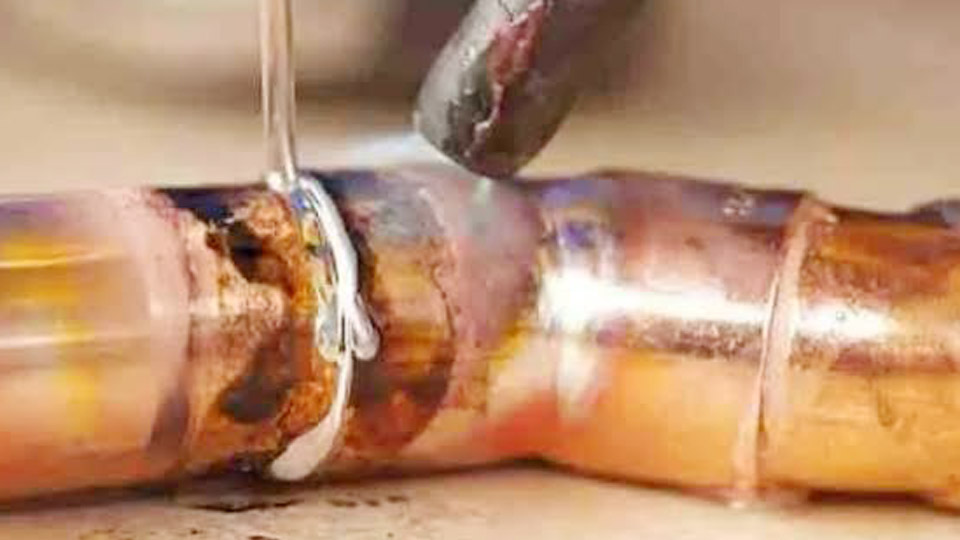
Image by focoinduction
When Flux Is Required Versus When Phosphorus Handles the Job
Flux necessity hinges on the filler-metal chemistry and the metals being joined, not on personal preference.
Copper-to-Copper Joints with BCuP Alloys
Phosphorus-containing alloys classified BCuP (examples: BCuP-2, BCuP-3, BCuP-5) are self-fluxing on pure copper. The phosphorus reduces copper oxides as the alloy melts, allowing the filler to wet and flow by capillary action without a separate chemical flux.
Common commercial rods such as Stay-Silv 15 (15 % Ag, 5 % P), Stay-Silv 5, and Dynaflow fall into this group. Brazing temperature typically runs 1300–1550 °F (704–843 °C). These alloys are standard for HVAC refrigerant lines, plumbing, and electrical bus work where both members are copper.
Copper-to-Brass or Copper-to-Bronze Joints
Brass contains zinc that oxidizes rapidly. Phosphorus alone cannot clean zinc oxide effectively, so a separate flux is mandatory even when a BCuP rod is used. Apply a thin coat of white brazing flux (AWS A5.31 FB3-A type) to the male tube end before assembly. Without it the filler balls up and refuses to enter the joint clearance.
High-Silver BAg Alloys on Any Copper Combination
Silver-based fillers without phosphorus (Safety-Silv 45, Safety-Silv 56, etc.) always require flux. These alloys melt lower (often 1145–1400 °F / 618–760 °C) and deliver higher ductility, but they contain no built-in deoxidizer. Flux must be present to dissolve oxides on both the copper and any dissimilar metal.
Ferrous Metals and Dissimilar Combinations
Never use phosphorus-bearing alloys on steel, stainless, or nickel alloys; the phosphorus forms brittle intermetallics that crack under load. Switch to a BAg alloy and pair it with the correct flux for the base-metal oxide type.
Selecting the Correct Flux Chemistry and Temperature Window
Flux must become active below the solidus of the filler and remain fluid through the entire brazing cycle.
White Paste Flux for Standard Silver and Phos-Copper Work
White flux (borate/fluoride based, AWS FB3-A or EN FH10 equivalent) activates between approximately 1050–1600 °F (565–870 °C). It covers the majority of copper, brass, and mild-steel joints made with BAg or BCuP fillers. The paste turns clear and quiet near brazing temperature, giving a visual cue that the joint is ready for filler.
Black Flux for Extended Heating Cycles
Black flux contains added boron that extends protection up to roughly 1700 °F (925 °C). Use it on heavy sections, induction heating, or any assembly that spends longer time at temperature. It is also preferred when stainless steel is part of the joint because it handles chromium oxides more effectively.
Flux Form and Application Limits
Paste is the most controllable form for torch work. Powder can be mixed with water or alcohol into a slurry or used dry by dipping a hot rod. Flux-coated rods exist for small-diameter or difficult-access joints; NFPA 99 permits them on medical-gas tubing ⅞ in and smaller when dissimilar metals are involved.
Never apply flux inside refrigerant or medical-gas sockets if residue can remain in the system—capillary action will draw a thin external coat into the joint.
Joint Preparation and Flux Application Decisions That Affect Strength
Surface condition and flux placement control whether the filler reaches every capillary path.
Cleaning Requirements Before Flux
Mechanical abrasion to bright metal removes mill scale, oils, and existing oxides. Chemical cleaners can follow but must be fully rinsed and dried. Fingerprints or residual oil prevent flux adhesion and create voids.
Placement and Quantity Rules
Brush a thin, continuous film only on the male tube surface that will enter the socket. Avoid heavy deposits that push excess flux into the bore. After insertion, a slight rotation distributes the flux evenly. Excess flux that burns and crystallizes traps slag and weakens the joint.
Clearance and Capillary Control
Ideal joint clearance for most copper brazing is 0.002–0.005 in (0.05–0.13 mm). Wider gaps demand more fluid fillers and careful heat balance; flux alone cannot compensate for excessive clearance.
Heat Input, Visual Cues, and Filler Feeding Sequence
Flux behavior during heating supplies the only reliable real-time temperature indicator for torch operators.
Watching the Flux Transition
As heat is applied, flux first bubbles, then melts, then becomes transparent and quiet. That transparent stage signals the joint is near brazing temperature. Apply filler only after both sides of the joint show the same clear flux appearance; uneven clarity means uneven temperature and incomplete flow.
Filler Application Technique
Heat the base metals, not the rod. Touch the rod to the joint mouth once the flux is clear; capillary action should draw the molten alloy around the circumference.
For larger diameters, feed from multiple points while keeping the torch moving to maintain even temperature. Overheating beyond the flux active range burns the flux into hard, non-removable residue.
Post-Braze Residue Removal
Flux residue is corrosive if left in place. Hot-water wash and brushing remove most white-flux residue. Stubborn black-flux residue may need mechanical abrasion or a mild acid rinse followed by thorough neutralization. Incomplete removal leaves pathways for corrosion, especially in water or refrigerant service.
Special Cases: Atmosphere Brazing and Self-Fluxing Limits
Certain industrial processes eliminate flux entirely, but field torch work rarely has that option.
Controlled-Atmosphere and Vacuum Brazing
In hydrogen, nitrogen, or vacuum furnaces the atmosphere itself prevents oxide formation, so flux is unnecessary. These methods are limited to production shops and are irrelevant for most repair or field copper work.
Limits of Phosphorus Self-Fluxing Action
Phosphorus works only on copper and high-copper alloys. It provides no protection on brass, bronze containing significant zinc or tin, or any ferrous metal. Attempting to skip flux on those combinations produces incomplete wetting regardless of alloy brand.
Nitrogen Purge Considerations for HVAC and Medical Gas
Even when flux is omitted for copper-to-copper BCuP joints, a nitrogen purge inside the tube prevents internal oxidation and scale that can later contaminate the system. The purge is independent of external flux decisions.
Performance Differences Between Fluxed and Flux-Free Joints
Joint integrity is measurable by appearance, leak testing, and mechanical strength.
Indicators of Adequate Flux Action
A properly fluxed joint shows continuous fillet around the socket, no voids visible on sectioning, and clean slag peel after cooling. The filler flows fully into the clearance without balling or skipping.
Consequences of Missing or Incorrect Flux
Without flux on a required joint the filler remains on the surface, forms irregular beads, and leaves oxide inclusions. Tensile and shear strength drop sharply; leak paths form under pressure or thermal cycling.
Over-fluxing produces the opposite problem—glassy residue trapped inside the joint that also reduces strength.
Alloy Selection Trade-Offs
BCuP alloys without flux are lower cost and faster for pure copper work. BAg alloys with flux cost more but deliver better ductility, vibration resistance, and the ability to join dissimilar metals. Match the combination to service requirements rather than defaulting to the cheapest rod.
Wrapping Up
Choosing whether to use flux when brazing copper is a binary technical decision driven by filler chemistry and base-metal combination. Copper-to-copper with BCuP alloys runs flux-free; every other practical case requires a matched white or black flux applied thinly and removed completely after the joint cools.
The flux clear-point remains the most reliable field indicator that the joint has reached proper temperature for filler flow.
Advanced operators further control heat input by balancing torch size and travel so the flux never burns before the filler has completed its capillary path, producing consistently dense, high-strength joints under real shop conditions.
FAQs
Do you need flux for Stay-Silv 15 on copper pipe?
No. Stay-Silv 15 is a BCuP-5 alloy; the phosphorus content makes it self-fluxing on copper-to-copper joints. Flux is required only if one member is brass or another non-copper alloy.
What flux is used for copper to brass brazing?
White brazing flux meeting AWS A5.31 FB3-A (or equivalent EN FH10) is the standard choice. Apply a thin coat to the copper tube end before assembly.
Can you braze copper without any flux at all?
Only when using a phosphorus-bearing BCuP alloy on pure copper-to-copper joints, or when brazing inside a controlled atmosphere or vacuum furnace. Open-air torch work on any other combination requires flux.
How do you know when the flux is ready for filler metal?
The flux melts, then turns clear and quiet. That visual change indicates the joint has reached brazing temperature and the filler can be applied.