Welders handling 304 stainless steel often face conflicting claims: some sources call the material completely safe for food equipment, while others highlight serious health risks from fumes. The question “Is 304 stainless steel toxic?” matters because the answer depends entirely on the form and process involved.
Solid 304 plate or tubing presents negligible toxicity under normal conditions, yet the same alloy generates hexavalent chromium and nickel compounds when welded or ground.
Incorrect assumptions lead to inadequate fume extraction on one side or unnecessary rejection of a proven food-grade alloy on the other.
Accurate risk assessment requires separating the passive solid metal from the airborne contaminants created by high-temperature processes.
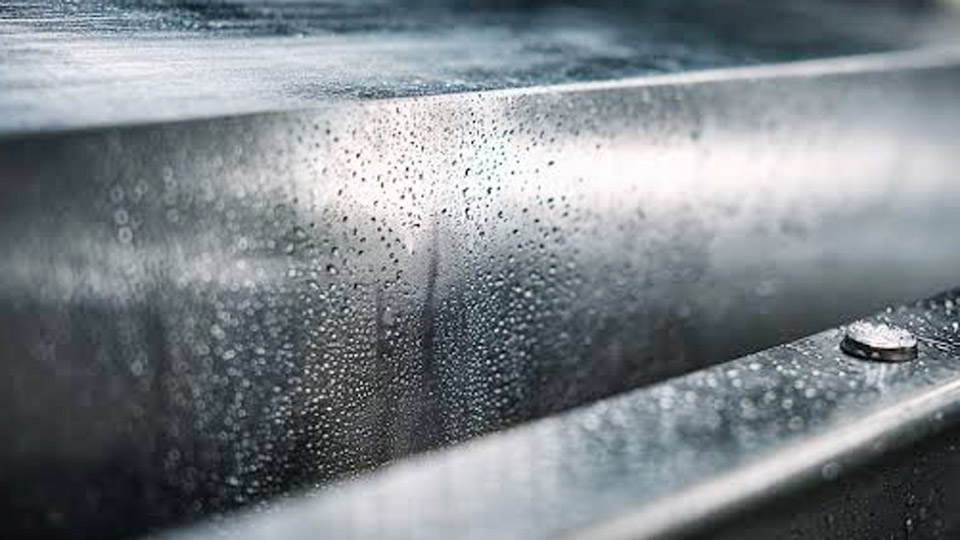
Image by maidatechenclosure
Solid 304 Stainless Steel Composition and Inherent Toxicity Profile
AISI 304 (UNS S30400, EN 1.4301) contains 18.0–20.0 % chromium, 8.0–10.5 % nickel, maximum 0.08 % carbon, and the balance iron, with controlled manganese, silicon, phosphorus, and sulfur.
Chromium forms a continuous, self-repairing chromium(III) oxide passive film that severely restricts metal-ion release in most aqueous and physiological environments.
Metal Release Rates in Physiological and Food Simulants
Bioaccessibility studies show that nickel and chromium release from intact 304 surfaces remain far below levels that would classify the alloy as acutely toxic or carcinogenic under GHS or CLP criteria.
In citric-acid food simulants and artificial body fluids, release rates drop rapidly after the first exposure as the passive film stabilizes.
Inhalation studies on stainless-steel powders confirm low lung toxicity relative to what bulk nickel content would predict, precisely because the oxide layer limits bioavailability.
Absence of Hexavalent Chromium in the Solid State
Chromium in 304 exists in the metallic (zero-valent) state or as Cr(III) oxide. Hexavalent chromium is not present in the alloy as manufactured or in finished, non-welded components. Toxicity concerns associated with Cr(VI) arise only when the metal is heated above the temperatures that drive oxidation during welding, thermal cutting, or aggressive grinding.
Welding Fumes: The Primary Toxicity Pathway for 304 Stainless Steel
The heat of the welding arc oxidizes a fraction of the chromium in both base metal and filler into hexavalent chromium. Nickel compounds also enter the fume. These airborne particles constitute the dominant health hazard for fabricators.
Hexavalent Chromium Generation by Process
Cr(VI) concentrations in stainless fume vary sharply with process and shielding gas. Axial-spray GMAW with oxygen-containing mixtures produces higher Cr(VI) fractions than short-circuit transfer or helium-rich inert gases. SMAW and certain FCAW processes also generate elevated levels.
Measured generation rates range from under 1 µg/min to several micrograms per minute depending on parameters. Particle-size data show most Cr(VI) resides in the fine fraction (<0.6 µm) that reaches the deep lung.
Regulatory Exposure Limits and Health Classification
OSHA’s permissible exposure limit for hexavalent chromium is 5 µg/m³ as an 8-hour TWA; some jurisdictions enforce lower values. Welding fume as a whole is classified by IARC as carcinogenic to humans.
Chronic inhalation of Cr(VI) is linked to lung cancer, nasal septum damage, and respiratory irritation. Nickel in the fume adds sensitization and additional carcinogenic potential. Total fume monitoring alone underestimates risk because it does not quantify the Cr(VI) fraction.
Practical Process Decisions That Lower Cr(VI) Output
Selecting short-circuit or pulsed modes with low-oxygen or inert shielding gases reduces Cr(VI) generation rate per unit of wire consumed. TIG (GTAW) typically produces lower fume volume overall, though ozone generation must still be managed.
Local exhaust ventilation positioned at the arc remains the primary engineering control; air-supplied helmets or powered air-purifying respirators with appropriate cartridges provide the final barrier when engineering controls cannot achieve the exposure limit.
Food-Contact Safety of Finished 304 Components
Once fabrication is complete and surfaces are cleaned and passivated, 304 is widely accepted for food-contact applications. Migration testing under Council of Europe protocols and national standards (for example GB 4806.9) shows chromium and nickel release well below specific release limits for both acidic and neutral simulants.
Factors That Increase or Decrease Metal Leaching
Acidic foods (tomato products, citrus, vinegar), prolonged boiling, and brand-new or heavily abraded surfaces elevate short-term release. Sequential cooking cycles rapidly reduce subsequent leaching as the passive film reforms and stabilizes.
High-quality 304 with low sulfur content and proper surface finish (2B, BA, or electropolished) consistently meets regulatory thresholds. 316 offers additional molybdenum-enhanced resistance in high-chloride environments but is not required for most food-service applications of 304.
Nickel-Sensitive Individuals and Skin Contact
Prolonged skin contact with certain free-machining or high-sulfur stainless grades can elicit reactions in already nickel-sensitized people. Standard low-sulfur 304 and 316 release nickel at rates low enough that most sensitized individuals tolerate jewelry or utensils made from these grades.
Orthodontic and implant literature further supports the biocompatibility of properly finished austenitic stainless steels.
Grinding, Cutting, and Secondary Operations
Thermal cutting and aggressive grinding also liberate chromium and nickel compounds. Plasma cutting of 304 generates fine particulate containing Cr(VI). Dry grinding without local extraction produces respirable dust that carries the same metals.
Wet grinding or vacuum-assisted tools reduce airborne concentrations substantially. Post-weld cleaning with pickling pastes introduces additional chemical hazards (hydrofluoric and nitric acids) that must be controlled separately from the fume risk.
Decision Framework for Fabricators and End Users
For the solid material in service—tanks, food-processing equipment, architectural panels, or consumer goods—304 presents no meaningful toxicity under normal use. The passive film keeps metal release within safe bounds for the general population.
For personnel performing welding, cutting, or grinding, the material must be treated as a source of regulated hazardous fumes. Engineering controls (local exhaust, process selection) take priority; PPE supplements but does not replace them.
When nickel allergy is documented in an end-user population, specify low-sulfur 304 or consider 430 ferritic grades for non-welded applications where formability permits.
Exposure monitoring that includes both total particulate and speciated Cr(VI) provides the only reliable verification that controls are effective. Relying solely on visual fume density or generic welding-fume PELs leaves the hexavalent chromium risk unquantified.
Wrapping Up
Welders who treat 304 as an ordinary carbon-steel alloy with respect to fume control underestimate a documented carcinogen; designers who reject 304 for food equipment on toxicity grounds ignore decades of migration data and regulatory acceptance.
Matching the control strategy to the actual exposure route—solid surface versus thermal process fume—resolves the apparent contradiction and keeps both fabrication shops and finished products within established safety margins.
Advanced shops further reduce risk by specifying low-Cr(VI) process parameters and verifying residual surface chemistry after pickling or electropolishing, ensuring the passive film is restored before the component enters service.
FAQs
Is 304 stainless steel safe for food and cooking?
Yes. Finished 304 surfaces release only trace nickel and chromium under normal cooking conditions, levels that remain below regulatory migration limits for acidic and neutral foods.
Does welding 304 stainless steel produce toxic fumes?
Yes. The arc converts a portion of the chromium into hexavalent chromium, a known human carcinogen, along with nickel compounds. Local exhaust and appropriate respiratory protection are required.
Can nickel from 304 stainless steel cause allergic reactions?
Prolonged skin contact can affect already nickel-sensitized individuals, particularly with higher-sulfur grades. Standard low-sulfur 304 releases nickel at very low rates and is tolerated by most people.
Is hexavalent chromium present in solid 304 stainless steel?
No. Chromium exists in the metallic or trivalent oxide form. Hexavalent chromium forms only during high-temperature processes such as welding or plasma cutting.