Many welders assume a 200-amp TIG machine stops at ¼-inch steel and that thicker sections require switching processes. That assumption creates unnecessary limits.
How thick can a TIG welder weld depends far more on joint preparation, multi-pass technique, and heat management than on the machine’s peak amp rating alone.
A properly set-up 200-amp inverter can produce full-penetration welds on ½-inch or even 1-inch material through beveling and sequential passes, while the same machine delivers clean single-pass results only up to roughly ¼ inch on mild steel.
Understanding the real boundaries prevents underpowered attempts on thick plate and overpowered heat input on thin stock.
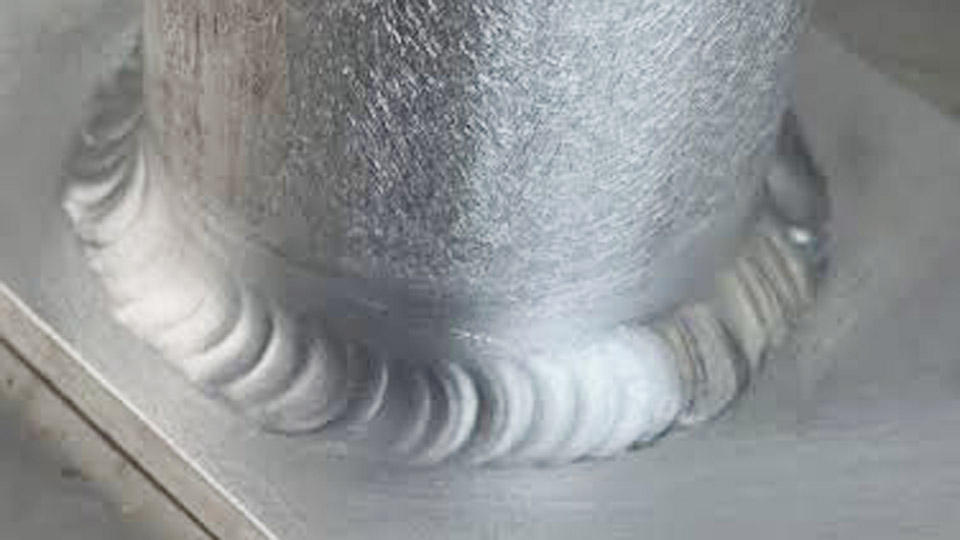
Image by fb/Aluminum Tig welding
Single-Pass Thickness Limits by Machine Amperage
Single-pass capability is the most common reference point because it defines the thickness that can be fused without joint beveling or layering.
150–200 Amp Machines
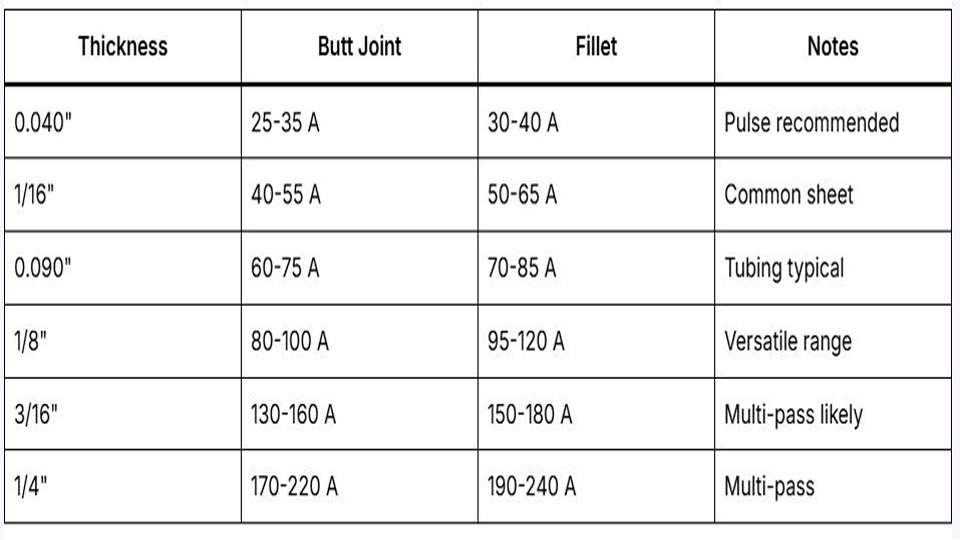
These cover the majority of hobby and light-shop units. On mild steel the practical single-pass limit sits at ¼ inch (6.4 mm). Starting amperage follows the approximate rule of 1 amp per 0.001 inch of thickness, so ¼-inch plate begins near 150–180 A with a 3/32-inch tungsten and 1/8-inch filler.
Clean square-butt joints with tight fit-up reach full penetration at these settings; open roots or poor fit-up drop the reliable thickness to 3/16 inch.
Aluminum single-pass capability falls to roughly 3/16 inch because of higher thermal conductivity and the oxide layer that demands more heat.
250–350 Amp Machines
Higher output extends single-pass mild-steel thickness to ⅜ inch under favorable conditions. At 200–280 A a 1/8-inch tungsten can maintain a fluid puddle long enough for full fusion on ⅜-inch plate when travel speed stays controlled.
Stainless steel reaches similar or slightly greater single-pass thickness because it retains heat better, allowing 10–15 % lower amperage for the same result. Aluminum still tops out near ¼ inch unless helium is mixed into the shielding gas to increase arc energy.
High-Output Industrial Units
Machines rated 400 A and above, paired with water-cooled torches, push single-pass mild-steel capability past ½ inch in specialized setups. Even then, most industrial work switches to multi-pass or hybrid processes once thickness exceeds ⅜–½ inch because deposition rate and heat-input control become limiting factors.
Material Differences That Change Maximum Thickness
Thermal conductivity and oxide behavior alter the amp-to-thickness relationship more than machine size alone.
Mild Steel vs Stainless Steel
Mild steel follows the classic 1 A per 0.001 inch guideline closely. Stainless steel requires 10–15 % fewer amps at the same thickness because lower thermal conductivity keeps heat concentrated in the weld zone.
A ⅛-inch mild-steel butt joint starts around 90–130 A; the same thickness in 304 or 316 stainless often runs cleanly at 70–115 A.
This heat retention allows slightly thicker single-pass stainless sections before distortion or interpass temperature limits appear, but it also increases the risk of warping on thin sheet if travel speed is too slow.
Aluminum and High-Conductivity Metals
Aluminum demands higher amperage—commonly 1.2–1.5 A per 0.001 inch—plus AC polarity to break the oxide. A ⅛-inch aluminum joint typically needs 120–160 A AC, while ¼-inch material climbs to 210–275 A.
Single-pass limits therefore sit lower than steel: most 200 A machines handle 3/16 inch reliably and reach ¼ inch only with helium addition or preheating. Magnesium and copper alloys follow similar high-conductivity patterns and further restrict single-pass thickness.
When Multi-Pass Becomes Necessary and How Far It Extends Capability
Once thickness exceeds single-pass limits, joint design and sequence determine success far more than peak amperage.
Joint Preparation Requirements for Thick Sections
Square butts become impractical above ¼–⅜ inch. A 60-degree single-V or double-V groove with a 1/16–1/8-inch root face and controlled root gap allows the arc to reach the bottom of the joint at moderate amperage.
Proper beveling converts a ½-inch plate into a series of ⅛-inch effective thicknesses that a 150–200 A machine can handle layer by layer. Land and gap consistency matter; excessive gap forces higher filler volume and heat input, while zero gap risks incomplete root fusion.
Root, Fill, and Cap Sequencing
The root pass establishes penetration and is typically run at 70–90 % of the calculated full-thickness amperage with a smaller filler. Subsequent fill passes build volume at slightly higher or equal current while maintaining interpass temperature limits (often 300–400 °F for carbon steel).
Cap passes finish the profile at reduced amperage or higher travel speed to control reinforcement. With this approach, even a 130 A machine on 120 V input can produce sound welds on 1-inch or thicker plate, provided cleaning between layers removes oxides and slag. Lack of fusion risk rises with thickness, so each pass must fully remelt the previous toe and root.
Equipment Factors That Determine Real-World Thickness Capability
Machine amp rating is only one constraint; torch, tungsten, and duty cycle set the practical ceiling.
Torch Cooling and Duty Cycle Constraints
Air-cooled torches on 150–200 A machines usually carry 60–100 % duty cycle at rated output. Sustained high-amperage welding on thick plate quickly exceeds that rating, forcing pauses that allow the joint to cool unevenly.
Water-cooled torches maintain higher continuous current and stabilize the arc on multi-pass thick work. Duty-cycle limitations become the binding constraint long before the power source itself runs out of amperage.
Tungsten Size and Gas Coverage Limits
Tungsten diameter must match the current: 1/16 inch up to roughly 150 A, 3/32 inch to about 235 A, and 1/8 inch beyond that. Undersized tungsten balls or melts, contaminating the weld.
Larger cups or gas lenses improve shielding on wide multi-pass beads, but flow rates above 25–30 CFH can create turbulence that pulls in air.
On thick aluminum, helium mixtures raise heat input without increasing machine amperage, effectively extending the thickness window of a given power source.
Decision Guide: Choosing TIG Versus Switching Processes for Thick Work
TIG remains the preferred choice when weld quality, cleanliness, or precise heat control outweigh deposition speed—pipe root passes, stainless process piping, aluminum structures, and any application requiring radiographic quality.
Once thickness exceeds ⅜–½ inch and production volume rises, deposition rate becomes the deciding factor. Stick or flux-cored processes fill large grooves faster; hybrid procedures often use TIG only for the root and switch to a higher-deposition process for fills.
The correct decision balances required mechanical properties, available equipment, and total arc time rather than chasing maximum single-pass thickness on an undersized machine.
Wrapping Up
A 200-amp TIG welder delivers reliable single-pass results on mild steel up to ¼ inch and extends far beyond that thickness through proper joint design and multi-pass sequencing.
Matching amperage to material conductivity, sizing tungsten and torch cooling correctly, and controlling interpass temperature convert machine rating into actual capability.
The advanced insight is that heat-input management across sequential passes—not peak amperage—ultimately governs both fusion quality and distortion on thick sections.
FAQs
How thick can a 200-amp TIG welder weld in a single pass?
On mild steel, approximately ¼ inch with good fit-up. Aluminum drops to about 3/16 inch; stainless sits near ¼ inch at slightly lower amperage.
Can you TIG weld ½-inch steel?
Yes, with a beveled joint and multiple passes. A root pass at moderate amperage followed by fill and cap layers produces full penetration even on machines rated well below 300 A.
What amperage is needed for ⅛-inch mild steel TIG?
Start at 90–130 A DCEN with a 3/32-inch tungsten. Adjust upward for fillets or open roots and downward for thin-to-thick transitions focused on the thinner member.
Does aluminum require more amps than steel for the same thickness?
Yes. Expect 20–50 % higher amperage on AC plus oxide-cleaning balance settings because of aluminum’s high thermal conductivity and tenacious oxide layer.