The electrode freezes to the plate mid-pass, the arc extinguishes, and the bead ends with a crater full of slag. That exact failure happens when arc voltage collapses under a short arc length and the machine cannot respond fast enough.
What does arc force do on a welding machine? It detects the voltage drop and delivers a controlled, temporary surge of amperage that clears the short, keeps the arc alive, and restores the preset current the instant voltage recovers.
Without it, operators either raise base amperage too high or accept frequent sticking; with it dialed correctly, the same amperage produces stable penetration on root passes, out-of-position joints, and electrodes that prefer a tight arc.
The feature exists only in SMAW mode on modern inverter machines and changes nothing about steady-state current until the arc length threatens to collapse.
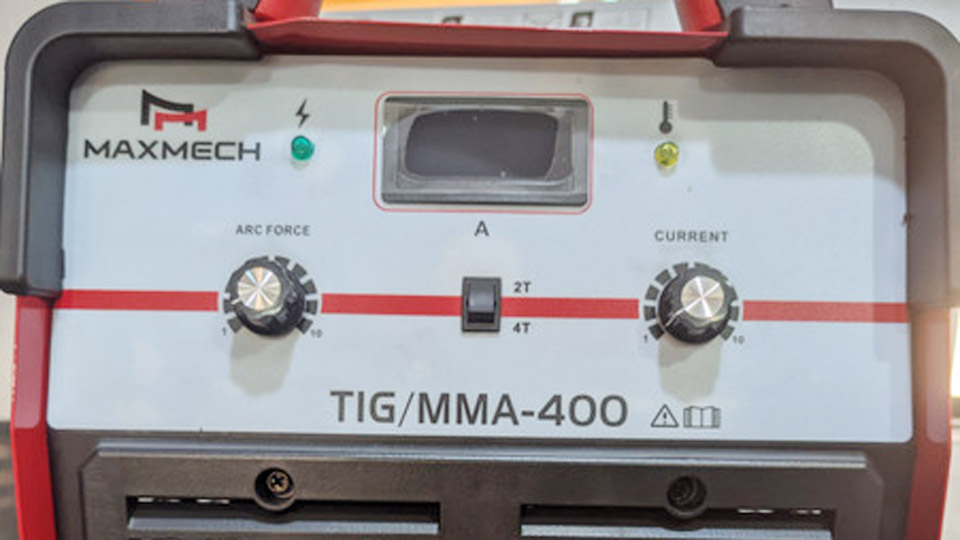
Image by tikweld
How Arc Force Detects and Corrects a Collapsing Arc
Arc force continuously samples the voltage between electrode and workpiece. A healthy stick arc typically runs between 18–25 V. When the operator shortens the arc or the electrode approaches the puddle, voltage falls toward zero.
At a predetermined threshold—often near 15–18 V—the control circuit adds a percentage of the set amperage for a few milliseconds. Once voltage climbs again, the boost disappears and the machine returns to the exact dialed current.
Voltage Threshold and Current Boost Magnitude
The boost amount is proportional to the arc-force setting. At 30 % on a machine set to 120 A, the momentary peak may reach roughly 156 A. At 80 % the same machine can momentarily deliver 200 A or more. The duration is short enough that average heat input barely rises, yet long enough to melt the tip free and re-establish the plasma column.
Interaction with Machine Output Curve
On a pure constant-current machine without arc force, current stays flat even as voltage collapses; the electrode simply sticks.
Arc force modifies the lower end of the volt-ampere curve, creating a controlled “dig” region that increases current as voltage falls. Higher settings produce a steeper dig slope; lower settings leave the curve nearly flat.
Recommended Arc Force Ranges by Electrode Type
Electrode coating chemistry dictates how much dig the arc needs. Cellulosic rods generate a forceful plasma and prefer aggressive settings; low-hydrogen rods run smoother and prefer restraint.
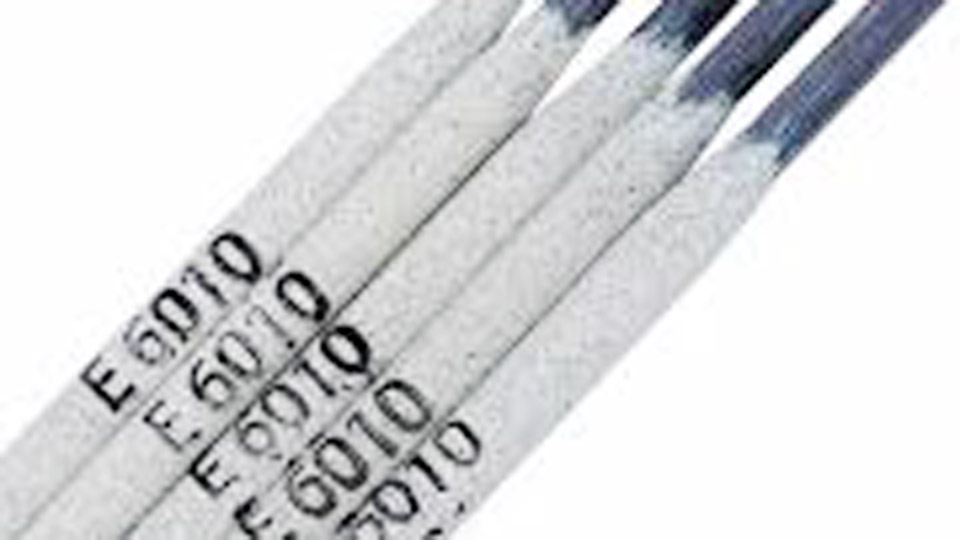
Cellulosic Electrodes (E6010, E6011)
Set 60–90 %. These rods require a tight arc and deep penetration, especially on open-root pipe or dirty plate. High arc force keeps the keyhole open and prevents the tip from freezing when the operator rides the leading edge of the puddle.
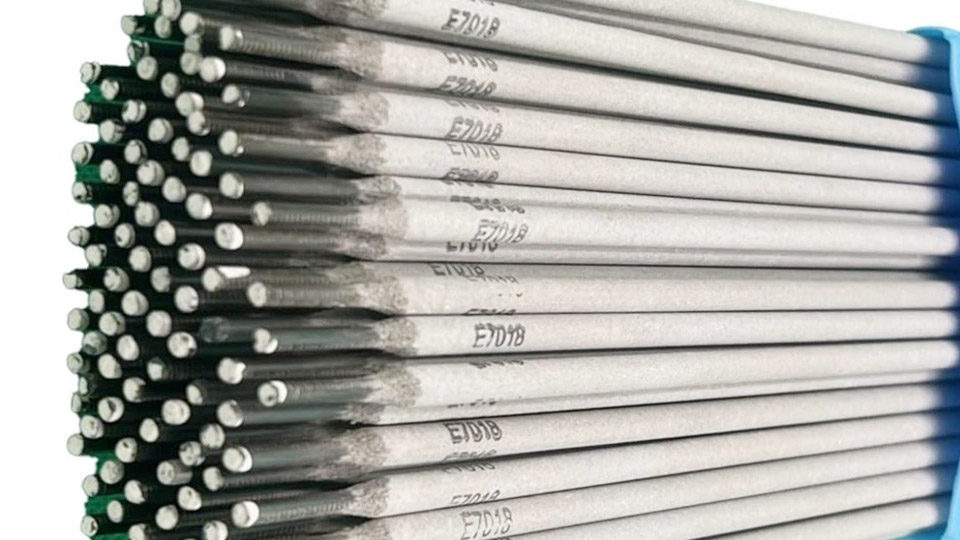
Low-Hydrogen Electrodes (E7018, E7016)
Set 20–50 %. Excess dig produces a harsh, sputtering arc, excess spatter, and a high-crowned bead. Most structural work settles between 30–40 %. Raise toward 50 % only for vertical-up or overhead where gravity increases the risk of sticking.
Rutile and Iron-Powder Electrodes (E6013, E7014)
Set 10–30 %. These coatings already run soft. Higher arc force adds unnecessary violence and undercut.
| Electrode Family | Typical Arc Force | Primary Benefit |
|---|---|---|
| E6010 / E6011 | 60–90 % | Keyhole stability, gap bridging |
| E7018 / E7016 | 20–50 % | Smooth bead, low spatter |
| E6013 / E7014 | 10–30 % | Minimal dig, flat profile |
Position-Specific Arc Force Decisions
Gravity and joint access change how often the arc length shortens unintentionally.
Flat and Horizontal
Start at the low-to-mid range for the electrode in use. In flat position the operator can maintain consistent arc length, so aggressive dig is rarely required and often produces convex beads or undercut.
Vertical-Up
Raise 10–20 percentage points above the flat setting. The need to keep a short arc against gravity increases the chance of momentary shorts; moderate dig clears those shorts without forcing the puddle out of the joint.
Overhead
Use mid-to-high settings within the electrode’s preferred window. Overhead technique already demands a short arc and rapid freeze. Arc force supplies the extra current needed to keep the tip free while the operator manipulates the puddle against gravity.
Distinguishing Arc Force from Hot Start and Anti-Stick
Three separate electronic assists often appear together on inverter panels, yet each addresses a different moment in the weld cycle.
Hot Start Function
Hot start raises current only for the first 0.3–1.0 second after the arc is struck. It solves cold-start sticking and lack of fusion at the beginning of the bead. Once the arc is established, hot start returns to base amperage and stays out of the way.
Anti-Stick Function
Anti-stick collapses output current the instant a sustained short circuit is detected. The electrode cools rapidly and can be broken free without twisting or damaging the holder. It is a recovery feature after sticking has already occurred.
Arc Force Timing
Arc force operates continuously during the weld, intervening only when voltage drops below the threshold and releasing the moment voltage recovers. It never raises current at the start and never drops current after a full stick.
Effects of Excess or Insufficient Arc Force on Bead Quality
Incorrect settings produce visible and measurable defects that cannot be corrected by travel speed alone.
Too Little Arc Force
The electrode sticks repeatedly on tight arcs. Root passes lose the keyhole. Arc extinguishes on vertical or overhead work. Operators compensate by raising base amperage, which then overheats the joint on longer arcs.
Too Much Arc Force
The arc becomes violent and directional. Spatter increases sharply. Bead profile turns high-crowned and narrow. Undercut appears at the toes because the force pushes molten metal away from the edges. On thin material the extra dig can burn through even when base amperage is correct.
Practical Calibration Sequence on Scrap
Match plate thickness, joint geometry, and electrode to the production joint. Set base amperage first according to electrode diameter and position. Begin with the mid-range arc-force value recommended for that electrode.
Run a 4–6 inch bead while deliberately varying arc length from normal to nearly contacting the plate. Observe whether the tip freezes or the arc remains fluid. Increase arc force in 10 % increments only until the short-arc condition no longer sticks; stop there.
Then run a normal bead and inspect profile, spatter, and toe fusion. If the bead is excessively convex or undercut appears, drop the setting 5–10 % and retest. Record the final combination of amperage and arc force for that electrode and position.
Machine Variations and Label Differences
Manufacturers use different names and scales for the same function. Lincoln panels may read “Arc Control” or “Crisp/Soft.” Miller units often show “Dig.” Many inverter brands label the control “Arc Force” with a 0–100 % scale. Some older machines use a 0–10 dial.
The electrical behavior remains identical: higher numbers increase the dig slope. Always consult the specific machine’s operator manual for the exact voltage threshold and maximum boost percentage, because those values differ between brands and models.
When Arc Force Cannot Compensate
Arc force cannot overcome an electrode that is damp, a ground clamp with high resistance, or a base amperage set far below the electrode’s operating range. It also cannot correct operator technique that maintains an excessively long arc; the feature only activates on short-arc conditions.
On pure transformer machines without electronic controls, no arc-force circuit exists and the operator must manage sticking solely through amperage and arc-length skill.
Wrapping Up
Choosing the correct arc-force value is a balance between the electrode’s natural arc characteristics and the geometric demands of the joint. A 6010 root on open pipe needs the high dig that keeps the keyhole alive; a 7018 fill pass on structural steel needs the low dig that produces a flat, low-spatter bead.
Once base amperage is established, arc force becomes the fine adjustment that lets the same machine run both electrodes without constant amperage changes.
Advanced operators treat the control as a dynamic tool—raising it for the root and lowering it for the fill—rather than a fixed machine setting, thereby matching heat input and arc behavior to each pass in the sequence.
FAQs
What does arc force do on a stick welder?
It temporarily increases amperage when arc voltage drops because the electrode is too close to the work, preventing sticking and keeping the arc stable without changing the base current setting.
What arc force setting for 7018?
Most operators use 20–50 %, with 30–40 % common for flat and horizontal work. Raise toward 50 % only for vertical-up or overhead.
Is arc force the same as dig control?
Yes. Arc force, dig, and arc control are different labels for the identical function that boosts current on short arcs during SMAW.
Should arc force be high or low for root passes?
High for cellulosic electrodes (60–90 %) to maintain the keyhole; moderate for low-hydrogen electrodes when a tight arc is required.