Many TIG welders still grab a red-tipped electrode for every steel job without checking whether the procedure actually requires it or whether a non-radioactive alternative will deliver equal arc stability.
The confusion around what is thoriated tungsten used for creates two practical problems: unnecessary exposure risk during grinding and mismatched performance when the job shifts to AC aluminum or low-amperage thin-gauge work.
Thoriated electrodes (primarily 2 % ThO₂, AWS EWTh-2) remain valuable for specific DC electrode-negative applications because the oxide lowers the electron work function, raising current capacity and locking the arc.
Understanding exactly where that advantage appears—and where it disappears—lets a welder match electrode chemistry to the base metal, power source, and procedure specification without defaulting to legacy habit.
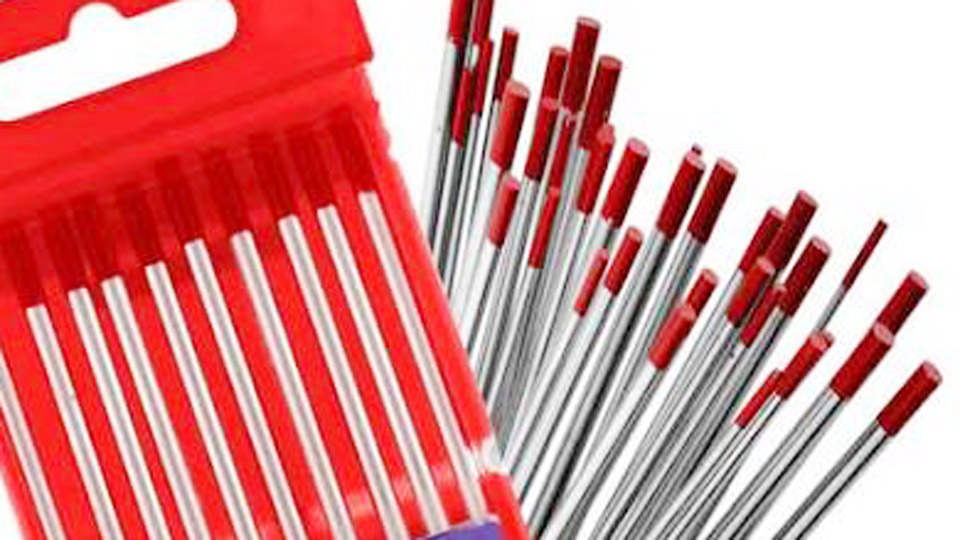
Image by arc-zone.com
Primary DC TIG Applications Where Thoriated Tungsten Delivers Measurable Gains
Thoriated tungsten is almost exclusively a DC electrode-negative (DCEN) electrode. The oxide addition improves thermionic emission so the tip operates well below its melting point, producing a stable, focused arc on ferrous and high-temperature alloys.
Carbon Steel and Stainless Steel Fabrication
On carbon steel, low-alloy steel, and the full range of austenitic and duplex stainless grades, 2 % thoriated electrodes provide reliable arc starts at both low and high amperage. Typical current capacity for a 1/16 in (1.6 mm) electrode runs 70–150 A DCEN; a 3/32 in (2.4 mm) electrode handles 150–250 A.
The pointed geometry holds under sustained load, giving deep, narrow penetration needed for single-pass root welds in pipe and pressure-vessel work. Weld metal contamination from electrode material remains low because the tip erodes slowly.
Nickel Alloys, Titanium, and Copper Alloys
Nickel-based alloys and commercially pure or alloyed titanium benefit from the same high electron emission. The stable arc reduces the risk of tungsten inclusions that would otherwise appear as radiographic indications.
Copper alloys also respond well under DCEN because the higher current-carrying capacity of thoriated tungsten offsets the high thermal conductivity of the base metal. In each case the electrode is ground to a sharp point (typically 15–30° included angle) and left with a small truncated tip to avoid arc wander.
High-Current and Continuous-Duty Work
When amperage exceeds roughly 200 A on heavier sections, thoriated electrodes resist rapid tip erosion better than pure tungsten. Automated or mechanized GTAW systems that run long continuous beads exploit this margin.
Aerospace and nuclear fabrication procedures written decades ago still list EWTh-2 because the original procedure qualification records were generated with that electrode; changing chemistry would require full requalification.
How the Thorium Oxide Addition Changes Electrode Behavior
The functional difference between pure tungsten and thoriated tungsten is not bulk melting point—both remain solid far above normal arc temperatures—but surface electron emission.
Current-Carrying Capacity Relative to Pure Tungsten
Thorium oxide lowers the work function of the electrode surface. As a result, a thoriated electrode of a given diameter can carry approximately 20 % more current than an identical pure-tungsten electrode before the tip begins to melt or spit.
This margin appears as longer electrode life and reduced tungsten inclusions in the weld pool. At the same time the arc column remains narrower and more directional, improving control on thin-to-medium sections.
Tip Geometry Retention and Contamination Resistance
Because the electrode runs cooler relative to its melting point, a ground point stays sharp through multiple starts and longer bead lengths. Pure tungsten tends to form a ball and wander; thoriated tungsten resists that deformation under DCEN.
The lower erosion rate also means less tungsten is transferred into the weld puddle, which is critical for radiographic or ultrasonic acceptance criteria.
Situations That Still Justify Specifying Thoriated Tungsten
Despite the availability of lanthanated and ceriated alternatives, thoriated electrodes continue to appear in certain documentation and shop practices for concrete technical reasons.
Legacy Welding Procedure Specifications
Many aerospace, nuclear, and pressure-vessel WPS documents were qualified with 2 % thoriated electrodes. Substituting another oxide requires a new procedure qualification record, including mechanical testing and often radiographic examination. Until the owner or code body accepts a revised WPS, the original electrode remains mandatory.
Operator Preference for Point Retention on High-Amp DC
Experienced welders frequently report that red electrodes hold a sharp grind longer under heavy DC loads than some early-generation rare-earth alternatives. When a shop already stocks thoriated material and the procedure permits it, the performance consistency outweighs the modest radiation-handling overhead for many operators.
Performance Limits on AC and Modern Inverter Power Sources
Thoriated tungsten is a poor choice for most AC applications. Under alternating current the electrode tends to overheat, form an irregular ball, and burn back into the cup. Specialty thin-gauge aluminum work below 0.060 in is sometimes cited as an exception, but zirconiated or lanthanated electrodes produce cleaner results with modern square-wave inverters.
On inverter-based machines the advantage of thoriated electrodes shrinks further. Inverters deliver high-frequency starts and precise current control that allow lanthanated (blue) and ceriated (gray/orange) electrodes to match or exceed the arc-start reliability once unique to thoriated tungsten.
Many manufacturers now recommend the non-radioactive grades as drop-in replacements for DC steel and stainless work.
Radioactivity Considerations That Affect Daily Handling Decisions
Thorium-232 is a low-level alpha emitter. Intact electrodes present negligible external dose. The practical hazard arises during grinding: fine dust can be inhaled, and alpha particles then irradiate lung tissue over long periods.
Shops that continue to use thoriated electrodes therefore require dedicated grinders with local exhaust ventilation, respiratory protection rated for fine particulates, and controlled disposal of grinding residue and spent stubs.
Pre-ground electrodes eliminate the grinding step entirely and are preferred when the WPS still demands thoriated material.
Selecting Between Thoriated and Non-Radioactive Alternatives for New Work
When a procedure is open or being written for the first time, the decision rests on three measurable factors: current type, amperage range, and regulatory environment.
Direct Comparison of Common Alternatives
- 2 % lanthanated (EWLa-2, blue): Matches or exceeds thoriated current capacity on DC, works on AC, non-radioactive, excellent point retention.
- 2 % ceriated (EWCe-2, gray/orange): Superior low-amperage starts (below ~100 A), good for orbital and thin-sheet DC, also usable on AC.
- Pure tungsten (EWP, green) and zirconiated (EWZr-1, brown/white): Reserved for AC aluminum on transformer machines; not competitive on DC.
For most new carbon-steel or stainless DC work, 2 % lanthanated electrodes deliver equivalent arc stability and electrode life without the grinding-dust protocol. Ceriated electrodes are preferred when the process stays under 90–100 A. Only when an existing qualified procedure explicitly lists EWTh-2 does thoriated remain the required choice.
Diameter and Tip Preparation Decisions
Regardless of oxide type, diameter is selected by amperage: 1/16 in for up to ~150 A, 3/32 in for 150–250 A, 1/8 in for higher currents. Thoriated electrodes are always ground to a sharp or slightly truncated point for DCEN; never balled. Longitudinal grinding lines parallel to the electrode axis reduce arc wander.
Wrapping Up
When the job is DC steel or stainless, the procedure is open, and grinding controls are limited, lanthanated tungsten removes both the performance compromise and the radiation-handling burden.
When the WPS is locked to EWTh-2, the same electrode continues to provide the focused, high-capacity arc that originally justified its selection—provided dust is captured at the source and spent material is managed according to the safety data sheet.
The advanced distinction that separates routine fabrication from high-integrity work is not the oxide itself but whether the electrode chemistry, tip geometry, and current polarity remain inside the envelope that was actually qualified.