Using the wrong shielding gas on aluminum produces immediate problems: black soot, heavy porosity, lack of fusion, or a contaminated tungsten that refuses to start cleanly.
The question of what type of shielding gas for aluminum welding is not optional—aluminum’s tenacious oxide layer and high thermal conductivity demand a fully inert atmosphere.
Reactive gases such as CO₂ or argon-CO₂ mixes oxidize the puddle, destroy mechanical properties, and create rejects that no amount of parameter tweaking can fix. Selecting the correct gas controls arc stability, cleaning action, heat input, and porosity risk.
The decision directly determines whether a weld meets structural or cosmetic requirements on 1xxx through 6xxx series alloys.
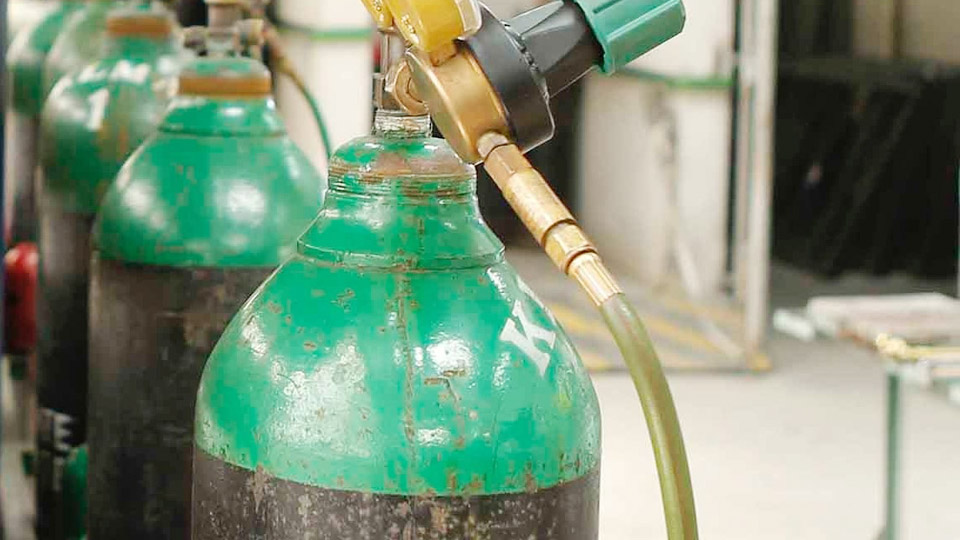
Image by dnhsecheron
Pure Argon for Everyday Aluminum TIG and MIG
Pure argon remains the default choice for the majority of aluminum welding because it delivers a stable, controllable arc and effective oxide disruption without adding unnecessary heat or cost.
Why 100% Argon Works for Most Thicknesses
Argon is completely inert and denser than air, so it blankets the weld zone effectively in the flat and horizontal positions. In AC TIG it supports strong cathodic cleaning that breaks the aluminum oxide film. In MIG it supports spray or pulsed-spray transfer with minimal spatter.
For material up to roughly ¼–½ inch, pure argon supplies enough energy for full fusion while keeping heat input low enough to limit distortion on thinner sheet.
Typical Flow Rates and Cup or Nozzle Sizes
TIG flow rates commonly fall between 15 and 25 CFH, adjusted to cup diameter (a #7 or #8 cup often runs 15–20 CFH). MIG flow rates sit higher—usually 20–40 CFH—to account for the larger nozzle and higher travel speeds.
Excess flow creates turbulence that pulls air into the shield and increases porosity; insufficient flow leaves the puddle unprotected.
Limitations of Pure Argon on Heavy Sections
On plate thicker than about ½ inch, argon’s lower thermal conductivity can leave incomplete fusion or require slower travel speeds that raise the risk of heat distortion. At that point helium additions become practical.
When and How to Add Helium for Thicker Aluminum
Helium raises arc voltage and thermal conductivity, producing a hotter, more fluid puddle that penetrates deeper and travels faster.
Common Argon-Helium Blend Ratios
- 75 % argon / 25 % helium: moderate heat increase, good arc stability, suitable for ⅜–½ inch material in both TIG and MIG.
- 50 % argon / 50 % helium: noticeably higher heat input for thicker plate or higher travel speeds.
- 25 % argon / 75 % helium or pure helium: reserved for very heavy sections or specialized high-productivity work; arc starts become more difficult and cost rises sharply.
Process-Specific Differences with Helium Mixes
In TIG the added helium widens the arc and increases penetration without destroying the cleaning action provided by the argon portion. In MIG the hotter arc improves wetting and reduces the chance of lack-of-fusion defects on thick joints. Because helium is lighter than argon, flow rates must increase—often 50 CFH or higher for high-helium mixes—to maintain coverage.
Cost and Availability Trade-Offs
Helium is significantly more expensive and subject to supply fluctuations. Most shops keep pure argon as the primary gas and introduce helium blends only when thickness or production speed justifies the premium.
Gas Selection by Welding Process and Material Thickness
The same gas does not perform identically across TIG and MIG or across different gauges.
TIG (GTAW) Recommendations
Pure argon covers nearly all manual TIG work up to ⅜–½ inch. For heavier plate or automated high-speed TIG, move to 75/25 or 50/50 argon-helium. AC balance and frequency settings remain critical; the gas choice simply supplies the thermal energy the process needs.
MIG (GMAW) Recommendations
Pure argon is standard for most MIG aluminum work up to approximately ½ inch. Spray or pulsed spray transfer with 100 % argon produces clean, low-spatter beads.
Above that thickness, 75 % argon / 25 % helium or higher helium content improves penetration and allows faster travel. Never introduce oxygen or CO₂—even in trace amounts—because aluminum reacts aggressively with active gases.
Thickness Decision Guide
| Thickness Range | Preferred Gas | Process Notes |
|---|---|---|
| Under ⅛–¼ inch | 100 % Argon | Maximum control, lowest distortion |
| ¼–½ inch | 100 % Argon or 75/25 Ar/He | Pure argon still common; helium helps speed |
| Over ½ inch | 50/50 or higher helium | Deeper penetration, reduced porosity risk |
Gas Purity, Moisture, and Delivery Requirements
Aluminum welds are highly sensitive to contamination. Even small amounts of moisture or oxygen produce porosity that appears as elongated wormholes or surface pinholes.
Minimum Purity Specifications
Welding-grade argon should be at least 99.99 % pure with a dew point of –76 °F or lower. Helium requires similar purity. Lower grades introduce hydrogen and oxygen that dissolve in the molten aluminum and form gas pockets on solidification.
Hoses, Regulators, and Flow Control
Use dedicated inert-gas hoses free of residual CO₂ or moisture. Flowmeters calibrated for argon will under-read helium mixtures; adjust accordingly. Keep cylinders upright and secured, and purge the lines thoroughly after any cylinder change.
Environmental Factors That Affect Shielding
Drafts, high ambient humidity, and long electrode stick-out all degrade gas coverage. Outdoor or poorly shielded work often requires higher flow or wind screens. On thick sections the hotter helium arc helps drive dissolved hydrogen out of the puddle, reducing porosity even when ambient conditions are less than ideal.
Practical Decision Criteria for Choosing the Correct Gas
Selecting the gas is a balance of thickness, process, production rate, and cost rather than a single “best” answer.
Shop Constraints Versus Weld Requirements
Hobbyists and small shops usually stay with pure argon because one cylinder serves both TIG and MIG aluminum work and the majority of jobs fall within its performance envelope. Production fabricators welding heavy plate or high-speed automated joints gain measurable productivity from helium additions that more than offset the higher gas cost.
Joint Design and Position Considerations
Open-root or poorly fitted joints benefit from the fluid puddle produced by helium mixes. Overhead or vertical work may favor pure argon for easier puddle control. Fillet welds on thick material often need the extra heat of helium to achieve full root fusion without multiple passes.
Matching Gas to Filler Alloy and Base Metal Series
5xxx series alloys with higher magnesium content can show more smut or porosity; the hotter helium arc sometimes reduces these issues by improving degassing.
6xxx series responds well to pure argon for cosmetic appearance. Always verify the gas choice against the procedure qualification record when code work is involved.
Wrapping Up
Choosing pure argon for the majority of aluminum TIG and MIG work, then adding helium only when thickness or travel speed demands it, produces the most consistent results across the widest range of jobs.
The advanced decision is not simply “which gas,” but matching the thermal conductivity of the shielding mixture to the heat-sink capacity of the joint so that fusion, travel speed, and distortion remain in balance without over-heating the surrounding material.
FAQs
What is the best shielding gas for TIG welding aluminum?
Pure argon is the standard choice for most TIG aluminum work. Use argon-helium mixes only when welding thicker sections that need extra heat and penetration.
Can I use the same gas for MIG and TIG aluminum?
Yes. 100 % argon works for both processes on typical thicknesses. Separate argon-helium cylinders are needed only if you regularly weld heavy plate with either process.
What happens if I use CO₂ or C25 on aluminum?
Active gases react with aluminum, producing heavy oxidation, porosity, black soot, and weak welds. Never use CO₂-containing mixtures on aluminum.
Do I need helium for aluminum under ¼ inch thick?
No. Pure argon provides adequate heat and superior arc control on thin material. Helium adds cost and can make the puddle harder to control without delivering meaningful benefit.