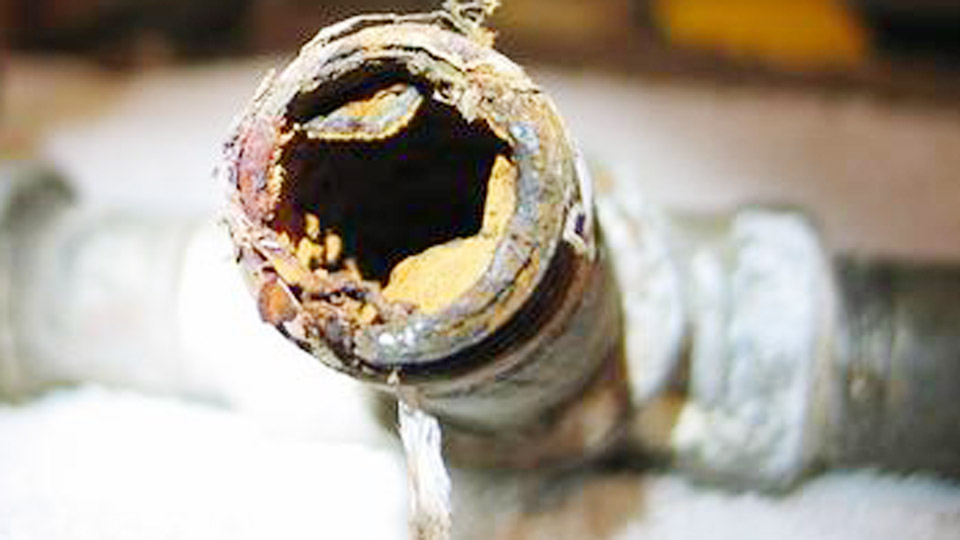
Magnesium’s rapid oxide formation and low melting point cause the puddle to collapse or oxidize the moment heat is applied, leaving porous, cracked, or contaminated joints that fail under load.
The preferred method of welding magnesium resolves this by delivering precise, controllable heat while continuously disrupting the oxide layer and excluding atmosphere.
Gas tungsten arc welding (GTAW/TIG) with alternating current meets those requirements more effectively than other processes for the majority of manual and semi-automatic work on wrought and cast alloys.
Selecting the wrong process increases the risk of burn-through, hydrogen porosity, and solidification cracking—defects that compromise structural integrity in aerospace, automotive, and lightweight fabrication applications. Correct process choice therefore determines whether the joint retains usable strength and corrosion resistance.
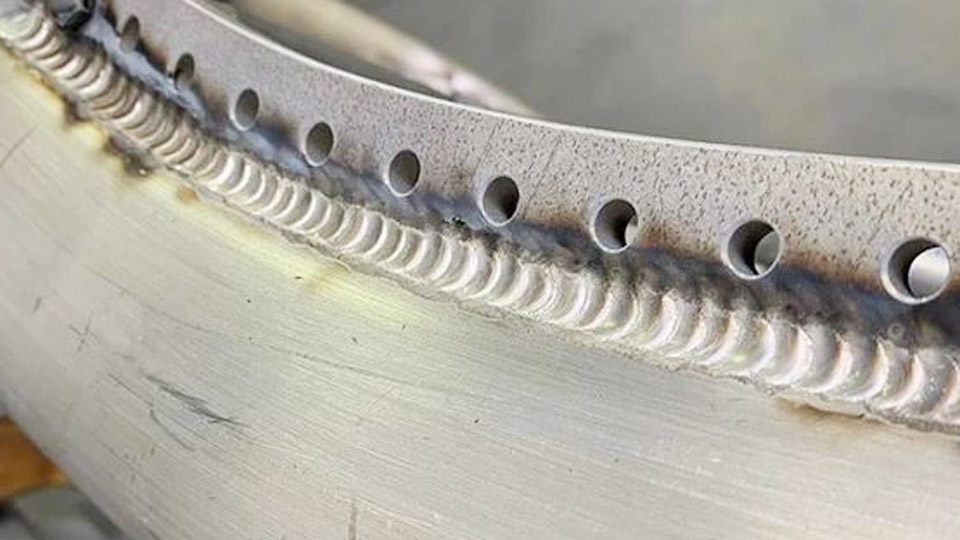
Photo by yeswelder
Why GTAW Outperforms Other Processes for Most Magnesium Joints
GTAW provides independent control of heat input and filler addition, allowing the operator to match energy delivery to magnesium’s high thermal conductivity and low melting range (approximately 650 °C).
The non-consumable tungsten electrode maintains a stable arc length of roughly 0.8 mm, concentrating heat without the continuous metal transfer that can overheat thin sections.
Oxide Cleaning Action Under AC Polarity
Alternating current reverses polarity within each cycle. The electrode-positive half-cycle provides cathodic cleaning that breaks up the tenacious MgO surface film, while the electrode-negative half-cycle drives deeper penetration into the base metal.
Balanced-wave or adjustable-balance machines typically operate at 60–75 % electrode-negative for optimum penetration-to-cleaning ratio. Direct-current electrode positive can be used on very thin sheet, but AC remains the standard for reliable oxide removal across the thickness range encountered in practice.
Heat-Input Precision Compared with GMAW
Gas metal arc welding deposits filler continuously and generates higher average heat input. On material thinner than approximately 3 mm this frequently produces excessive distortion or burn-through.
GTAW’s foot-pedal or fingertip current control permits instantaneous reduction of amperage once the puddle forms, keeping the heat-affected zone narrow and residual stress low.
Published process reviews consistently list GTAW as the preferred arc process for magnesium because of this combination of adaptability, arc stability, and economic accessibility.
Critical Surface Preparation Before Any Arc Is Struck
Residual oil, chromate conversion coatings, or mill oxide introduce hydrogen and solid inclusions that appear as porosity or lack of fusion. Mechanical cleaning with a clean stainless-steel wire brush dedicated to magnesium, followed by solvent degreasing with acetone or an alkaline cleaner, is mandatory.
Chemical pickling may be required for heavily oxidized castings; the surface must then be thoroughly rinsed and dried before welding.
Joint Design and Fit-Up Decisions
Square-edge butt joints are adequate for thicknesses up to about 3 mm. Thicker sections require a 60° single-V groove with a small root face to ensure full penetration without excessive reinforcement.
Root gaps larger than 1 mm promote burn-through; tight, consistent fit-up and the use of run-on/run-off tabs minimize crater cracking at the start and finish of each pass.
Preheat Requirements by Alloy and Thickness
Wrought alloys such as AZ31B rarely need preheat below 6 mm. Certain cast alloys (AZ91, EZ33) benefit from 150–200 °C preheat to reduce thermal gradients and solidification cracking susceptibility. Interpass temperature should not exceed the preheat value; excess heat softens the heat-affected zone and promotes grain coarsening.
Filler Metal Selection and Matching Strategies
Filler metals are classified under AWS A5.19. The most common compositions are ER AZ61A, ER AZ92A, ER AZ101A, and ER EZ33A. Matching or slightly higher alloy content relative to the base metal improves joint strength and reduces hot-cracking tendency.
Composition Compatibility Rules
For AZ31B and AZ61 wrought alloys, ER AZ61A or ER AZ92A provide good ductility and strength. Cast alloys containing rare-earth elements often require ER EZ33A to maintain elevated-temperature properties. Using a lower-alloy filler on a higher-alloy base metal can produce under-matched joints that fail in the weld metal under tensile load.
Diameter and Feed Considerations
Filler diameter is selected to match base-metal thickness: 1.6 mm for sheet under 2 mm, 2.4–3.2 mm for thicker plate. Manual GTAW requires the filler to be introduced into the leading edge of the puddle without touching the tungsten; contact contaminates the electrode and forces a restart.
Shielding Gas Choices That Prevent Oxidation and Porosity
Pure argon at 12–20 L/min (approximately 15–25 CFH) is the default for thicknesses up to 6 mm. Argon provides a stable arc and dense coverage.
For sections thicker than 6–8 mm, or when deeper penetration is required, a 75 % argon–25 % helium mixture or pure helium increases heat input and fluidity while still excluding atmosphere. Helium flow rates must be increased because of its lower density.
Flow-Rate and Torch Configuration
A gas lens and appropriate cup size (No. 6–8 for most manual work) reduce turbulence. Post-flow of 5–10 seconds protects the solidifying weld and the tungsten tip from oxidation. Any interruption of gas coverage immediately produces black, sooty oxide that must be removed before continuing.
Practical Current and Travel-Speed Windows for Manual GTAW
Current requirements scale with thickness and are lower than for aluminum of equivalent thickness because of magnesium’s lower melting point. Representative manual GTAW parameters drawn from established handbook data include:
- 1.0 mm (0.040 in): 35 A AC, 1.6 mm tungsten, argon 12 CFH
- 1.6 mm (0.063 in): 50 A AC, 2.4 mm tungsten
- 2.5 mm (0.100 in): 100 A AC
- 3.2 mm (0.125 in): 125 A AC
- 4.8 mm (0.190 in): 160 A AC
Travel speeds typically range from 150–300 mm/min depending on joint type and whether filler is added. Stringer beads are preferred; wide weaves increase the risk of oxide entrapment and solidification cracking. Automatic GTAW can operate at higher speeds with correspondingly adjusted current.
Pulsed-Current Advantages
Pulsed GTAW further reduces average heat input while maintaining penetration. Peak currents of 130–150 A with base currents of 80–100 A at frequencies of 1–5 Hz refine the solidification structure and limit grain growth in the heat-affected zone, improving tensile strength and ductility on alloys such as AZ31.
When Alternative Processes Become Preferable
GMAW (MIG) with short-circuit or pulsed spray transfer and pure argon or argon–helium shielding is selected for thicker sections or higher deposition rates in production. Wire diameters of 1.2–1.6 mm and DCEP polarity are typical.
Laser beam welding and electron-beam welding offer the lowest heat input and narrowest fusion zones for precision aerospace components, but equipment cost restricts them to specialized facilities.
Friction-stir welding, a solid-state process, eliminates melting-related defects entirely and is increasingly used for long linear joints in automotive and structural applications where high joint efficiency is required.
Decision Criteria Based on Thickness and Volume
Below 3 mm and for repair or prototype work, GTAW remains the first choice. Above 6–8 mm or in high-volume manufacturing, GMAW or laser processes often prove more economical. Solid-state methods are evaluated when residual stress or distortion must be minimized to the greatest extent possible.
Defect Formation Mechanisms and Parameter Adjustments That Prevent Them
Porosity arises primarily from hydrogen dissolved in the molten pool or from inadequate gas coverage. Thorough cleaning and continuous argon shielding eliminate the majority of sources. Hot cracking is driven by wide freezing ranges in certain alloys and high restraint; matching filler composition, reduced heat input, and proper joint design mitigate the risk.
Incomplete fusion results from excessive travel speed or insufficient current; increasing amperage 5–10 A or slowing travel restores fusion without excessive reinforcement.
Post-Weld Inspection and Stress Relief
Visual examination for undercut, porosity, and crater cracks is followed by dye-penetrant or radiographic inspection on critical components. Stress-relief treatments in the 200–300 °C range for selected alloys reduce residual stress without significantly altering mechanical properties. Over-aging must be avoided on precipitation-hardenable compositions.
Wrapping Up
Selecting GTAW with AC polarity, matched filler, and controlled heat input consistently produces sound magnesium welds that retain the base metal’s strength-to-weight advantage.
When thickness, production volume, or residual-stress limits change, the same decision framework directs the operator toward GMAW, laser, or solid-state alternatives without defaulting to an unsuitable process.
Advanced operators further refine results by combining pulsed current with tight arc-length control and real-time adjustment of balance settings, achieving joint efficiencies that approach parent-metal performance on properly prepared material.
FAQs
What shielding gas is best for TIG welding magnesium?
Pure argon at 15–25 CFH is the standard choice for most thicknesses; add helium (25–100 %) only when deeper penetration on thicker sections is required.
Can magnesium be welded with MIG instead of TIG?
Yes. GMAW works on thicker material using DCEP and argon or argon–helium shielding, but it delivers higher heat input and less precise control than GTAW on thin sections.
What filler metal should be used for AZ31 magnesium?
ER AZ61A or ER AZ92A are the most common matching fillers for AZ31B wrought alloy and provide good strength and ductility.
Why does magnesium require AC polarity in TIG welding?
The electrode-positive half-cycle of AC provides cathodic cleaning that continuously removes the high-melting MgO surface film, allowing proper fusion.